

El Paso County sex assault convictions overturned due to judge’s incorrect competency ruling
Colorado’s second-highest court last month vacated a man’s 15-year-old convictions for sexually assaulting a child, finding an El Paso County judge made a flawed determination that the defendant was competent to stand trial.
In doing so, a three-judge panel for the Court of Appeals cautioned it may not be feasible to determine now whether Theodore William Griffin III was competent after so many years have elapsed.
Griffin is serving a sentence of up to life in prison after jurors convicted him in 2010 of having sex with a 14-year-old girl when he was 21. The relationship lasted for roughly one month in late 2007.
Before trial, psychologist John Crumlin completed a court-ordered evaluation of Griffin and found him mentally competent to stand trial. However, Griffin exhibited behavior during trial that suggested he was mentally unwell. One juror pointed out Griffin was “sleeping and sucking his thumb,” which struck her as “very disrespectful.”
Griffin claimed he was stressed and had not slept because of the case. The next day he absconded from court and was allegedly suicidal.
Shortly after the verdict, then-District Court Judge Deborah Grohs went off the record to talk to the parties. The prosecution later alleged she “had issues with the trial proceedings” and “conducted research into whether the parties could agree to throw out the jury’s verdict.”
After the prosecutor called Grohs’ comments “highly improper,” Grohs clarified she was “encouraging the parties to seek justice” and potentially avoid a mandatory prison sentence for Griffin.
Months later, the defense requested a new trial and alleged Griffin was mentally incompetent. Grohs ordered Crumlin to perform a second evaluation. This time, he found Griffin was suffering from a “mental disease or defect” that rendered him incompetent at his trial.
The district attorney’s office responded with a five-sentence motion for a second evaluation, arguing only that Crumlin’s conclusion was “not supported by the evidence.” It also moved to disqualify Grohs from the case, accusing her of speaking privately with Crumlin and exhibiting bias toward the defense.

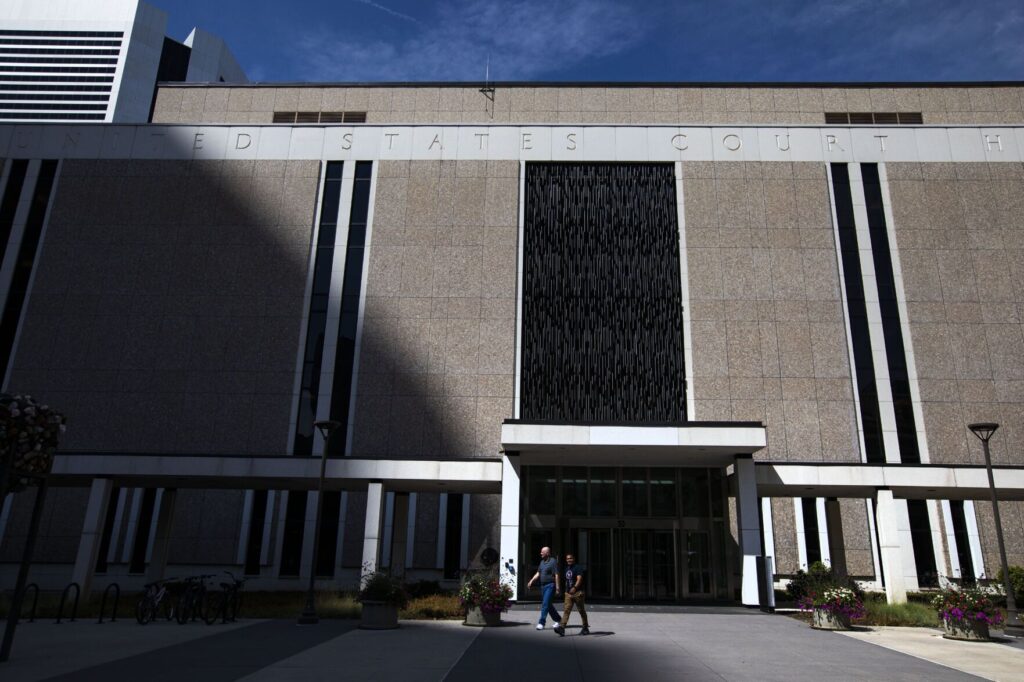
The entrance of the El Paso County Terry R. Harris Judicial Complex on Tejon Street in Colorado Springs.
Grohs stepped down from the case, leading then-District Court Judge Larry E. Schwartz to decide whether to grant Griffin a new trial. A second medical professional, Jane Cleveland, evaluated Grifin eight months after his trial and concluded he was competent as of January 2010.
After listening to Crumlin and Cleveland testify, Schwartz found them both credible, but “Dr. Cleveland’s conclusions were the most convincing.”
Although Griffin alleged on appeal that multiple errors occurred with his trial, a Court of Appeals panel believed Schwartz’s assessment of Griffin’s competency was problematic on its own.
Judge Craig R. Welling, in a Dec. 12 opinion, observed the first problem stemmed from the prosecution’s request for Cleveland to perform a second competency evaluation. Lawmakers created a more lenient standard in 2008 for second evaluations. But the law governing Griffin’s 2007 offenses required “good cause” before a judge could order another competency evaluation.
Welling acknowledged the parties all seemed to believe at the time that good cause was not required, but they were mistaken. Further, the prosecution’s sole allegation that Crumlin’s conclusion was faulty did not amount to good cause.
Without it, “Dr. Crumlin’s report opining that Griffin was retrospectively incompetent would have been the only opinion for the trial court to rely on,” Welling wrote.
Second, the appellate panel noted Crumlin and Cleveland had relied on different definitions of incompetency. The prosecution and the defense disagreed about how meaningful the differences were, but Welling explained the problem was not necessarily the language discrepancy alone. It was that Crumlin was correct and Cleveland was wrong.
Because Schwartz thought Cleveland had used the correct definition, “it’s possible that the trial court was more persuaded by Dr. Cleveland’s standard because she similarly applied the incorrect standard,” Welling wrote.
The Court of Appeals returned Griffin’s case to the trial court with a lengthy set of instructions, each with conditions attached. A new judge will need to determine whether the prosecution had good cause for a second competency evaluation. If so, the judge will then need to decide whether Griffin was competent in January 2010.
Welling elaborated that it may not be feasible to determine Griffin’s compentency by looking back 15 years. In that case, a new trial will be necessary. Then, Griffin’s new lawyer will once again be able to challenge whether Griffin is competent to stand trial.
Only if the judge finds Griffin was competent in 2010 will his convictions be reinstated — and Griffin will be able to appeal anew.
The case is People v. Griffin.

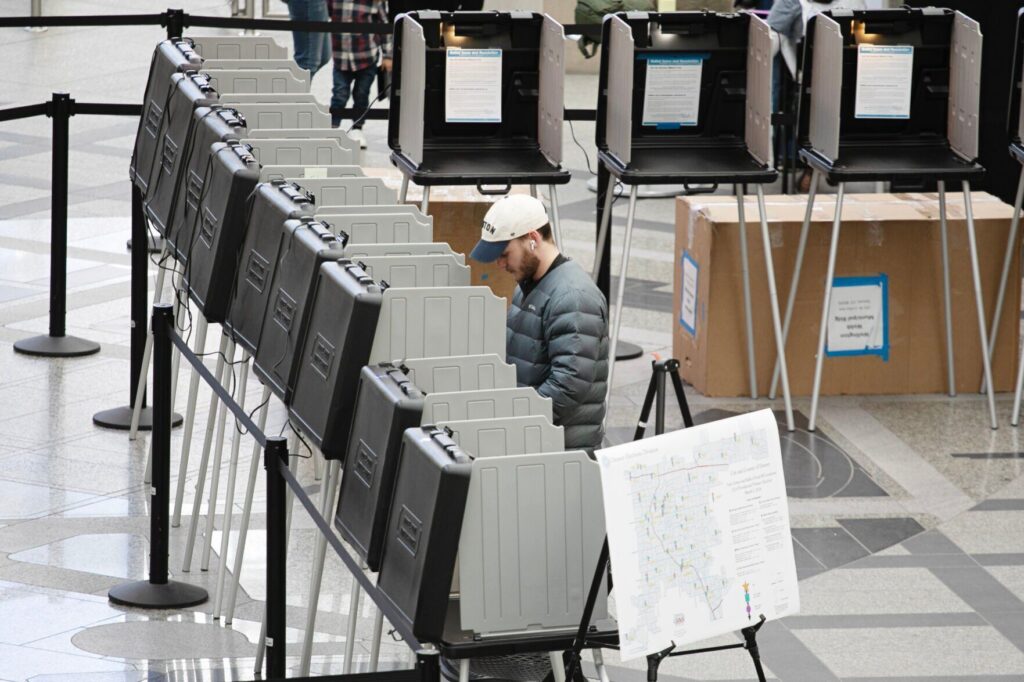
Federal judge upholds constitutionality of Colorado campaign contribution limits
Michael Karlik
michael.karlik@coloradopolitics.com
Updated 1 day ago
A federal judge upheld Colorado’s individual campaign contribution limits as constitutional on Thursday, finding that three Republican plaintiffs failed to prove the campaign finance framework violates their First Amendment rights. U.S. District Court Senior Judge John L. Kane recognized that...

Appeals court rejects theory that existing tax revenue undermines need for new fees
Michael Karlik
michael.karlik@coloradopolitics.com
Updated 2 days ago
Colorado’s second-highest court rejected a plaintiff’s claim on Thursday that the tax revenue generated by an existing activity should prevent local governments from imposing new fees aimed at regulating the activity. The question stemmed from Colorado’s unique constraints on taxation...
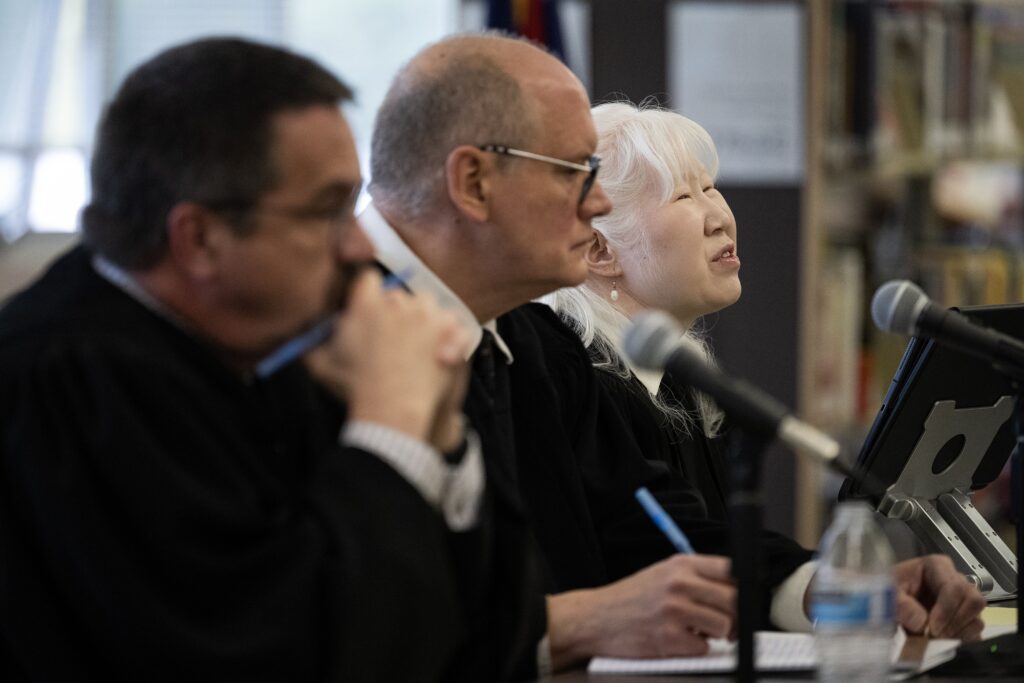
Appeals court finds no illegal sentence when defendants forfeit time-served credit
Michael Karlik
michael.karlik@coloradopolitics.com
Updated 11 hours ago
Colorado’s second-highest court ruled on Thursday that criminal defendants may agree to relinquish the credits they earned while incarcerated pending trial, despite a state law guaranteeing that such time “shall be deducted” from a person’s sentence. Kerry Ellis Endsley pleaded...
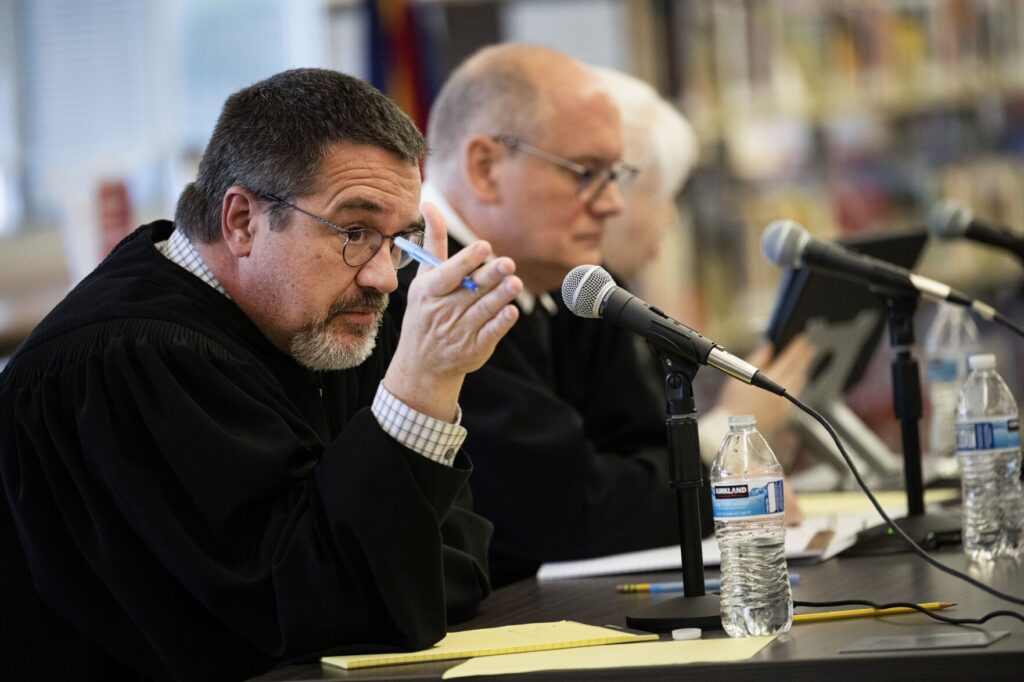
Appeals court reinstates Garfield County arson charge
Michael Karlik
michael.karlik@coloradopolitics.com
Updated 3 days ago
Colorado’s second-highest court reinstated a Garfield County defendant’s arson charge on Thursday, concluding a trial judge improperly credited a witness’s claim that she alone was responsible for starting the fire. A sheriff’s deputy responded to a brush fire near Parachute...
Federal judges rebuke ex-Colorado judicial discipline director for conduct in lawsuit
Michael Karlik
michael.karlik@coloradopolitics.com
Updated 3 days ago
A pair of federal judges expressed a desire on Thursday to break the logjam on a lawsuit by Colorado’s former judicial discipline director against the state Supreme Court and related entities, while simultaneously showing little tolerance for the plaintiff’s scorched-earth...

Democratic bill would let recipients of ‘conversion therapy’ sue Colorado providers with no statute of limitations
Marissa Ventrelli
marissa.ventrelli@coloradopolitics.com
Updated 3 days ago
Colorado lawmakers have advanced a proposal that would allow people who underwent conversion therapy to sue licensed providers for damages, moving the measure forward on a party-line vote in the House Judiciary Committee. House Bill 1322, proposed by Democratic Reps....
Federal judge refuses to authorize immediate appeal in World Cup trafficking lawsuit
Michael Karlik
michael.karlik@coloradopolitics.com
Updated 4 days ago
A federal judge declined to authorize an immediate appeal last week of a prior decision allowing companies operating out of Colorado to be sued for allegedly participating in a human trafficking venture involving Filipino laborers who constructed facilities for the...
Federal judge considers second round of sanctions against ex-Colorado judicial discipline director
Michael Karlik
michael.karlik@coloradopolitics.com
Updated 4 days ago
A federal judge ordered Colorado’s former judicial discipline director on Tuesday to explain why she should not sanction him a second time for filing documents for improper purposes, such as harassment or delay. U.S. District Court Senior Judge Kathryn H....

Colorado justices agree to review insurance question that has divided federal judges
Michael Karlik
michael.karlik@coloradopolitics.com
Updated 4 days ago
The Colorado Supreme Court granted a federal judge’s request on Friday to address an issue that has produced conflicting answers in policyholders’ lawsuits against insurance companies over unpaid benefits. “Parties (and judges) regularly spend undue time and money fighting in...

Federal judge dismisses background screeners’ challenge to Colorado law
Michael Karlik
michael.karlik@coloradopolitics.com
Updated 16 hours ago
A federal judge dismissed a challenge on Friday to a portion of Colorado law that prohibits certain information from being included in consumer reports, in what seemed to be a conflict with federal law. Congress originally enacted the Fair Credit...