

Denver eases deadlines for large building energy reductions
Denver has postponed a deadline for large building owners to comply with a major energy reduction plan and also terminated compliance targets due in three years.
Denver’s Office of Climate Action, Sustainability and Resiliency announced the series of actions on Monday. First, the “Energize Denver” target for 2025 compliance was moved to 2026, while the 2027 compliance target was eliminated.
The 2030 final compliance target remains, but the city said that, if needed, buildings may establish an alternative timeline through the “Energize Denver” process.
Manufacturing, agricultural, and industrial (MAI) buildings in the MAI alternate compliance option will stay on the 2026/2030 timeline.
Denver allows these facilities to apply for an MAI designation. Owners can then choose a compliance pathway tailored to their operations.
Elizabeth Babcock, executive director of CASR, said the changes resulted from concerns voiced by the business community during feedback sessions.
“The city is working to make improvements to make Energize Denver more easily implementable,” said Babcock. “The proposed updates to the Energize Denver Building Performance Policy are still in review.”
Approved by the Denver City Council on Nov. 22, 2021, “Energize Denver” aims to reduce greenhouse gas emissions from buildings larger than 25,000 square feet by 80% by 2040. The city said commercial buildings are responsible for 49% of Denver’s greenhouse gas emissions.
“These progressive new building codes were the result of a strong collaboration between the city and the community,” said Mayor Michael B. Hancock in 2023. “Denver has spoken loud and clear that taking climate action is a top priority — codes like these will help get us to zero emissions by 2040.”
“Energize Denver” was among a string of measures approved at the state and local levels that sought to quickly transition away from fossil-fired energy. Supporters argued the transition — although they acknowledged it might be painful in the short term — positions Colorado for a more sustainable and energy-efficient future. They said it would help wean the country from dependence on foreign oil. Ultimately, they added, the transition toward green energy is good for the environment and people’s health.
Critics maintained the quick transition is failing to protect American consumers, particularly low-income residents, who already contend with soaring inflation, and that the singular focus on alternative energy is short-sighted.
The city has never released an estimate of the costs to building owners to meet the standards, although the ordinance provides avenues for financial assistance.
Buildings outside of Denver are not included in this postponement, but buildings in the city are still required to meet the state energy performance standards if they are larger than 50,000 square feet.
The Denver ordinance is similar to the Polis administration’s large building energy performance standards regulations that apply to more than 8,000 buildings statewide larger than 50,000 square feet.
That regulation went into effect September 6, 2021. It requires a 7% reduction in greenhouse gas emissions by 2026 and a 20% reduction by 2030.
The state, in its economic impact statement for Regulation 28, estimated the cost of compliance for some 8,000 buildings that fall under the regulation at $3.1 billion.
Both the state and Denver are being sued in federal court by developers claiming that both laws are unfair and costly.
The court challenges alleged that the ordinance effectively requires conversion from natural gas to electricity by setting impossible-to-meet energy savings targets and that this violates the federal Energy Policy and Conservation Act that reserves the setting of energy use standards for appliances, including furnaces, water heaters and stoves, to the federal government.
The complaint, filed on April 22, 2024, by four apartment, hotel, and construction trade organizations, argued that Congress “intended EPCA to preempt patchwork state or local laws that are unworkable, that undercut a coordinated national energy policy, that overlook the public’s need for reliable and resilient energy, and that deny consumer choice.”
According to the complaint, the standards set by Denver and the state are both impossible to achieve at any reasonable cost and are not mere energy usage requirements, as the state suggests.
Instead, the plaintiffs argued, the intent — and practical effect — of the regulations would be to set energy use standards so low that only full building electrification and the elimination of natural gas use can meet the standards.
The case, Colorado Apartment Association et al v. Ryan et al, is s being heard in U.S. District Court for the District of Colorado before judge Regina M. Rodriguez.


Costs explode for Colorado program covering pregnant women and children living in the U.S. illegally
Marianne Goodland
marianne.goodland@coloradopolitics.com
Updated 15 hours ago
A state program providing health care to pregnant women and children living in the country illegally is costing far more than lawmakers expected, with expenses nearly tripling in just a year and threatening to squeeze Colorado’s budget amid a $1...
Costs explode for Colorado program covering pregnant women and children living in the U.S. illegally
Marianne Goodland
marianne.goodland@coloradopolitics.com
Updated 15 hours ago
A state program providing health care to pregnant women and children living in the country illegally is costing far more than lawmakers expected, with expenses nearly tripling in just a year and threatening to squeeze Colorado’s budget amid a $1...
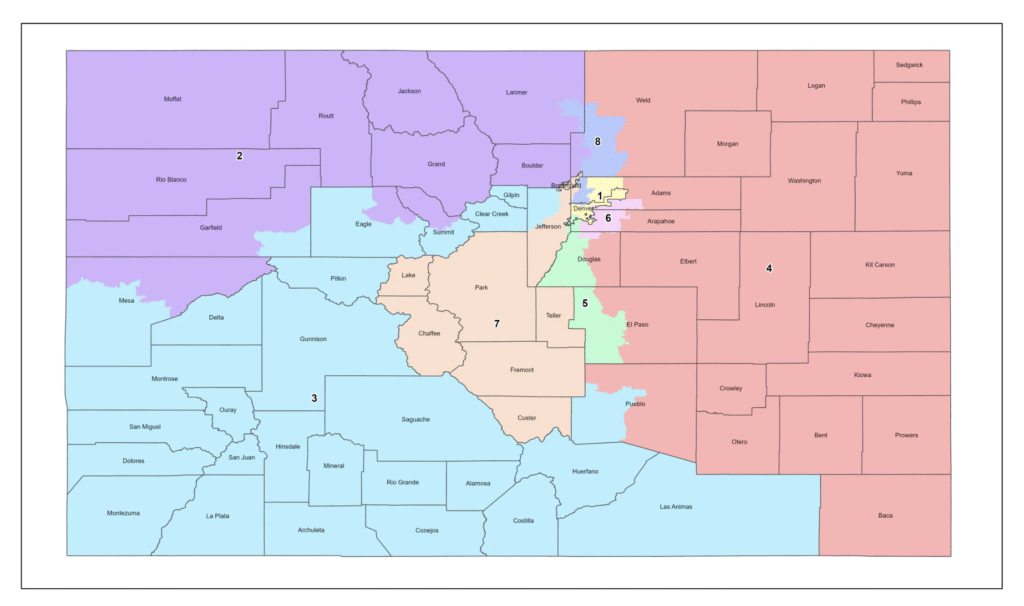
Colorado Title Board advances competing redistricting proposals and revised Pinnacol measure as April ballot deadline nears
Marianne Goodland
marianne.goodland@coloradopolitics.com
Updated 16 hours ago
With just two meetings left before an April 15 deadline, the state’s Title Board on Wednesday pushed through a slate of ballot measures — including a revised proposal to privatize Pinnacol Assurance and dueling plans to redraw Colorado’s congressional map...
SAVE America Act showdown relished by GOP and Democrats alike
Ramsey Touchberry, Washington Examiner
ramsey.touchberry.washington.examiner@gazetteedit.wpenginepowered.com
Updated 17 hours ago
Both political parties have found rare agreement in a divided Washington, convinced that the GOP’s federal voter ID and election bill is a slam-dunk messaging opportunity. But that’s where the bipartisanship quickly ends. The two sides are diametrically opposed over...

Senate panel advances bill to tighten Colorado sports betting rules amid youth addiction concerns
Marissa Ventrelli
marissa.ventrelli@coloradopolitics.com
Updated 16 hours ago
A divided Senate Finance Committee on Tuesday narrowly advanced a bill to impose new restrictions on Colorado’s booming sports betting industry, as lawmakers cited rising concerns about youth gambling and addiction while operators warned the changes could drive bettors to...

Federal judge green-lights trial against Denver officer over race-based enforcement
Michael Karlik
michael.karlik@coloradopolitics.com
Updated 18 hours ago
A federal judge green-lit a jury trial last week on a man’s claim that a Denver police officer engaged in racially selective enforcement of the law by arresting him for video recording at a police station, while not arresting a...

Federal judge says 8 years in solitary confinement not grounds to reduce man’s sentence
Michael Karlik
michael.karlik@coloradopolitics.com
Updated 18 hours ago
A federal judge concluded earlier this month that a man’s eight years allegedly spent in solitary confinement did not justify granting his request for a sentence reduction. However, U.S. District Court Senior Judge William J. Martínez signaled his willingness to...

Democrat Matt Cavanaugh ends campaign in Colorado’s 5th CD, says petition firm came up short
Ernest Luning
ernest.luning@coloradopolitics.com
Updated 15 hours ago
Democratic congressional candidate Matt Cavanaugh said Wednesday that he was ending his bid to challenge Republican U.S. Rep. Jeff Crank in Colorado’s 5th District because the firm his campaign hired to gather petition signatures failed to deliver. Cavanaugh, an Army...

Colorado voters to decide whether to ban gender surgeries for minors
Marissa Ventrelli
marissa.ventrelli@coloradopolitics.com
Updated 13 hours ago
Colorado voters will decide this November whether to prohibit gender surgeries for minors and bar public funding or insurance coverage for procedures that alter children’s biological sex characteristics. The measure qualified for the ballot amid a push by the federal...

Democrats want to bar use of consumer data to set Colorado prices, employee wages
Marissa Ventrelli
marissa.ventrelli@coloradopolitics.com
Updated 16 hours ago
A closely divided House committee advanced a bill aimed at curbing the use of personal data to set individualized prices and wages, reviving a proposal that failed last year and setting up a broader debate over how far the state...