

Colorado court rules ethics commission can’t assert jurisdiction over local governments
A Denver district court judge has upheld a decision of the Colorado Court of Appeals regarding whether the state’s ethics commission can assert jurisdiction over local governments that have their own ethics code.
The decision could end an eight-year fight over ethics complaints filed against the mayor of Glendale, the origin of the city’s challenge to the ethics commission’s claims of jurisdiction.
It could also end the ethics commission’s decisions to assert jurisdiction over home rule governments on ethics.
Under subsection 7 of the state ethics law, a constitutional amendment adopted by voters in 2006, “any county or municipality may adopt ordinances or charter provisions with respect to ethics matters that are more stringent than any of the provisions contained in this article. The requirements of this article shall not apply to home rule counties or home rule municipalities that have adopted charters, ordinances, or resolutions that address the matters covered by this article.”
The ethics commission, however, has claimed jurisdiction multiple times when it believes the ethics codes adopted by counties or municipalities, including those with home rule authority, don’t pass muster.
That’s been at the heart of two ethics complaints filed against Glendale Mayor Mike Dunafon in 2016 and 2017, which date back to meetings by the Glendale City Council in February 2015. Two complaints were also filed against a Glendale city council member, and they were later dismissed.
In October, the commission ruled that Dunafon had violated the state ethics law but did not assess any fines for that violation.
The commission also claimed jurisdiction in a complaint filed against a Weld County commissioner in 2018 and in a complaint filed this year against a member of the Durango City Council. However, in the latter case, the IEC would have the authority to investigate since the city’s ethics code does not apply to city council members.
Both Weld County and the city of Durango have home-rule authority. That’s when local governments with that authority “are not required to follow state statutes in matters of local and municipal concern and therefore enjoy freedom from state interference regarding local and municipal matters,” according to the Colorado Municipal League.
In her ruling, Denver District Court Judge Jill D. Dorancy wrote, “There is no authority for the IEC to hold concurrent jurisdiction with the municipality so long as the municipality has addressed the issue over which the IEC was created.” She noted that for the ethics commission to assert that jurisdiction would render subsection 7 “superfluous.”
The lawsuit, City of Glendale vs. State Ethics Commission, was originally filed in 2020. The Colorado Municipal League and Colorado Counties Inc. filed friend-of-the-court briefs supporting Glendale’s position.
in the 2020 filing, Glendale disputed the IEC’s jurisdiction, claiming it had established its own code of ethics that would make it exempt from the IEC. But the IEC countered the city’s code of ethics didn’t meet the “proper requirements” and would not be exempt.
Dorancy noted Glendale’s ethics code contained a gift ban, a penalty provision or discipline process, and an independent decisionmaker, outside of city council, to handle complaints.
In 2023, the ethics commission said the Glendale code was insufficient because it lacked a complaint and investigative process in its code.
Dorancy sided with Glendale, stating its ethics code met the requirements under the state ethics amendment. At the heart of her ruling are three words in subsection 7: “Address the matters.” Dorancy wrote that the state Supreme Court or state Court of Appeals had not defined the term as it applies to home-rule cities. “The Court finds that the phrase ‘address the matters’ is susceptible to multiple meanings and is thus ambiguous.”
The judge also rejected an IEC claim that it has the authority to resolve ethics complaints, “regardless of whether the municipality is exempt” under Article 29 and even if the municipality has a process for resolving them.
Colorado case law regarding a home rule municipality’s authority “is well settled,” Dorancy wrote. “If the home rule city’s regulation conflicts with the state statute, the home rule enactment will control in matters of purely local concern.” The ethical duties of an elected official or employee falls under a city’s home rule charter, and hence deprives the IEC of jurisdiction, she wrote.
“This decision should once and for all answer the question for the IEC,” which has asserted its authority over home rule municipalities, said Kevin Bommer, executive director of the Colorado Municipal League. He told Colorado Politics that Glendale’s charter ordinances address all the matters covered by Amendment 41, and the city can decide how to address those matters.
Equally important, home-rule municipalities have exclusive authority over ethics. The ethics commission doesn’t get to decide whether or not an ethics code meets some standard. The court was very clear on that, he added.
Bommer noted that this has gone on for a long time, “and it shouldn’t take this long for plain language on an otherwise confusing amendment to be misconstrued for this long. Amendment 41 was clear, and I’m glad the courts have finally acknowledged that.”
Colorado Counties, Inc.’s Executive Director, Kelly Flenniken, told Colorado Politics, “I appreciate the clarity that comes from the court on this issue as it certainly speaks to local control and underscores the powers home rule municipalities and counties have.”
The commission had not met to review the decision formally. Earlier this year, they chose not to appeal the Colorado Court of Appeals’ decision to the state Supreme Court.
Dunafon did not return a request for comment. In October, his attorney, Josh Weiss of Brownstein, Hyatt, Farber & Schreck, told Colorado Politics that Dunafon plans to appeal the ethics commission’s decision to the Denver District Court.
According to the Department of Law, legal expenses for the ethics commission lawsuit were $152,029 between 2018 and 2022. Through 2023, Glendale had paid over $2 million to litigate the case for Dunafon and the city.


Pastors Scott Bottoms, Victor Marx win spots in Colorado GOP’s gubernatorial primary at party assembly
Ernest Luning
ernest.luning@coloradopolitics.com
Updated 56 minutes ago
Two pastors from Colorado Springs qualified Saturday for the Republican gubernatorial primary ballot at the Colorado GOP’s state assembly in Pueblo in a party meeting that dragged late into the night. State Rep. Scott Bottoms, who is known as one...

Colorado House finishes work on 2026-27 state budget, finally
Marianne Goodland
marianne.goodland@coloradopolitics.com
Updated 7 hours ago
The House on Saturday, after four days of work – it usually takes two – finished up their work and voted on the $46.8 billion 2026-27 state budget, as contained in House Bill 1410 and 64 accompanying measures designed to...

Home rule has protected Colorado cities for over 125 years | Cronin and Loevy
Tom Cronin Bob Loevy
tom-cronin-bob-loevy@coloradopolitics.com
Updated 8 hours ago
Colorado is currently gripped by a political struggle between the governor plus the legislature in Denver and populous home-rule city governments, mainly on the Front Range, such as Colorado Springs. In the past few years, the legislature has been passing bills that applied to city government policies, which...
Colorado Politics calendar Apr. 13-19
Rachael Wright, Special to Colorado Politics
rachael.wright@coloradopolitics.com
Updated 3 days ago
CoPo’s weekly political calendar will help you find political and public-policy events throughout Colorado. It includes candidate and issue campaign events, public policy meetings, court hearings, state and local party conventions, assemblies, debates, rallies, parades, speaking engagements, traveling dignitary appearances,...
Minority Leader Peña argues against oil and gas bill | A LOOK BACK
Rachael Wright, Special to Colorado Politics
rachael.wright@coloradopolitics.com
Updated 3 days ago
Forty-Five Years Ago This Week: “The Colorado House of Representatives had just given its final approval to House Bill 81-1152, which created $9 million in tax relief to oil and gas companies. But this came “at the expense of local...

A longshot, upset bid and a few quick takes | SONDERMANN
By Eric Sondermann
by-eric-sondermann@coloradopolitics.com
Updated 3 days ago
It is hard to keep up these days. The flow of news often seems overwhelming. Let’s focus today on an unusual congressional race before moving on to a few quick, supplementary observations. Since its creation 54 years ago, Congressional District...
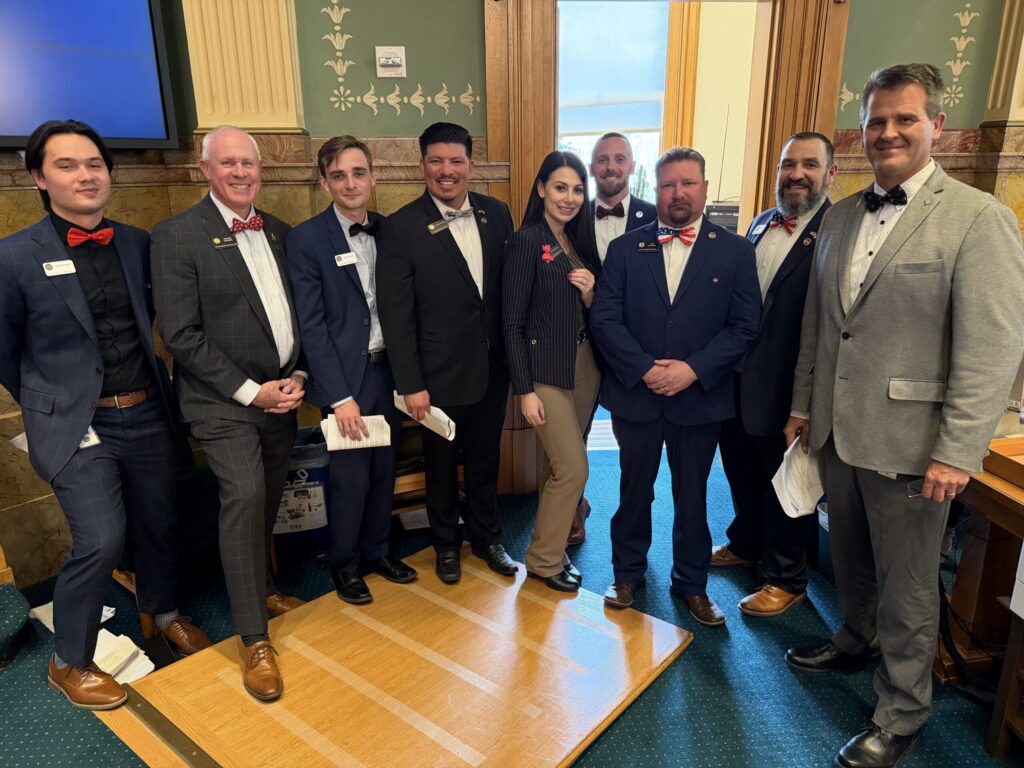
An “-“ends tribute in a week full of “odds” | Capitol M | Week of April 11, 2026
Marianne Goodland
marianne.goodland@coloradopolitics.com
Updated 2 days ago
The lighter side of the Capitol, usually… The decision to read the budget bill — the long bill, which spans 661 pages this year — put a damper on the House’s already less‑than‑festive mood. So Capitol M decided to catch...
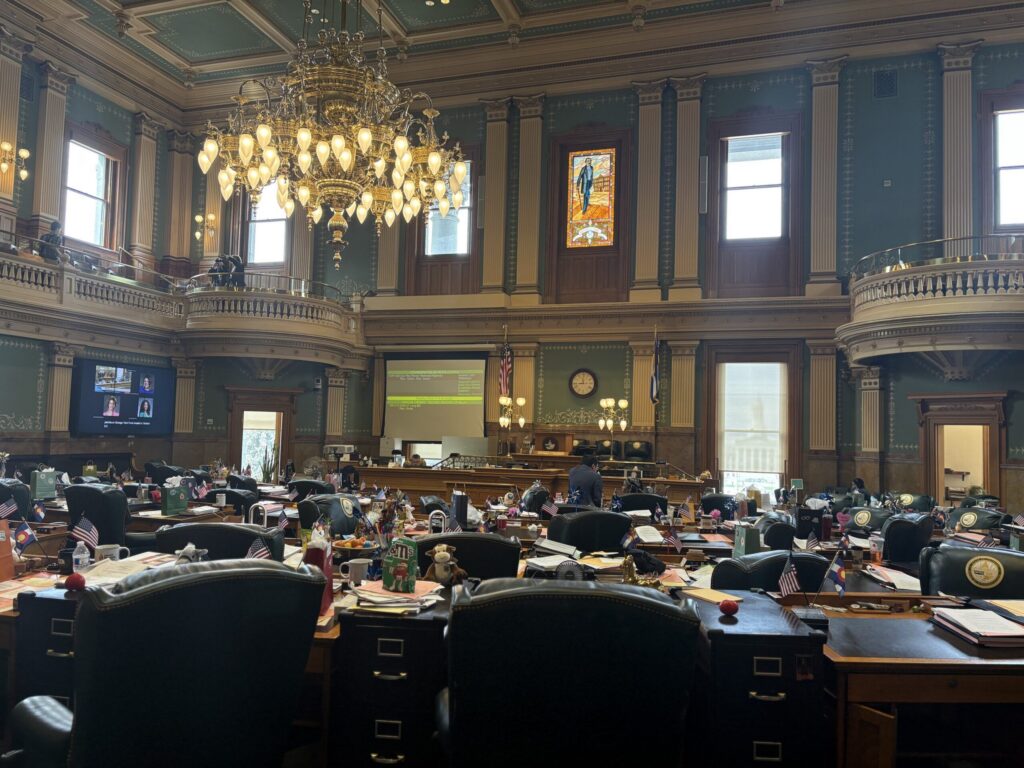
What you need to know about the Colorado legislature reading a 661-page bill aloud
Marianne Goodland
marianne.goodland@coloradopolitics.com
Updated 7 hours ago
A rarely used procedural move by a Republican legislator threw the Colorado House into an extended slowdown, after she invoked her right to have a nearly 700-page state budget bill read aloud in full. Once Rep. Brandi Bradley, R‑Roxborough Park,...
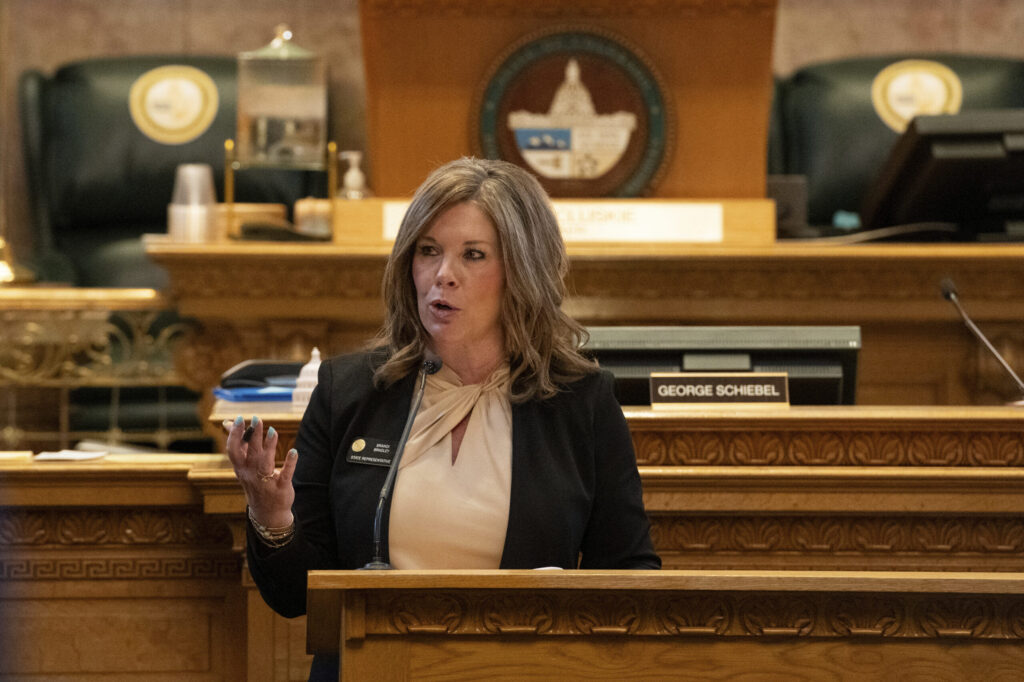
Literal reading of budget bill complicates Colorado legislators’ plans for GOP assembly
Marianne Goodland
marianne.goodland@coloradopolitics.com
Updated 13 hours ago
Republican Rep. Brandi Bradley’s decision to force the full reading of the state budget — called the “long bill” for its obvious length — has not only slowed House business to a crawl but also disrupted her colleagues’ plans for...
10th Circuit provides guidance on police searches of cloud-based data
Michael Karlik
michael.karlik@coloradopolitics.com
Updated 1 day ago
The Denver-based federal appeals court provided guidance to law enforcement agencies on Monday for ensuring that searches of cloud-based accounts comply with the Fourth Amendment’s requirements. A three-judge panel of the U.S. Court of Appeals for the 10th Circuit noted...