

Time to modernize Colorado’s labor laws for working families | OPINION

Stephanie Felix-Sowy
The recent national elections sent a clear message: voters want elected officials to address economic inequalities and uplift working families. Even in traditionally conservative states like Missouri, Alaska and Nebraska, voters approved higher minimum wages and guaranteed paid sick leave, showing strong support for policies that support everyday workers over billionaires and corporations. National Democrats faced consequences for failing to prioritize such progressive economic policies.
Here in Colorado, despite our state’s recent liberal reputation — with Democrats leading the governor’s office, state Senate and House — our outdated labor laws make us one of the “reddest” blue states when it comes to workers’ rights. Colorado’s restrictive laws hinder workers from forming strong unions and negotiating fair wages and safe working conditions. With Gallup reporting more than 70% of Americans support unions, it’s time to provide the economic boost Coloradans deserve by changing our outdated labor laws.
Stay up to speed: Sign up for daily opinion in your inbox Monday-Friday
Currently, Colorado law imposes significant barriers for workers seeking to unionize. Corporations often retaliate against employees organizing a union, and Colorado’s requirement of two separate elections makes it even harder for workers to negotiate fair terms. In most states, workers need only one simple majority vote to form a union. In Colorado, however, a second election with a higher threshold is required even to discuss “union security” — the concept that all workers pay their fair share of representation fees, with union membership remaining optional.
This second-election rule creates an additional hurdle, giving employers an opportunity to intimidate workers. It’s hard enough to organize the first worker election because employers — and their union-busting consultants — often bully and retaliate against workers. Take Colorado’s Starbucks employees as an example: after winning union recognition, they continue to struggle for a signed agreement, with several workers fired or threatened for their organizing efforts. A recent court decision ordered the reinstatement of 40 employees fired illegally by Starbucks, highlighting the real risks workers face under Colorado’s labor rules.
States with more straightforward labor laws, requiring only one election, show stronger unions and better conditions for working people. Union workers, on average, earn more than 10% more than nonunion workers in comparable roles, and union households enjoy nearly four times the median wealth of nonunion households. These unions set industry standards that benefit all workers, union and non-union alike. Studies confirm unions do not cause businesses to fail or leave the state; unionized companies, including major corporations like General Electric, Southwest Airlines and Disney, remain highly competitive and successful.
Beyond financial benefits, union security leads to safer and better-quality services. At WellPower, a Denver mental health organization, union security has allowed staff to work collaboratively with management to improve staffing practices, resulting in better client care and lower turnover. In industries across the board, union members are empowered to advocate for safety without fear of retaliation. For example, unionized construction and hospitality workers confidently flag unsafe worksite conditions and food safety concerns, reducing health risks for the public, as seen in the recent McDonald’s E. coli outbreak. Organized workplaces drive these improvements because employees can advocate openly for the common good without fearing retribution.
Colorado can support workers by modernizing its labor laws and eliminating the second-election requirement. Lawmakers should take action now, not only to protect workers’ rights but to make it easier for them to organize. When employees have the power to negotiate, they can improve their pay and work environment, reduce the wealth gap and contribute to a safer, stronger economy. By listening to voters nationwide, Colorado can set an example, empowering workers to stand up to billionaires, put more money into working families’ pockets and build a fairer future for all.
Stephanie Felix-Sowy is a leader of Colorado Worker Rights United, a coalition of labor unions and community groups building worker power through organizing and solidarity in Colorado. She’s also president of SEIU Local 105, uniting more than 8,000 janitors, health care, airport and security workers in Colorado and the mountain west.


Mum on his own replacement, Bennet disrespects voters | Dick Wadhams
Dick Wadhams
dick-wadhams@coloradopolitics.com
Updated 1 day ago
U.S. Sen. Michael Bennet is playing an arrogant game of hide-and-seek with Colorado voters as he seeks to abandon his Senate seat to become governor. Bennet insists that if he is elected governor in November, he will wait until he...

What kind of energy independence did we pay for? | Miller Hudson
Miller Hudson
miller-hudson@coloradopolitics.com
Updated 1 day ago
It was during the summer of 1972 AT&T published an internal solicitation for installation and repair supervisors with “inner-city” experience to transfer to Mountain Bell. The catch was an applicant’s readiness to work 10 hours a day, six days a...

Those who cannot live without wild things | Rachel Gabel
Rachel Gabel
rachel-gabel@coloradopolitics.com
Updated 1 day ago
Aldo Leopold wrote in his Sand County Almanac, “There are some who can live without wild things and some who cannot.” The collection of essays first published in 1949 was accepted by a publishing house after a steady stream of...

Thank God for Wyoming — the un-Colorado | Jon Caldara
Jon Caldara
jon-caldara@coloradopolitics.com
Updated 1 day ago
Years ago, I interviewed a Canadian health-care broker whose job was helping his countrymen escape their own failing system. When their “free” health care turned into “free to wait until you die,” he’d save his clients by routing them to...
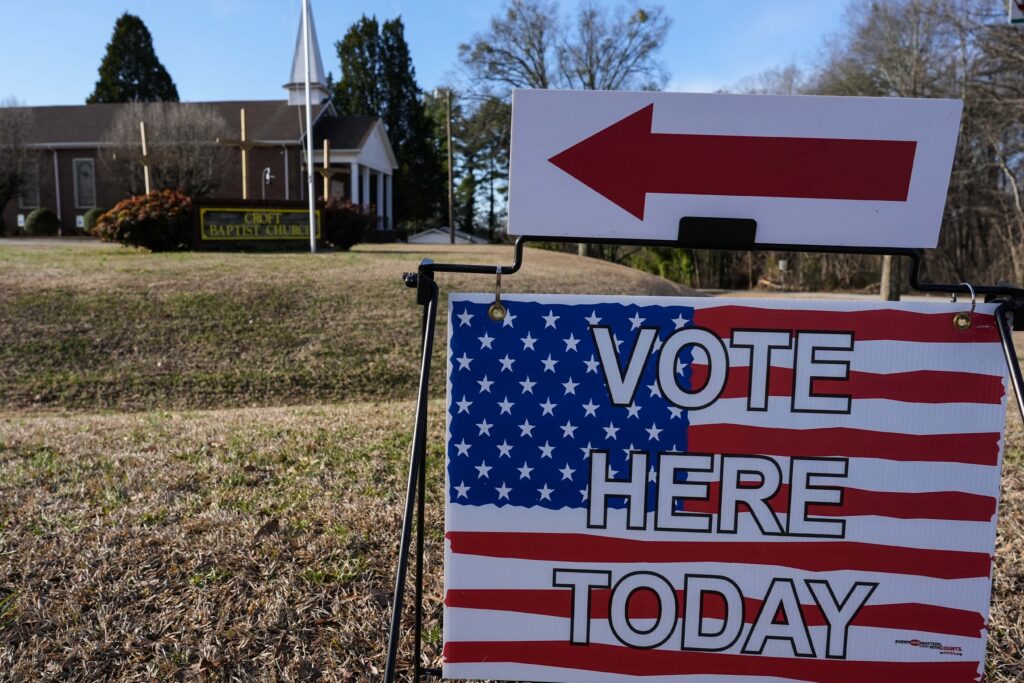
It’s time to let unaffiliated voters caucus | Vince Bzdek
Vince Bzdek
vince.bzdek@gazette.com
Updated 2 days ago
There’s no getting around it: Colorado’s 3,000 county caucuses, which just wrapped up recently, left half the electorate out in the cold. Since unaffiliated voters now make up 51% of all Colorado voters, a majority of Colorado electors are barred...
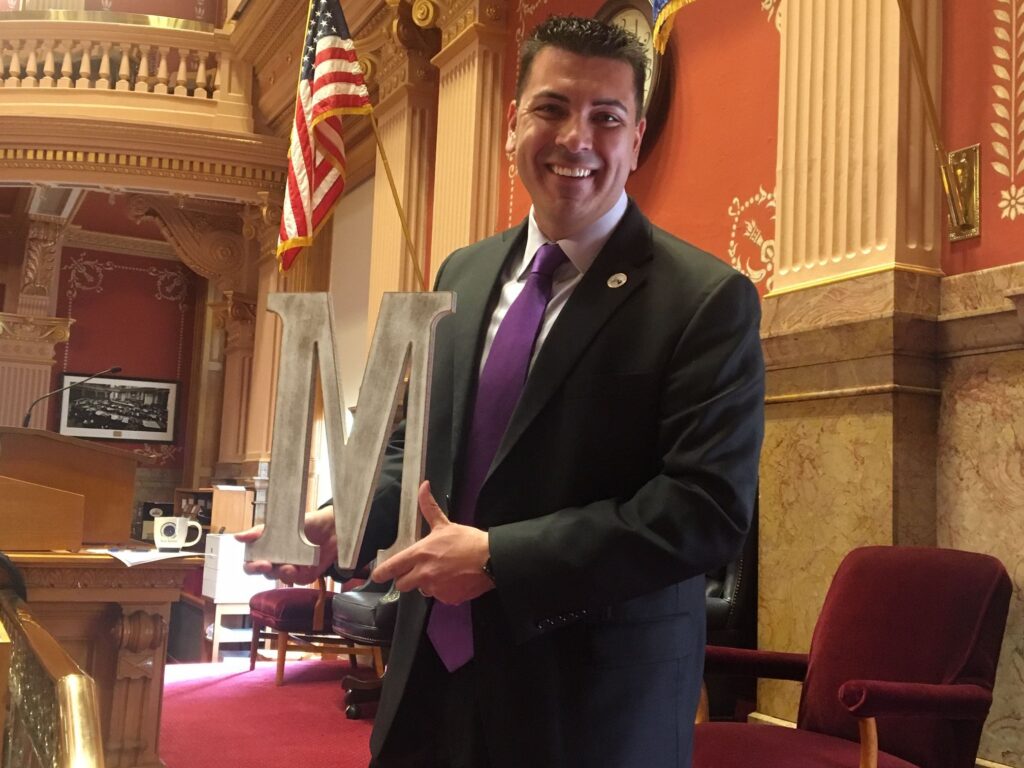
A Mile High, again: Capitol M | Week of March 21, 2026
Marianne Goodland
marianne.goodland@coloradopolitics.com
Updated 4 days ago
The lighter side of the Capitol, usually…. Local Journalism Day, except they forgot their very own local journalists. The state Senate on Thursday, March 19, passed a resolution recognizing Local Journalism Day. Everyone voted for it, which is good, because...

The insular bubble of caucuses and assemblies | SONDERMANN
Eric Sondermann
eric-sondermann@coloradopolitics.com
Updated 3 days ago
Nearly 30 years ago, then-Federal Reserve Chairman Alan Greenspan coined the term “irrational exuberance” to describe the overheated stock market. That descriptive phrase could also apply to much of the political realm. The hype in politics often grossly exceeds the...

Set appropriate state guidelines for critical surveillance technology | OPINION
Colorado Politics
colorado-politics@coloradopolitics.com
Updated 3 days ago
I admit it: I’m worried. I’m hearing a lot about surveillance in the public arena. I hear cameras are capturing my car’s license plate wherever I drive, my face as I go in and out of stores and health facilities,...

Puppy trafficking bill promotes inhumane breeding | OPINION
Colorado Politics
colorado-politics@coloradopolitics.com
Updated 3 days ago
By Patti Strand When Justice Thurgood Marshall wrote “The Constitution does not prohibit legislatures from enacting stupid laws,” he wasn’t wrong. He was referring to a political process sometimes ill-equipped to deal with complex issues that require subject-matter knowledge and a...

Penny wise but foolish by pounds | Paula Noonan
Paula Noonan
paula-noonan@coloradopolitics.com
Updated 4 days ago
Leadership of Colorado’s General Assembly introduced the Fiscal Year 2026-2027 Legislative Appropriation bill, HB26-1333, at $75.72 million. That will be the budget to run the state legislature next year. About $74 million comes out of the general fund and the...