

Lobbyists needed stagehands for ‘Hollywood for ugly people’ politics | HUDSON

Miller Hudson
I acknowledge Democrats have been pummeled of late for their identity politics. Therefore, I hesitate to rush to the defense of another oft maligned group — legislative lobbyists. At a time of collapsing public confidence in our governing institutions — when public approval of U.S. Congress and state legislatures has plummeted into the low teens — I realize lobbyists are viewed as part and parcel of the “scum and vermin” so detested by our returning president. They earn no better respect from progressives. The prevailing perception is lobbyists are pernicious greed heads, intent on corruptly squeezing money from the public purse together with a shameless propensity for sharing ethical behavior with the world’s oldest profession. Nonetheless, if politics is truly “Hollywood for ugly people,” then lobbyists are the stagehands.
There is, without question, a fraction of lobbyists who market their well-honed skills to the highest bidder, regardless of purpose, leading to the head spinning instance of a well-known Democrat, Wally Stealey, representing the tobacco industry against long-postponed taxation for the health costs attributable to cigarettes. Republican Freda Poundstone also could be found carrying water for casino operators and attempting to overturn Hollywood’s “blind bidding” practices on the part of movie distributors. This latter effort failed when it was pointed out theater owners all viewed and then turned down John Travolta’s “Saturday Night Fever”, which proved a huge box office success the year it was released. These “hired gun” lobbyists argue that, at the right price, every cause is entitled to the best representation they can offer. This moral agnosticism makes them wealthy.
Stay up to speed: Sign up for daily opinion in your inbox Monday-Friday
During the 1980s and into the 1990s there were several bars along East Colfax where a legislator never received a bill — all tabs picked up weekly by lobbyists. Those were the well-lubricated bad old days. With the onset of term limits and “clean government” reforms, lobbying changed. Previously lobbyists could be separated between membership and leadership firms. The former would work the entire House and Senate on behalf of clients, while the latter established close relationships with long serving and powerful committee chairs and majority officers who could quietly poison or grease a piece of legislation. With the advent of term limits, which kicked in at the end of the century, it has been unusual for committee chairmanships to endure more than a single session. Julie McCluskie, re-elected as House Speaker last week, is only the second Democrat to serve twice, joining Andrew Romanoff, since 2000.
The perception lobbyists spend most of their time attempting to curry fiscal favors is no longer true. Lobbying has become far more often a defensive game — guarding against unintended or otherwise unanticipated consequences. With bi-annual turnover among freshmen members, it is lobbyists who provide them with institutional memory. What has worked, what has failed and whose oxen might be gored by a bright idea is best understood by those who have worked at the Capitol for decades. There are also more varieties of lobbyists today. Yes, most major industries are represented, but so are local government agencies and state administrative departments. Non-profits use specialized “public interest” shops. There is also a handful of Joint Budget Committee experts who monitor the appropriations process. Regulated industries also prowl the halls. It is these Capitol veterans who arrange for witness testimony and, more significantly, influence their clients’ campaign contributions come campaign season.
I mention all this because it is the opinion of this quasi-official cadre that has the best perspective on the competence of legislators. I’ve jokingly observed every legislative body, irrespective of partisan affiliation, can be roughly divided into thirds. One-third, again irrespective of party, works diligently to represent the interests of their voters as directed by their political philosophy. These are the work horses and compromisers. Another third is elected because of a single issue or two that burn deeply in their conscience. Such salience is usually related directly to a personal, family, employment or business experience. When you concur with their priority, they can usually be recruited as allies on your legislation. The final third is often too ignorant, too inebriated or too performative (show horses) to be relied upon, usually in thrall to the last member they spoke with. Lobbyists know which cohort members inhabit.
If you are curious to learn how your legislator is doing, it can be useful to query a few lobbyists. If you keep hearing a particular member is an utter jerk — they’re probably a jerk. Again, this tends to be irrespective of party. There are members on both the left and the right who refuse to meet with lobbyists as a matter of principle. On the left, it often is a form of virtue signaling — evidence their personal rectitude remains unsullied. On the right, it can come packaged as an arrogant or belligerent certitude — who requires advice or facts when he or she already comprehends everything? Either way, it’s a sure indicator of stupidity. None of us has all the answers. The more opinions you consider, the better the decisions you can make. A legislator beyond persuasion has abandoned reason for faith.
I don’t know Yadira Caraveo, who just lost her congressional seat after a single term, but I have been surprised by how much she is respected by congressional lobbyists. They appreciated her willingness to listen carefully and valued her insight, as a doctor, on health care issues. She will be missed. None of this is meant as criticism of her replacement. Gabe Evans survived a primary contest where his party chairman supported a rival. The fact he then successfully navigated a bitter, intra-party leadership rivalry — attending meetings held by each faction is commendable. His hesitation to embrace the mass deportation of immigrants holding jobs, paying taxes and complying with Colorado laws suggests he has a spine. It’s a shame political consultants persuaded this pair of genuinely worthy candidates to undertake such an ugly campaign, marred by nasty attack ads I suspect embarrassed them both.
Miller Hudson is a public affairs consultant and a former Colorado legislator.

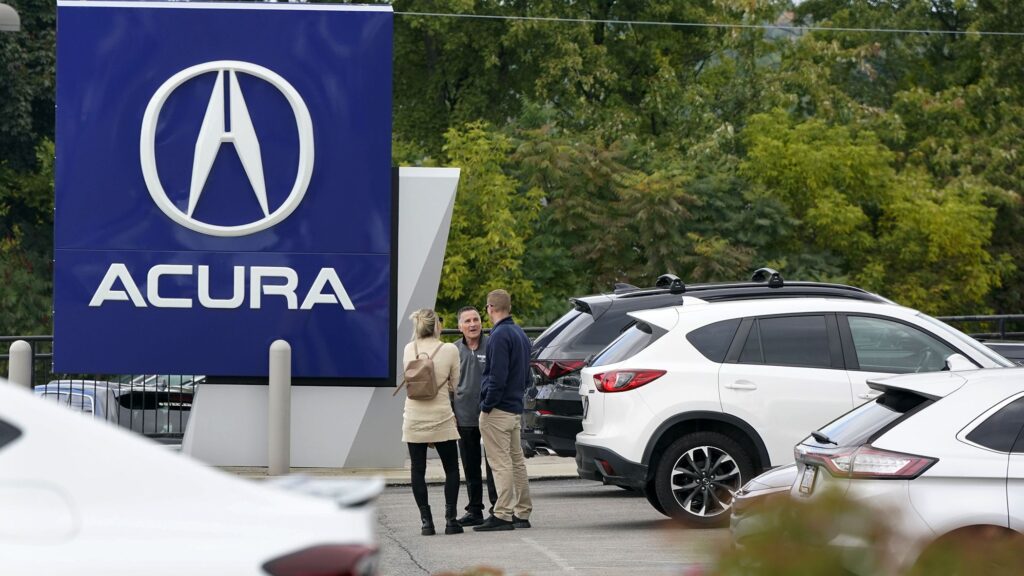
Vince Bzdek: Coloradans are fed up with the high price of cars
Vince Bzdek
vince.bzdek@gazette.com
Updated 12 hours ago
Car buyers in Colorado – and America – are fed up. Cars are too damn expensive. The average price of a new car broke the $50,000 barrier last fall, according to Kelley Blue Book stats. The Wall Street Journal recently...
Unsolicited advice to both Republicans and Democrats | SONDERMANN
Eric Sondermann
eric-sondermann@coloradopolitics.com
Updated 3 days ago
This even-numbered year will be one of political turnover in Colorado with the governor’s chair opening up, along with the other state executive offices (attorney general, state treasurer, and secretary of state), all due to term limits. A U.S. Senate...

Regime change, this time down Venezuela way | Kelly Sloan
Kelly Sloan
kelly-sloan@coloradopolitics.com
Updated 2 days ago
As luck and the calendar would have it, I penned my annual “state of the world” column two days before the grand fireworks in Caracas took place, and the column was subsequently published two days after. To prove I was...
Protect young people while respecting their data, privacy | OPINION
Bruce Brown
bruce-brown@coloradopolitics.com
Updated 2 days ago
After 40 years practicing law, first as a public defender in Los Angeles, then in private criminal defense, and serving eight years as the elected District Attorney for Colorado’s 5th Judicial District, I’ve developed a straightforward test for evaluating any...

Lack of accountability in state standardized testing system | NOONAN
Paula Noonan
paula-noonan@coloradopolitics.com
Updated 3 days ago
The General Assembly kicks up its heels this month along with the National Western Stock Show. Both should offer some exciting bull rides. Last General Assembly produced one interesting bill on K-12 public education. It’s HB25-1278 on the education accountability...
Don’t punish the stores playing by the rules | OPINION
Colorado Politics
colorado-politics@coloradopolitics.com
Updated 3 days ago
By Mary Szarmach My family has been in business in this state for decades serving some of the hardest working Coloradans. And, yes, they buy tobacco products, and, yes, my staff and I card them every single time. We know the law, we...
Colorado chose politics over public safety and now our communities pay the price | PODIUM
Colorado Politics
colorado-politics@coloradopolitics.com
Updated 4 days ago
By Chris Richardson and Max Brooks This week, federal authorities arrested Jose Barrera-Bolanos in Denver. He is an illegal immigrant who had already been convicted of sexually assaulting a child. That fact alone should stop every parent, grandparent and lawmaker...

Helping close Colorado school children’s literacy gaps | OPINION
Colorado Politics
colorado-politics@coloradopolitics.com
Updated 4 days ago
By Ellen Gelman Imagine being a high school student sitting in a room where everyone around you seems to understand texts that to you feel like a foreign language. Imagine knowing you’re smart, knowing you have ideas worth sharing, but...

Do Coloradans really care about reproductive health? | OPINION
By Tom Perille
by-tom-perille@gazette.com
Updated 5 days ago
Colorado Amendment 79 passed more than one year ago. It ensured access to abortion at any time during pregnancy for any reason. Sixty-two percent of Coloradans who voted for the amendment and the 38% who opposed the amendment both sincerely believed...

Putting power back in the hands of the petty | BIDLACK
Hal Bidlack
hal-bidlack@coloradopolitics.com
Updated 5 days ago
If there is one thing I’m sure my kindly editor does not want right now is yet another column commenting on the recent events in Venezuela (Ed: correct!). You have likely heard all you want to hear about the extraction,...