

Jefferson County commissioner candidates | 2024 VOTER GUIDE
Editor’s note: Active voter registration numbers are current as of Sept. 25, 2024, according to the Colorado Secretary of State’s Office. The candidates’ responses have been edited for clarity and brevity.
Elected at large to four-year terms, members of the Jefferson County Board of County Commissioners serve as the governing body for one Colorado’s biggest counties. The board enacts policies, such as establishing property tax rates and adopting a budget.
Voter registration: Democrats: 115,532; Republicans:89,799; Unaffiliated: 207,391. Total active voters: 420,803
District 1
The district covers the northern portions of the county, including Arvada, Coal Creek Canyon and Westminster. These areas are primarily suburban and rural, with a mixture of residential communities, historic landmarks, and access to Colorado’s natural landscapes.

Jefferson County Commission District 1 candidate, Charlie Johnson
Charlie Johnson
Website: www.cjforjeffco.com
Education: Bachelor’s degree in Hospitality Management, East Stroudsburg University, Pennsylvania
What are the biggest issues facing your county and do you intend to solve them?
Jefferson County’s own taxpayers recently told us what’s most important to them and that included:
1. Fixing potholes: 71%
2. Road and bridge repair: 70%
3. Youth mental and behavioral health: 66%
4. Wildfire mitigation and flood response: 66%
5. Child nutrition: 62%
6. Addiction and mental health: 61%
7. Crime prevention: 61%
8. Home health for infants, new mothers: 57%
9. School resource officers: 55%
10. Housing and food assistance: 54%
11. Homelessness: 52%
12. Sheriff’s office: 49%
13. DA’s office: 27%
I want to use these research findings as a guide to redirect Jeffco’s spending and budgeting.
Being a sanctuary county is contributing to concerns with several of these issues:
-
Money is being spent on illegal immigration rather than road and bridge repair
-
Scarce affordable housing is going to illegal immigrants instead of our legal homeless residents
-
Illegal immigration is contributing to higher crime
Of course, I intend to solve these issues for taxpayers. Why else would I be running?
If elected, what is your top priority and how will you fund it?
I have not one but three top priorities
-
Ending spending policies in the county that contribute to inflation, including the high cost of illegal immigration, county spending on programs that do not have majority support and unnecessary regulation that slows development and improvement
-
Reducing crime by fully supporting all law enforcement in the county, including the Sheriff’s office, and enabling them to enforce laws
-
Defending Colorado’s Taxpayer Bill Of Rights (TABOR) to ensure government has guardrails and spends effectively
Following the compromise deal reached by the governor, lawmakers and two groups, how do you intend to deal with property taxes and county budgets in the future?
The state legislature only did this because they were forced to the table by conservative groups who brought common sense ballot issues. The new bill has too many loopholes; the fine print affords too many easy outs. It is, therefore, not a great long-term solution. We needed a better, long-term solution.
I am particularly concerned that while the state is providing some relief, Jefferson County is interested in taking back part of that relief by keeping county TABOR refunds indefinitely. It’s the “indefinitely” part that concerns me most about the county ballot issue.
We need a full budget review to prioritize essential services taxpayers identified in recent research. We need to eliminate programs not supported by taxpayers, and I’d like to see 1-2% cuts across all departments except Sheriff and roads/bridges. Taxpayers told us what’s important to them, now we need to find the courage to implement changes in support of their interests.

Jefferson County Commission District 1 candidate, Rachel Zenzinger
Rachel Zenzinger
Website: www.rachelforcolorado.com
Education: Bachelor’s and master’s degrees, Regis University,
What are the biggest issues facing your county and do you intend to solve them?
Jeffco faces several big issues but my top three are wildfire, affordable housing, and transportation and infrastructure. We cannot really “solve” the problem of wildfire, but here are some strategies to help mitigate: Partner, Plan, Prepare, and Prevent. First, Jeffco must remain involved with the Wildfire Commission where we are currently partnering with regional, state, and federal entities and benefiting from this collaborative planning effort. Second, we must continuously and rigorously update our Community Wildfire Protection Plan. Third, we need to proactively work with residents in the Wildland-Urban Interface to prepare for wildfires, such as creating defensible spaces. Lastly, we must regularly communicate with Jeffco residents to educate them about prevention and mitigation strategies to prevent wildfires from happening.
Second, we must focus on increasing our affordable housing options. Jeffco does not have a direct role regarding housing beyond administering state and federal funds for a variety of homeless, housing, economic development and infrastructure improvement initiatives. However, the availability and cost of housing has a major impact on the community, and the county should do more. We should strengthen Jeffco’s partnership with Foothills Regional Housing to build more housing. FRH is a collective effort between the Jefferson County Commissioners and a housing task force focused on the housing needs of low- and moderate-income households. Next, we must continue working with the Jeffco Housing Advocacy Steering Committee, a group tasked with developing and implementing strategies to increase affordable housing in Jeffco. We have already developed a “Blueprint” that will serve as a regional plan for increasing affordable middle-income housing. Lastly, Jeffco can be more aggressive in taking advantage of several new state affordable housing programs.
Third, we must address our aging transportation and infrastructure needs, including expanding broadband and renewable energy. To keep pace with growth and improve connectivity, I will seek out collaborative partnerships with local, state and federal agencies to secure more funding so that we may upgrade and expand our roads, bridges, and multimodal options. That includes improving conditions that allow cyclists and pedestrians to stay safe as well. Next, we can improve high-speed internet by increasing public-private partnerships, working with local utility companies, and streamlining county permitting processes. Lastly, we can increase renewable energy by integrating our goals into the county’s comprehensive plan and work with Jeffco EDC to attract green businesses.
If elected, what is your top priority and how will you fund it?
My top priority is to responsibly balance the county budget to live within the fiscal constraints of TABOR while also meeting the needs of our large, geographically diverse and highly populated county. One of the most critical duties of a county commissioner is to balance the county budget. Allocation of limited resources to a wide variety of county services requires a high level of expertise and finesse. Jefferson County is the fourth-most populous county in Colorado, which means the task of aligning the available revenue with the many needs of its citizens can be a challenge, but one that I am uniquely qualified to handle. I was the chair of the Colorado state legislature’s Joint Budget Committee, where I successfully balanced the $40 billion state budget for five years. I also provided five years of input into the Arvada city budget.
The outcome of the 1A measure will influence the urgency of this priority. If the revenue retention ballot measure does not pass, the county will be forced to cut $20 million (or 10%) from the General Fund. Not all county departments are supported by the General Fund, but the ones that are — the Sheriff, District Attorney, and Business, Information and Technology — seem important to me. Recently, the Colorado Health Foundation conducted a poll to better understand the priorities and attitudes of Coloradans on a range of important issues. Homelessness and affordable housing were top concerns, followed by drug overdoses and crime, then wildfires and natural disasters. If we had to cut 10% from the three departments above, the county would be hard pressed to make progress on the top concerns of Jeffco residents. Conversely, we could make huge positive progress toward improving public safety and protecting their homes from wildfire if we had the proper resources to do so. However, regardless of the outcome of 1A, I am exactly the person you want on the commission to exercise sound judgment when making tough budget decisions due to my experience.
Following the compromise deal reached by the governor, lawmakers and two groups, how do you intend to deal with property taxes and county budgets in the future?
The compromise bill was signed by the governor and is therefore the law of Colorado, so our only choice as a county is to follow the new provisions. The bill reduced the residential assessment rate and imposed a cap on the amount of year-over-year increase in property tax revenue that local governments and school districts can take in. While I believe capping the growth rate was necessary to respond to a dramatic increase in property taxes over the last two years, we needed to do it in a responsible way to not harm local governments. I believe the bill struck the right balance and I voted in favor of it.
For some counties and special districts, the forced reductions will pose a challenge in meeting their budgetary obligations. Jeffco’s position is unique, however, because unlike 62 of the 64 counties, we have a strict revenue cap and must refund approximately $20 million of revenue. Even though home values were up in Jeffco, we will not benefit significantly from the increased property tax values. This means the new provisions of HB24b-1001 will have a minimal impact on Jeffco. One key provision of the new property tax law that will be especially beneficial is the timeline. Rather than having to adjust to something new every year, we will finally have some certainty about the assessment rates for a minimum of six years, and we can plan and prepare our county budget accordingly.

Jefferson County Commission District 1 candidate, Eric Bodenstab
Eric Bodenstab
Website: www.ericforallofus.com
Education: Bachelor’s in Architecture, Williams College; Master’s in Structural engineering, University of Colorado Denver; Master’s in Buddhist Studies, Naropa University
What are the biggest issues facing your county and do you intend to solve them?
The biggest problem we are facing in the country, and the nation as a whole, is that we live in a flawed democracy. You can look at the Economist Intelligence Unit (EIU) report sponsored by the United states is ranked 29th and that’s probably too high — 94 countries in the world use some form of proportional representation or a hybrid version with multi-member districts, a single transferable vote and other methods to make sure everybody has a seat at the table. I want to bring democracy to more people in Jeffco. The only system that would allow it is not a first-past-the-post system. It is a proportional representation system. I’m interested in what 582,000 Jeffco residents want. The (Jeffco) voting population is about 470,000. I’m interested in what they want. There will not be a single wasted vote.
If elected, what is your top priority and how will you fund it?
The first step would be to expand the commission from three to five members and to put home rule on the ballot. I would also like to increase the size of the commission to 10 people proportionally elected, one big multi-member district in the urban area and one rural district, because they’re not represented at all on the board. No one on this commission lives in a rural area, and they are completely forgotten about.
Following the compromise deal reached by the governor, lawmakers and two groups, how do you intend to deal with property taxes and county budgets in the future?
We have too many metro districts that are already in place that was not addressed by the governor and was not, unfortunately, addressed by Sen. (Rachel) Zenzinger; it was addressed bleakly. There’s not enough transparency for homebuyers regarding metro districts. As pointed out, metro district taxes can exceed the mil levy of the county tax, and it goes straight to developers and a few people on a “paper tiger.” If we were to eliminate those, I’m certainly not in favor of approving any more (metro districts). It doesn’t change the ones that are already in existence; about 2,400 metro districts are in existence, and they grow at a rate of about 100 per year. They do allow for abusive practices by developers because they are the ones on these boards that are the recipients of the tax. And it’s not the county.
District 2
The district encompasses several cities and communities, including parts of Lakewood, Golden, and Morrison. This district also covers a variety of unincorporated areas and neighborhoods, such as parts of the Ken Caryl area. The district also includes areas with significant open spaces and parks, contributing to its focus on sustainability and smart development.

Jefferson County Commission District 2 candidate, Andy Kerr
Andy Kerr (incumbent)
Website: www.kerrforjeffco.com
Education: Bachelor’s degree in Geography; Master’s degree in Information and Learning Technologies, University of Colorado
What are the biggest issues facing your county and do you intend to solve them?
Balance. We need to have a balanced county budget, and we work closely with our finance and budget teams to achieve this. We need to balance our need to respond to the climate crisis with our ability to identify and fund solutions. Our need for affordable housing must be balanced with the limited land, water, and resources that we have. The key is to listen to our constituents and find balance.
If elected, what is your top priority and how will you fund it?
My top priority is to have a balanced budget that adequately funds our county services. While challenging, I know we can work with our constituents, municipalities, and non-profit partners while funding our service departments. Our critical services include public safety, transportation, sustainability, affordable housing, human services, and planning and zoning.
Following the compromise deal reached by the governor, lawmakers and two groups, how do you intend to deal with property taxes and county budgets in the future?
We need to determine how future cuts will impact critical services. With property taxes decreasing, the county will have fewer resources to address the critical services mentioned above. With state constitutional limits on future revenue, Jefferson County will do what we always have — have a robust conversation with our constituents on what constitutes their desired critical services & balance our budget.

Jefferson County Commission District 2 candidate, Natalie Menten
Natalie Menten
Website: www.nataliementen.com
Education: Transportation, small business management, accounting and auditing
What are the biggest issues facing your county and do you intend to solve them?
The biggest issue facing Jefferson County is the rising cost of living. For over two decades, my volunteer public policy work at both the state and local levels, including the county, has focused on one core goal: keeping more money in your pocket.
From eliminating grocery taxes to defending TABOR refunds, I’ve consistently worked to protect taxpayers. As a volunteer board director for the nonprofit TABOR Foundation, I’m committed to safeguarding the Taxpayer’s Bill of Rights (TABOR) and ensuring residents receive the refunds they deserve. I’ve also fought to protect property tax caps and have been deeply involved in the Colorado Property Tax Commission to prevent further financial strain on homeowners. Property tax caps are critical not just for homeowners, but also for renters and consumers, as these taxes often get passed on, driving up rent and the cost of goods.
Tackling this issue starts with replacing the current county commissioners who are determined to eliminate our tax protections. Their approach only increases the financial strain on residents. We need leadership that prioritizes taxpayer relief and government efficiency, not higher taxes.
Jefferson County, like many urban areas in Colorado, is struggling with rising crime. We face significant crime levels and underreporting, as many believe reporting incidents is pointless due to lenient penalties. Tackling this issue begins with addressing gaps in the state’s criminal code, which falls to the state legislature. Counties were created to be the middleman between local residents and state government. That’s why a key part of the commissioner’s role is to act as a direct line to the state capitol, ensuring Jefferson County’s concerns are heard. This spares the average working person from having to track hundreds of bills that are rapidly — and sometimes irresponsibly — passed during the brief four-month legislative session. I have spent significant time at the Capitol during the legislative session over the past several years, and if elected as county commissioner, I will do so even more.
In Colorado’s arid climate, water infrastructure is increasingly strained by rapid population growth and housing booms. This issue is further exacerbated by heavy-handed state mandates, like those introduced in House Bill 24-1313 and House Bill 24-1175, which require high-density housing as a condition for returning tax revenue to local communities and expand government-managed, taxpayer-funded housing projects. These laws use financial pressure to force local governments into compliance, effectively overriding local control and community preferences in zoning decisions. Such overreaching state laws must be challenged to restore local zoning authority. I’ve spent significant time volunteering at the state capitol to fight these mandates. If elected county commissioner, I will continue advocating against these heavy-handed burdensome state policies.
If elected, what is your top priority and how will you fund it?
After being elected, I plan to collaborate on implementing a Property Tax Volunteer Credit program in Jefferson County. Established in 1995 under Colorado law (CRS 39-3.7-101), this program allows volunteers to reduce their property taxes through their service. Despite its long-standing existence and success in other counties, Jefferson County has yet to take part in this opportunity.
This tax credit program is already available in various school districts, counties, special districts, and municipalities across Colorado. For example, Thompson School District filled its volunteer slots for seniors in 2023. Counties such as Pueblo, Douglas, Boulder, Ouray, and San Miguel also offer this benefit.
The program taps into the wealth of knowledge, experience, and skills that volunteers — especially seniors — bring to the table, improving county services while providing a direct benefit to those who give their time. It’s a completely voluntary, self-funding program that reduces property tax bills for participants without requiring additional tax dollars. By implementing this in Jefferson County, we can both enhance community services and offer meaningful relief to property owners who volunteer their time.
Following the compromise deal reached by the governor, lawmakers and two groups, how do you intend to deal with property taxes and county budgets in the future?
Most importantly, we must keep the cap on property taxes in Jefferson County to prevent homeowners, renters, and consumers from facing even higher costs of living. The state legislature isn’t done tweaking property tax laws, and it’s critical that we have a tenacious defender for the community at the state capitol—exactly what a county commissioner should be in their full-time role. During this past session, I spent countless hours fighting to cap property taxes to ensure that property owners aren’t taxed out of their homes or businesses.
Next, we need to address the county budget by streamlining operations and eliminating the inefficiencies in siloed accounting processes. This issue is not only apparent to the public, but it’s a concern that staff have raised, yet the current county commissioners have failed to act on it.
Finally, while counties across Colorado rightfully argue that the state imposes poorly conceived laws that impact local taxing agency budgets, what often gets overlooked is that TABOR protects local governments from these state mandates. As a board director for the TABOR Foundation, I am fully equipped to vigorously oppose state mandates that don’t fit the needs of our community and that violate our state constitution. I will work relentlessly to ensure Jefferson County is protected from unnecessary state interference, advocating for policies that put the interests of our residents first.


Democracy is under attack, right here in Colorado | Jon Caldara
Jon Caldara
jon-caldara@coloradopolitics.com
Updated 1 day ago
Remember during COVID, when the people screaming the loudest for government-mandated jabs were the very same people chanting “my body, my choice” when it came to abortion — I mean, “women’s health care”? They’re also the folks who insist a...
8 exemplars to guide us into the new year | SONDERMANN
Eric Sondermann
eric-sondermann@coloradopolitics.com
Updated 4 days ago
It started as a one-off in my first year of writing this regular column. To ring in the new year back in the eventful year of 2020, I offered a shoutout to eight Coloradans who served as models of how...
Raids, pushback and TdA indictments defined Denver’s immigration story in 2025
Nico Brambila
nico.brambila@denvergazette.com
Updated 13 hours ago
The Trump administration’s push for a large-scale, deportation effort — built around campaign warnings about Tren de Aragua, the Venezuelan prison gang that established a foothold in Colorado — collided with the realities on the ground in Denver, where raids...
Denver’s budget deficit shaped 2025 news coverage
Deborah Grigsby
deborah.smith@denvergazette.com
Updated 13 hours ago
It was a year of big goals on a tight budget for the Mile High City, where Mayor Mike Johnston’s announcement of a $200 million city budget deficit dominated the news coverage. Facing a $50 million gap in its 2025...
Colorado podcaster who has called for political foes to be executed joins GOP primary for governor
Ernest Luning
ernest.luning@coloradopolitics.com
Updated 15 hours ago
Joe Oltmann, the conservative Colorado podcaster who has repeatedly called for Colorado’s top elected officials to be executed and whose uncorroborated claims that the 2020 election was rigged spawned multiple defamation lawsuits, declared his candidacy for the Republican nomination for...
‘The canary in the democracy mine is local journalism’ | Vince Bzdek
Vince Bzdek
vince.bzdek@gazette.com
Updated 19 hours ago
Colorado could do a lot more to save newspapers – and democracy – in rural areas By Vince Bzdek As another new year and another legislative session dawn for Colorado, it’s a good time to ask what the absolute most...
Colorado’s national correspondent recounts violent KKK march in D.C. | A LOOK BACK
Rachael Wright
rachael.wright@coloradopolitics.com
Updated 5 days ago
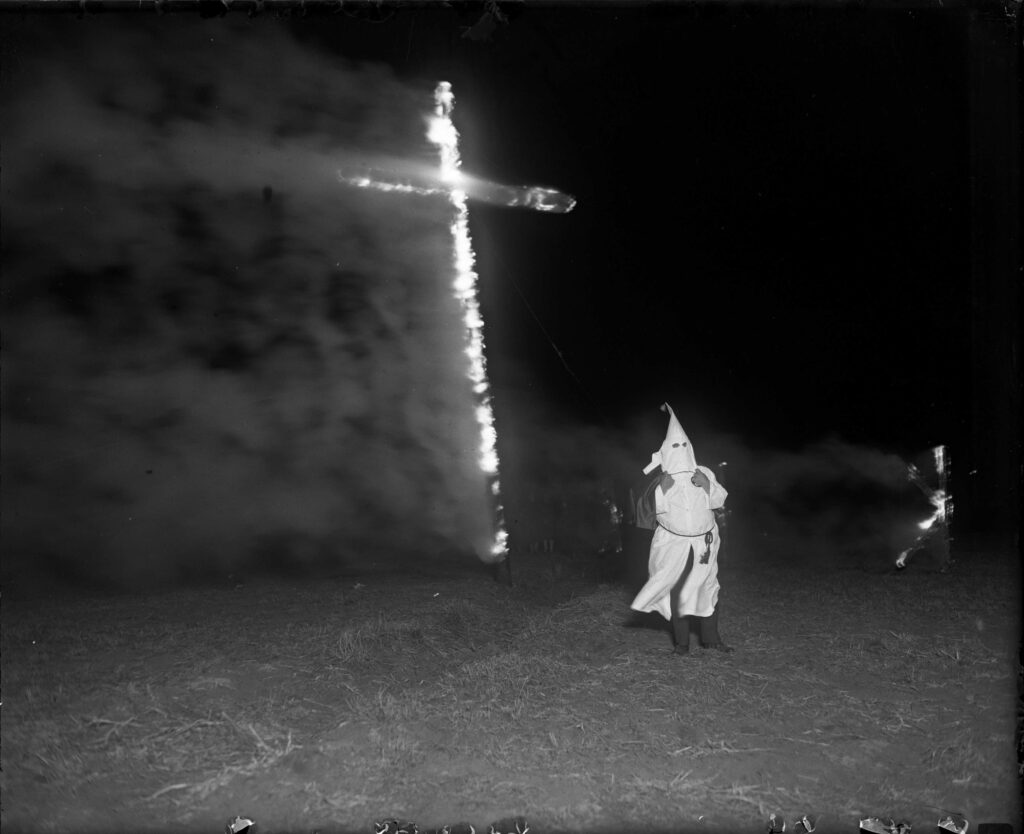
by Rachael Wright Thirty-Five Years Ago This Week: “I had forgotten about the Ku Klux Klan,” said Ann Downing Schmidt, The Colorado Statesman’s Washington, D.C., correspondent. In a commentary piece published in The Statesman, Schmidt described trying to make the ten-minute drive from...

2025 Unfiltered: Moments that marked Colorado’s decidedly off-kilter political year
Ernest Luning
ernest.luning@coloradopolitics.com
Updated 4 days ago
From the flurry of executive orders that ushered in President Donald Trump’s second term to a blizzard of lawsuits filed by the state’s Democratic officials, the state’s political year was marked by near-constant conflict between the GOP-controlled federal government and...
Colorado Politics in focus: the year’s top in-depth cover stories and series | 2025 unfiltered
Thelma Grimes
thelma.grimes@coloradopolitics.com
Updated 17 hours ago
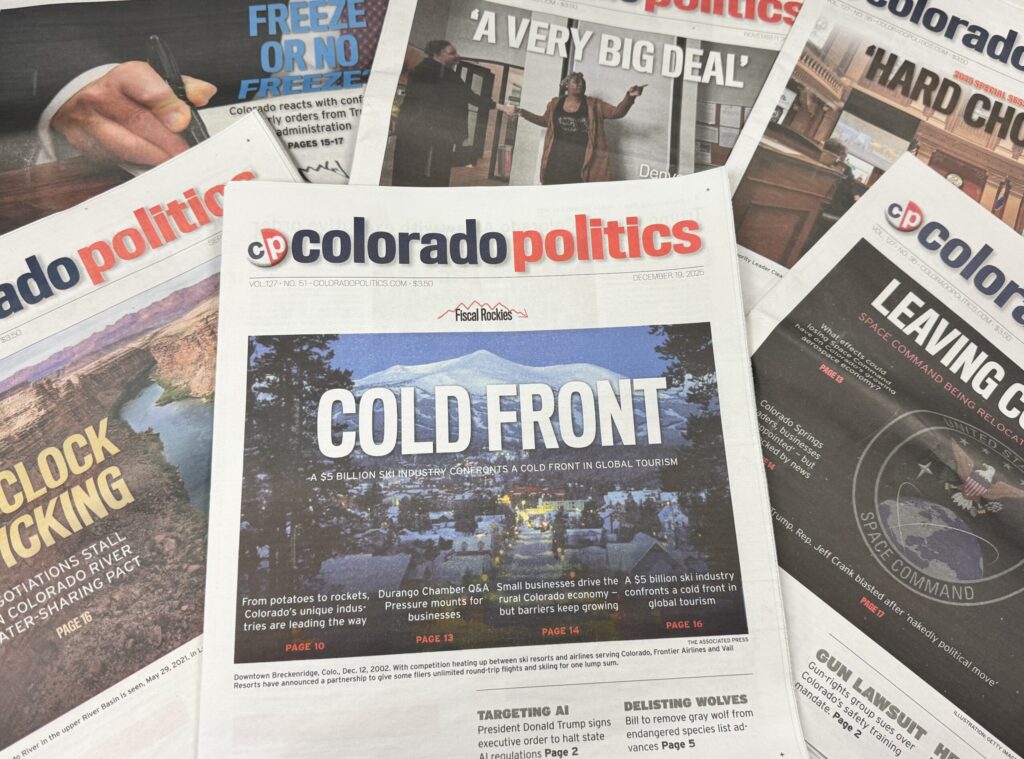
In 2025, Colorado Politics went beyond the daily headlines, delivering in-depth reporting on the major issues shaping the state — from congressional action to legislative proposals to the urban-rural divide and the future of Colorado’s economy. Here’s a look at...
2025 Unfiltered: Remembering those we lost in Colorado
Marianne Goodland
marianne.goodland@coloradopolitics.com
Updated 17 hours ago
Rod Bockenfeld Former Rep. Rod Bockenfeld, R-Watkins, died on Feb. 13, 2025, at his home in Watkins. He was 69. Bockenfeld served in the Colorado House from 2019 to 2025, including on the Joint Budget Committee. He battled cancer during...