

Why Colorado charter schools deserve fair share of local money | PODIUM

Rob Moulton

Cortney Crouch
As we approach the 2024 elections, voters across Colorado will once again face critical decisions about funding for our public schools. On many local ballots, you’ll see questions about local property tax increases, known as mill levy overrides (MLOs), or bond measures designed to provide additional financial support for education.
These measures can have a transformative effect on school districts, improving facilities, boosting teacher pay, and expanding student resources. However, there’s an essential aspect of these decisions that deserves more attention: the fair inclusion of public charter schools in the distribution of these funds.
Public charter schools are an integral part of our education system, serving thousands of families in diverse communities across the state. They are tuition-free public schools that operate under a charter — a contract — either directly with the local school district or through the Colorado Charter School Institute (CSI), the state charter-authorizing body.
Stay up to speed: Sign up for daily opinion in your inbox Monday-Friday
Despite being public schools, charter schools can face significant disparities in funding compared to traditional district-run schools. HB17-1375, enacted in 2017, required districts fairly include district-authorized charter schools in mill levy overrides going forward. And just last year, HB24-1394 finally funded the state Mill Levy Equalization Fund to ensure state-authorized charters under CSI also receive a commensurate level of additional funding.
Though the question of how and when charters must be included in MLOs has been largely settled by the state legislature, however, how and when charter schools are included in local bond questions remains highly varied. When approved by voters, these questions can provide large amounts of additional funding for capital improvements, facilities maintenance, school safety and other needs.
Unfortunately, many districts still opt to limit how charters access bond monies, and some still opt to exclude some or all charters entirely from these questions. As a result, too many charter schools still receive far less than their fair share of these locally approved funds simply because of the way they are authorized. This issue is exacerbated by the fact that, unlike district-run public schools, charters are already responsible for their own facilities costs — an enormous financial burden that can pose major challenges even for the most successful schools.
Excluding charter schools from receiving local funds, or providing them with less than their fair share, unfairly penalizes the families and students who choose these schools. Yet, these families and students are part of the same communities as their neighbors who choose district-run schools, and they are equally responsible for carrying (and ultimately repaying) the debt associated with bonds.
This needs to change.
What voters can do
When considering your vote on your local bond questions this November, think about the full range of public schools in your community — not just district-run schools. Here are key points to keep in mind:
Fairness in funding
Public charter schools, like traditional public schools, are part of our public education system. They should receive an equitable share of local dollars. Voting for measures that ensure charters are fairly included means supporting all students in your community.
Local benefits
When both mill levy and bond funds are fairly distributed, the entire community benefits. Charter schools often serve as centers of innovation, testing new teaching methods and models that can be shared across all schools. Investing in these schools ensures the benefits of local tax increases are fully realized across the public education spectrum.
Transparency and accountability
Some argue public charter schools are less accountable because they operate under their own independent boards with an increased level of autonomy. However, charter schools are public schools and are therefore subject to the same rigorous accountability standards as district-run schools, including academic performance, financial oversight and regular evaluations. They are also subject to renewal (or non-renewal) through their authorizers on a regular basis — usually every three to five years.
Inclusive ballot language
Pay close attention to how ballot language is worded. Advocating for inclusive ballot language that explicitly states charter schools will receive a fair share of the funds can help ensure equity. If your district’s proposal doesn’t mention charter schools, or if it is ambiguous about their inclusion, ask why before marking your ballot.
As you prepare to vote this election season, remember your vote on local funding questions will shape the future of education in your community. By advocating for fair funding for all public schools, including public charter schools, you can help create a more equitable education system that serves every student, regardless of the type of public school they attend.
Let’s ensure every child in Colorado has the resources they need to succeed. Fair funding isn’t just a matter of financial equity; it’s a commitment to the future of all our students.
Rob Moulton is founder and executive director and Cortney Crouch is board chair of the Education Alliance of Colorado, a nonprofit association representing 21 public schools of choice serving 34,000 students statewide.


Killing off the Regional Transportation District | Miller Hudson
Miller Hudson
miller-hudson@coloradopolitics.com
Updated 2 hours ago
This column is appearing the same day state Sen. Matt Ball (D) of Denver and his legislative co-sponsors unveil legislation implementing many of the recommendations advanced by last summer’s Regional Transportation District Accountability Committee. Although it isn’t readily apparent, they...

Green energy shouldn’t come at expense of Colorado farmers, ranchers feeding us | Rachel Gabel
Rachel Gabel
rachel-gabel@coloradopolitics.com
Updated 2 hours ago
In 2023, the Department of Energy released the National Interest Electric Transmission Corridors (NIETC) study identifying areas they speculate would experience transmission capacity constraints of congestion. The map identified more than 2 million acres or 24% of the state of...

Bill in state legislature would put large apartment projects in single-family neighborhoods | Cronin & Loevy
Tom Cronin Bob Loevy
tom-cronin-bob-loevy@coloradopolitics.com
Updated 2 hours ago
There is an old joke that goes something like this: “When the state legislature is in session, no person and their property are safe.” That is not a joke in the older, more traditional neighborhoods that surround the downtown regions...

Colorado hates its disabled citizens | Jon Caldara
Jon Caldara
jon-caldara@coloradopolitics.com
Updated 3 days ago
This is a selfish column. The legislature is about to hurt my disabled son. My son, Chance, has Down syndrome and a few years ago would have been labeled “retarded.” Then “developmentally delayed.” Now the hypersensitive prefer “intellectually disabled.” Whatever...
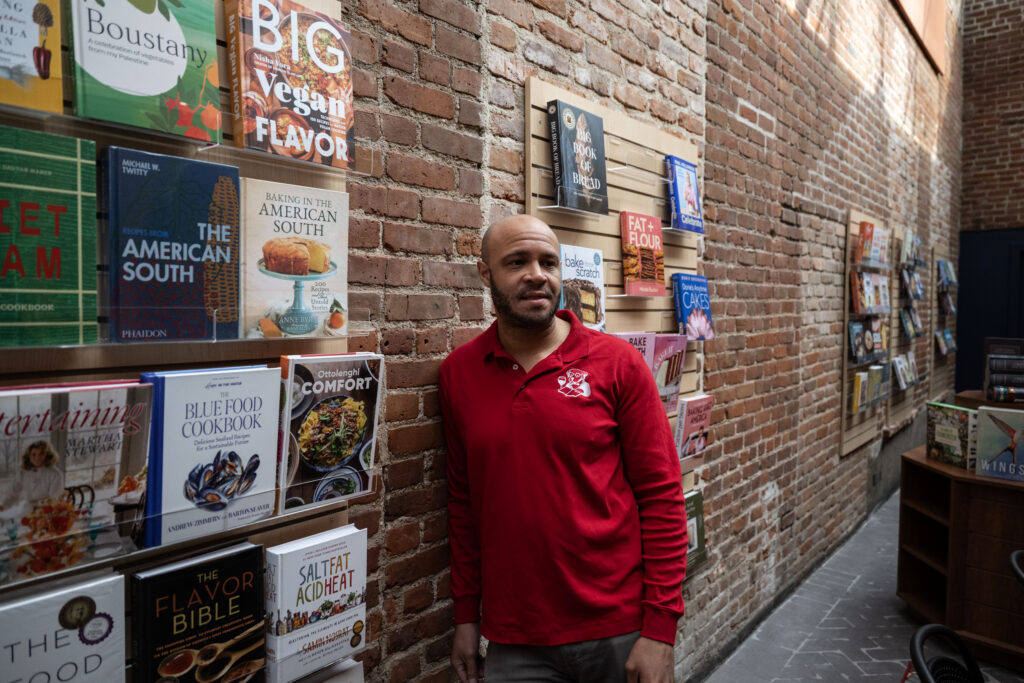
Kwame Spearman warrants plenty of criticism, not cancellation | SONDERMANN
By Eric Sondermann
by-eric-sondermann@coloradopolitics.com
Updated 4 days ago
All of us are flawed humans, some more so than others. This is the tale of Kwame Spearman who burst onto Denver’s business and political scene a handful of years back. His ride has taken a downhill trajectory. Within the...
From pause to progress — a better path on AI policy | OPINION
Colorado Politics
colorado-politics@coloradopolitics.com
Updated 3 days ago
By Brittany Morris Saunders and Loren Furman Last year, following the Special Legislative Session, we wrote in Colorado Politics that delaying Colorado’s AI Act was not a setback. It was an opportunity. We asked state leaders to pause, bring more...
Cutting Prop 123 would cost Colorado far more than it saves | OPINION
Colorado Politics
colorado-politics@coloradopolitics.com
Updated 3 days ago
By Luke Teater Colorado’s legislative budget writers are about to receive updated revenue forecasts and begin making final cuts to close a historic budget gap, and Proposition 123’s affordable housing financing tools are on the chopping block. But in their...
Colorado’s place in President Trump’s oil-and-gas approach | Paula Noonan
Paula Noonan
paula-noonan@coloradopolitics.com
Updated 4 days ago
Head spinning is the unwanted reality of today’s world. Let’s start at the international level. The wars in the Middle East since the 1950s have never ended. Though religion and ethnicity are factors, oil and gas access is always predominant...

Reject onerous ad limits in sports-betting bill | OPINION
Colorado Politics
colorado-politics@coloradopolitics.com
Updated 4 days ago
By Justin Sasso A dangerous precedent is potentially afoot in the Colorado state Senate right now, where a bill was recently introduced to restrict advertising for local broadcast media across Colorado. Senate Bill 26-131, seemingly designed to discourage Coloradans from participating...
Reform to Colorado’s grantmaking drives efficiency, strengthens state’s partnership with nonprofits | OPINION
Colorado Politics
colorado-politics@coloradopolitics.com
Updated 4 days ago
By Marco Dorado and Jack Murphy Colorado’s nonprofit sector is one of the most significant contributors to our state’s economic and civic life, with more than 14,000 registered nonprofit organizations supporting more than 262,000 jobs — approximately 10% of all...