

What’s next for Tina Peters?
On Thursday, former Mesa County Clerk and Recorder Tina Peters will find out how much, if any, time she will serve on her state criminal conviction for election tampering.
After a two week trial, Peters was found guilty on Aug. 12 on seven out of 10 charges, including four felonies: three counts of attempting to influence a public servant and one count of conspiracy to commit criminal impersonation. She was also convicted on three misdemeanors: first-degree official misconduct, violation of duty and failure to comply with an order from the Secretary of State.
She was acquitted of three other charges: an additional count of criminal impersonation, a charge of conspiracy to commit criminal impersonation and identity theft related to Gerald Woods.
The total sentence for the convictions could range from 10 to 20 years.
Peters was charged with three counts of attempting to influence a public servant, conspiracy to commit criminal impersonation, a second conspiracy charge that includes “cause liability,” identity theft, first degree official misconduct, violation of duty and failure to comply with requirements of the Secretary of State. The first six are felonies; the last four are misdemeanors.
The charges are all tied to a security breach for elections equipment at the Mesa County Clerk and Recorder’s office in May 2021. (See More Information box)
Her assistants, Brenda Knisley and Sandra Brown, both accepted plea deals in exchange for testimony against Peters.
But the sentencing on Thursday is not the end of Peters’ legal troubles.
She’s still under investigation from the FBI, a probe that started in 2021 with a series of search warrants issued by a federal grand jury. In addition to searching Peters’ home, the FBI also seized a cell phone from Mike Lindell, the CEO of MyPillow. According to Lindell, the grand jury subpoena sought the following:
- All records and information relating to damage to any Dominion computerized voting system, including any impairment to, or attempt to impair, the integrity or availability of data, a program, a system, or information
- All records and information relating to BIOS on any Dominion computerized voting system, including any modification to, or attempt to modify, a BIOS setting
- All records and information relating to the attachment of any peripheral to any Dominion computerized voting system, including any USB flash storage drive or other external storage media
- All records and information relating to the operation of any Optical Disc Drive on any Dominion computerized voting system, including the use or attempted use of CDs or DVDs to run software
That investigation is believed to be ongoing, although the FBI won’t confirm or deny it. The Department of Justice has not responded to a Freedom of Information Act request for the search warrants.
FBI raids home of Mesa County Clerk Tina Peters in election data breach investigation
Campaign finance and ethics complaints
Peters has also been hit with multiple campaign finance and ethics complaints related to the election tampering issue.
One year ago this week, a hearing was held on two campaign finance complaints filed by Scott Beilfuss of Grand Junction. The two were consolidated into one hearing.
The first complaint, filed in August 2021, alleged Peters accepted gifts that exceeded allowable limits and that she failed to report expenditures or contribution.
The gifts were flights paid for by Lindell and his MyPillow Foundation to fly Peters on a private plane to a cyber symposium in South Dakota in August 2021.
Under state law, Peters was given an opportunity to file the required reports. She hadn’t filed required reports since 2019 and did not take the opportunity to provide the reports on the more recent donations, which likely exceeded the state limit of $1,250.
In June, 2021, Peters began soliciting contributions for a reelection bid for 2022, but she failed to register a candidate committee or even file a candidate affidavit, according to an investigation by the Elections Division of the Secretary of State. Peters was tied to two websites: one for candidate contributions and another for soliciting donations for legal bills. She also said she was running for reelection on her Facebook page at that same time. The investigation did not report on the estimated cost of the flight nor any other costs contributed by Lindell for her attendance.
The second complaint, also filed by Beilfuss, was in September, 2021. That complaint was specifically tied to a “StandWithTina.org” website that solicited contributions for legal defense. As per the state’s limit of $65 on gifts, the complaint claimed she accepted gifts valued at more than $65, and also per the state’s ethics rules, did not have a way to prevent lobbyists from contributing.
Once Peters announced she would run for Secretary of State, the matter was referred to the Attorney General to serve as the complainant.
A two-day hearing that took place in November 2022 and January 2023. Administrative Law Judge Timothy L. Nemechek found Peters had violated the state’s campaign finance laws in failing to register an active campaign committee with the Colorado Secretary of State, as well as accepting contributions and making expenditures. Peters also declared her candidacy for reelection without filing a candidate affidavit, another violation of state law.
Peters’ defense claimed the Secretary of State did not have jurisdiction to bring the complaint, “as these were citizen complaints that were not referred to the proper enforcement authority.” Peters also disputed evidence that she was a candidate in June 2021, and said she did not accept contributions or make expenditures at that time.
Nemechek imposed a fine of $12,900 for the failure to register and failure to declare as a candidate. For accepting donations without a committee, Nemecheck imposed a fine of $2,500. That was on Sept. 29, 2023.
The complaint is still listed as open on the Secretary of State’s website. A spokesperson said the decision has been appealed to district court.
Peters also is facing an investigation on three ethics complaints that deal with some of the same issues.
The three complaints were filed by Anne Landman of Grand Junction.
The first was in August 2021, and dealt with the Lindell-sponsored cyber symposium. The complaint claimed Peters accepted thousands of dollars in services, travel, security and favors from Lindell.
Peters’ response, submitted by her attorney, Scott Gessler, asked that the proceedings be stayed based on a complaint dealing with the same subject filed with the Secretary of State. He also cited the pending criminal investigation by the Mesa County District Attorney. She denied the violations of the state’s ethics requirements.
The ethics commission granted Peters’ request to hold off on the complaint.
The second complaint, filed in January 2022, said Peters was operating a criminal legal defense fund in violation of the ethics law, specifically, a “violation of the public trust by attempting to realize personal financial gain through her public office.” Secondly, the complaint alleged she was operating the fund in violation of ethics commission guidelines on solicitations and acceptance of funds for defense in criminal actions. Those guidelines require public disclosure of all donations and that the fund cannot be administered by someone directly affiliated with Peters. Landman wrote that Peters was operating the fund in her capacity as an elected official and not as a private citizen.
Gessler asked that the complaint be dismissed, inferring the ethics commission guidance is not mandatory, and that disclosing donors could be dangerous to those contributors, given the nature of Peters’ situation.
The commission also put off the investigation on the complaint, an action they took in April 2024.
The third complaint got the same treatment — it was stayed, pending the resolution of the criminal proceedings.
Filed in May 2022, Landman alleged Peters had accepted an $800,000 contribution from Lindell, based on a statement by Lindell in Denver on April 5, 2022. By then, Peters had taken down the “StandWithTina.org” website and moved her fundraising to Lindell’s “Legal Offense Fund,” which is based in another state.
Lindell told 9News he had put in “3, 4, 5, maybe $800,000 of my own money” into Peters’ legal defense fund. Peters claimed she had no knowledge of Lindell’s contributions, despite numerous occasions when Peters and her allies had urged people to give to Lindell’s fund.
Gessler sought a dismissal of the complaint, based on the same defense posed in the second complaint.
The commission put off further action on the complaint, also in April 2024.
So where does that leave Peters?
In August, with the criminal trial concluded, the commission discussed whether it should further hold off on the complaints.
The commission’s attorney, Gina Cannan, said the body could interpret the stay to include sentencing, but she isn’t sure that would change the matter for their purposes.
Commissioner Cole Wist said Peters could appeal, and that he wanted to be “respectful” of that process. However, Cannan said the stay was not intended to last during the appeals process.
The commission then went into closed session to receive advice from Canan, and after that, asked the parties to submit briefs on whether the stay should be extended through the appeals process. Those briefs were due on September 13.
If the commission concluded that Peters violated the state ethics laws and rules, the fines could be the largest in state history by quite a bit.
In 2020, the commission fined former Gov. (now U.S. Sen.) John Hickenlooper $2,750, which represented twice the estimated cost for a limousine trip at the 2018 Bilderberg Meeting, which the commission determined exceeded the existing state gift limit of $59. He also accepted a private jet trip from MDC Holdings, owned by friend Larry Mizel, to the commissioning of the USS Colorado in Connecticut, also in 2018.
The commission’s fine structure is to penalize at twice the cost of the un-allowed expenditure. The same structure was used to impose a $1,514.88 fine on Gessler for a 2012 ethics violation while he was Secretary of State. Gessler had already reimbursed the state $1,278.90 for a state-paid trip to the Republican National Convention in 2012. Gessler had also “swept” a petty cash fund without providing receipts, a total of $117.99.
The fine was the $1,278.90, plus the $117.99 and an additional fine of $117.99. Gessler paid that fine in 2019, after challenging the complaint all the way to the U.S. Supreme Court, which refused to hear the case. It cost Colorado taxpayers more than $500,000 in legal fees for Gessler and the ethics commission.
Based on the commission’s precedent for fines, at twice the amount of the donations Peters accepted from Lindell, her fine could be at a minimum $1.6 million, not to mention fines related to the cost of services, travel, security and alleged favors from Lindell, plus the other contributions accepted on her behalf with both the StandWithTina.org website and the Lindell legal defense fund — none of which have ever been publicly disclosed.
9NEWS contributed to this report.


10th Circuit rules cognitively impaired man’s risk of lobotomy, mistreatment in Mexico not ‘torture’
Michael Karlik
michael.karlik@coloradopolitics.com
Updated 57 minutes ago
The Denver-based federal appeals court concluded last month that a man’s risk of mistreatment or forced lobotomy in his native Mexico did not amount to “torture” that should shield him from deportation. A three-judge panel of the U.S. Court of...
Colorado justices side with news organizations for disclosure of high-level child abuse data
Michael Karlik
michael.karlik@coloradopolitics.com
Updated 6 hours ago
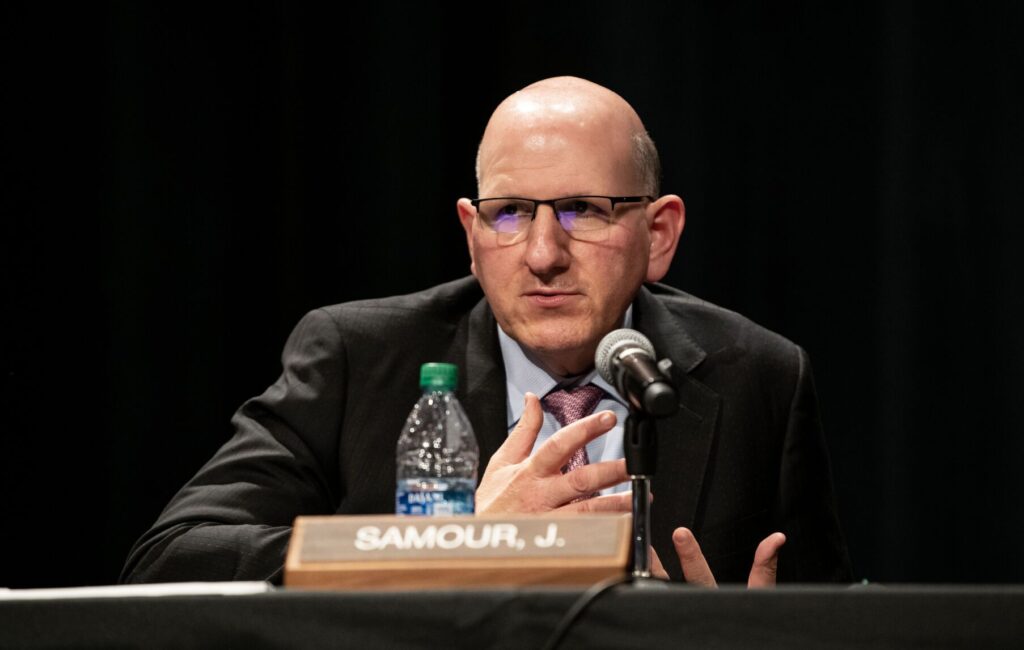
The Colorado Supreme Court ruled on Monday that the state must disclose the number of child abuse reports at individual group living facilities in response to an open records request, as the addresses are already in the public domain. The...
Divided Colorado Supreme Court finds Denver detective did not violate defendant’s Miranda rights
Michael Karlik
michael.karlik@coloradopolitics.com
Updated 57 minutes ago
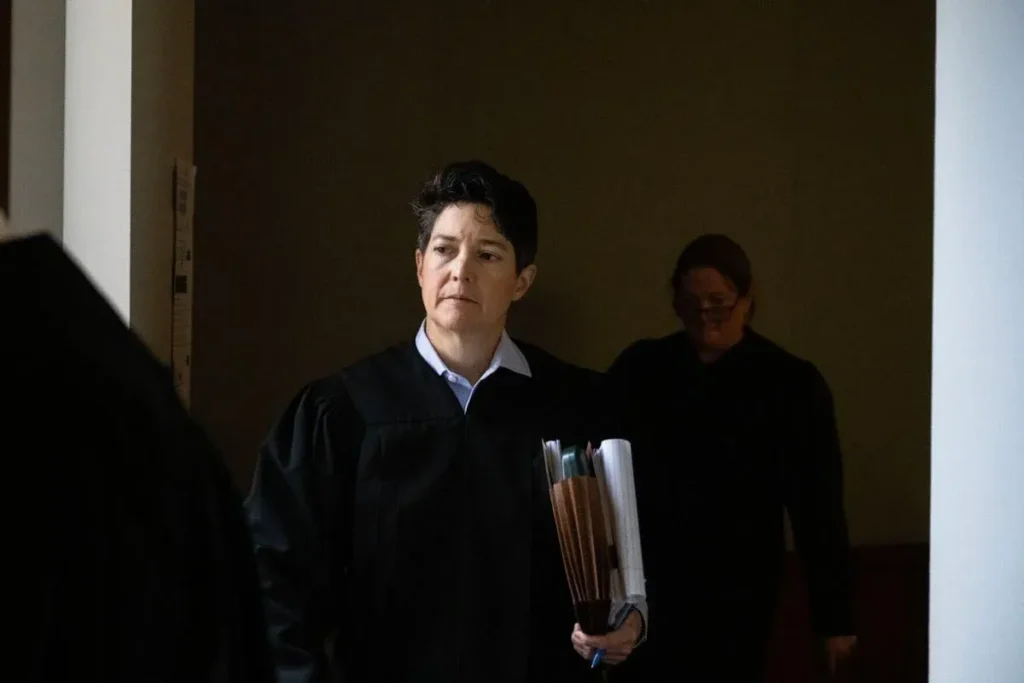
The Colorado Supreme Court determined on Monday that a Denver detective did not improperly resume questioning of a defendant in custody after he invoked his right to counsel. By 4-3, the justices reversed a trial judge’s order that found a...

Colorado Gov. Polis signs social media warrant bill after last year’s veto
Marissa Ventrelli
marissa.ventrelli@coloradopolitics.com
Updated 3 hours ago
Colorado law enforcement will soon have faster access to digital evidence after Gov. Jared Polis signed a pared‑down bill requiring social media companies to acknowledge and respond to search warrants on a tight timeline, a shift from a broader proposal...
Under fire from legislators and critics, Colorado’s top Medicaid official resigns
Marianne Goodland
marianne.goodland@coloradopolitics.com
Updated 5 hours ago
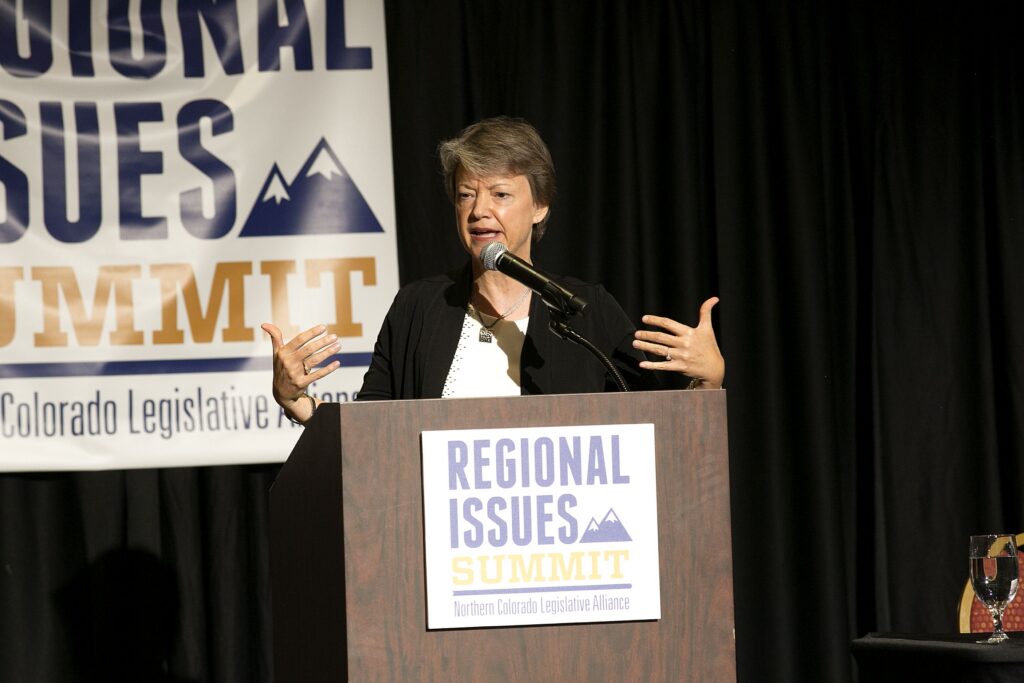
Colorado’s top Medicaid official stepped down on Monday, just as a bipartisan bloc of state senators prepared to formally urge Gov. Jared Polis to remove her over what they called years of mismanagement, waste and costly errors inside the state’s...

Usha Vance launches story time podcast in latest second lady venture
Asher Notheis, Washington Examiner
asher.notheis.washington.examiner@gazetteedit.wpenginepowered.com
Updated 12 hours ago
Second lady Usha Vance unveiled her new story time podcast of reading children’s stories on Monday. The podcast, Storytime with the Second Lady, features either her reading books or inviting a special guest to read, and is part of her...

Out-of-state judges address ex-discipline director’s lawsuit, Colorado justices accept federal invitation | COURT CRAWL
Michael Karlik
michael.karlik@coloradopolitics.com
Updated 13 hours ago
Welcome to Court Crawl, Colorado Politics’ roundup of news from the third branch of government. A pair of out-of-state judges got down to business in a lawsuit brought by Colorado’s former judicial discipline director, plus the state Supreme Court has...
Power grid shutdowns in Colorado bring protection — and problems
Scott Weiser
scott.weiser@gazette.com
Updated 3 hours ago
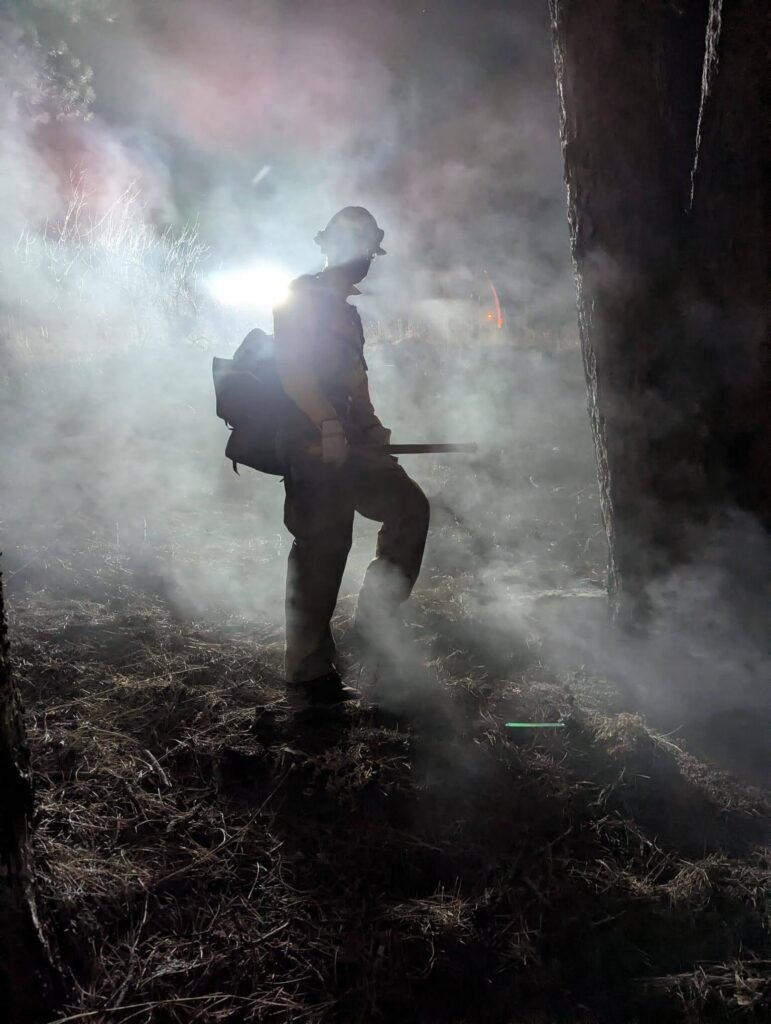
A downed power line in Sunshine Canyon in the mountains west of Boulder in December posed an electrocution risk to firefighters and bystanders after Xcel Energy re-energized it without repairing it, despite being notified of the break the day before....
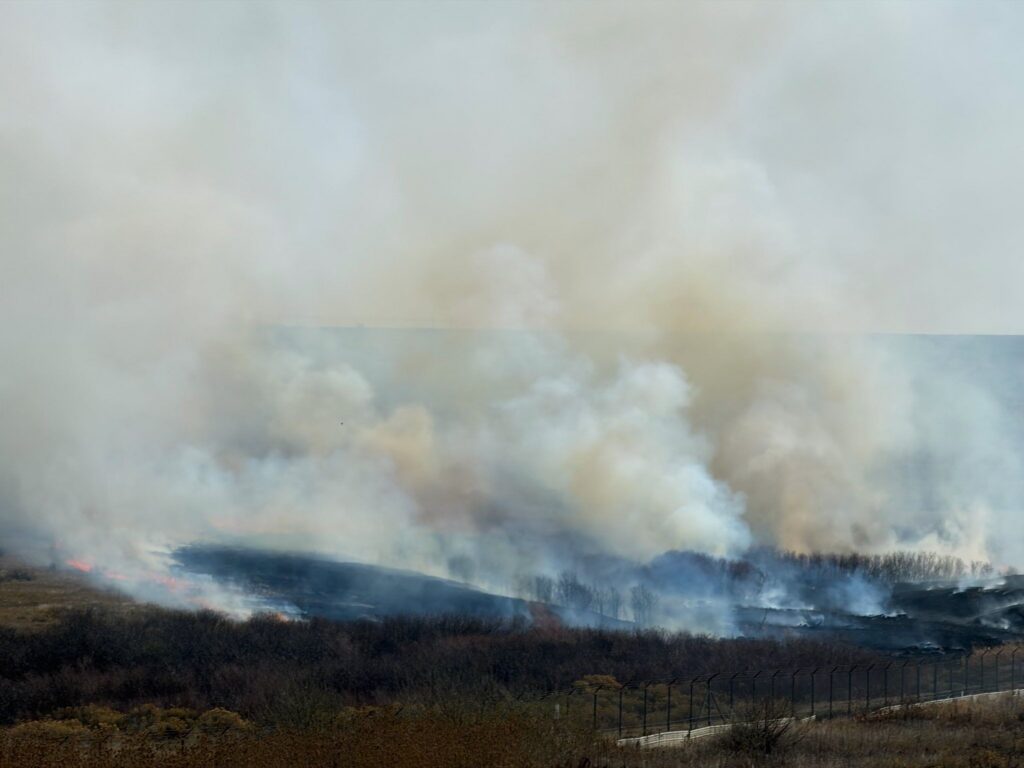
Aurora wildland fire contained at Buckley Space Force Base
Nicholas Fogleman
nicholas.fogleman@denvergazette.com
Updated 13 hours ago
A wildland fire burned Sunday morning on the southwest end of Buckley Space Force Base in Aurora, authorities said. The fire no longer posed a threat and crews were clearing the scene as of 10:53 a.m., according to Aurora Fire...

Unsustainable: How Colorado’s Medicaid spending exploded
Nico Brambila
nico.brambila@denvergazette.com
Updated 15 hours ago
The state’s Medicaid program — which covers about one in four Coloradans — is poised for its largest single-year jump in at least two decades, with officials proposing a $2.3 billion increase, even as lawmakers face a $1.5 billion budget...