

Geriatric presidential debate a gut punch to those they govern | HUDSON

Miller Hudson
As the presidential election approached in 1992, every American president for the previous 40 years had served in uniform during World War II, (albeit only briefly for Jimmy Carter and Ronald Reagan). These men were all part of the “Greatest Generation,” yet the first wave of Baby Boomers would soon begin to receive membership solicitations from the AARP. The country these presidents were leading had changed dramatically — a cultural and civil rights rebellion during the 1960s, Watergate and stagflation during the 1970s and a neo-conservative tidal wave that engulfed 1980s Washington, D.C. With his success in rolling back Saddam Hussein’s invasion of Kuwait during Operation Desert Storm, George H. W. Bush appeared headed toward another four years in the White House.
Ross Perot’s decision to leap into the contest, with his charts bemoaning federal budget deficits, precipitated a generational hand-off of White House keys to Bill Clinton. Capturing two or three Republican voters for each defecting Democrat, Perot doomed the candidacy of an incumbent with an arguably competent record. Perhaps forgotten today is a singular blunder that spotlighted the president’s removal from the everyday experience of most Americans. Bush marveled at the wonder of a barcode scanner during a grocery store visit, signaling voters he was a man who had rarely performed the rituals of middle-class life — but had been cosseted by minions who did these chores for him. Boomers elected Clinton as their bridge to the 21st century.
Although previous presidents had been aging since John Kennedy’s 1960 election, only Reagan’s 1980 candidacy, coming in his 60s, drew significant comment. After surviving an assassin’s bullet, it seemed poor form to raise this issue four years later when he ran for re-election. Confronting a pair of geriatric gladiators in 2024, the issue of age has leapt front and center. Certainly, both are closing in on some biological hurdles that will prove daunting. There are better reasons to question the wisdom of aged leadership than rumors of encroaching cognitive limitations. There is little evidence to assume a man or woman in their ninth decade can’t handle the intellectual challenges of the presidency, provided their bodies remain healthy. Just watch a YouTube video of Mick Jagger’s recent performance at Mile High Stadium for proof of what still remains possible at age 80.
Stay up to speed: Sign up for daily opinion in your inbox Monday-Friday
We should be aware our children and grandchildren are growing up in entirely different worlds than have Presidents Joe Biden and Donald Trump. A contemporary of these candidates, I’ve never played electronic games although apparently many younger than I devote the better part of their days to them. The unceasing march of technology is reshaping our lives — to such an extent the Surgeon General is recommending mental health warnings for social media. This raises the question of whether rules regulating the future should be written by those closer to their exits than those who will have to live with the consequences of their decisions? My parents’ habits were shaped by their privations during the Great Depression. Current American foreign policy has failed to escape the shadows cast by the Cold War. Yesterday’s wisdom seems a poor predictor of tomorrow’s challenges.
Recent Congressional hearings exploring the potential threats to the pursuit of happiness under the influence of social media and artificial intelligence have exposed the chilling technological ignorance of the average congressperson, who is older today than at any time in our 250-year history. I do not reach this conclusion from any personal expertise but rely on the informed judgments of my kids and grandkids. It’s doubtful one member in 10 can offer a coherent explanation of an algorithm — what it is or how it works. With the benefit of hindsight, I’ve reached the conclusion the optimum age for legislators, governors and presidents is 30 to 65. Just as police departments, military services, pilots and surgeons are escorted into mandatory retirement, so should a democracy gracefully leave its governing to those who will face the consequences of its decisions. There’s little reason to exempt Supreme Court judges who seem to think bump stocks are a protected class of gun gadgetry.
As a high school debater, I placed second with my partner at the Maryland state tournament in my final two years of competition, losing each time to the same pair of identical twins, I know a little bit about what it takes to win and lose. Watching the first 2024 presidential match was little short of painful. The only positive for Joe Biden is no one will be accusing him of having been jacked up on drugs or energy drinks. The contest scraped bottom as it approached its close with each candidate charging, “No, you were the worst president in American history.” Then it descended still further, prompting moderator Dana Bash to demand the pair stop acting like children as they bragged about their golf handicaps. For voters who may have wanted some insight into their plans for a second term, there was very little on offer. Trump’s mendacity and grievance sucked Biden into a continuing quarrel about the past.
Even when the moderators sought responses to queries about what each candidate might do to provide affordable childcare, or control inflation, or expand health care, both candidates would use up half their allotted time to pursue a previous fracas. Crafting pithy rebuttals demands paying close attention to precisely what your opponent has said and then turning any careless words against them. Neither candidate seemed up for that kind of focused listening. As Trump repeatedly mentioned the “thousands” of Americans being murdered by immigrants, it might have been timely to ask him to explain why the national murder rate has been dropping since 2020. That’s a suggestion from this no-longer-young man who’s just been asked to complete the term of his HOA president who departed unexpectedly for Alaska. I’ve agreed, reluctantly, with a Shermanesque stipulation about seeking election next January, “If nominated, I will not accept. If elected, I will not serve.” A man has to stick with his principles.
Miller Hudson is a public affairs consultant and a former Colorado legislator.


Are our overlords normalizing power outages? | Jon Caldara
Jon Caldara
jon-caldara@coloradopolitics.com
Updated 3 days ago
I’ve lived in Colorado since 1970. And you know what Colorado had back in 1970? High winds blowing down the Front Range. I moved to Boulder in 1984 and have been there ever since. And you know what Boulder has...

Who has the power to declare war? | Cronin and Loevy
Tom Cronin Bob Loevy
tom-cronin-bob-loevy@coloradopolitics.com
Updated 2 days ago
Our constitutional framers boldly and ambitiously granted Congress the power to declare war yet granted the executive the responsibility, after war is declared, to supervise war as the commander-in-chief. That worked well until the Cold War began. The U.S. has been...

The delicate, ever-changing dance between politics and religion | SONDERMANN
By Eric Sondermann
by-eric-sondermann@coloradopolitics.com
Updated 2 days ago
The dance, really a marathon that brings to mind the classic movie “They Shoot Horses, Don’t They?”, has been going on as long as there have been governments and organized religion. That is to say that this delicate tango has...
Roasts, get yer roasts, here: Capitol M | Week of March 14, 2026
Marianne Goodland
marianne.goodland@coloradopolitics.com
Updated 5 days ago
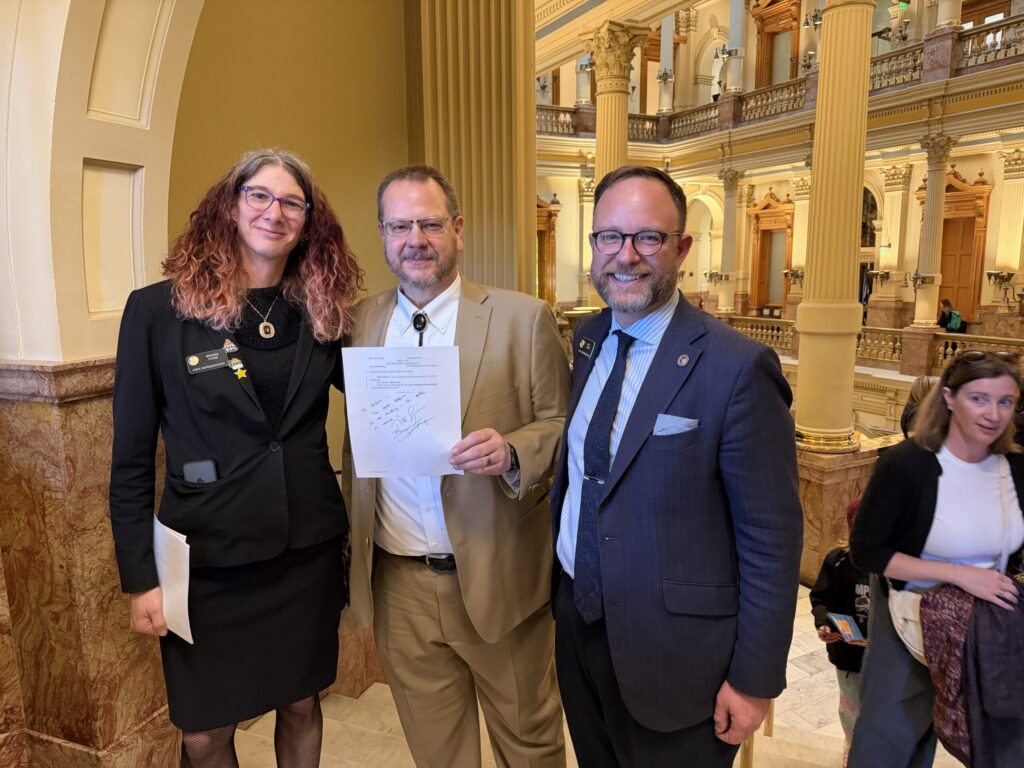
The lighter side of the Capitol, especially in the past week Apparently, the pending and eventual switch to daylight stupid time has put people in some pretty funny moods. And thank goodness! On March 4, the Senate approved the appointments...

Colorado’s election audits are built on math, not politics | IN RESPONSE
Colorado Politics
colorado-politics@coloradopolitics.com
Updated 4 days ago
By Amanda Gonzalez You don’t build a secure election system overnight. You build it over years — layer by layer — reinforcing it with stronger safeguards, better technology and more transparency. In Colorado, one of those safeguards is a little-known...

The backstory behind the school-funding TABOR ballot initiative | Paula Noonan
Paula Noonan
paula-noonan@coloradopolitics.com
Updated 4 days ago
Last session, the General Assembly took in a report on K-12 public school funding. The legislature ordered the report because an idea circulated Colorado was among the bottom five states in dollars allocated per student even though it is one...
Senate Bill 22 critical to keeping energy costs affordable, power reliable | PODIUM
Colorado Politics
colorado-politics@coloradopolitics.com
Updated 4 days ago
By Brian Wortinger I love Colorado’s outdoors. I’m an avid skier and hiker and my happiest days are spent deep in the mountains with no one around for miles. I want to protect that environment as much as anyone along...

Swipe-fee ban a giveaway to big boxes, mega-chains | IN RESPONSE
Colorado Politics
colorado-politics@coloradopolitics.com
Updated 5 days ago
By Jenifer Waller Four Colorado lawmakers recently published an op-ed in Colorado Politics calling for legislation to prohibit interchange fees on the sales tax portion of credit and debit card transactions (“Why Colorado should stop charging swipe fees on sales...

Leveling the playing field —why Colorado must fight fire with fire on redistricting | OPINION
Colorado Politics
colorado-politics@coloradopolitics.com
Updated 5 days ago
By Curtis Hubbard So Dick Wadhams suddenly cares about mid-decade redistricting — hyperventilating about efforts to “hijack Colorado’s congressional map” and calling those of us involved with the effort “amazingly naive.” Where was his outrage last year when President Donald...
You get what you pay for in your state reps | Hal Bidlack
Hal Bidlack
hal-bidlack@coloradopolitics.com
Updated 6 days ago
My regular readers will know of my affection for the Out West Roundup, a Colorado Politics feature that lets us keep up to date with the goings on out here in the western U.S., and draws attention to stories that...