

Coalition cries foul over Colorado elections bill, urges Governor Jared Polis to veto
A last-minute amendment to an elections bill has voting rights groups seeing red and calling on Gov. Jared Polis to veto the measure.
County clerks, on the other hand, would prefer to see Senate Bill 210 signed. The governor has until June 7 to sign the remaining bills from the 2024 session into law.
SB 210 began as the annual attempt to clean up election language. Notably, it had no outside opposition as it moved through the General Assembly and was approved with just a handful of “no” votes from Republicans in the House and Senate.
Voting groups are angry about an amendment added to the bill on May 5 by sponsor Rep. Emily Sirota, D-Denver, that applies to ranked-choice voting. This amendment is now pitting voting groups against the county clerks, who point out that the bill deals with much more than ranked-choice voting and urge Polis to sign it.
A coalition of voting groups, including the League of Women Voters, Let Colorado Vote, and Unite America, pointed to the problem with SB 210.
“The bill’s transparent attempt to frustrate and invalidate the will of the people as expressed through the citizen’s initiative process is an affront to the people of Colorado and the system of checks and balances that govern it,” the group said in a letter to the governor Thursday.
“Until the waning hours of the legislative session, the bill was a ministerial elections clean-up measure. Regrettably, all that changed when a provision was added that, through deceitful machinations, attempts to halt implementation of a pro-Democracy ballot measure before the voters even have a chance to vote on it.”
The amendment, known as L40, would delay ranked-choice voting to a series of pilots in 12 municipalities based on size before it could be implemented statewide.
Sirota told the House on May 5 that the amendment was worked out with “several clerks,” and that as “new voting methods” are implemented in different types of elections, “we have a good amount of data to analyze to ensure we’re not undermining Coloradans confidence in elections and that voters understand the ballot, and that communities of color, low-income voters and those with limited English proficiency are not harmed.” She did not mention that it impacted ranked-choice voting or ballot initiatives, and no one challenged the amendment.
The coalition said SB 210 “applies a convoluted, and perhaps unmeetable, set of terms and conditions which would indefinitely delay, and likely prevent, implementation” of ranked voting.
Ranked Choice Voting for Colorado also urged a veto, noting “the hurried passage of S.B.24-210 appears to have been a means to delay implementation of final-four plurality primaries at the expense of RCV,” according to RCV’s Linda Templin. Final four primaries refers to a pick-one, all-candidate primary with the top-four vote-getters proceeding to the general election, Templin said.
On the other side, county clerks urge Polis to sign the measure.
In a letter sent to Gov. Jared Polis Friday, the Colorado County Clerks Association noted that commissioners in Park and Custer counties “have openly discussed removing their County Clerks because they followed Colorado election law and refused to subscribe to election denialism. Language in this bill clarifies the role of the County Clerk and the Board of County Commissioners and ensures county commissioners cannot remove a clerk as the designated election official.”
SB 210 also gives clerks greater ability to set hours during an election without needing approval from county commissioners.
Other provisions supported by the clerks include a provision that allows the governor to move the convening of presidential electors if necessary to protect the ability of lawful elections to carry out their duty, a response to the efforts to allow fake electors who supported then-President Trump to participate in the elector process following the 2020 election. The bill attempts to rein in “bad actors” who overwhelm county clerk offices with open records requests, which the association called “denial of service attacks on election offices,” and expands the use of voter “drop” boxes on college campuses.
Matt Crane, executive director of the county clerk’s association, echoed some of the concerns raised by Sirota on the impact of ranked voting on communities of color. He said the amendment did not come from the clerks’ association, and they supported the idea of a study of RCV before being implemented statewide.
“We have lots of concerns about ranked-choice voting, things we’ve heard from other parts of the country,” Crane said. In California, their governor vetoed a bill on ranked-choice voting because of its potential impact on people of color and seniors, Crane said. There are also concerns that it will impact voters with disabilities and whether results can be audited. “We haven’t gotten answers to these questions,” he said.
He also noted opposition to ranked voting by groups like the NAACP. He explained that adding complexity to the ballot could impact underrepresented voters.
A recent study from Princeton University found that ranked voting presents difficulties for minorities, both candidates and voters. Princeton’s Nolan McCarty said, “High ballot exhaustion rates among minority-group voters would mean that those voters exercise less electoral influence.”
But former House Speaker Terrance Carroll told Colorado Politics the Princeton study is an outlier and that the line of argument is insulting because it assumes Black and brown people can’t figure out how to use ranked-choice voting.
In New York City, for example, ranked voting has been used to elect a Black mayor and a majority Black city council. Both do exceptionally well in ranked choice voting when used in communities of color and with women. “It’s okay if you don’t like it, but don’t hide behind Black and Brown folks on how it could harm us,” Carroll said.


New jaguar spotted in Arizona points to progress in endangered species’ recovery | OUT WEST ROUNDUP
The Associated Press
the-associated-press@coloradopolitics.com
Updated 6 days ago
ARIZONA New jaguar spotted in wild The spots gave it away. Just like a human fingerprint, the rosette pattern on each jaguar is unique so researchers knew they had a new animal on their hands after reviewing images captured by...
8 exemplars to guide us into the new year | SONDERMANN
Eric Sondermann
eric-sondermann@coloradopolitics.com
Updated 5 days ago
It started as a one-off in my first year of writing this regular column. To ring in the new year back in the eventful year of 2020, I offered a shoutout to eight Coloradans who served as models of how...
Raids, pushback and TdA indictments defined Denver’s immigration story in 2025
Nico Brambila
nico.brambila@denvergazette.com
Updated 2 days ago
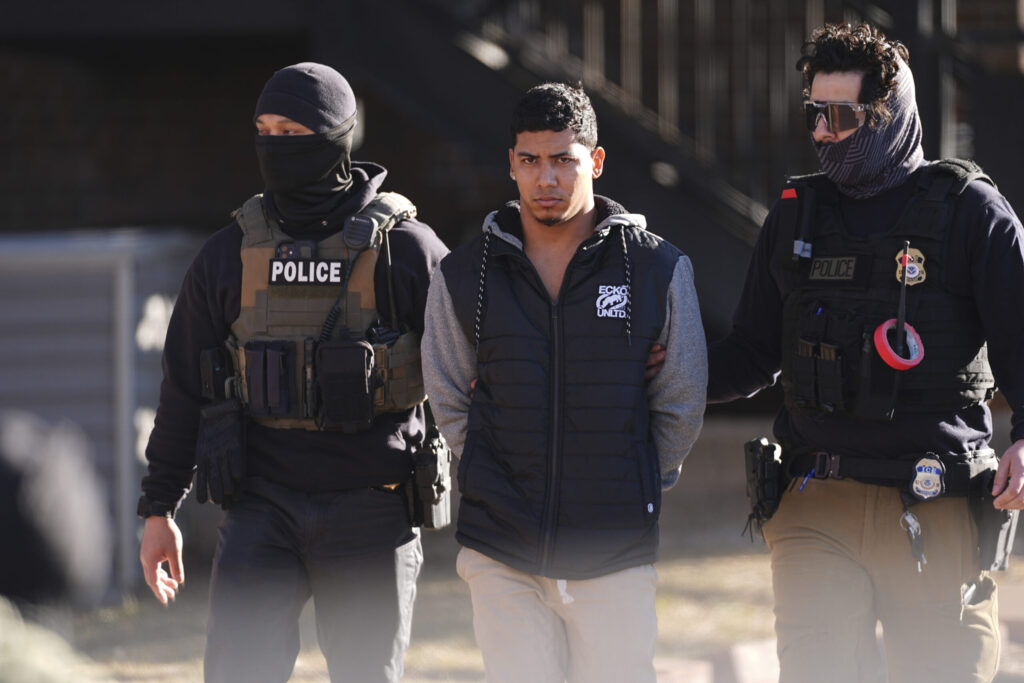
The Trump administration’s push for a large-scale, deportation effort — built around campaign warnings about Tren de Aragua, the Venezuelan prison gang that established a foothold in Colorado — collided with the realities on the ground in Denver, where raids...
Denver’s budget deficit shaped 2025 news coverage
Deborah Grigsby
deborah.smith@denvergazette.com
Updated 2 days ago
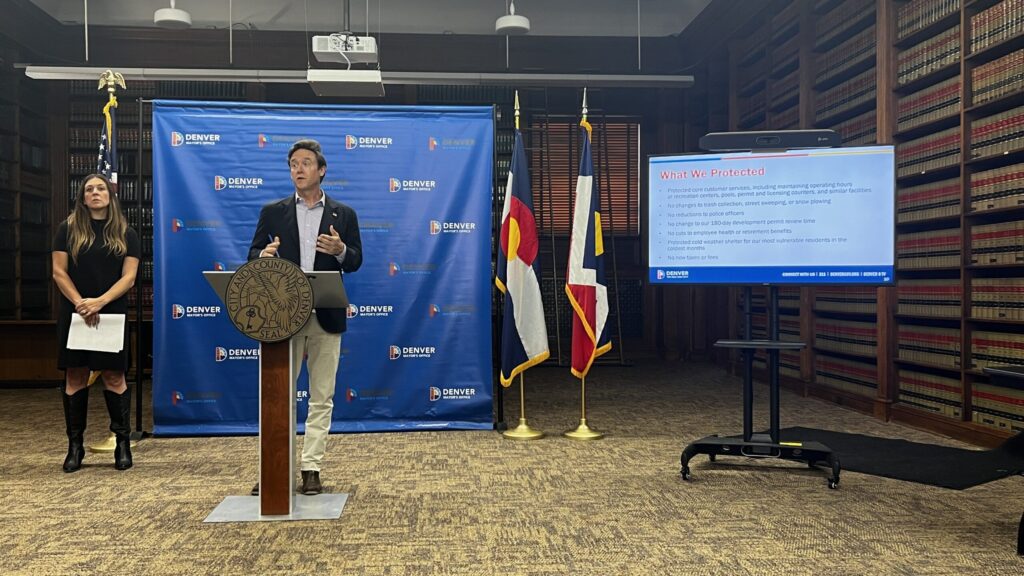
It was a year of big goals on a tight budget for the Mile High City, where Mayor Mike Johnston’s announcement of a $200 million city budget deficit dominated the news coverage. Facing a $50 million gap in its 2025...
Colorado podcaster who has called for political foes to be executed joins GOP primary for governor
Ernest Luning
ernest.luning@coloradopolitics.com
Updated 2 days ago
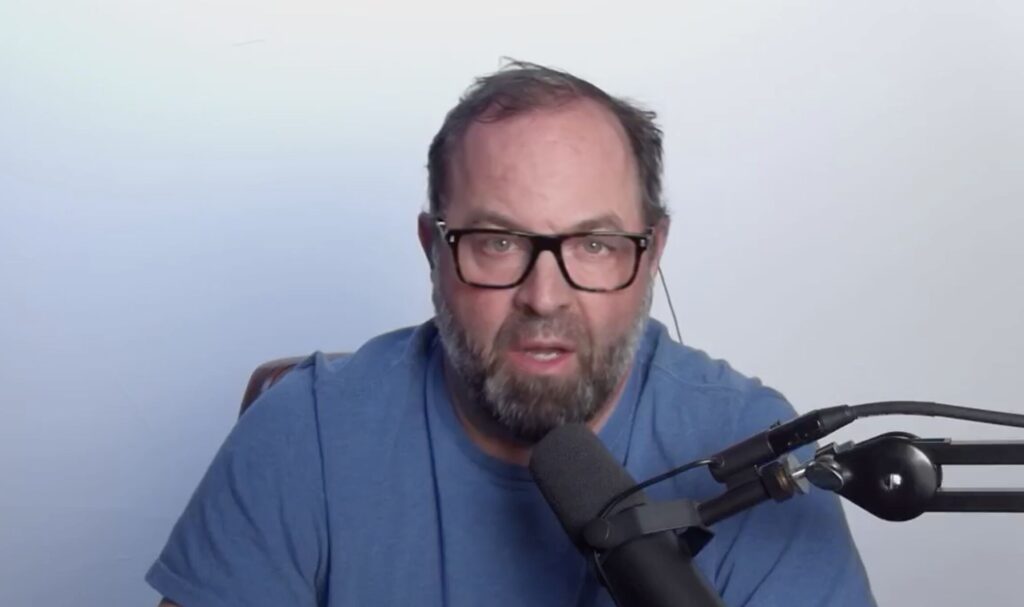
Joe Oltmann, the conservative Colorado podcaster who has repeatedly called for Colorado’s top elected officials to be executed and whose uncorroborated claims that the 2020 election was rigged spawned multiple defamation lawsuits, declared his candidacy for the Republican nomination for...

‘The canary in the democracy mine is local journalism’ | Vince Bzdek
Vince Bzdek
vince.bzdek@gazette.com
Updated 2 days ago
Colorado could do a lot more to save newspapers – and democracy – in rural areas By Vince Bzdek As another new year and another legislative session dawn for Colorado, it’s a good time to ask what the absolute most...
Colorado’s national correspondent recounts violent KKK march in D.C. | A LOOK BACK
Rachael Wright
rachael.wright@coloradopolitics.com
Updated 6 days ago
by Rachael Wright Thirty-Five Years Ago This Week: “I had forgotten about the Ku Klux Klan,” said Ann Downing Schmidt, The Colorado Statesman’s Washington, D.C., correspondent. In a commentary piece published in The Statesman, Schmidt described trying to make the ten-minute drive from...
2025 Unfiltered: Ethics investigations, scandals plague Colorado Capitol
Marianne Goodland
marianne.goodland@coloradopolitics.com
Updated 2 days ago
Over the course of the year, a series of investigations, allegations and controversies emerged at the state Capitol, drawing scrutiny to the behavior of elected officials and, in some cases, overshadowing policy debates. Here are some of the notable investigations,...
2025 Unfiltered: Top stories of the Colorado General Assembly
Marianne Goodland
marianne.goodland@coloradopolitics.com
Updated 7 hours ago
In 2025, the Colorado legislature faced a budget deficit, sought to tackle a lingering housing crisis and saw a wave of lawmakers leaving for other opportunities, prompting multiple vacancy committees to act. Here are a look at the year’s top...
2025 Unfiltered: Colorado Supreme Court vacancy, surge in federal filings and more
Michael Karlik
michael.karlik@coloradopolitics.com
Updated 2 days ago
This year was awash in legal news nationally, with federal courts taking an outsize role in responding to executive branch actions. In Colorado, that effect was evident, but it was not the only factor at play. Here are the top...