

Lawmakers pitch tax cuts & credits — in disappearing ink | Colorado Springs Gazette
The crop of ruling Democrats at the State Capitol might be the first in their party’s history to accept that the Taxpayer’s Bill of Rights actually is an indelible part of Colorado’s constitution. It has taken since 1992 — when voters enacted the amendment — but at long last, the party in charge seems to be OK with it.
So long as they can hijack it, of course.
And if hijacking is too harsh a word for the temporary-tax-cut-and-refund package touted last week by legislative Democrats and their party’s standard-bearer, Gov. Jared Polis — it certainly applies to some pieces of the complicated legislation.
Stay up to speed: Sign up for daily opinion in your inbox Monday-Friday
Most notably, the majority party is intent on redistributing this year’s $2 billion TABOR surplus as it sees fit. It doesn’t matter what taxpayers think; never mind that they are constitutionally entitled to a refund of the excess cash collected in taxes by the state.
Sure, the money must be returned — that much is given under TABOR, which requires the state to refund revenue it collects in a given year above the combined rates of inflation and population growth. But there’s wiggle room as to how the money is refunded.
Lawmakers aren’t content just to return it to the general taxpaying public as was once the practice. Instead, they are proposing — once again, as in recent years — to exercise their leeway under the state constitution to create quasi-refunds in the form of tax credits. Those credits go to groups or activities deemed most deserving.
The plan announced last week would divert about $700 million of the pending surplus to low-income Coloradans through an expanded earned-income tax credit and a new “family-affordability” tax credit.
That’s problematic in a couple of ways.
It isn’t fair to the vast majority of taxpayers who helped generate the excess revenue in the first place. Many of them also are of relatively modest means in these inflationary times and could use the money.
It’s also arguably unfair even to the intended beneficiaries of the tax credit. In years when there’s an economic downturn and thus, little or no surplus revenue is collected by the state, the tax credit would go away. That’s when those households that qualify for it need it most.
Which kind of makes the tax credits a gesture in false compassion. After all, if lawmakers really cared, wouldn’t they instead hardwire the credits into the state’s annual operating budget — to be paid for as regular line items — insulating them from economic cycles?
To be fair — and to give credit to the governor — Polis also insisted that an income tax cut be part of last week’s ballyhooed deal. That reflects his long-standing, professed support for income-tax cuts in a state that, regardless of its partisan alignment, likes tax cuts of all kinds.
Understandably, outnumbered legislative Republicans have gotten aboard the tax-cut portion of the package. And the cut is commendable, as far as it goes.
Yet, like the tax credits, the proposed income tax cut is contingent on there being a TABOR surplus to begin with. Worse still, the tax cut won’t kick in unless the surplus tops $300 million. The rate of the cut would vary, depending on the amount by which the surplus exceeds that threshold in any year. This year, the income tax rate would drop to 4.25% from its current 4.4%.
If Polis really cared about easing the tax burden on Colorado’s income earners, wouldn’t he press his fellow Democrats in the Legislature to build the cuts into the budget so they are permanent?
There still would be surpluses in some years. And in lean years with no surplus, maybe the bureaucracy could tighten its belt — for a change — as Colorado’s households always do.
Colorado Springs Gazette Editorial Board

Caldara overlooked facts in slamming utilities | FEEDBACK
Colorado Politics
colorado-politics@coloradopolitics.com
Updated 11 hours ago
Normally, I appreciate the variety of perspectives published on Colorado Politics. But regarding Jon Caldara’s recent column on Xcel, he irresponsibly neglects key facts to the point of annihilating credibility (“Are our overlords normalizing power outages?” March 15). He neglects...

Fix the process before reauthorizing state PUC | OPINION
Sara Blackhurst
sara-blackhurst@gazette.com
Updated 9 hours ago
What needs to be fixed before reauthorizing the Public Utilities Commission? The answer is simple: the process. The last time the commission was reauthorized in 2021, lawmakers expanded its role in meaningful ways — particularly as Colorado accelerated its clean...
What exactly makes you a public figure? | Hal Bidlack
Hal Bidlack
hal-bidlack@coloradopolitics.com
Updated 1 day ago
Well, once again, this non-lawyer columnist is going to jump in the deep end of legal scholarship and will explore a recent Colorado Court of Appeals decision. Buckle up. In yet another terrific Colorado Politics Court Crawl article, we learned...
Congress needs to protect 340B for rural Colorado | PODIUM
Colorado Politics
colorado-politics@coloradopolitics.com
Updated 9 hours ago
By Rod Pelton A lot of politicians talk about understanding what life is like for our rural communities, but not many really do. I’m a third-generation Cheyenne County farmer and rancher; I grew up on the eastern plains of Colorado, raised...

Modernizing Pinnacol is about its members, not politics | IN RESPONSE
Colorado Politics
colorado-politics@coloradopolitics.com
Updated 22 hours ago
By Akasha Absher While we share the passion for protecting Colorado’s workers expressed in a recent op-ed from the perspective of trial attorneys and union representatives, the piece paints a picture of Pinnacol Assurance that is more rooted in 1915...

Mum on his own replacement, Bennet disrespects voters | Dick Wadhams
Dick Wadhams
dick-wadhams@coloradopolitics.com
Updated 4 days ago
U.S. Sen. Michael Bennet is playing an arrogant game of hide-and-seek with Colorado voters as he seeks to abandon his Senate seat to become governor. Bennet insists that if he is elected governor in November, he will wait until he...

What kind of energy independence did we pay for? | Miller Hudson
Miller Hudson
miller-hudson@coloradopolitics.com
Updated 4 days ago
It was during the summer of 1972 AT&T published an internal solicitation for installation and repair supervisors with “inner-city” experience to transfer to Mountain Bell. The catch was an applicant’s readiness to work 10 hours a day, six days a...

Those who cannot live without wild things | Rachel Gabel
Rachel Gabel
rachel-gabel@coloradopolitics.com
Updated 4 days ago
Aldo Leopold wrote in his Sand County Almanac, “There are some who can live without wild things and some who cannot.” The collection of essays first published in 1949 was accepted by a publishing house after a steady stream of...

Thank God for Wyoming — the un-Colorado | Jon Caldara
Jon Caldara
jon-caldara@coloradopolitics.com
Updated 4 days ago
Years ago, I interviewed a Canadian health-care broker whose job was helping his countrymen escape their own failing system. When their “free” health care turned into “free to wait until you die,” he’d save his clients by routing them to...
It’s time to let unaffiliated voters caucus | Vince Bzdek
Vince Bzdek
vince.bzdek@gazette.com
Updated 2 days ago
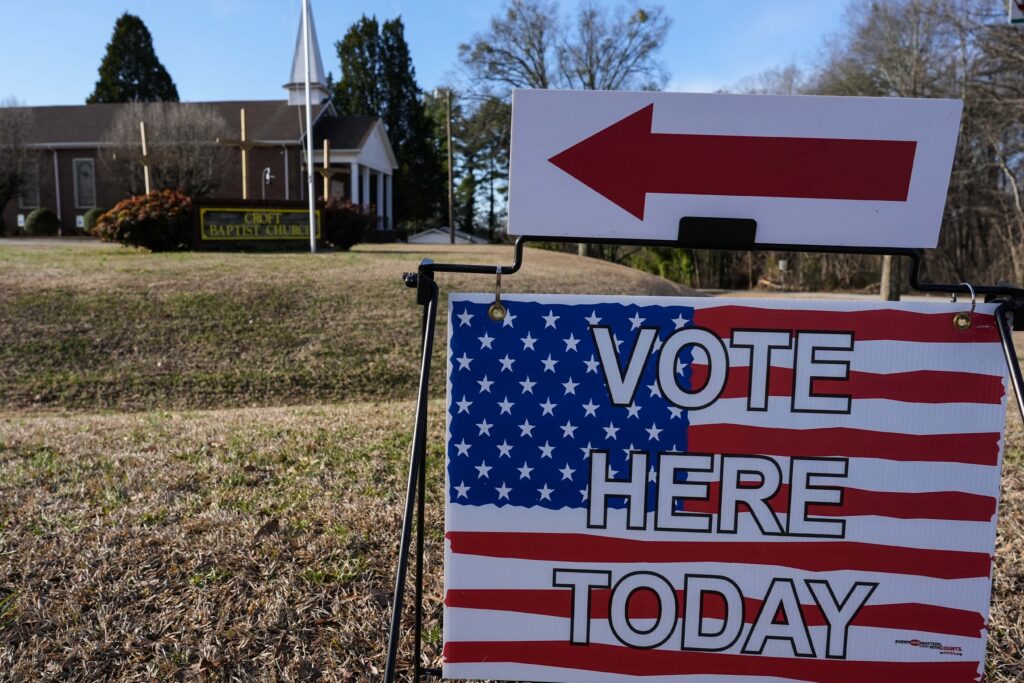
There’s no getting around it: Colorado’s 3,000 county caucuses, which just wrapped up recently, left half the electorate out in the cold. Since unaffiliated voters now make up 51% of all Colorado voters, a majority of Colorado electors are barred...