

As Denver’s sanctuary city crisis spirals, nearby communities and nonprofits scramble to respond
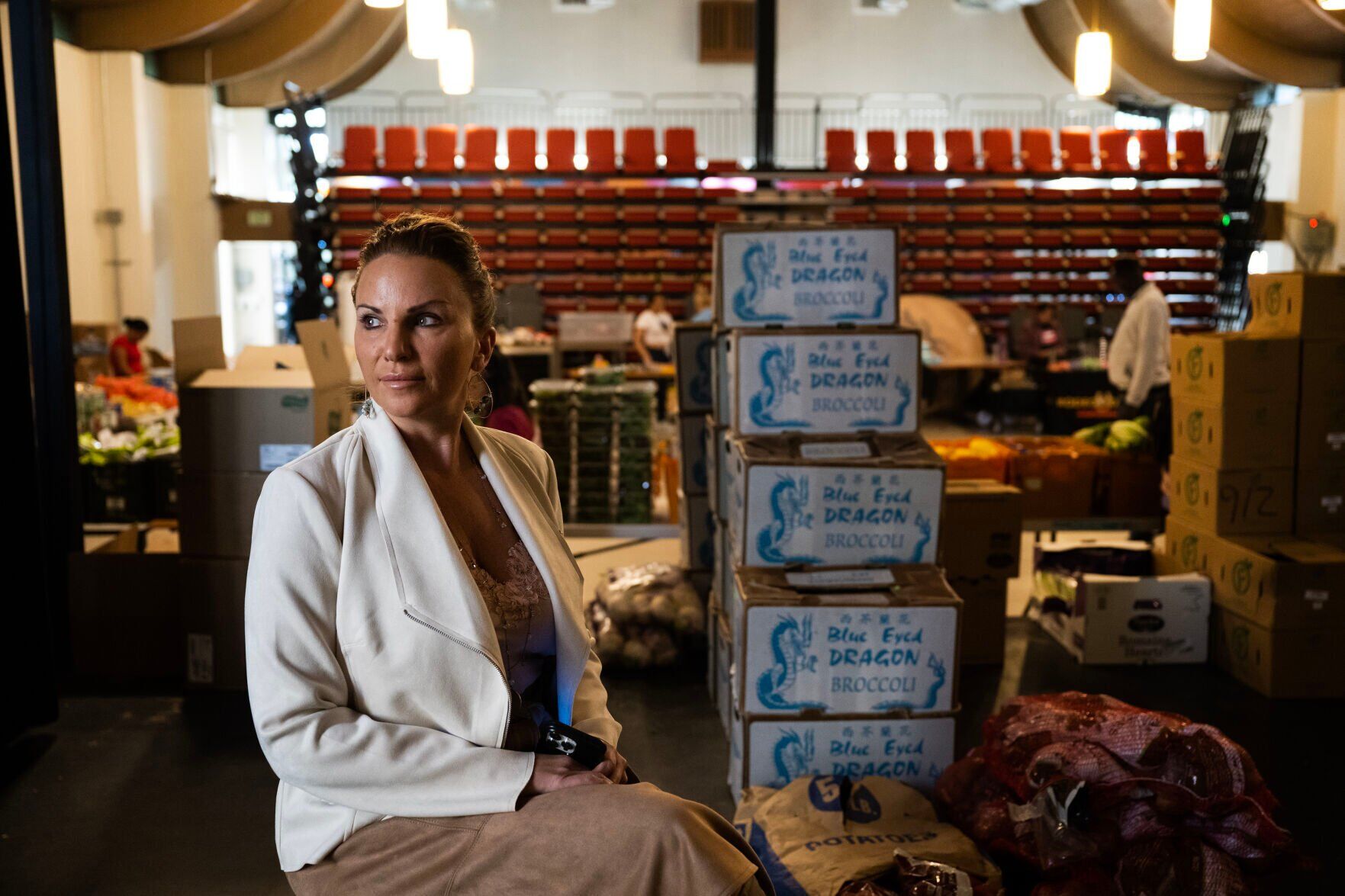
Mateos Alvarez, the executive director of the Aurora Economic Opportunity Coalition, drove to his office in Northwest Aurora every morning expecting to see a few dozen people waiting outside for services offered by his nonprofit, which helps people in underserved communities get work opportunities.
That is — until one morning in late 2022.
“As I was pulling up to my office … both sides of the street are just full,” he said. “We went from the normal 30 or so to maybe 150 or 200 people.”
Alvarez experienced firsthand the beginning of the influx of immigrants to Denver, which led to a scramble for nonprofits and local governments in the metro area, as thousands more arrived in need of help.
Since December 2022, nearly 40,000 immigrants — who illegally crossed America’s southern border — arrived in Denver, a sanctuary city where officials decided earlier in the crisis to provide shelter, feed and transport immigrants to their final destination.

That decision has come at a staggering cost — more than $42 million, and counting. To date, the state and federal government have reimbursed Denver roughly $14 million, with the rest of the cost borne by the city’s taxpayers.
Denver is surrounded by counties and cities that, like Aurora, have deliberately avoided being tagged with a “sanctuary status.” Some, worried about getting saddled with the costs after seeing what’s unfolding in Denver, have gone further to try and deter immigrants from coming into their territories.
Nonprofit leaders said that stance has left those operating in Denver’s surrounding communities scrambling to help the immigrants — and to sustain that help.
Others inferred, though they didn’t it say it outright, that Denver’s “welcoming” stance — Mayor Mike Johnston has always reiterated the city will do its best to help the immigrants, as opposed to signaling he doesn’t want them arriving in the city — is the problem, as it is attracting immigrants to the Front Range and the crisis is then spilling over into nearby localities.
An ‘overflowing bathtub’
Douglas County, just south of Denver, adopted a resolution in October with this message to the rest of the region: “Douglas County is not a sheltering solution to Denver’s migrant population crisis.”
The resolution affirmed that the county is not a “sanctuary” jurisdiction and called on cities and counties in the metro area, including Denver, to publicly do the same.

Douglas County Commissioner Abe Laydon compared the immigrant situation in the metro area to a bathtub overflowing with water and arguing the call has been to spend money on towels and mops.
“Let’s start by turning off the faucet,” Laydon said. “Until very strong communications and messaging is made in Texas and at the border that the Denver metro area is not a sanctuary area, unfortunately that faucet is going to continue to run.”
The metro area is facing a “massive affordability crisis,” Laydon said, adding that’s already making it difficult for people who live in the region to find housing.
“Being a beacon to 40,000 people and saying ‘come here’ when we already can’t find housing for people is really challenging,” Laydon said.
El Paso, Denver buckle under strain of immigration surges | Border Crossroads
While Denver is a sanctuary city, most of the surrounding jurisdictions are not, he noted.
Generally speaking, a sanctuary city is a designation given to municipalities and counties that establish policies to discourage local law enforcement from reporting an individual’s immigration status to federal authorities.
Compassion and refusing to declare “sanctuary” are not mutually exclusive, said Laydon, the Douglas County commissioner.
“It’s okay to say we’re going to enforce federal immigration law and do right by those who are coming here legally and trying to be self sufficient,” he said. “We also have to recognize limited resources.”
‘Policy decisions created the situation’
Denver’s illegal immigration crisis has affected other jurisdictions’ resources, and now local governments are deliberately and very publicly backing away from the “sanctuary” label, arguing they don’t have the resources to help people.
Aurora’s councilmembers passed a resolution in February stating exactly that.
As amended, Aurora’s new resolution affirms the city’s “non-sanctuary” status, asserting that the city “does not currently have the financial capacity to fund new services related to this crisis.” The resolution demands that nonprofits and municipalities should coordinate with Aurora’s officials before bringing immigrants into the city.

The resolution is symbolic. Since the statement is a resolution — not an ordinance — it has no enforcement mechanism, City Attorney George Koumantakis noted.
In Colorado Springs, the city council also approved a largely symbolic resolution that reaffirms it is not a sanctuary city in the hopes of discouraging immigrants from heading south from Denver.
Colorado Springs City Council President Randy Helms, supported the measure, saying he believes — as officials at the southern border do — that being “welcoming” has welcomed the immigrant influx.
“When you offer someone free transportation, free shelter, I think it’s only human nature people would be drawn to that,” Helms said.
Free transportation creates immigrant ‘pull factor’ to Denver
Helms added: “Denver is going through a struggle and are going through a crisis. We just don’t want that crisis here.”
El Paso County Commissioner Carrie Geitner agreed.
“I don’t think people want to recognize that their policy decisions created the situation that they’re in,” Geitner said.

The nonprofit response
In response to the spillover from Denver, Mateos Alvarez from the Economic Opportunity Coalition started the Migrant Response Network, a collection of nonprofits that have joined together to help each other out.
In Aurora, the situation for nonprofits is different than in Denver. While Denver is a county, city and has declared itself a sanctuary city, in Aurora, that’s “not the case at all,” Alvarez said.
“From our standpoint, we have a city council and a mayor’s office who said it’s not going to help,” he said. “We have two counties who point the finger at each other and say, ‘You’re responsible.'”
“And then our elected officials at the state level took awhile to respond to cries for help,” he said.
The Migrant Response Network and fellow nonprofit Village Exchange Center wrote a letter to Colorado’s U.S. senators, who then sent a letter to FEMA asking for northwest Aurora to be included in the next round of funding.
“That’s important because we have not gotten any funding from any city, county or state,” Alvarez said.
Alvarez said the nonprofits launched the Migrant Response Network because they believe the influx of immigrants is a public health issue, and they aren’t getting any help from the city or county.
“So, we turned inward as nonprofits,” he said. “We need help. This isn’t just a Denver thing because they’re landing in Denver, but they’re migrating their way or walking their way over to us.”
His organization called the first meeting of the Network in January 2023 and about 15 or 20 nonprofits showed up. Now, up to 180 entities have joined.
“To my surprise, we weren’t the only ones going through it,” he said. “All of our food banks in and around northwest Aurora were just being decimated.”
Amanda Blaurock at Village Exchange Center said the influx changed her organization’s function “drastically.” Notably, the influx means its food pantry went from 200 families to 700 families. It also required the group to start having security guards due to the number of people showing up at their door.

Because of the organization’s location, just a few blocks from the border of Denver, it’s often the first stop when people enter Aurora seeking services, she said.
What is a sanctuary city?
The practical effect of a city declaring itself a sanctuary city is that the communication between local law enforcement and federal immigration enforcement is interrupted to some extent, according to Violeta Chapin, a clinical professor of law and associate dean for community and culture at the University of Colorado Boulder.
“What that meant, and what that’s typically meant in the term sanctuary city, is that local law enforcement are not going to take proactive measures to contact immigration enforcement to make them aware of immigrants in their midst,” said Chapin, who has been a lawyer for 22 years and on the faculty at CU for 14 years, specializing in immigration law. “There’s just not going to be sort of this proactive cooperation of state authorities with immigration authorities.”
A jurisdiction declaring itself “sanctuary” doesn’t mean Immigration and Customs Enforcement (ICE) agents can’t be there, she said.
Illegal immigration ‘tornado’ in Denver threatens to overshadow mayor’s 2024 goals
In 2013, Colorado passed legislation allowing undocumented residents to get a driver’s license with the idea that states are in charge of the safety of their roads and would prefer to know people are taking driving tests and have insurance.
In the same year, lawmakers passed legislation allowing undocumented high school graduates to have access to in-state tuition to Colorado schools as long as they met residency requirements.
Whether or not the designation sways people to go to a certain place really varies based on access to information, Chapin said. While a lot of people have access to information and an understanding of what sanctuary cities are, a lot of others don’t have that capacity.
Gov. Greg Abbott of Texas and Gov. Ron DeSantis in Florida have been explicit about the fact that they are sending migrants to sanctuary cities, according to Chapin said.
Officials from El Paso, Texas recently told The Denver Gazette that Denver would not have been facing the crisis without the promise of free shelter and onward travel, calling it a “pull factor.”
“There’s a pull factor created by this, and the policies in Denver for paying for onward destinations,” said one El Paso official.
El Paso, Denver buckle under strain of immigration surges | Border Crossroads
And a review of the timeline of immigrants coming to Denver do not fully support blaming Abbott.
While the Republican governor has relished busing immigrants to so-called sanctuary cities, Denver wasn’t one of them initially. Abbott didn’t begin busing immigrants to Colorado — according to the governor’s office — until May 18, 2023.
That’s roughly six months after Denver began experiencing immigrant surges. Indeed, the day before Abbott’s first bus arrived in Denver last spring, the city had already received 10,058 immigrants, city data shows.
Chapin said there’s a silver lining to all these — it has made the country collectively think about what it means to share the burden of illegal immigration.
“It’s not fair to focus that burden on border states just because they are geographically contiguous. This needs to be something that all of us are sort of working on,” Chapin said. “To some extent it’s been an important way to get the states to start collectively talking about how we can move our federal government to help us resolve this crisis.”
Denver has “certainly tried really hard,” Chapin said.
“I think it’s super important for them to continue to press the federal government to be like, ‘This is your problem and you are failing to address it,’” Chapin said.

‘Not officially accepting immigrants at this time’
Many of the large cities and counties in the metro area adopted resolutions or statements in an attempt to sway immigrants from moving into their jurisdictions.
Lakewood
Just to Denver’s west, officials in Lakewood met with Denver City and County officials to better understand the crisis and talk through options for collaboration.
Lakewood agreed to help Denver manage its crisis in ways that wouldn’t tap its own resources. Its council has not met — and does not plan — to discuss making Lakewood a sanctuary city.
“In the spirit of being a good neighbor,” Lakewood officials agreed to add Denver’s immigrant resource information to its website and assist in communicating volunteer opportunities for residents who may want to help.
Arvada
Arvada, located northwest of Denver, does not have the resources to provide shelter and other services to immigrants, according to city spokesperson Rachael Kuroiwa.
The city “recognizes the challenges associated with the migrant arrivals to the Denver metro area,” Kuroiwa said. Arvada also recognize that immigrants are lawfully free to move around the state for services, but the city is not equipped to assist them, she said.
The Arvada City Council has not made any action related to the immigration influx, but the city encourages community members who want to voice their perspectives on immigration policy to contact their federal representatives.
Centennial
The City of Centennial “continues to monitor the migrant situation in the metro area via the Arapahoe County Office of Emergency Management,” city spokesperson Allison Wittern told The Denver Gazette. The city currently does not have the resources to assist in sheltering immigrants, Wittern said.
Arapahoe County
Southeast of Denver and encompassing several cities including Centennial and Aurora, Arapahoe County is working with local and state leaders to identify regional approaches to the crisis, according to spokesperson Anders Nelson.
Funding is the biggest hurdle, Nelson said, “as federal and state funds are constrained by statute and prevent the county from serving undocumented migrants.”
While commissioners work on better solutions, the county currently refers migrant needs to community partners and any existing county services they are eligible for, Nelson said.
Adams County
County spokesperson Nikki Kimbleton told The Denver Gazette the local government is “not officially accepting immigrants at this time.”
Jefferson County
Jefferson County did not reply to requests for information about its response to the immigrant crisis.

Colorado Sen. Mike Weissman calls for cold water on heated hate speech
Marianne Goodland
marianne.goodland@coloradopolitics.com
Updated 2 hours ago
Likening the recent record-setting warm temperatures to hot political rhetoric, Colorado Sen. Mike Weissman, D-Aurora, pleaded for an end to death threats and other hate speech directed at lawmakers of both parties. “The increasingly tragic reality of our politics, however, like...

Ethics panel dismisses complaint against Colorado agency chief Dan Gibbs
Marianne Goodland
marianne.goodland@coloradopolitics.com
Updated 2 hours ago
A state ethics panel has dismissed a complaint against Dan Gibbs, executive director of the Colorado Department of Natural Resources. The complaint, filed in December 2021 by the Republican-affiliated group Defend Colorado, alleged Gibbs awarded the think tank Keystone Policy...

Denver airport hasn’t had notice ICE agents will assist TSA yet. Wait times are short, though
Bernadette Berdychowski
bernadette.berdychowski@denvergazette.com
Updated 2 hours ago
As President Donald Trump deployed immigration agents to help U.S. airports manage hours‑long security lines during the partial government shutdown, Denver International Airport remained relatively calm on Monday. At the nation’s third‑busiest airport, TSA PreCheck lanes remained open to start...
Appeals court recognizes longer window to sue insurers for withholding policy details
Michael Karlik
michael.karlik@coloradopolitics.com
Updated 4 hours ago
Colorado’s second-highest court split with its own prior decision earlier this month and concluded injured motorists have two years, not one, to sue insurance companies for withholding relevant information about an at-fault driver’s policy. In 2019, Colorado lawmakers enacted a measure to...

Trump open to $5 billion ICE funding cut if SAVE Act package passes
Zach LaChance, Washington Examiner
zach.lachance.washington.examiner@gazetteedit.wpenginepowered.com
Updated 5 hours ago
President Donald Trump signaled he is open to a $5 billion funding cut for U.S. Immigration and Customs Enforcement if the Senate passes the Save America Act, along with other amendments. “I don’t think we should make any deal with...

Appeals court decides free speech cases, error-prone judge reversed again | COURT CRAWL
Michael Karlik
michael.karlik@coloradopolitics.com
Updated 6 hours ago
Welcome to Court Crawl, Colorado Politics’ roundup of news from the third branch of government. The state’s Court of Appeals decided multiple cases implicating free speech rights, plus Colorado’s most error-prone judge was reversed on appeal yet again. Heard on...
It’s time to let unaffiliated voters caucus | Vince Bzdek
Vince Bzdek
vince.bzdek@gazette.com
Updated 6 hours ago
There’s no getting around it: Colorado’s 3,000 county caucuses, which just wrapped up recently, left half the electorate out in the cold. Since unaffiliated voters now make up 51% of all Colorado voters, a majority of Colorado electors are barred...

With new medical school set to open, Feinstein will step down as UNC president
Hap Fry, Special to The Gazette
hap-fry@gazette.com
Updated 1 day ago
GREELEY • Dr. Andrew “Andy” Feinstein, the charismatic president of the University of Northern Colorado, has announced that he will step down from his leadership role just on the cusp of what is perhaps his signature accomplishment being realized. He’ll...
Governor warns energy development both a boon and a risk to Colorado | A LOOK BACK
Rachael Wright, Special to Colorado Politics
rachael.wright@coloradopolitics.com
Updated 5 days ago
Forty-Five Years Ago This Week: “The real opportunity and the dangers before us are both real,” said Gov. Dick Lamm in his January state of the state address before the Colorado General Assembly. Lamm argued that energy development would continue...
A Mile High, again: Capitol M | Week of March 21, 2026
Marianne Goodland
marianne.goodland@coloradopolitics.com
Updated 5 days ago
The lighter side of the Capitol, usually…. Local Journalism Day, except they forgot their very own local journalists. The state Senate on Thursday, March 19, passed a resolution recognizing Local Journalism Day. Everyone voted for it, which is good, because...
PREV
PREVIOUS

Colorado Supreme Court committee votes to explore role of AI in practice of law
An advisory committee to the Colorado Supreme Court recently created a subcommittee that will evaluate existing rules barring the unauthorized practice of law to determine if changes are necessary to accommodate emerging artificial intelligence-powered legal tools. The March 1 vote of the Advisory Committee on the Practice of Law came at the request of the […]

More than a thousand Colorado criminal cases now 'in question' due to data manipulation by state DNA scientist, investigative report says
DNA findings in more than 1,000 criminal cases in Colorado are now “in question” due to data manipulation by former Colorado Bureau of Investigation DNA scientist Yvonne “Missy” Woods, state officials announced on Friday when they unveiled the findings of an internal investigative report into Woods’ work. The internal CBI investigation found that Woods deviated […]