

Colorado House committee debates a defendant’s right to post bail in first-degree murder cases

Colorado lawmakers are debating whether defendants charged with first-degree murder in Colorado should have the right to post bail in cases where “proof is evident and presumption is great.”
The House Judiciary Committee tackled the issue Wednesday, with some members hesitantly pushing the measure forward.
HCR 1002 and HB 1225 were introduced in response to a 2023 Colorado Supreme Court Case, People vs Smith.
Before 2020, first-degree murder was considered a capital offense, automatically exempting defendants from the possibility of posting bail. However, because of the state’s 2020 repeal of the death penalty, the court ruled that, since first-degree murder is no longer a capital offense, a defendant cannot automatically be denied bail.
Lynch, a sponsor of the bill, argued that, by following the Supreme Court ruling, some judges are setting bail amounts that are not obtainable to the general population, creating instances in which only the wealthiest people could remain free until trial.
Lynch said these situations might face future challenges, as they could be deemed a violation of the Eighth Amendment, which prohibits the imposition of “excessive” bail for defendants in non-capital offenses.
While eight of the committee members voted to advance the bill, two representatives said “no.”
Rep Javier Mabrey, D- Denver, who is an attorney, said that, while he agrees the bail system is inherently unfair, he believes that all defendants are innocent until proven guilty. He said he is concerned that pretrial hearings on evidence of proof could create a presumption of guilt before a trial has even begun.
Rep Lorena Garcia, D- Westminster, shared similar concerns, saying she is worried the legislation would move the state closer to a “guilty until proven innocent” approach.
“I feel that when we decide to pre-judgement hold people based on certain levels of evidence, that we are in fact declaring guilt,” she said.
Snyder, too, expressed apprehension, as did Rep. Leslie Herod, D- Denver, who pointed out that was no opposing testimony during the hearing. While both voted to move the bill forward, they said it is possible their votes may change when the measure gets to the floor.
The bill is contingent on voters adopting the concurrent resolution, which will be on the ballot in November if it passes through both chambers with a simple majority vote.
“No amount of money, no matter what we have argued in bond hearings earlier in that week, makes them feel safe,” she said.
District Attorney Michael Allen of the Fourth Judicial District said he has had to face family members in court who were previously told, “Your offender, who has affected your family in a way that none of us can actually imagine is now going to be able to bond out of jail.”
District Attorney Brian Mason of the 17th Judicial District said he supported abolishing the death penalty, but there has been an unintended consequence of individuals charged with first-degree murder posting bail, sometimes even when judges set higher than average rates.
As an example, he cited a first-degree murder case in his district, in which a defendant posted a $500,000 bond.
“I don’t believe that the voters of Colorado want those who have been charged with first-degree murder to be able to get out pending their trial,” he said, adding that individuals charged with first-degree murder pose a high flight risk because the penalty is particularly significant – life without the possibility of parole.
Courtenay Whitelaw, mother of Riley Whitelaw, a 17-year-old girl who was killed at a Colorado Springs Walgreens in 2022, said that, while her daughter’s killer was charged with first-degree murder, he was given the right to a bail hearing.
Whitelaw told the committee she was “blindsided” when she found out he had the possibility of posting bail.
“As a mother of a child who was brutally murdered, it felt wrong to have to go back and address bail in a case where the proof was evident and presumption is great,” she said.
The judge ultimately set Johnson’s bail at $10 million, but Whitelaw said, “It still felt wrong that bail was even an option afforded” to the suspect, “no matter the amount.”
While the bill and concurrent resolution specify that bail exemptions would only apply for cases in which proof of guilt is evident or presumption is great, Rep. Mark Snyder, D- Colorado Springs, questioned whether there is a specific definition or guidelines for determining what constitutes as “evident” or “great.”
According to Allen, the district attorney, that definition depends on evidence and other case-specific information, all considered by a judge who ultimately determines whether there is reasonable proof that a defendant is guilty.
The bill, co-sponsored by House Majority Leader Monica Duran, D-Wheat Ridge, and sponsored in the Senate by Sens. Rhonda Fields, D- Aurora, and Bob Gardner, R- Colorado Springs, would also implement a law permitting defendants in first-degree murder cases 10 peremptory juror challenges, with three additional challenges on each side if there is more than one defendant in a case.


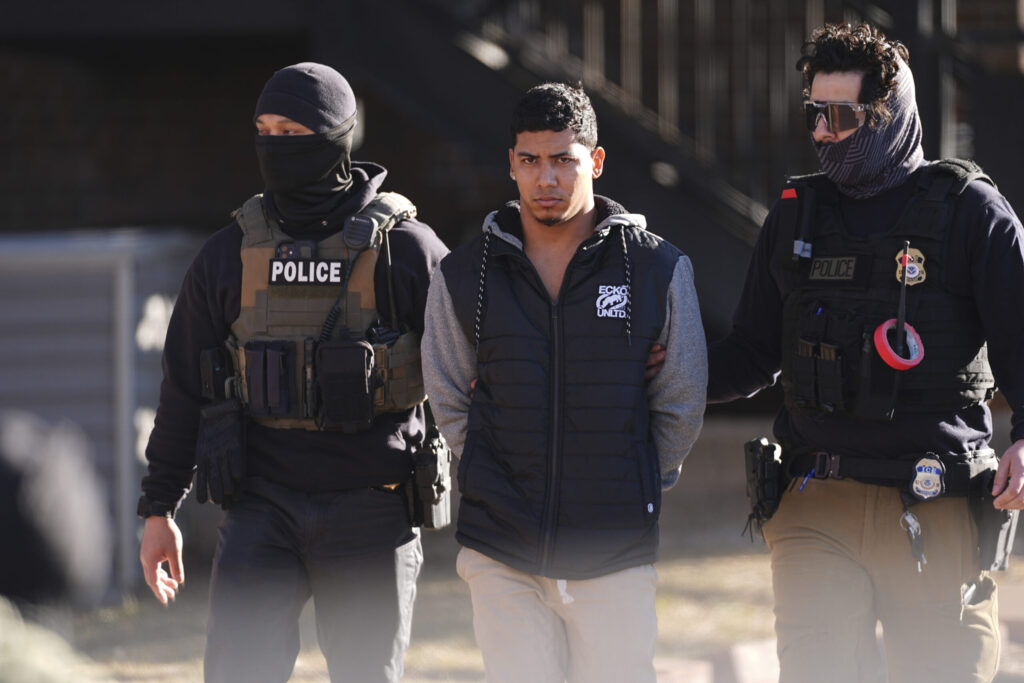
Denver police chief on mask ban, mayor’s orders: ‘What enforcement looks like, I’m not exactly sure’
Deborah Grigsby
deborah.smith@denvergazette.com
Updated 3 hours ago
Denver bans wearing of face masks by law enforcers, use of city property to stage immigration operations As Denver takes steps to restrict federal agents conducting immigration enforcement in the Mile High City, its police chief said he is unclear...
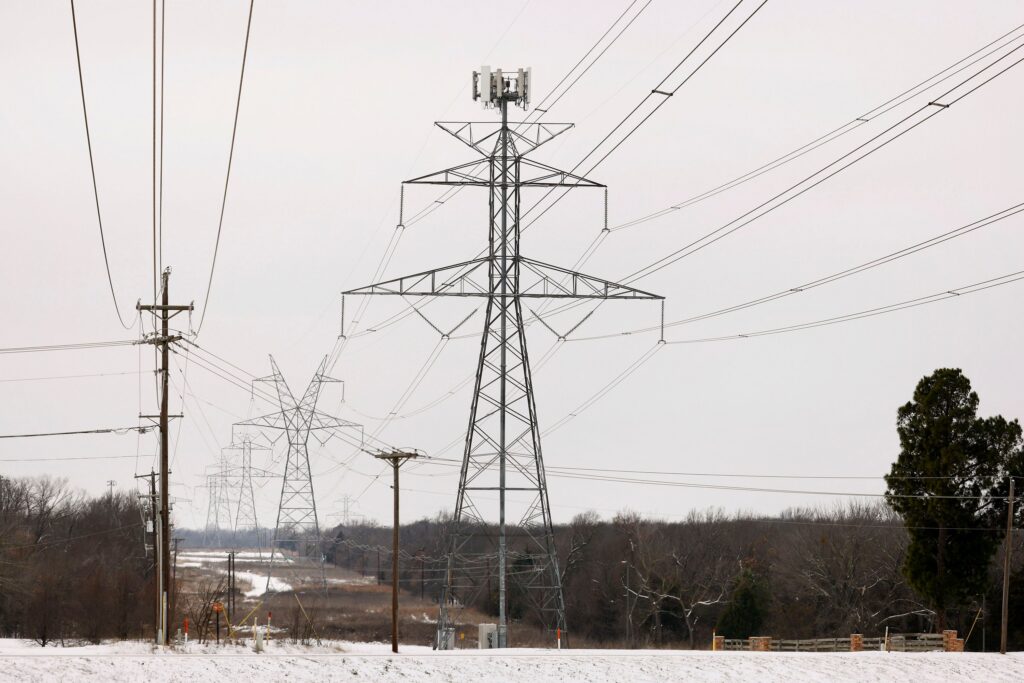
Colorado lawmakers move to curb eminent domain powers after Xcel dispute
Marissa Ventrelli
marissa.ventrelli@coloradopolitics.com
Updated 9 hours ago
After months of backlash over Xcel Energy’s use of eminent domain in eastern Colorado, lawmakers representing Elbert and El Paso counties are advancing legislation that would bar utilities from initiating property takings until they’ve secured state approval and all required...

As parents claim some AI chatbots encourage teen suicide, Colorado legislators eye regulation
Marissa Ventrelli
marissa.ventrelli@coloradopolitics.com
Updated 6 hours ago
Juliana Peralta of Thornton was a vibrant, happy kid, said her mom, Cynthia Montoya. Then, in the final months of 2023, Cynthia began to notice a change in her 13-year-old daughter. Peralta had become more withdrawn and was on her...

Trump to attend dignified transfer of six US service members killed by Iran
Christian Datoc, Washington Examiner
christian.datoc.washington.examiner@gazetteedit.wpenginepowered.com
Updated 7 hours ago
President Donald Trump will attend the soon-to-be-held dignified transfer of six American service members killed so far by Iran in Operation Epic Fury. White House press secretary Karoline Leavitt made the announcement during her Wednesday press briefing. “These heroes represent...

Judge declines to block potential Boebert challenger from going through assembly process in Colorado’s 4th CD
Ernest Luning
ernest.luning@coloradopolitics.com
Updated 9 hours ago
Congressional candidate Eileen Laubacher, one of the Democrats seeking to challenge Republican U.S. Rep. Lauren Boebert, can participate in the party’s caucuses and assemblies pending a court hearing later this month, a Denver judge ruled Tuesday in response to a...
Sanctuary cities declined 17,864 requests to hold illegal immigrants for ICE in 2025: Noem
Anna Giaritelli Washington Examiner
anna-giaritelli-washington-examiner@coloradopolitics.com
Updated 10 hours ago
Sanctuary cities and counties declined to turn over 17,864 illegal immigrants in police custody to Immigration and Customs Enforcement in 2025, according to the Department of Homeland Security. Homeland Security Secretary Kristi Noem testified before the House Judiciary Committee on...

Federal judge dismisses malicious prosecution claim against former Denver prosecutor
Michael Karlik
michael.karlik@coloradopolitics.com
Updated 11 hours ago
A federal judge concluded on Monday that a former Denver prosecutor could not be sued for allegedly causing the arrests of two plaintiffs after they failed to appear for trial on the scheduled date, even though the trial had been...

Judicial discipline commission reports increased transparency, increased submissions
Michael Karlik
michael.karlik@coloradopolitics.com
Updated 11 hours ago
The Colorado Commission on Judicial Discipline received 473 misconduct complaints about judges in 2025, which was nearly 29% higher than in 2024 and substantially greater than any time in the past decade. However, only 31 complaints were referred to the commission...
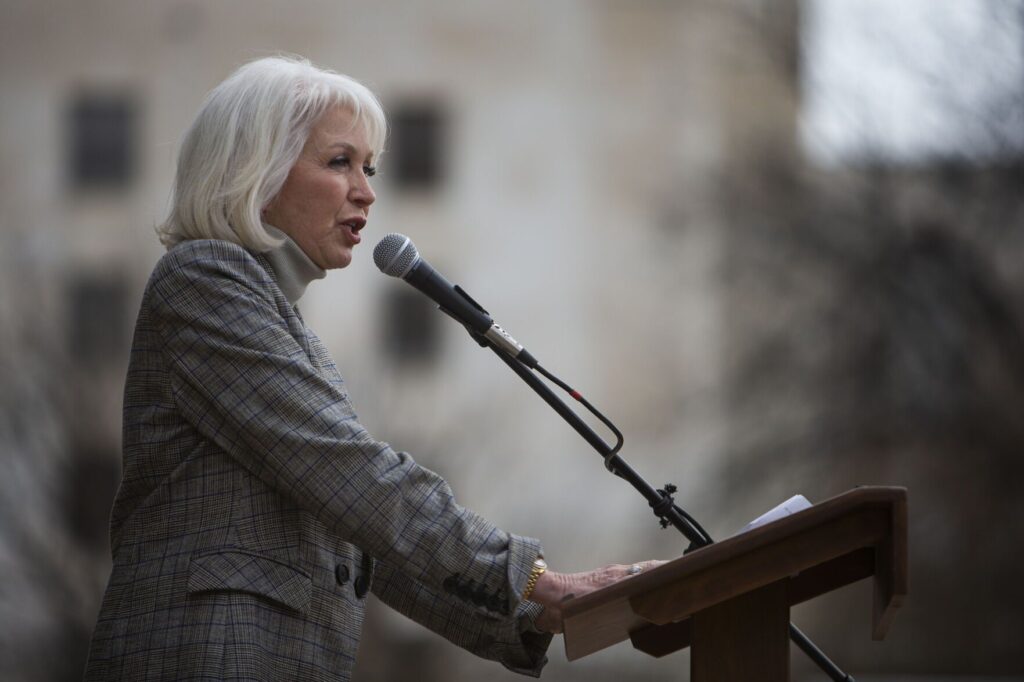
Colorado Gov. Jared Polis ignites fierce debate after raising clemency questions in Tina Peters case
Marianne Goodland
marianne.goodland@coloradopolitics.com
Updated 5 hours ago
Gov. Jared Polis ignited a political firestorm Tuesday night after weighing in on the prison sentences of two former Colorado officials — a Democrat and a Republican — convicted of attempting to influence a public servant. The comments quickly fueled...

Colorado Supreme Court signals intervention in dispute over treatment for trans children
Michael Karlik
michael.karlik@coloradopolitics.com
Updated 1 day ago
The Colorado Supreme Court ordered Children’s Hospital Colorado on Tuesday to explain why it should not direct the organization to resume providing certain types of services to transgender children in compliance with the state’s non-discrimination law. Last month, a Denver...
PREV
PREVIOUS

Colorado Supreme Court takes up another restitution appeal
The Colorado Supreme Court announced on Tuesday it will hear another case interpreting the procedure trial judges use when ordering criminal defendants to pay financial restitution to their victims. At least three of the court’s seven members must agree to review an appeal. In Colorado, when a convicted defendant is required to pay restitution, prosecutors typically […]

Fact-checking spin surrounding the ex-FBI informant arrested for Biden bribery claims
As the Justice Department fights to keep former FBI informant Alexander Smirnov behind bars, Republicans and Democrats are scrambling to fit Smirnov’s indictment into their partisan narratives about President Joe Biden‘s impeachment inquiry. David Weiss, the special counsel appointed to investigate Hunter Biden, charged Smirnov last week with making a false statement and creating a […]