

The trouble with America’s modern mass mistrust | HUDSON
Miller Hudson

The Boy Scout Law I pledged to observe as a teenager demands a dozen worthy qualities but begins: “A Boy Scout is trustworthy.” Suddenly, an epidemic of mistrust has emerged prompting everyone from New York Times columnist David Brooks on the right, to home-schooled Harvard and Yale Law wunderkind Jedidiah Britton-Purdy, now teaching at Duke University, on the progressive left, lamenting the collapse of trust in American institutions and each other. Britton-Purdy launches a recent essay in The Atlantic magazine with “Americans don’t trust one another, and they don’t trust government. This mistrust is so pervasive that it can feel natural, but it isn’t. Profound distrust has risen within my lifetime; it is intensifying, and it threatens to make democracy impossible.”
Recently Jim Hightower also noted in his Lowdown newsletter, ” In our country only about 10 percent say democracy is working for most Americans today, with the ‘Powers That Be’ not even trying to serve what the majority believes in, wants and needs.” We can probably assume the 10% who aren’t sure whether they think American government is working in their interests are the same 10% who answer “don’t know” to all polling inquiries. The shocker is a consensus apparently exists among both Democrats and Republicans regarding the failure of our political system. Certainly, they harbor differing grievances, but they share contempt for a political leadership that cossets the wealthy and powerful while ignoring the challenges facing the remaining 95% of their constituents.
Stay up to speed: Sign up for daily opinion in your inbox Monday-Friday
In 1964, as I was a freshman in college, 77% of Americans reported they trusted the federal government to do the right thing most of the time. By 2022, this confidence slipped to 22% — with trust in Congress cratering into single digits, 6% for the House and 8% for the Senate. Trust of the media, universities, the courts and even churches and public schools have evidenced a similar downward spiral. I would like to believe a measure of Colorado opinion would reveal a somewhat more optimistic assessment, but I fear this hope is merely my nostalgia for the frontier ethic where a man or woman’s word was their bond, and a handshake was a promise that would be honored. There are as many theories for why trust has evaporated as there are pundits — most of them suspiciously simplistic.
Yes, Vietnam and Watergate may have triggered an erosion of public trust decades ago, as did September 11tth and the financial destruction of the Great Recession more recently; but it’s been the failures of omission that have, I suspect, been more damaging to public trust. The internet scammers that seem a nuisance today are about to be emboldened with the arrival of artificial intelligence along with deep-fake video and voice technologies. It may be primarily the gullible, the elderly, the young and the naïve who fall victim now, but the damage is often substantial. Most of this could be prevented. When a whistleblower leaks documents to a journalist, government seems able to track them down within a month. Are we expected to believe they can’t identify, prosecute and imprison scammers?
There is money to be made in sowing distrust. And wherever there’s money, you will find lobbyists and their campaign contributions. If you spend more than a few minutes in bookstores these days, you will discover diatribes attacking Democrats who “hate America” and wish to destroy our country. Competing screeds accuse Republicans of lusting to impose a tyranny of the minority upon the nation — fascists in waiting for an opportunity to trade democracy for dictatorship. Though you might find a handful of such extremists at the outermost fringes of both the right and left, most of these claims are preposterous. After 40 years in Colorado politics, I’ve never met an elected official who hates his or her country. Nor, fortunately, is there any widespread corruption to be found. There are two parties, to be sure, each reliant on conflicting sources of information they tend to trust.
Democracies are designed to devise compromises from these conflicting viewpoints. This isn’t easy work. As Britton-Purdy explains, we should be striving “…for citizens of an intensely diverse country to be able to coexist in a time when our problems need political solutions; not to love one another, but to get along enough to wrestle with climate change, immigration, public safety, child-care, budget deficits, war — together.” That’s the goal. Reaching agreement demands trust — something difficult to achieve when 73% of voters under 30 say, “Most of the time, people just look out for themselves.” Have you ever noticed how much energy it takes to remain angry all the time? Anger sends us on a perpetual search for fresh things to be enraged about (when you are irritated by Taylor Swift cheering for her boyfriend, it’s time for some professional counseling).
Embracing mistrust is a way of abandoning the satisfactions of friendship and the benefits afforded from civic engagement. We are lucky enough to live in a time and place where we can determine the direction of our future together. No one gets everything they want in a democracy, but neither is anyone required to live under the edicts of fanatics who know what’s best for us whether we like it or not. Trust me on this!
Miller Hudson is a public affairs consultant and a former Colorado legislator.

Our legislature’s mission — absolve criminal conduct | George Brauchler
George Brauchler
george-brauchler@gazette.com
Updated 21 hours ago
As the dust settles on a primary election that should alert Coloradans to the downward dive public safety may take in November — our current attorney general and secretary of state have presided over a state that is now America’s...
Telling themes to take away from Tuesday’s primary elections | Paula Noonan
Paula Noonan
paula-noonan@coloradopolitics.com
Updated 1 day ago
Let’s be clear about how Colorado’s primaries arrived at these unexpected results. The most significant voting cohorts on both the Democratic and Republican sides were women from 65 to 75-plus. These senior women voters selected Phil Weiser and have given...

Aurora Mayor Mike Coffman on what sleeping in a homeless shelter is teaching him | The OpEdge Podcast
Tony Olivero
tony.olivero@gazette.com
Updated 2 days ago
Aurora Mayor Mike Coffman joins The OpEdge to explore why he’s spent every Friday night since February sleeping at a homeless shelter. Coffman tells host and investigative columnist Jimmy Sengenberger what the experience is teaching him about homelessness, why he...
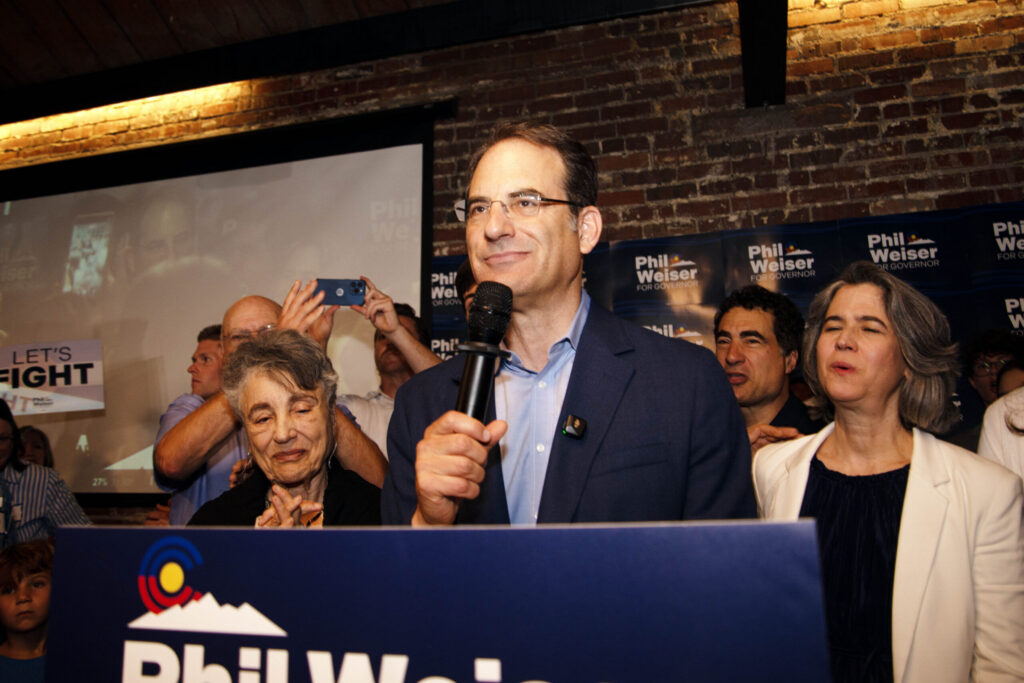
Landlocked Colorado’s sea-change primary | ANALYSIS
By Eric Sondermann
by-eric-sondermann@coloradopolitics.com
Updated 1 day ago
Colorado’s primary elections held in the doldrums of early summer tend to be routine affairs, most often predictable and by the book. Tuesday’s battlefield was anything but. It is no exaggeration to call it a sea change. Its ripples will...

If we lose our coverage, we lose our lives | PODIUM
Colorado Politics
colorado-politics@coloradopolitics.com
Updated 1 day ago
By Thomas Buckley My oncologist asked: “Polycythemia Vera. Do you know what that means?” Earlier, I lived in blissful ignorance, unaware I potentially carried a myeloproliferative neoplasm encoded within my DNA. “Yes,” I answered, “A rare form of blood cancer,...
Leading Colorado toward modern mental health solutions | GUEST COLUMN
Colorado Politics
colorado-politics@coloradopolitics.com
Updated 4 days ago
By Sean Camacho America is facing a silent crisis. Millions of Americans are living with invisible illnesses like generalized anxiety disorder (GAD), major depressive disorder (MDD), and post-traumatic stress disorder (PTSD), which decrease quality of life and, amid limited treatment...
Colorado’s workers can’t afford a decline in tourism | GUEST COLUMN
Colorado Politics
colorado-politics@coloradopolitics.com
Updated 4 days ago
By Terrance Carroll Work is about more than a paycheck. It is about dignity, stability and the ability to build a life, to provide for family, to contribute to community, and to move forward with purpose. That is why we...

Add Lynn Bartels to Colorado’s roll call of legends | Dick Wadhams
Dick Wadhams
dick-wadhams@coloradopolitics.com
Updated 5 days ago
A few weeks after the Rocky Mountain News shut its doors forever in 2009, more than 600 Republicans gathered for the state party’s annual Centennial Dinner. Lamenting the historic significance of the loss of one of Colorado’s great daily newspapers,...

Conservation efforts emphasize the lesser prairie chicken | Rachel Gabel
Rachel Gabel
rachel-gabel@coloradopolitics.com
Updated 5 days ago
Reid DeWalt, deputy director of Colorado Parks and Wildlife, spoke to the Water Resources and Agriculture Review Committee about the Lesser Prairie Chicken and moving conservation forward. He said in 2026, CPW staff counted 77 males on 13 leks, a...

Colorado’s regulations should address policy challenges only as truly needed | Miller Hudson
Miller Hudson
miller-hudson@coloradopolitics.com
Updated 1 day ago
As Colorado approaches its 150th birthday, we should remember its first 100 years were characterized by repeated boom-and-bust economic cycles. Dependence on mineral extraction and agricultural commodity prices was subject to the volatility of these markets. In 1972, as I...
PREV
PREVIOUS

Fankhauser a force who fought the good fight for Colorado's cattlemen | GABEL
Rachel Gabel Terry Fankhauser came to Denver to join the staff at the Colorado Cattlemen’s Association in 2000, a ranch kid from Kansas nearly straight out of K-State. His family ranch, established in 1906, is in Madison, Kansas, near the Verdigris River south of Emporia. CCA was established in 1867, and is the nation’s oldest […]

Court ruling stays GOP suicide | Colorado Springs Gazette
A federal judge on Friday may have saved Colorado’s Republican Party. At the very least, he prevented a small-scale political suicide by what’s left of it. Indeed, the Republican Party is private. Private entities should do as they please within the confines of law. The merits regarding the outcome of this case remain in question […]