

What did President Biden expect? | SLOAN


Kelly Sloan

In the wake of the attack by an Iranian proxy militia on a U.S. base in Jordan last Sunday in which three American service members were killed and another 25 wounded, the question is circulating: What did President Joe Biden expect?
Since the Oct. 7 mass terrorist attack by Hamas on Israel, Iran has flexed its muscles throughout the wider Middle East. There have been somewhere on the order of 160 attacks on U.S. forces scattered around the region by militias that either receive direction from, or are wholly owned subsidiaries of, the Iranian military. Meanwhile, Iran-backed Houthi rebels have effectively choked off the Red Sea through daily attacks on merchant vessels and Western naval assets. Any of these incidents would, in any rational mind and time, warrant a rather large-scale, decisive military strike on the perpetrating nation, Iran.
Stay up to speed: Sign up for daily opinion in your inbox Monday-Friday
In fact, one could argue these acts are enough of a cassus belli to declare war on the Islamic Republic of Iran. Professor George Kennan suggested just that back in early 1980 in response to a Senate Foreign Relations Committee question concerning what the U.S. ought to have done in response to the Iranian taking of American hostages. Kennan, you may recall, was the brilliant American historian and diplomat who, notwithstanding his brilliance, struggled most of his career to conceive of a scenario in which an American show of arms might have a justifiable place. And yet his advice to the horrified Senate panel was to declare war on Iran.
Now obviously that is off the table. For one thing, in order to declare war today we would need to assemble a task force of constitutional scholars and historians to instruct Congress and the White House on just how exactly one does such a thing, based solely on historical records. Every war we have fought in the last nearly-80 years has been done without the frippery of a formal declaration. And in any case, that is so far removed from the policies being pursued by the current administration one might just as well suggest President Biden challenge the Ayatollah to a duel.
Indeed, the president’s response to these aggressions has been, at best, tepid, halting and obviously ineffectual. It has been marked not by a desire to exert the force necessary to keep the shipping lanes open and deter further acts of aggression, but by a somewhat crippling fear of provoking an “escalation” with Iran. That fear has translated into weakness, either actual or perceived, a distinction which is immaterial on the foreign stage.
Timid responses to aggression have not had a great run of success in recent history. Neville Chamberlain’s policy of appeasement gave Hitler a large chunk of eastern Europe to butcher and ultimately started World War II. Weak and ineffectual foreign policy in the 1970s gave the West the oil crisis, OPEC and the Soviet invasion of Afghanistan. Former President Bill Clinton’s indecision and lack of focus kept Osama bin Laden alive long enough to do his worst. Obama’s feckless response to Russia’s 2014 annexation of Crimea paved the way to Putin’s later invasion of the rest of Ukraine. Trump’s disinterest in following through in Afghanistan precipitated the events which ended up in Biden completely bollixing the abandonment a few years later, an abandonment well noted by much of the rest of the world.
So what ought to be done now? Well to begin with, we should face and accept two facts regarding the Middle East: one, we cannot fix it and, two, we cannot ignore it. A great deal of the world’s commerce, including ours, passes through the region, especially the Red Sea. Islamist terrorism’s ideological penchant for exporting itself should not be forgotten, and Iran’s strategic ambitions, getting closer every day to being nuclear-backed, over a region in which American economic and strategic interests are so indispensable, dispel any fantasy of disengagement. And if that doesn’t do it, just consider the interest which Russia and China are devoting to Iran. There is a reason why the Middle East has featured so prominently in every presidential administration since at least Nixon.
There is also a reason why so many American presidents failed in their efforts to bring peace to the region. We need to emancipate ourselves from the superstition our influence and presence alone will reorganize the Middle East along Western lines and resolve the problems that plague it. What we can do — and must do — is proactively and aggressively defend our interests and our allies in the region. Just as Israel is now at war with people who made war on Israel, we — whether President Biden wishes to admit it or not — are at war with a nation which made war on us. And to continue to ignore the fact, hoping it will go away, will simply invite the escalation which the president is so desperate to avoid.
Kelly Sloan is a political and public affairs consultant and a recovering journalist based in Denver.


Colorado’s role in Spirit Airlines’ demise should not be ignored | GUEST COLUMN
Colorado Politics
colorado-politics@coloradopolitics.com
Updated 1 day ago
By Robin Rossenfeld At a time when Colorado families are already struggling with rising transportation costs, the collapse of Spirit Airlines could not come at a worse moment. According to the U.S. Bureau of Labor Statistics, prices in the Denver-Aurora-Lakewood...
How would Weiser, Bottoms, Bennet, Kirkmeyer address Colorado’s affordability problem? | Paula Noonan
Paula Noonan
paula-noonan@coloradopolitics.com
Updated 2 days ago
It’s decision time in Colorado as primary election ballots hit mailboxes this week. Democrats will pick their candidates in every statewide race, and Republicans select candidates for governor and Attorney General. GOP operatives wanted to exclude unaffiliated voters from their...
The new Trustees Report is a wake-up call for Congress | GUEST COLUMN
Colorado Politics
colorado-politics@coloradopolitics.com
Updated 2 days ago
By Sara Schueneman Every year, the Social Security Trustees Report provides an important snapshot of the long-term outlook for one of America’s most popular and important initiatives. This year’s report sends a clear message: Congress needs to act. The latest...

Colorado lupus patients can’t afford ‘most favored nation’ drug pricing | PODIUM
Colorado Politics
colorado-politics@coloradopolitics.com
Updated 2 days ago
By Kristy Kibler When you live with lupus, you learn quickly waiting is not an option. Lupus is unpredictable: flares can escalate overnight, organs can be damaged quickly, and access to the right treatment at the right time can determine...

Dustin Zvonek pinpoints Colorado’s housing-first homelessness failures | The OpEdge Podcast
Tony Olivero
tony.olivero@gazette.com
Updated 4 days ago
As homelessness continues to persist across Colorado, former Aurora City Councilman Dustin Zvonek paints a compelling picture of how the primary policy prescription may be enabling the root cause more than providing a permanent solution. In this OpEdge Podcast conversation...
Robert Rodriguez spoke softly and carried a big stick | GUEST COLUMN
Greg Fulton
greg-fulton@coloradopolitics.com
Updated 4 days ago
President Teddy Roosevelt was known to have said, “Speak softly and carry a big stick.” The phrase was a reference to his leadership style, in which one negotiates in a civil and peaceful manner while also making clear one can...

CPW has a weighty decision to make on a recent wolf kill | Rachel Gabel
Rachel Gabel
rachel-gabel@coloradopolitics.com
Updated 6 days ago
Gov. Jared Polis made three new appointments to the Colorado Parks and Wildlife Commission and reappointed both Richard Reading, at-large representative, and vice chair Gabriel Otero, sportspersons representative who resides west of the Continental Divide. Appointed as a production agriculture representative residing west of the Continental Divide, John LeCoq of...

Bennet wants to be Colorado’s next governor | Cronin and Loevy
Tom Cronin Bob Loevy
tom-cronin-bob-loevy@coloradopolitics.com
Updated 6 days ago
U.S. Sen. Michael Bennet is considered the front-runner in the Colorado Democratic Party primary contest for governor. His major opponent is current Colorado Attorney General Phil Weiser. The Democratic primary election is June 30. Registered Democrats and unaffiliated voters who choose to can vote in this election. Ballots are being mailed...

Is Jared Polis turning into Dick Lamm? | Jon Caldara
Jon Caldara
jon-caldara@coloradopolitics.com
Updated 1 week ago
By Jon Caldara Dick Lamm was Colorado’s longest-serving governor, at 12 years in office (a close second goes to Roy Romer). And during those three terms, he slowly drifted to the right. Not because he became a Republican or even...
A tale of two debates | Vince Bzdek
Vince Bzdek
vince.bzdek@gazette.com
Updated 7 days ago
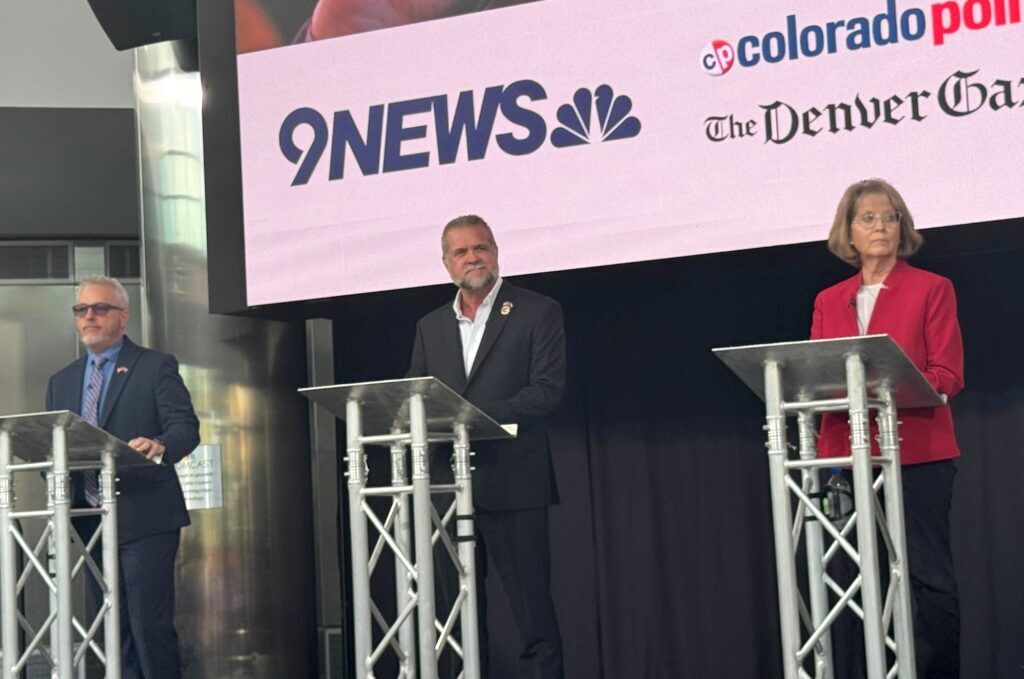
Ballots go out Monday as the June 30 state primary elections bear down on us. As a result, it is suddenly the season of proliferating political debates, and there have been some doozies already. I had the chance to see two very...
PREV
PREVIOUS

Rescheduling medical marijuana opens Pandora’s box | OPINION
John M. Williams Picture this — hundreds of dispensaries closed in Colorado, people having to go to a local pharmacy to get their marijuana, then paying out of pocket because their drug insurance policy doesn’t cover it. Add to this, the loss to Colorado of hundreds of millions in annual tax revenue and tourism dollars. […]

Coloradans crave candor amid consequential illegal immigration crisis | DUFFY
Sean Duffy If you roll out the welcome mat, don’t bellyache when people show up. Think back a few years to when then-Denver Mayor Michael Hancock famously hung a massive sign across the façade of the City and County Building declaring “Welcome Immigrants.” Hancock fancied himself a 21st-century Statue of Liberty, standing at the city […]