

Help Pueblo by going atomic | Colorado Springs Gazette

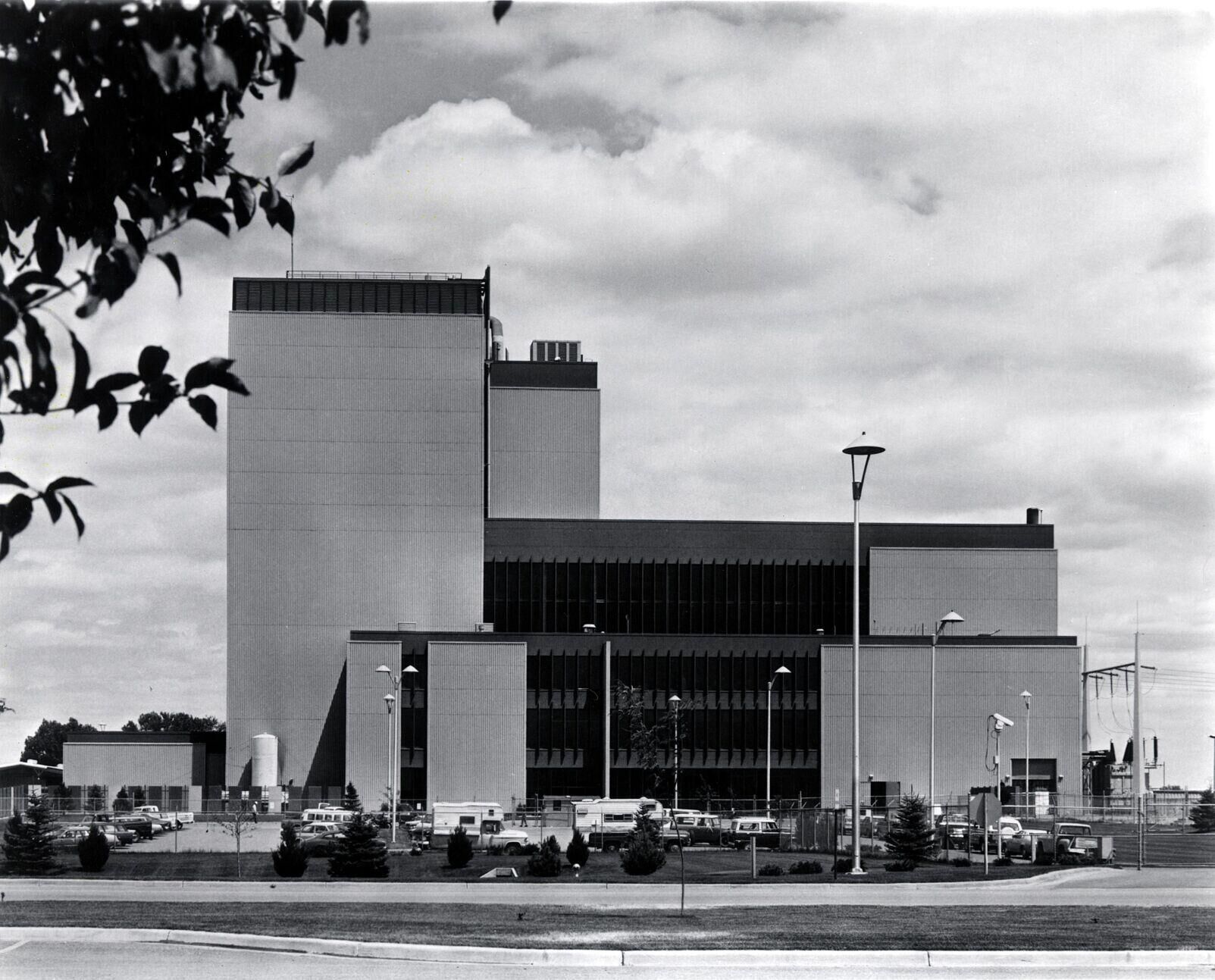
Energy is health and wealth. Pueblo needs both, which means going nuclear.
Modern energy extraction has facilitated every major advancement in human history, including a successful march toward zero poverty and starvation around the globe.
The more concentrated an energy source, the higher its value. Like superfoods provide a high concentration of nutrition, dense energy sources – oil, gas, coal and fission – deliver a lot for a little.
One kilogram of coal can produce 8 kilowatt hours of heat, while a kilogram of oil generates 12.
A kilogram of uranium – no less natural than broccoli – can deliver 24,000,000 kilowatt hours of electricity, while generating no greenhouse gases.
This makes nuclear power the only clear path to achieving the zero emissions goals of environmentalists and the Green New Deal.
Stay up to speed: Sign up for daily opinion in your inbox Monday-Friday
To facilitate the irresponsible race to clean energy, Xcel Energy plans the closure of the coal-fired Comanche 3 power plant in Pueblo County by Jan. 1, 2031. Like most clean energy schemes, the closure will hurt a poor community to suit the demands of wealthy environmentalists and politicos mostly in Denver, Boulder, and Aspen.
Excel does not provide power to Pueblo, but the plant employs 77 locals directly and 160-plus indirectly. The operation generates about $20 million in annual tax payments that support local needs.
To lose Comanche without a replacement is to devastate Pueblo – a community with a high poverty rate and a median household income of $35,000 less than the state average.
The committee studied 12 energy generation technologies and 10 of them would generate less than $2 million in taxes each year for Pueblo. As reported in the Pueblo Chieftain, a carbon capture cycle gas plant would generate $16.52 million in taxes while providing 20 to 25 jobs with salaries between $80,000 to $120,000.
An advanced nuclear power plant would generate $95.29 million in taxes and create up to 300 jobs that pay between $60,000 and $200,000. By embracing concentrated energy, the green transition would benefit Pueblo after years of causing harm.
“The only thing that is going to make Pueblo whole with the closure of Comanche 3 is going to be advanced nuclear,” said Frances Koncilija, the committee co-chair and owner of Koncilija Energy Law and Policy.
A Pueblo native, Koncilija supports clean energy. As a former member of the Colorado Public Utilities Commission, she has seen the green transition oppress her hometown.
“Pueblo’s foundation was built on coal, steel, and iron,” said committee member Sarah Blackhurst, as quoted by the Chieftain. “That’s true, but its future is built on the atom. This is the correct way to make this community prosper.”
Most importantly, it would be safe. The United States has used 93 nuclear power reactors in 28 states, beginning in the 1960s, and seen little carnage. Globally, we have experienced more than 18,500 reactor years and had two major accidents.
World Health Organization data shows the mortality rates per billion kilowatt hours are 100 for coal, 36 for petroleum, 24 for biomass, 4 for natural gas, 1.4 for hydropower, 0.44 for solar power, and 0.15 for wind.
Nuclear is the safest of all, with a human death rate of 0.04 for each billion kilowatt hours produced. Cold weather and a lack of heat kill at a considerably higher rate than all the world’s nuclear power plants.
The committee got this right, and the recommendation awaits approval by Xcel and the utilities commission.
For middle- and lower-income households, the war on traditional fuels isn’t a hobby or a fashion statement. It is a burden of unpaid bills, empty cupboards, and despair. A modern, small-scale nuclear plant would help the community and clean the air.
Colorado Springs Gazette Editorial Board

Untraditional education platform makes fool out of state ed department | Paula Noonan
Paula Noonan
paula-noonan@coloradopolitics.com
Updated 11 hours ago
It’s April Fool’s week and ERBOCES, Education Re-envisioned BOCES, is one of the state’s biggest jokers. This untraditional education platform authorized through five founding school districts including Falcon School District 49 in El Paso County has played the Colorado Department...

‘Steel for fuel’ — but bill consumers for both | PODIUM
Colorado Politics
colorado-politics@coloradopolitics.com
Updated 1 day ago
By Sarah Montalbano In 2018, Xcel Energy, an investor-owned utility serving millions of customers across eight states, was the first U.S. utility to pledge to deliver 100% carbon-free electricity by 2050. Eight years later, Xcel is pleading with Colorado...

Mental health education for coaches can help young athletes on and off the field | OPINION
Colorado Politics
colorado-politics@coloradopolitics.com
Updated 1 day ago
By Erin Harrop Youth athletics have become significantly more intense and competitive. The physical effects of training or injury can be grueling — but so are the mental health effects, particularly as performance pressure increases. As leaders and mentors, coaches...
Legislature busy sending lots of minor bills for governor’s signature | Hal Bidlack
Hal Bidlack
hal-bidlack@coloradopolitics.com
Updated 2 days ago
One of the benefits of being, well, I guess technically, some type of journalist writing here on Colorado Politics, isI get on interesting mailing lists. A while back, some kind soul in the governor’s office added me to the daily...
SB26-140 will protect access to rare disease treatments | OPINION
Colorado Politics
colorado-politics@coloradopolitics.com
Updated 2 days ago
By Amanda Boone There are moments in life that leave an indelible mark on your soul. For me, one came in the middle of the night when I took a full breath for the first time in over a decade....
Lawmakers hold the key to solving Colorado’s mental health crisis | OPINION
Colorado Politics
colorado-politics@coloradopolitics.com
Updated 2 days ago
By Ryan M. Burkhart The U.S. is currently in the midst of a mental health crisis, and here in Colorado, more than 28% of residents live with a mental health condition. Unfortunately, a majority of Colorado residents are currently locked...
‘Change the terrain’ for deliberative democracy | FEEDBACK
Colorado Politics
colorado-politics@coloradopolitics.com
Updated 2 days ago
Vince Bzdek’s Gazette piece on James Fishkin’s experiments in deliberative democracy is an interesting read, though the very factors that produced its results — balanced information, expert moderation, and structured discussion — are what everyday politics lacks, and precisely what...

Killing off the Regional Transportation District | Miller Hudson
Miller Hudson
miller-hudson@coloradopolitics.com
Updated 3 days ago
This column is appearing the same day state Sen. Matt Ball (D) of Denver and his legislative co-sponsors unveil legislation implementing many of the recommendations advanced by last summer’s Regional Transportation District Accountability Committee. Although it isn’t readily apparent, they...

Green energy shouldn’t come at expense of Colorado farmers, ranchers feeding us | Rachel Gabel
Rachel Gabel
rachel-gabel@coloradopolitics.com
Updated 3 days ago
In 2023, the Department of Energy released the National Interest Electric Transmission Corridors (NIETC) study identifying areas they speculate would experience transmission capacity constraints of congestion. The map identified more than 2 million acres or 24% of the state of...

Bill in state legislature would put large apartment projects in single-family neighborhoods | Cronin & Loevy
Tom Cronin Bob Loevy
tom-cronin-bob-loevy@coloradopolitics.com
Updated 3 days ago
There is an old joke that goes something like this: “When the state legislature is in session, no person and their property are safe.” That is not a joke in the older, more traditional neighborhoods that surround the downtown regions...
PREV
PREVIOUS

AG Weiser picks pot over Colorado’s kids | Colorado Springs Gazette
Big Marijuana is waging a war on Colorado’s children – just as Big Tobacco has done for generations. High-potency concentrates are sold in nifty little packages and pre-loaded into disposable, battery-powered vape pens that can be concealed in a kid’s backpack or pocket. Then, they’re inhaled discreetly on the fly – maybe on the way […]

The rot on campus | SLOAN
Kelly Sloan Back in the early 1960s, William F. Buckley famously quipped he “would rather be governed by the first 2,000 people in the Boston telephone directory than by the 2,000 people on the faculty of Harvard University.” That statement has sprung to mind often, and taken on rather special meaning, as the drama involving […]