

Federal judge allows ‘supermax’ prisoner’s limited religious freedom claims to proceed

A federal judge last week permitted a Muslim man serving a life sentence in Colorado’s “supermax” prison for terrorism-related offenses to pursue a limited number of religious freedom claims against the government.
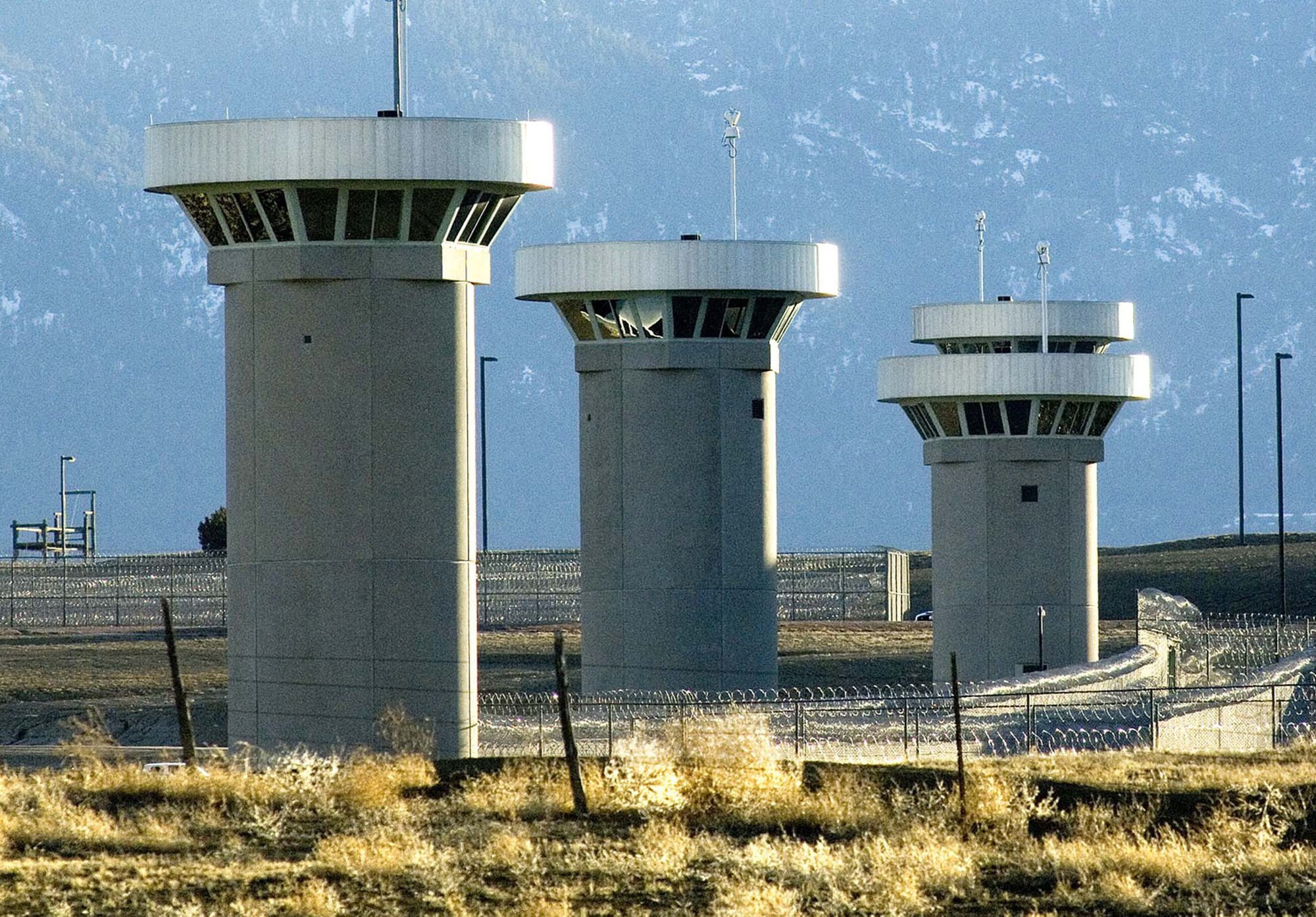
Mostafa Kamel Mostafa, also known as Abu Hamza, arrived at the U.S. Penitentiary – Administrative Maximum Facility in Florence in 2015. A British citizen, Mostafa was extradited to the United States and convicted of hostage taking, providing material support to terrorists and conspiring to provide goods and services to the Taliban.
As an inmate at the highly secure prison, abbreviated “ADX,” he alleged multiple constitutional violations, ranging from prison staff assaulting him and failing to accommodate the exercise of his Muslim faith to withholding basic hygiene items from Mostafa – who, as a double amputee, has difficulty functioning with prosthetic arms.
In a pair of Jan. 3 orders, U.S. District Court Chief Judge Philip A. Brimmer significantly narrowed the scope of Mostafa’s lawsuit. For many claims, Brimmer found Mostafa had not made full use of the internal prison grievance process, which is a prerequisite for filing suit.
However, Brimmer declined to dismiss Mostafa’s allegations that ADX officials were denying him access to a religious diet and the ability to wash himself in accordance with his faith, and they unreasonably prohibited him from contacting an attorney.
Mostafa’s lawsuit seeks monetary damages, a removal of the restrictions on his religious exercise and the provision of prosthetics that enable him to maintain his hygiene.
Mostafa was the leader of a London mosque until 2003. British authorities arrested and charged him with inciting murder and racial hatred. While he was imprisoned, the U.S. sought to extradite him for his role in taking hostages in Yemen in 1998 – resulting in four deaths – and conspiring to establish a “terrorist training camp” in Oregon, among other acts.
The European Court of Human Rights weighed Mostafa’s concerns about torture and inhumane treatment if he were extradited and confined at ADX, but in 2012 cleared the path for his transport to the U.S.
“Where there are limitations on the services provided, for example restrictions on group prayer, these are necessary and inevitable consequences of imprisonment,” the court wrote of ADX. Even if a detainee’s rights were violated, there would be recourse through an “administrative remedy programme and the federal courts.”

Following Mostafa’s terrorism convictions in New York, he entered ADX. Representing himself at first, but then with the assistance of pro bono counsel, Mostafa filed suit in 2020 alleging:
? ADX does not permit him to pray with other Muslims, serve halal food to him in a way he can access given his physical disabilities, or enable him to effectively cleanse himself before prayer
? Muslim prisoners as a group are subject to stricter, unnecessary prohibitions on their religious exercise
? ADX officials assaulted him while he underwent a hunger strike
? The prison constrained his ability to communicate with his children, grandchildren and lawyers
? His rights under federal disability law were violated by the provision of ineffective or dangerous prostheses
The various terrorism-related restrictions that still apply to Mostafa are “an exaggerated response to the attacks on the World Trade Center and Pentagon over 20 years ago,” wrote his attorney, Paul Wolf.
The government defended the conditions placed upon Mostafa, citing his “demonstrable jihadist proclivities” and the “sprawling network of terrorists Mostafa has spawned.”
“Prison employees must make difficult judgment calls about how to manage inmates, particularly one like Mostafa who will complain of everything – even the offer of custom-built prostheses,” wrote then-Assistant U.S. Attorney Susan Prose, who has since joined the bench as a federal magistrate judge. “No plausible inference can be drawn that Mostafa faces conditions falling below the minimal civilized measure of life’s necessities.”
Brimmer concluded most of Mostafa’s claims were not viable for various reasons, including the near-prohibition on prisoners being able to sue federal officials for money over constitutional violations, a recent precedent set by the U.S. Supreme Court.
Even though the government submitted statements from prison officials asserting Mostafa did have access to a religious diet and was outfitted with a special cell to address his concerns over hygiene, Brimmer declined to dismiss those claims. He noted such evidence was more appropriate for later stages of the litigation.
Otherwise, Brimmer agreed with the government that Mostafa had not shown how group prayer restrictions violated Mostafa’s right to equal protection under the law, or that the prohibitions on communicating with his children and grandchildren were unreasonable.
The lawsuit “does not allege that Mr. Mostafa’s sons and stepsons have no connections to terrorist activities or organizations,” he noted.
One defendant, a nurse identified only as “William,” did not seek to dismiss the claim against him, specifically that he refused to assist Mostafa put a bandage on his bleeding arm stump. Consequently, Brimmer left the claim intact.
The case is Mostafa v. Garland et al.


10th Circuit partially revives lawsuit over 2020 Denver protest injuries
Michael Karlik
michael.karlik@coloradopolitics.com
Updated 21 hours ago
The Colorado-based federal appeals court revived a man’s claims against Denver on Friday after concluding a trial judge resolved the case in the city’s favor without analyzing two of the three instances of alleged excessive force and other constitutional violations....
Federal judges find Colorado immigration judge violated several orders
Michael Karlik
michael.karlik@coloradopolitics.com
Updated 22 hours ago
Multiple federal judges in Colorado have freed people from immigration custody after determining that one immigration judge violated their directives for properly conducting bond hearings. For nearly a year, Colorado’s U.S. District Court has faced a flood of “habeas corpus” petitions...

Misconduct complaints from ex-Colorado judicial discipline director dismissed against federal judges
Michael Karlik
michael.karlik@coloradopolitics.com
Updated 2 days ago
The administrative body for the Denver-based federal appeals court upheld a finding last week that misconduct complaints against Colorado’s chief federal trial judge and the chief appeals judge warranted dismissal and appeared to be a “litigation tactic” by the complaining...
First-ever Red Rocks naturalization ceremony draws most diverse group of new citizens
Michael Karlik
michael.karlik@coloradopolitics.com
Updated 23 hours ago
Colorado’s federal trial court held its first-ever naturalization ceremony for nearly 300 new citizens on Thursday at Red Rocks Park and Amphitheatre. “We’re doing it to commemorate the 250th anniversary of the Declaration of Independence and the United States. Red...

Jeffco taxpayers could be on the hook for a possible child sex assault settlement
Matt Kyle
matt.kyle@denvergazette.com
Updated 1 day ago
Taxpayers may end up on the hook for a child sexual assault settlement, possibly worth up to $15 million, after Jeffco Public Schools failed to notify its insurance company in a timely manner about the case. The incident stems from...
10th Circuit finds no fair housing violation by Littleton landlord for worker’s alleged rape of tenant
Michael Karlik
michael.karlik@coloradopolitics.com
Updated 20 hours ago
The Denver-based federal appeals court concluded on Monday that Littleton’s housing authority could not be held liable for a maintenance worker’s alleged rape of a tenant, as the worker’s employment did not provide any special access to the victim. A...

Jeffco Public Schools sues Trump administration to protect funding after alleged transgender policies violation
Matt Kyle
matt.kyle@denvergazette.com
Updated 2 days ago
In the wake of several threats by the Trump administration to revoke federal funding, Jeffco Public Schools filed a lawsuit against the Department of Education seeking to protect that badly needed money. Jeffco has been under investigation by the DOE’s...
Denver detox center did not violate man’s rights with 10-hour hold, 10th Circuit says
Michael Karlik
michael.karlik@coloradopolitics.com
Updated 4 days ago
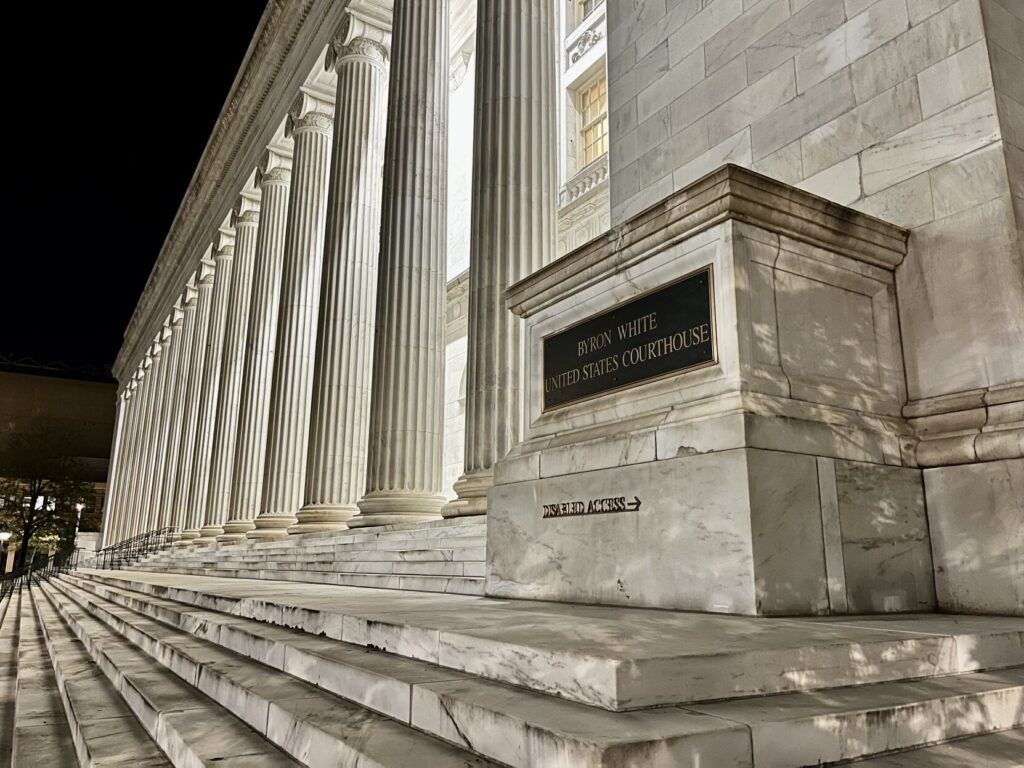
The Colorado-based federal appeals court concluded on Tuesday that Denver’s detoxification facility did not violate a man’s rights by holding him against his will for 10 hours until his blood alcohol content was projected to reach zero. Unusually, Brian Garrett’s...

Federal judge clarifies ex-GOP treasurer candidate’s burden to prove defamation claims
Michael Karlik
michael.karlik@coloradopolitics.com
Updated 4 days ago
A federal judge clarified last week that businessman and former Republican statewide candidate Brian Watson will need to surmount a higher hurdle in proving his claim that a party guest’s alleged description of him as a “criminal” amounted to defamation....
Colorado board permits state to appeal injunction against arthritis drug price cap
Marissa Ventrelli
marissa.ventrelli@coloradopolitics.com
Updated 4 days ago
A Colorado board voted Friday to allow the Attorney General’s Office to fight an injunction against a price cap on a drug that treats arthritis. A U.S. district court judge had granted the company Amgen a preliminary injunction, temporarily blocking...
PREV
PREVIOUS

Veteran state lawmaker Bob Gardner joins GOP primary to succeed Doug Lamborn in Colorado's 5th CD
State Sen. Bob Gardner, a Colorado Springs Republican, told Colorado Politics late Tuesday that he is running for the seat held by retiring U.S. Rep. Doug Lamborn. “I made the decision today that I’m a candidate for the Republican nomination for the 5th Congressional District,” Gardner said in an exclusive interview. “We’re taking the steps […]

Doug Lamborn's 17-year legacy in Congress includes battles with Big Bird, landing Space Command
After representing El Paso County in Congress for nearly a generation, Republican U.S. Rep. Doug Lamborn stunned observers last week when he announced that he plans to retire, rather than seek reelection this year, after nine terms in office. The 69-year-old Kansas-born attorney said he intends to devote the rest of the year to legislating […]