

Only 1 out of 550 homeless people in temporary shelters opted for treatment program

Out of 550 homeless people who moved into temporary shelters upon the urging of Denver officials, only one left for a treatment program, an early outcome that underscores the difficulties Mayor Mike Johnston faces as he grapples with one of his city’s most visible crises.
Both advocates of a “housing first” approach and a “treatment first” strategy agree that metro Denver’s homeless population faces a daunting drug overdose crisis. So far this year, 477 people have died from drug overdoses in Denver – homeless people made up 181 of those deaths or about 38%.
There is a month left in the year, and statistics may experience a lag of several weeks.
“There is no treatment unless the person specifically asks for it,” Craig Arfsten, president and co-founder of Safe and Clean Denver, told The Denver Gazette. “Sadly, the truth is they rarely ask for help.”
Denver’s homeless housing dashboard shows that out of 550 homeless people who transitioned into temporary shelters, 28 “exited.” Of that number, four went into other shelters, one died, four went to jail, and five went back to the streets.
In addition, 13 left without without telling the city they were leaving or where they were going.
Denver launched a new version of the dashboard to calculate the long-term “success” for homeless people in temporary housing for over 30 days, according to the mayor’s homeless czar, Cole Chandler.
“We’re excited that more than 90% of people are still in the program 30 days after move-in,” Chandler told city councilmembers last week.
The city’s dashboard changed or at least its presentation did.
On Monday, the dashboard’s language changed the label to 550 “people moved indoors.” Last week, the dashboard showed 586 were “housed.”
The dashboard says people’s average length in shelters is 24 days, and that 89% who moved into transitionary housing units more than 30 days ago are still there.
Councilmembers earlier cited the Johnston’s administration definition of people who are “officially housed” to mean mean individuals who stayed in shelters a minimum of 14 days.
“There was some miscommunication about that,” Chandler said. “Someone counts as a person who’s ‘indoors’ when they move in.”
Johnston earlier expressed confidence he can deliver on his promise to get 1,000 homeless off of the city’s streets before the year ends.
“I think it’s more and more possible every day,” Johnston told The Denver Gazette. “I am optimistic that we have a path to get there. But more than that, I’m grateful every time I get to see one person who’s made it off the streets and come indoors.”
Plans are afoot to move more than 400 homeless people from encampments and into temporary shelters over the next several days, Denver officials said.
A key part of the strategy is sweeping seven homeless encampments, as the administration is racing to get 1,000 people off of the city’s streets before the year ends.
“The current House1000 is not focusing on treatment,” said Arfsten of Safe and Clean Denver. “The mayor is promoting the ‘housing first’ approach, which says you put a roof over everyone’s head. When they are ready for treatment they will ask for it.”



Gov. Polis names new leaders for Colorado health agencies in wake of Medicaid turmoil
Marianne Goodland
marianne.goodland@coloradopolitics.com
Updated 54 minutes ago
Gov. Jared Polis, on Thursday, announced he was appointing Gretchen Hammer to serve as acting executive director of the Colorado Department of Health Care Policy and Financing, and deputy executive director Stephanie Beasley to become the next commissioner of the...

Federal judge releases man immediately as consequence for immigration judge disobeying orders
Michael Karlik
michael.karlik@coloradopolitics.com
Updated 1 hour ago
A federal judge ordered a man’s immediate release from immigration detention on Thursday after finding an immigration judge disregarded his prior orders requiring a bond hearing. For the past year, Colorado’s federal district court has faced a flood of “habeas corpus”...
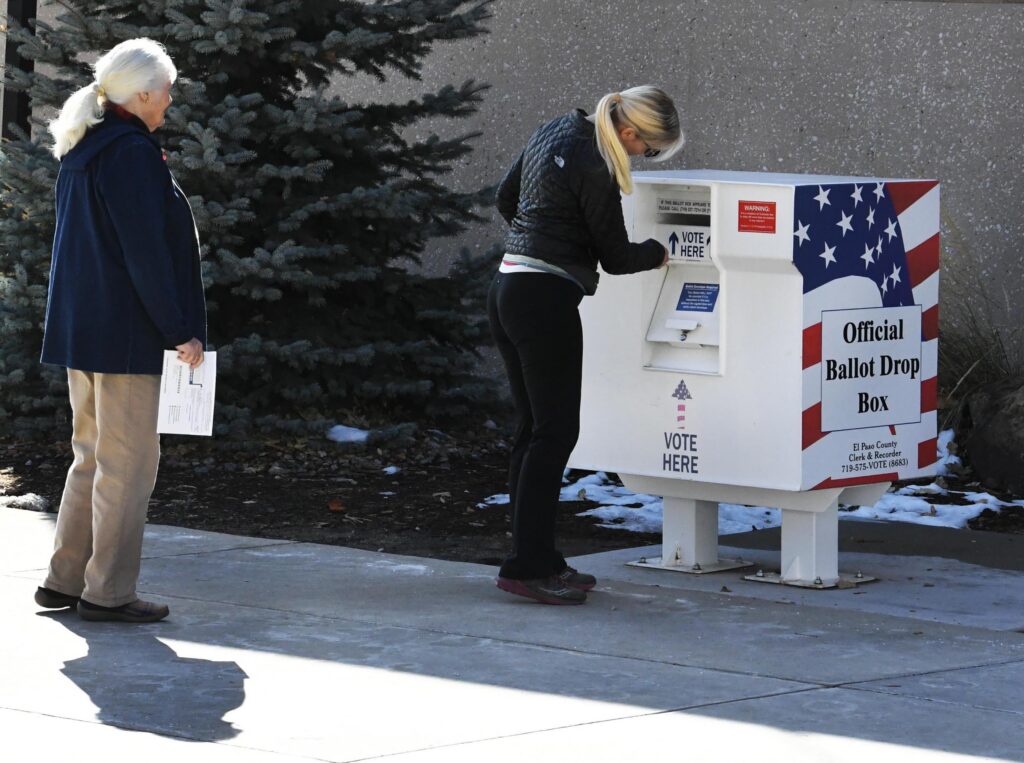
Colorado sues Trump administration, calling new election order ‘unconstitutional’
Marissa Ventrelli
marissa.ventrelli@coloradopolitics.com
Updated 2 hours ago
Colorado Attorney General Phil Weiser has joined a multistate coalition suing President Donald Trump over a new executive order on elections, arguing the directive unlawfully intrudes on states’ authority to run their own voting systems and threatens access to mail...

Federal judge sides with Mesa County school district in ex-student’s First Amendment claims
Michael Karlik
michael.karlik@coloradopolitics.com
Updated 3 hours ago
A federal judge concluded last week that Mesa County Valley School District 51 and three of its administrators did not violate the First Amendment rights of a former student when they imposed minor discipline in response to disruptive behavior. In...

Why Colorado’s LGBTQ laws keep getting struck down by the Supreme Court
Jack Birle, Washington Examiner
jack.birle.washington.examiner@gazetteedit.wpenginepowered.com
Updated 2 hours ago
The Supreme Court has been a house of horrors for Colorado over the past decade, with the state facing a trio of major losses over laws it claims it has enacted to protect LGBT people but that the justices found...
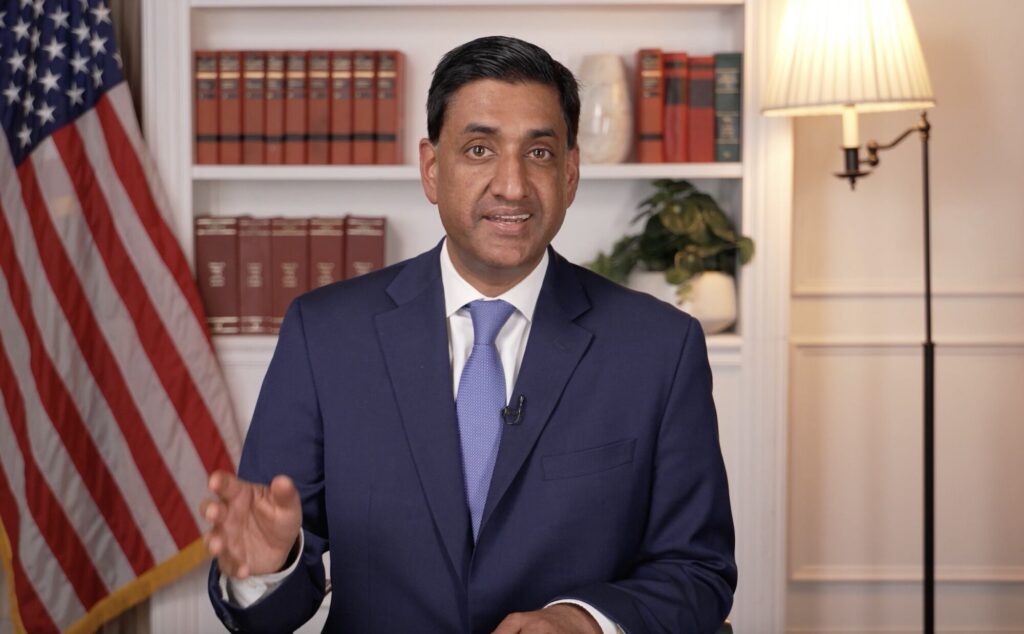
Denver Democrat Neal Walia lands endorsement from Ro Khanna in Colorado’s state House District 9
Ernest Luning
ernest.luning@coloradopolitics.com
Updated 4 hours ago
California Rep. Ro Khanna on Friday endorsed legislative candidate Neal Walia in the race for an open state House seat, praising the Denver Democrat’s commitment to public service and progressive goals. Walia, who mounted an unsuccessful challenge against U.S. Rep....

Denver judge denies Gov. Polis request to dismiss ICE-related records case
Marianne Goodland
marianne.goodland@coloradopolitics.com
Updated 7 hours ago
A year after blocking the release of state records to federal immigration agents, a Denver judge has now denied Gov. Jared Polis’ effort to end the lawsuit at the center of the dispute. The lawsuit filed against the governor in...

Gov. Lamm challenges Congress to stop ‘decontrol’ of natural gas | A LOOK BACK
Rachael Wright, Special to Colorado Politics
rachael.wright@coloradopolitics.com
Updated 2 days ago
Forty-Five Years Ago This Week: In a memo to Colorado’s congressional delegation, Gov. Dick Lamm urged them to vote against the phased pricing deregulation provisions in the Natural Gas Policy Act, a measure introduced in Congress in 1978 and still...

Environmentalists and Colorado Springs Utilities split on retirement date for Ray Nixon coal power plant
Brennen Kauffman
brennen-kauffman@coloradopolitics.com
Updated 5 hours ago
On Tuesday night, around 25 people gathered at Old Colorado City Brewing to celebrate Ray Nixon’s retirement. Nixon is only 46 years old, but the retirement has been expected for several years. The crowd delivered toasts and signed a poster-sized...

Colorado National Guard members deployed to the Middle East
The Gazette
the-gazette@coloradopolitics.com
Updated 5 hours ago
The Colorado Army National Guard announced Thursday that more than 200 members are deploying to the Middle East. The members of the 1st Battalion, 157th Infantry Regiment (Mountain), a unit based at Fort Carson, are deploying to help support an...
PREV
PREVIOUS

Aurora mayor hones in on "work first" approach to homelessness in state of city speech
Mayor Mike Coffman honed in on homelessness in his State of City speech on Friday, when he outlined key initiatives he said would help Aurora tackle the crisis that has soared in the last several years in Colorado’s urban centers. The city needs to focus on several key areas, notably affordable housing, water conservation, […]

Federal judge weighs constitutionality of new Colorado law regulating EpiPen pricing
A federal judge on Monday heard arguments about whether a new Colorado law regulating the affordability of EpiPens and their generic equivalents should be partially blocked because it potentially violates the U.S. Constitution. In June, Gov. Jared Polis signed a Democratic-backed measure aimed at countering the rising prices of epinephrine auto-injectors, which can save the lives […]