

Livestock producers share disappointment with Colorado wolf introduction

Despite a federal judge’s refusal Friday to prevent the reintroduction of gray wolves into Colorado, disappointed livestock producers say the ruling has not ended their battle.
Colorado Cattlemen’s Association (CCA) and The Gunnison County Stockgrowers’ Association filed a lawsuit against the U.S. Fish and Wildlife Services on Dec. 11, arguing the agency did not adequately review the negative effects that reintroducing gray wolves into Colorado would have on the industry. The state is reintroducing the predators based on a 2020 ballot measure.
Judge Regina Rodriguez denied the requested injunction on Friday.
“This is a setback to our legal strategy but not the end of our efforts,” the two associations said in a joint statement on Saturday.
The associations said the ballot measure was backed and passed by mostly urban voters, not those with knowledge of the potential negative effects of wolf reintroduction.
Voters in rural Colorado, including in the counties where the wolves would be released, voted overwhelmingly against the measure.
“Results show that Proposition 114 passed by a narrow margin in 2020. The will of the people must be respected, but the experiential knowledge of ranchers cannot be ignored. Wolf introduction in our state should not be moving forward without consideration of all the impacts, especially for the livestock, wildlife, and communities most affected,” Robert Farnam, CCA President, said in the release.
Colorado Assistant Attorney General Lisa Reynolds announced the process for the Parks and Wildlife division to obtain wolves from Oregon started on Dec. 10. Parks and wildlife officials plan to obtain and introduce 10 wolves as soon as Monday.
The associations argued that the wolves attacking livestock would be inevitable, causing heightened expenses to local ranchers.
In defense of reintroduction, attorneys for the government pointed to a state compensation program that pays owners if their livestock are killed by wolves. The compensation program provides up to $15,000 per animal.
Attorneys also noted that the requirements for environmental reviews had been met.
The associations said the next steps are to “study the Court’s ruling, and we will consider all of the alternatives after conferring with our legal teams,” according to the release. The two will continue to battle the overall plan to release around 50 wolves in Colorado over the next several years.
The Associated Press contributed to this report



Appeals court shuts down path to challenge convictions if lawyer tells jury that defendant is guilty
Michael Karlik
michael.karlik@coloradopolitics.com
Updated 2 hours ago
Colorado’s second-highest court concluded on Wednesday that defendants cannot challenge whether the evidence was sufficient to sustain their convictions if their lawyer argues to the jury that it should find the defendant guilty. The U.S. Supreme Court has provided guidance...

Colorado legislature votes to make committee hearing livestreams permanent
Marianne Goodland
marianne.goodland@coloradopolitics.com
Updated 2 hours ago
The executive committee of the legislative council—the six top leaders of the House and Senate—voted 5-1 Wednesday to make permanent the video livestreaming of committee hearings, starting in the 2026 legislative session, which begins Jan. 14. And they managed to...
Here’s where House retirements stand as clock strikes midnight on 2025
Rachel Schilke, Washington Examiner
rachel.schilke.washington.examiner@gazetteedit.wpenginepowered.com
Updated 4 hours ago
The House will return on Jan. 6, and with it, some 10% of lawmakers will start their final year in the lower chamber, either retiring or seeking higher office in the 2026 midterm elections. The lower chamber will get its...
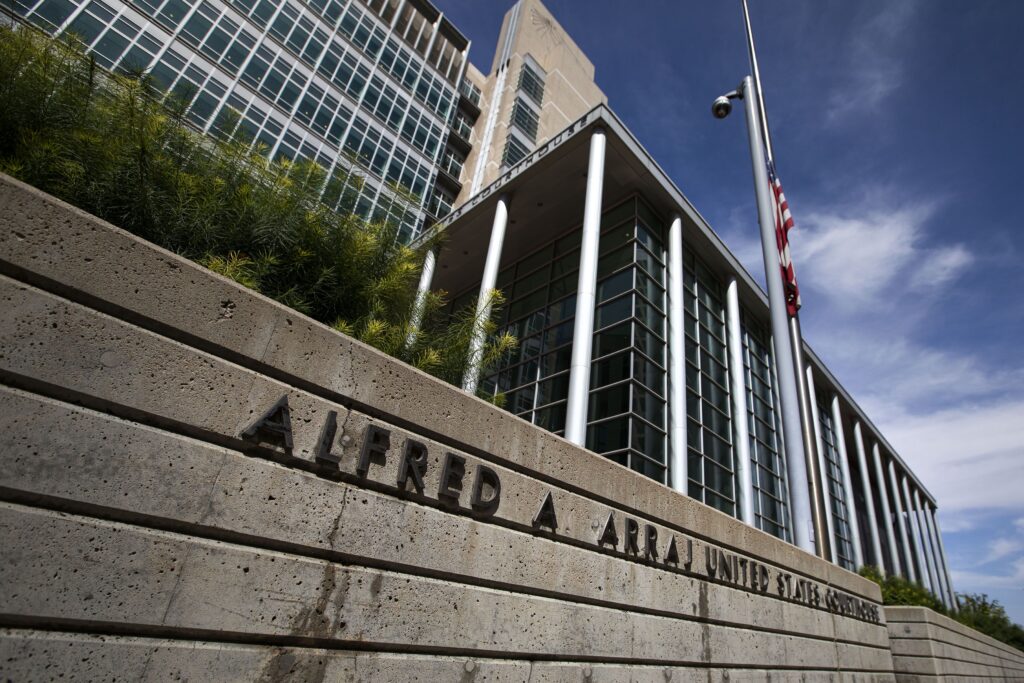
Colorado senator, local officials push for new Colorado Springs federal courthouse
Michael Karlik
michael.karlik@coloradopolitics.com
Updated 3 hours ago
Local officials and one of Colorado’s U.S. senators urged the judiciary earlier this year to explore placing a new federal courthouse and judge’s chambers in Colorado Springs, while the district court is cautioning that Congress must establish new judgeships before...

SNAP recipients in five states will be banned from using assistance for candy and soda, beginning 2026
David Zimmermann Washington Examiner
davidzimmermannwashingtonexaminer@wpstage.coloradopolitics.com
Updated 4 hours ago
More than 1.4 million recipients of the Supplemental Nutrition Assistance Program across five states will be banned from using federal food assistance for candy and soda purchases, starting Thursday. Indiana, Iowa, Nebraska, Utah, and West Virginia are the first group...

Trump’s first year back in office: Four successes and four failures
NAOMI LIM Washington Examiner
naomi-lim-washington-examiner@coloradopolitics.com
Updated 3 hours ago
President Donald Trump is closing a seismic year as the country’s commander in chief. Since the first day of his second administration, when he issued 26 executive orders, 12 presidential memos, and four proclamations, the most first-day actions of any...

Gov. Polis appoints Lindstedt to Colorado Senate District 25 after vacancy committee misses deadline
Marianne Goodland
marianne.goodland@coloradopolitics.com
Updated 34 minutes ago
Despite a similar vote by a Senate District 25 vacancy committee last week, it was up to Gov. Jared Polis on Tuesday to make sure the Senate seat was filled and ready for the 2026 session. That’s because the vacancy...

‘Rot in hell’: Trump post reignites feud with Colorado Gov. Jared Polis over Tina Peters
Thelma Grimes
thelma.grimes@coloradopolitics.com
Updated 2 hours ago
Heading into the New Year, President Donald Trump said he would like Gov. Jared Polis and others in Colorado to “rot in hell.” The object of the president’s ire is Tina Peters, the former Mesa County clerk convicted of state...

US Rep. Lauren Boebert calls for override vote after Trump vetoes bipartisan Colorado water bill
Marianne Goodland
marianne.goodland@coloradopolitics.com
Updated 2 hours ago
President Donald Trump issued the first veto of his second term Tuesday, blocking a long-awaited bipartisan effort to finish a southeastern Colorado water project that supporters say is critical to delivering clean drinking water to roughly 50,000 residents of the...

From Pope Francis to Charlie Kirk, many deaths in 2025 had a wide impact
Bernard Mcghee
bernard.mcghee@associatedpress.com
Updated 8 hours ago
The death of Pope Francis brought change to the Catholic Church, which counts 1.4 billion adherents and is now led — for the first time — by an American pope. The fatal shooting of conservative activist Charlie Kirk as he...
PREV
PREVIOUS

Judge allows wolf reintroduction program to proceed; 2024 is a critical year for the Colorado River | WHAT YOU NEED TO KNOW
Today is Dec. 18, 2023, and here’s what you need to know: The opening day of the annual Colorado River Water Users Association on Dec. 13 featured the signing of an agreement for Lower Basin states to conserve 1.6 million acre-feet of water over the next three years. It’s no small feat, according to representatives […]

'Give me the goods': State judges tell young lawyers how to win trust, cases in the courtroom
Be prepared. Know the courtroom. Learn the judge’s background. Make clear what you want. Show the judge how to get there. Look nice. Be mindful of the stickers on your water bottle. Those were some of the bullet points of advice that new attorneys heard earlier this month at the Lindsey-Flanigan Courthouse in Denver. The […]