

Colorado justices open to viewing campus sexual misconduct policies as ‘contracts’
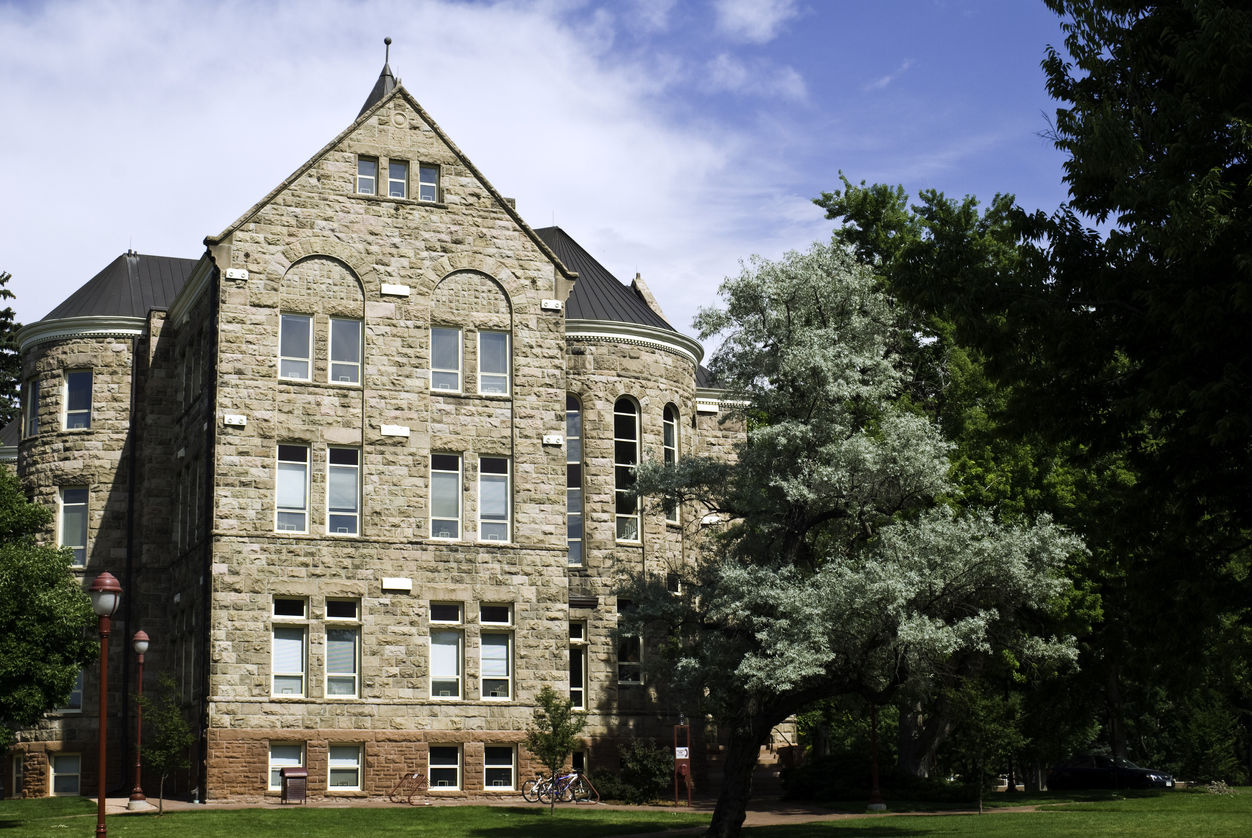
After Colorado’s second-highest court concluded the University of Denver’s promise of a “thorough, impartial and fair” investigation into alleged sexual misconduct was sufficiently descriptive to be an enforceable contract, the school appealed, claiming accused students should not be able to sue over vague terms like “fair.”
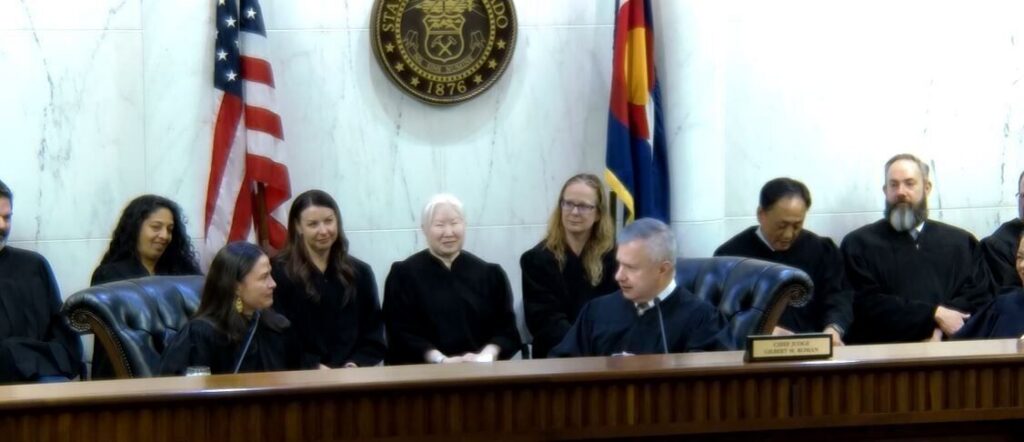
During oral arguments on Tuesday, the justices agreed with DU in principle, but noted the Court of Appeals had actually given more concrete guidance than that.
“What the Court of Appeals said was the investigation required that the investigator conduct interviews as necessary, review documents and any other relevant information,” said Justice Richard L. Gabriel. “Those are specific things in here.”
In the case at hand, a male student, identified as “John Doe,” was expelled from DU after an investigation found he engaged in non-consensual sex with female student “Jane Roe.” The university’s procedures committed to a “thorough, impartial and fair” investigation, but Doe pointed out several irregularities that bolstered his accuser’s evidence, while minimizing his own.
DU argued such a promise could not amount to a contract capable of being breached. But Gabriel and Justice Melissa Hart repeatedly emphasized the promise on its own was not the contract. Instead, an alleged failure to follow the established protocols to hear Doe’s side of the story amounted to the breach of contract.
“Why doesn’t this go to the jury?” asked Hart. “There is a fact question: Is interviewing only two of John’s witnesses, whereas you interviewed 11 of Jane’s witnesses – is that thorough, fair and impartial?”
While the Supreme Court appeared willing to accept DU’s protocols as contractual, members acknowledged there must be a limit to students’ ability to sue over universities’ representations of their services.
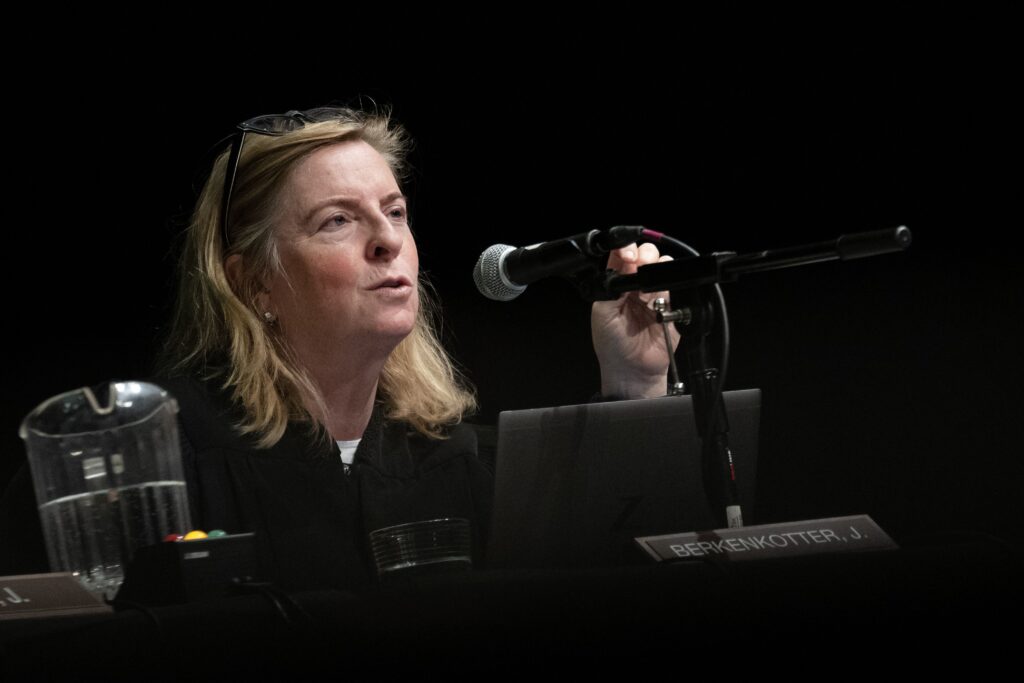
“Is every kind of material that a university gives a student, taking your argument to the logical conclusion, based in contract?” wondered Justice Maria E. Berkenkotter.
“Maybe the menu of the cafeteria is not,” responded Michael J. Mirabella, the attorney for Doe.

Doe pursued federal and state cases over his expulsion. Federally, he relied on Title IX, the civil rights law that prohibits sex-based discrimination in educational programs. A Colorado Politics analysis previously found at least 69 Title IX cases filed in Colorado’s federal trial court between 1991 and 2021. While the largest category involved victims of misconduct, there is a rise in allegations that campus investigations have become discriminatory – in effect, railroading accused male students.
In state court, Doe alleged breach of contract and negligence, among other claims.
Doe took issue with DU’s investigation of his accuser’s sexual assault allegations. According to Doe, investigators failed to consider Roe’s motivation for filing her report, spoke to only one of Doe’s witnesses while interviewing 11 of Roe’s, and neglected to explore Roe’s inconsistent statements. The investigators also did not have the entirety of Roe’s forensic exam, nor did they seek it.
In a precedent-setting decision, the U.S. Court of Appeals for the 10th Circuit determined those allegations of disparate treatment, coupled with statistics suggesting bias against accused male students, meant Doe could proceed with his Title IX claim.
Last year, the state’s Court of Appeals similarly found DU’s specific procedures for investigating sexual misconduct supported Doe’s breach of contract claim. Moreover, private institutions of higher education owed a duty to accused students to adopt and implement fair protocols.
“The risks involved in investigating and adjudicating claims of non-consensual sexual contact are palpable and severe,” wrote then-Judge Michael H. Berger. “A mere allegation of sexual misconduct can be devastating to the accused.”
On appeal to the Supreme Court, DU argued the Court of Appeals had not clearly explained why universities have a duty to accused students, but not to employees and not for other forms of misconduct. Regis University and Colorado College, private institutions like DU, also weighed in. They argued the Court of Appeals had kneecapped their ability to quickly respond to allegations of sexual misconduct, which would ultimately hurt female students.
“Because sexual misconduct policies are legally mandated in the higher education context, those policies cannot form part of the contract between the institution and student,” added the Colorado Attorney General’s Office, which represents public universities.
Joshua W. B. Richards, the attorney for DU, told the justices during oral arguments that it would be difficult for jurors to evaluate whether a university “fairly” investigated an accused student.
“If John Doe had presented 200 witnesses and Jane Roe had only presented one, is ‘fair’ interviewing all 200? Is it interviewing one for each?” he said. “The answer is we can’t know.”
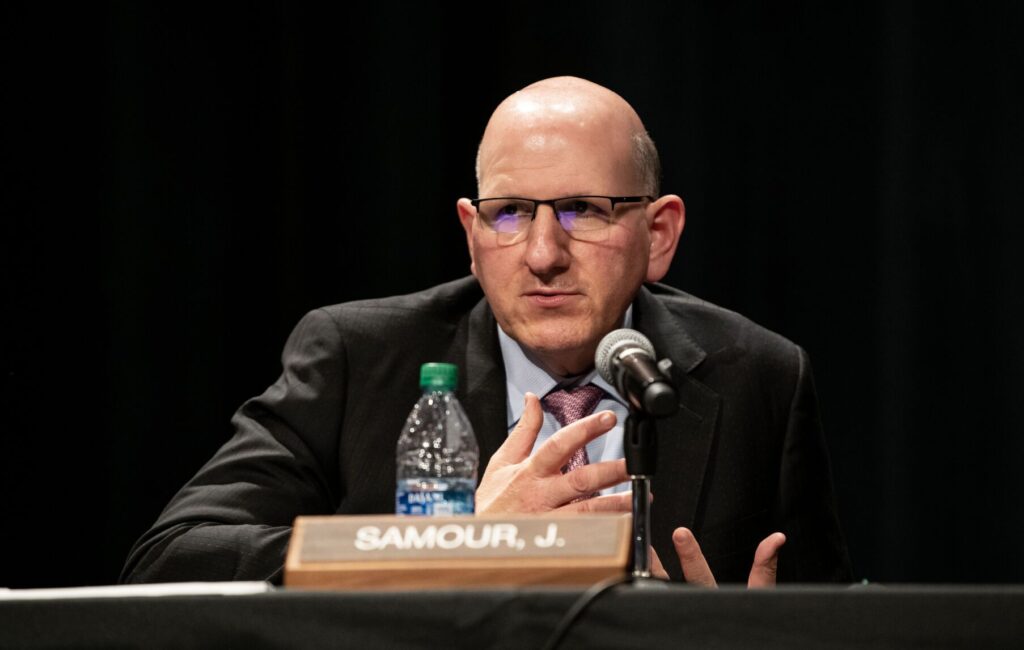
“But if you say ‘fair, impartial and thorough means one, two, three, four, five’ – you give these procedures. You have to give notice. You have to interview every witness that’s relevant. You have to investigate any motive the claimant may have,” said Justice Carlos A. Samour Jr. “What’s wrong with that? Why is that not definite enough?”
Mirabella, the attorney for Doe, agreed that courts do make judgments about fairness frequently and “it’s not a vague standard.”
Justice William W. Hood III observed Doe’s case fundamentally raised the question of how an accused student may hold school officials liable for conducting a biased inquiry.
“The larger point still troubles me, and that is in some instances, you can have what many people perceive as a very one-sided investigation,” he said. “There’s no avenue left for someone who suffered significant reputational harm because of such an inadequate investigation or a one-sided investigation. What avenue does someone have?”
The case is University of Denver v. Doe.

Colorado justices say insurers may access policyholders’ medical info in denied-benefits litigation
Michael Karlik
michael.karlik@coloradopolitics.com
Updated 1 day ago
The Colorado Supreme Court declined on Monday to expand its narrow prohibition on insurance companies accessing policyholders’ medical information, clarifying that a dispute over an insurer’s bad-faith decision to deny benefits is the only situation where a company is limited...
Colorado Supreme Court declines to loosen requirements for insurance company defendants
Michael Karlik
michael.karlik@coloradopolitics.com
Updated 2 hours ago
The Colorado Supreme Court declined last week to reconsider its longstanding expectations for insurance company defendants, and agreed that an insurer failed to properly raise its defenses against a policyholder’s breach-of-contract lawsuit. When an insured driver has an accident with...

Teen defendant properly transferred from youth detention to jail, Colorado justices conclude
Michael Karlik
michael.karlik@coloradopolitics.com
Updated 1 day ago
Colorado law required the transfer of a teenage murder suspect from youth detention to the county jail when he turned 18, the state Supreme Court ruled last week. Prosecutors have accused Issac James Lawrence of killing a younger boy and attempting to...
Divided Colorado Supreme Court finds parental anonymity in ‘safe haven’ law
Michael Karlik
michael.karlik@coloradopolitics.com
Updated 1 hour ago
Parents who surrender their newborns under Colorado’s “safe haven” law are entitled to anonymity and confidentiality in any subsequent adoptive proceedings involving the child, the state Supreme Court ruled on June 8. Colorado’s law, like its counterparts across the country,...
Safe2Tell tip, corroborated details provided grounds to search backpack, Colorado justices rule
Michael Karlik
michael.karlik@coloradopolitics.com
Updated 1 day ago
The Colorado Supreme Court decided last week that a tip submitted through the state’s confidential school safety system, plus a Douglas County administrator’s corroboration of some details, provided reasonable suspicion to search a student’s backpack for drugs. Someone submitted a...
Appeals court finds opening in Colorado Supreme Court’s framework for child neglect cases
Michael Karlik
michael.karlik@coloradopolitics.com
Updated 2 days ago
Colorado’s second-highest court squeezed through an opening last week in a controversial state Supreme Court decision from 2025, concluding that the justices had not prohibited a child’s legal representative from being the one to request termination of parental rights in...
Colorado Supreme Court upholds police search of car based on arm movements
Michael Karlik
michael.karlik@coloradopolitics.com
Updated 2 hours ago
The Colorado Supreme Court decided last week that Denver officers’ search of a vehicle was constitutional, based on their perception of the occupants’ arm movements that a trial judge found to not be credible. Officers Keegan Grubb and Richard Eberharter...
10th Circuit tosses Pueblo County sheriff defendants’ appeal in fatal shooting lawsuit
Michael Karlik
michael.karlik@coloradopolitics.com
Updated 3 minutes ago
The Denver-based federal appeals court rejected an attempt from Pueblo County sheriff’s employees on Wednesday to rely on their own version of the facts to escape liability for fatally shooting an unarmed man outside a middle school. A trial judge...
Colorado justices uphold strict interpretation of consumer protection law against debt collector
Michael Karlik
michael.karlik@coloradopolitics.com
Updated 2 hours ago
The Colorado Supreme Court concluded last month that a debt collector failed to comply with state law by suing a woman for an unpaid credit card debt without documentation that it owned her account. Portfolio Recovery Associates LLC filed a...
Colorado justices say judges can nearly eliminate parenting time without it being a ‘restriction’
Michael Karlik
michael.karlik@coloradopolitics.com
Updated 2 hours ago
The Colorado Supreme Court concluded last month that judges can reduce the number of days a parent spends with their child post-divorce to just above zero without it rising to the level of a “restriction” that requires more rigorous justification...
PREV
PREVIOUS

Environmentalists criticize livestock growers over wolf reintroduction lawsuit; two GOP legislators back Boebert challenger | WHAT YOU NEED TO KNOW
Today is Dec. 13, 2023, and here’s what you need to know: State Sens. Bob Gardner and Larry Liston on Tuesday endorsed congressional candidate Jeff Hurd, the Grand Junction Republican challenging U.S. Rep. Lauren Boebert in next year’s GOP primary. The Colorado Springs Republicans say they’re supporting the first-time candidate because they believe Hurd will […]
Embattled wolves gain new frontier in Democratic Colorado, stoking political tensions
As wildlife officials plan to release gray wolves in Colorado in coming weeks, ranchers and landowners prepare for potential conflicts many see as inevitable. And some funding is also beginning to flow into Colorado to pay for the cost of that conflict. More releases planned for Colorado over the next several years will start to […]