

Arapahoe County murder conviction overturned due to prosecutor misconduct

A teenager convicted of murder will receive a new trial after Colorado’s second-highest court determined on Thursday that Arapahoe County prosecutors inappropriately used the defendant’s constitutional right to silence as evidence of his guilt.
Jurors convicted Marquez Woodruff in 2019 of fatally shooting Terry Capler in the latter’s Aurora home. Woodruff, who was 16 at the time of the killing, argued he acted in defense of himself and his girlfriend. He is currently serving a life sentence with the possibility of parole.
Although the defense did not object to the prosecution’s conduct at trial, Woodruff argued on appeal that the prosecutors, at various points, suggested to jurors that Woodruff’s refusal to explain himself to police was a sign his “story” was not credible.
A three-judge panel for the Court of Appeals agreed the prosecutors’ commentary broke a clearly-established rule against penalizing a defendant for taking advantage of his constitutional protections.
“The error was also substantial in that the prosecutor repeatedly emphasized through further testimony and argument that the evidence of post-arrest silence rebutted Woodruff’s defense,” wrote retired Supreme Court Justice Alex J. Martinez, who sat on the panel at the chief justice’s assignment.
Case: People v. Woodruff
Decided: November 30, 2023
Jurisdiction: Arapahoe County
Ruling: 3-0
Judges: Alex J. Martinez (author)
Ted C. Tow III
Jaclyn Casey Brown
Background: Teen runaway convicted of 2017 Aurora murder gets life, parole chance in 40 years
The problematic questioning arose after Woodruff testified at his trial that he asked police officers why they had arrested him.
“No one told me. And then finally they told me, ‘Well, you have been arrested for a homicide’,” Woodruff recalled. “I said, ‘A homicide? I didn’t kill nobody’.”
At the police station, a detective began to give Woodruff his Miranda warning, but because Woodruff was a juvenile, his mother was present and invoked his rights to an attorney and to not speak with police.
The Court of Appeals did not name the prosecutors on the case – Zoe Laird and Amy Ferrin – but one of them began probing Woodruff about the decision to exercise his right against self-incrimination.
“You definitely didn’t speak to the police after that day, right?” the prosecutor asked.
“No,” Woodruff responded.
“So, the first time that you’ve told your story to anyone other than your lawyers is here in this courtroom, correct?” the prosecutor continued.
Yes, said Woodruff.
The prosecution also questioned the detective, confirming Woodruff never offered to talk to authorities. District Court Judge Andrew Baum decided the questioning about Woodruff’s silence was proper because it contradicted his testimony that he spoke to police and said he did not murder anyone.
Finally, in closing arguments, one of the prosecutors argued Woodruff’s behavior was inconsistent with self-defense.
Woodruff was not “forthcoming when the police found (him),” the prosecutor told jurors. He “waited and waited and waited and came into this courtroom and told you this new version for the first time.”
Woodruff argued on appeal that the prosecutors’ commentary on his silence suggested he was guilty for exercising his right not to speak with the police. The Colorado Attorney General’s Office countered that it was important for the prosecution to show the inconsistency between Woodruff invoking his right to silence, on the one hand, and allegedly telling police he denied committing murder, on the other.
Martinez, in the appellate panel’s Nov. 30 opinion, acknowledged Woodruff said he “didn’t kill nobody,” but there was no evidence his comment came after the Miranda warning. Therefore, there was no inconsistency and no need for the prosecution to repeatedly bring up Woodruff’s silence.
“The error in admitting evidence of post-arrest silence was obvious,” Martinez wrote.
Further, the Court of Appeals found it improper for Baum to limit the jury’s consideration of the victim’s own criminal behavior and possession of a gun when evaluating Woodruff’s self-defense claim.
The panel ordered a new trial.
The case is People v. Woodruff.


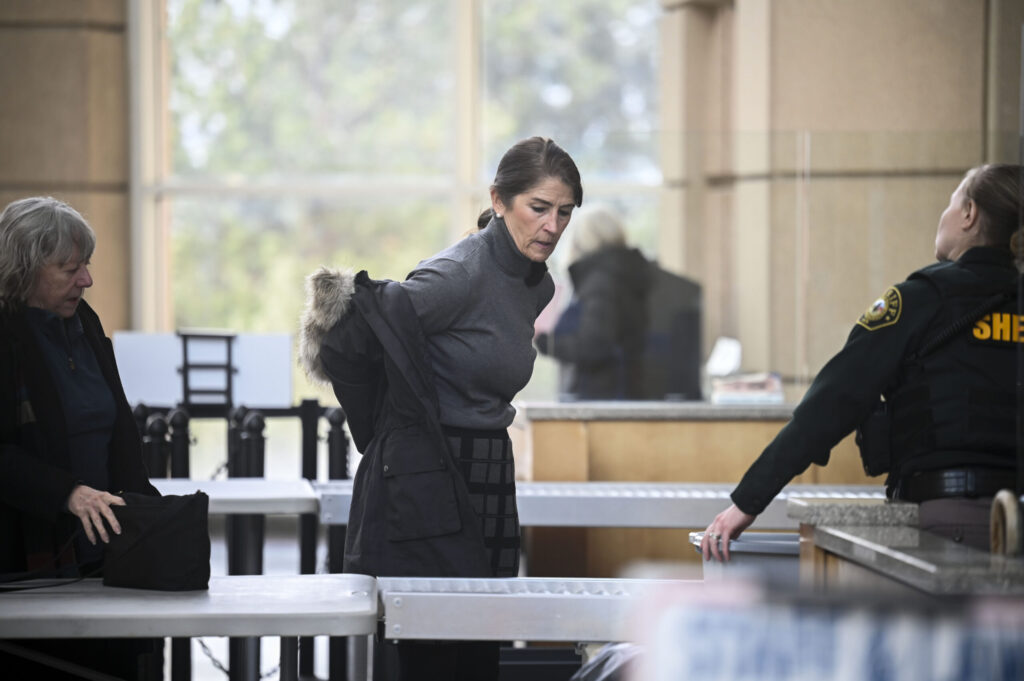
A year of developments in the CBI forensic lab scandal
Jenny Deam
jenny-deam@coloradopolitics.com
Updated 3 hours ago
As the scandal at the Colorado Bureau of Investigation forensic lab moved through its second year, a series of startling developments and revelations emerged with no clear end in sight and the full toll still unknown. At the heart of a scandal unlike any before in state history,...
Federal judge sides with Douglas County School District in ex-admin’s discrimination lawsuit
Michael Karlik
michael.karlik@coloradopolitics.com
Updated 20 hours ago
A federal judge concluded last week that a former high school administrator had not proven his claims of religious discrimination against the Douglas County School District. Corey McNellis had worked at Ponderosa High School since 2002 and served as the athletic...
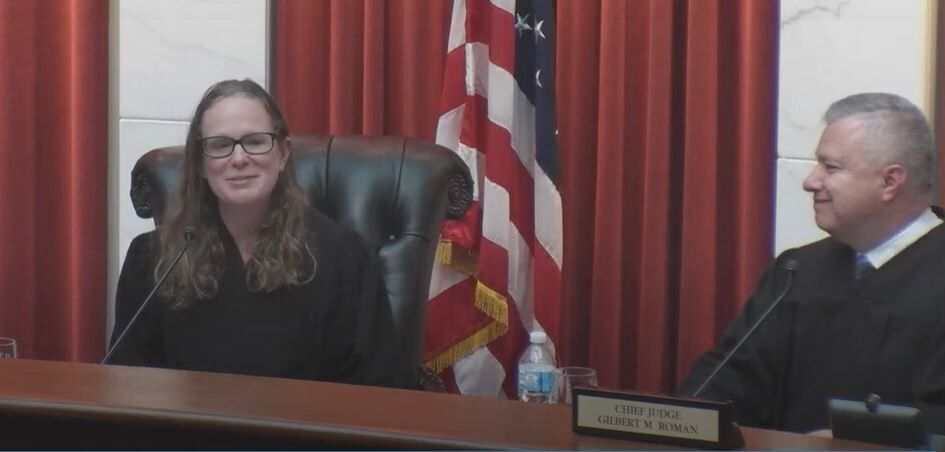
Appeals court orders new menacing trial after faulty self-defense instruction
Michael Karlik
michael.karlik@coloradopolitics.com
Updated 22 hours ago
Colorado’s second-highest court ordered a new trial last week for an El Paso County defendant convicted of felony menacing, concluding an erroneous self-defense instruction may have influenced the verdict. Under Colorado law, self-defense is an affirmative defense, meaning the prosecution...
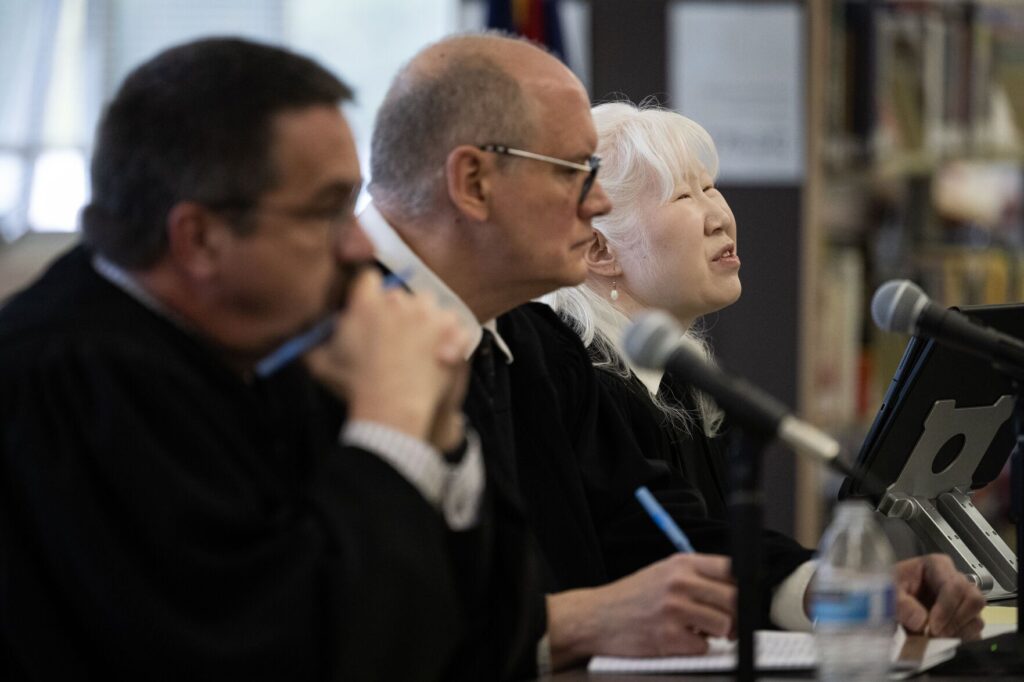
Appeals court clarifies framework for parents’ First Amendment rights in child-naming disputes
Michael Karlik
michael.karlik@coloradopolitics.com
Updated 1 day ago
Colorado’s second-highest court overturned a Jefferson County judge’s order last week in a long-running dispute about whether two ex-spouses must call their child by his first name or middle name outside the home. In doing so, a three-judge Court of...
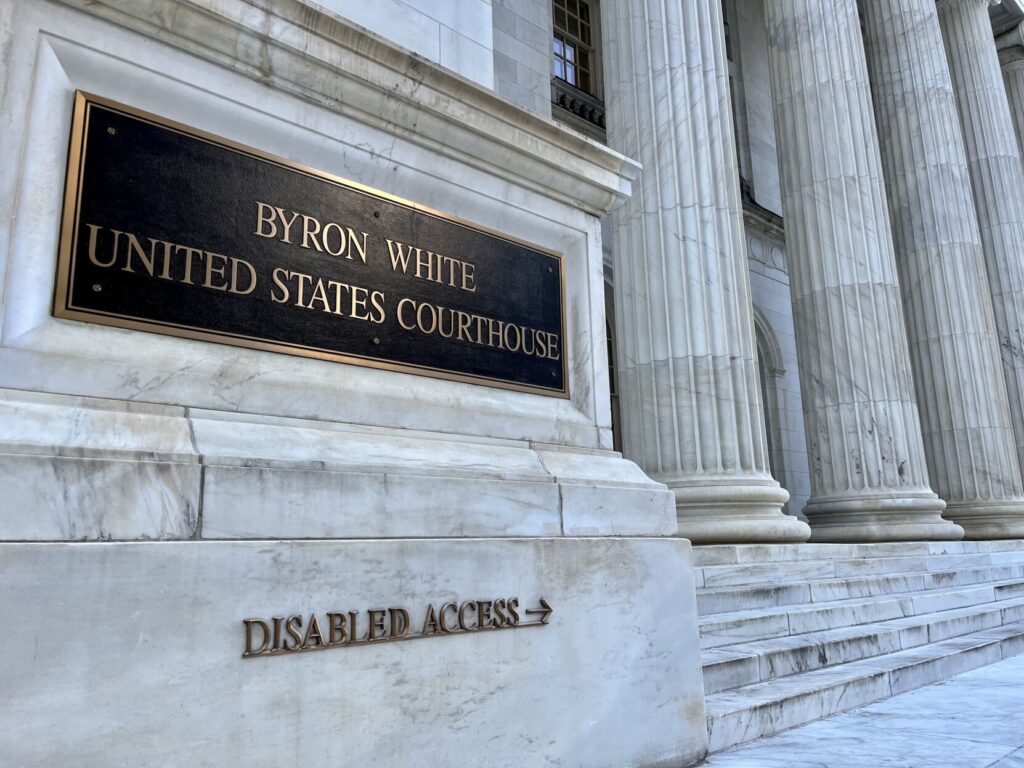
10th Circuit judges recap do’s and don’ts for lawyers
Michael Karlik
michael.karlik@coloradopolitics.com
Updated 1 day ago
Two members of the Denver-based federal appeals court spoke to attorneys on Monday about how to present cases effectively, and when it is helpful for outside entities to weigh in on pending appeals. Judges Robert E. Bacharach of Oklahoma and...
Divided appeals court overturns defendant’s $350,000 restitution obligation
Michael Karlik
michael.karlik@coloradopolitics.com
Updated 1 day ago
Colorado’s second-highest court overturned a defendant’s obligation to pay nearly $350,000 in crime victim restitution last week because an Arapahoe County judge issued the restitution order beyond the legal deadline. The divided decision of a three-judge Court of Appeals panel...
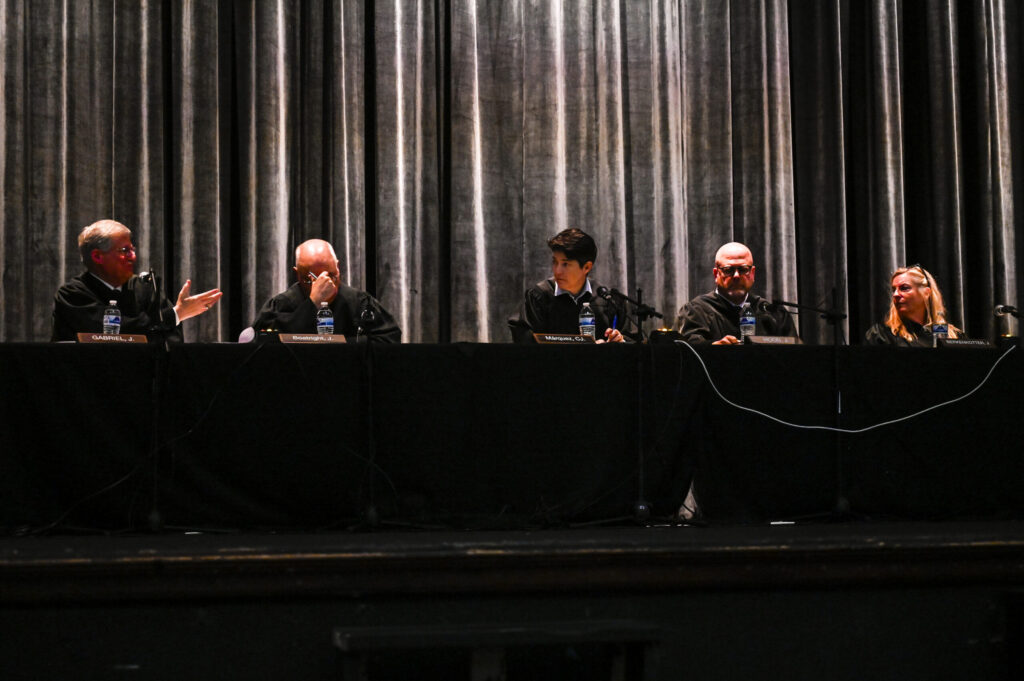
2025 Unfiltered: Colorado Supreme Court vacancy, surge in federal filings and more
Michael Karlik
michael.karlik@coloradopolitics.com
Updated 4 days ago
This year was awash in legal news nationally, with federal courts taking an outsize role in responding to executive branch actions. In Colorado, that effect was evident, but it was not the only factor at play. Here are the top...
$3 million penalty upheld against for-profit college following half-decade of appeals
Michael Karlik
michael.karlik@coloradopolitics.com
Updated 4 days ago
Colorado’s second-highest court upheld a $3 million penalty against a defunct for-profit college on Wednesday, agreeing the state had proven multiple violations of its consumer protection law. The Court of Appeals’ decision against CollegeAmerica followed a trial judge’s order in...
Appeals court decides violations of child custody orders may be prosecuted per child
Michael Karlik
michael.karlik@coloradopolitics.com
Updated 6 days ago
Colorado’s second-highest court concluded for the first time on Wednesday that a defendant may be charged with violating a child custody order based on the number of children affected, not the number of orders violated. Mesa County jurors convicted Tiffany...

Douglas County judge violated defendant’s right to counsel at sentencing, appeals court finds
Michael Karlik
michael.karlik@coloradopolitics.com
Updated 6 days ago
A Douglas County judge violated a defendant’s constitutional right to the counsel of her choice by refusing to postpone sentencing until her lawyer returned to the country, Colorado’s second-highest court concluded on Wednesday. In early 2023, Lyndie J. Felsher received...
PREV
PREVIOUS

Appeals court declines to open door to challenges of already-final convictions
Colorado’s second-highest court on Thursday declined to apply a major state Supreme Court decision retroactively and enable more people to challenge their criminal convictions. In 2022, the Supreme Court issued Rojas v. People – a decision that eliminated a “troublesome relic” from the rules of evidence. Known as the “res gestae” doctrine, it enabled prosecutors to introduce evidence […]

Jared Polis urges Coloradans to stand behind Israel as pro-Palestinian protesters banged on windows
As hundreds of pro-Palestinian demonstrators stood outside, Gov. Jared Polis on Thursday night unequivocally called on Coloradans – and, by extension, Americans – to stand behind Israel, which is at war with Hamas following the latter’s attack that killed 1,200 Israelis. “Our greatest strength is our ability to stand together to support the people of Israel […]