

New ‘Phantom Hacker’ scam: What is it and how to protect yourself

FBI Denver warned the public on Thursday of a new scam dubbed “The Phantom Hacker” that they say targets older adults.
According to FBI Denver, scammers impersonate technology, banking and government officials in a complex ruse to convince a typically older victim that foreign hackers have infiltrated their financial account. The scammers then instruct the victim to immediately move their money to what they say is a U.S. government account to protect their assets.
“These scammers are cold and calculated,” said FBI Denver Special Agent in Charge Mark Michalek in a news release. “They are targeting older members of our community who are particularly mindful of potential risks to their nest eggs. The criminals are using the victims’ own attentiveness against them. By educating the public about this alarming new scam, we hope to get ahead of these scammers and prevent any further victimization.”
According to FBI Denver, some victims are losing their entire life savings.
From from January through June of this year, FBI Denver said there were 19,000 tech support scams reported to the FBI Internet Crime Complaint Center. More than $542 million was lost during that time frame. The losses this year already exceed 2022 losses by 40%. Almost 50% of those victims are older than 60 years old.
Phantom Hacker scam: How it works
The FBI said the scam is often perpetrated in three steps:
Step 1 – Tech Support Imposter
A scammer posing as customer support representative from a legitimate technology company initiates contact with the victim through a phone call, text, email or a pop-up window on their computer and instructs the victim to call a number for assistance.
Once the victim calls the phone number, a scammer directs the victim to download a software program allowing the scammer remote access to the victim’s computer. The scammer pretends to run a virus scan on the victim’s computer and falsely claims the victim’s computer either has been or is at risk of being hacked.
Next, the scammer requests the victim open their financial accounts to determine whether there have been any unauthorized charges – a tactic to allow the scammer to determine which financial account is most lucrative for targeting. The scammer informs the victim they will receive a call from that financial institution’s fraud department with further instructions.
Step 2 – Financial Institution Imposter
A scammer, posing as a representative of the financial institution mentioned above, such as a bank or a brokerage firm, contacts the victim. The scammer falsely informs the victim their computer and financial accounts have been accessed by a foreign hacker and the victim must move their money to a “safe” third-party account, such as an account with the Federal Reserve or another U.S. government agency.
The victim is directed to transfer money via a wire transfer, cash or wire conversion to cryptocurrency, often directly to overseas recipients. The victim is also told not to inform anyone of the real reason they are moving their money. The scammer may instruct the victim to send multiple transactions over a span of days or months.
Step 3 – U.S. Government Imposter
In the third step, the victim may be contacted by a scammer posing as someone from the Federal Reserve or another U.S. government agency. If the victim becomes suspicious, the scammer may send an email or a letter on what appears to be official U.S. government letterhead to legitimize the scam. The scammer will continue to emphasize the victim’s funds are unsafe and they must be moved to a new “alias” account for protection until the victim concedes.
According to FBI Denver, victims often suffer the loss of entire banking, savings, retirement and investment accounts under the guise of “protecting” their assets.
Tips to protect yourself
The FBI recommends that the public take the following steps to protect themselves from “The Phantom Hacker” scam:
? Do not click on unsolicited pop-ups, links sent via text messages or email links or attachments.
? Do not contact the telephone number provided in a pop-up, text or email.
? Do not download software at the request of an unknown individual who contacted you.
? Do not allow an unknown individual who contacted you to have control of your computer.
The U.S. government will never request you send money to them via wire transfer, cryptocurrency or gift/prepaid card.
Reporting suspected fraud
The FBI requests victims report these fraudulent or suspicious activities to the FBI Internet Crime Complaint Center (IC3) at www.ic3.gov. Victims are asked to include as much information as possible, such as:
? The name of the person or company that contacted you.
? Methods of communication used, including websites, emails and telephone numbers.
? The bank account number where the funds were wired to and the recipient’s name(s).
Get more on this story and others at 9NEWS.com.



From Pope Francis to Charlie Kirk, many deaths in 2025 had a wide impact
The Associated Press
the-associated-press@coloradopolitics.com
Updated 3 hours ago
The death of Pope Francis brought change to the Catholic Church, which counts 1.4 billion adherents and is now led — for the first time — by an American pope. The fatal shooting of conservative activist Charlie Kirk as he...

Democrats and Republicans tied on economy heading into 2026, survey finds
Rachel Schilke, Washington Examiner
rachel.schilke.washington.examiner@gazetteedit.wpenginepowered.com
Updated 13 hours ago
Voter confidence in Democrats and Republicans regarding the handling of the economy is evenly split, according to recent polling, highlighting the challenge both parties face on a central matter ahead of the 2026 midterm elections. A survey released on Thursday...

Advance Colorado initiative allowing law enforcement cooperation with ICE clears 200,000 signatures
Marissa Ventrelli
marissa.ventrelli@coloradopolitics.com
Updated 12 hours ago
A petition supporting a proposed 2026 ballot measure that would allow law enforcement to cooperate with federal immigration officers has received more than 200,000 signatures, according to Advance Colorado. If passed, Initiative 95 would allow Colorado law enforcement to report...

Trump sets his sights on peace progress in the new year with Netanyahu and Zelensky meetings
David Zimmermann Washington Examiner
davidzimmermannwashingtonexaminer@wpstage.coloradopolitics.com
Updated 13 hours ago
In the days leading up to the new year, President Donald Trump is reportedly preparing to meet with Israeli Prime Minister Benjamin Netanyahu and Ukrainian President Volodymyr Zelensky again to discuss peaceful resolutions to the foreign nations’ respective conflicts. The...
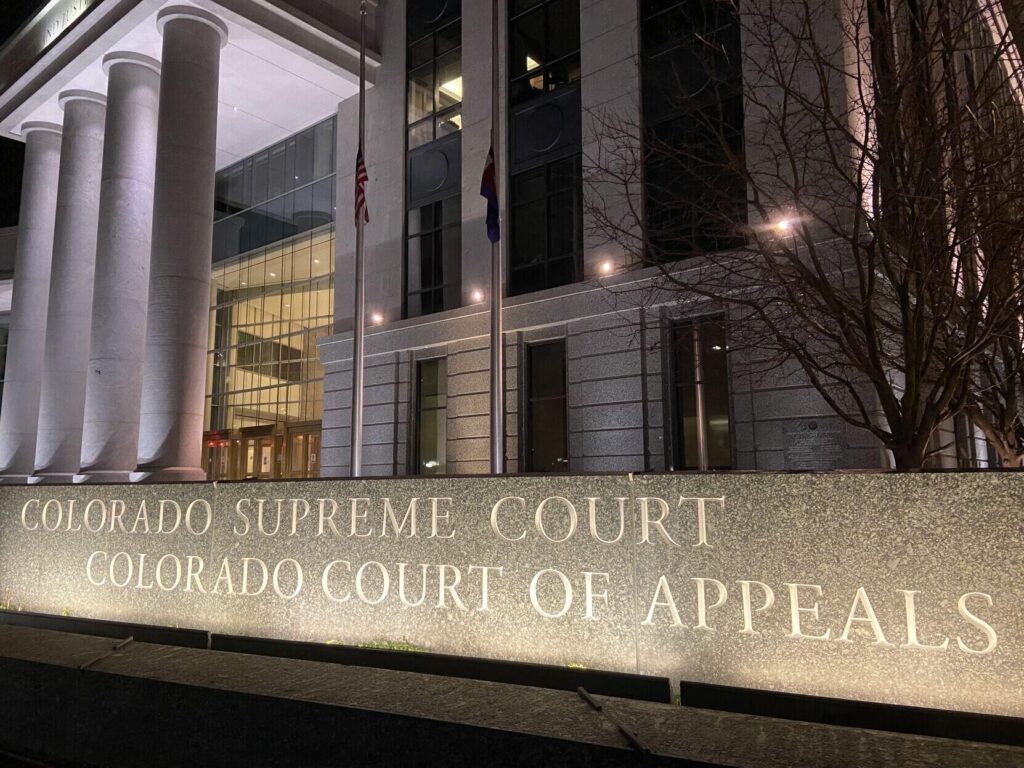
$3 million penalty upheld against for-profit college following half-decade of appeals
Michael Karlik
michael.karlik@coloradopolitics.com
Updated 9 hours ago
Colorado’s second-highest court upheld a $3 million penalty against a defunct for-profit college on Wednesday, agreeing the state had proven multiple violations of its consumer protection law. The Court of Appeals’ decision against CollegeAmerica followed a trial judge’s order in...

Colorado ski areas suffer, nobody has measured over 70 inches of total snowfall for winter 2025-26
Jonathan Ingraham
jonathan.ingraham@denvergazette.com
Updated 15 hours ago
Big changes coming as 10-15 inches of snow possible from incoming weekend storm, second snow event could double figure to start 2026 No Colorado ski area or resort has surpassed 70 inches of reported or estimated total snowfall amounts for...

Appeals court decides violations of child custody orders may be prosecuted per child
Michael Karlik
michael.karlik@coloradopolitics.com
Updated 1 day ago
Colorado’s second-highest court concluded for the first time on Wednesday that a defendant may be charged with violating a child custody order based on the number of children affected, not the number of orders violated. Mesa County jurors convicted Tiffany...

Douglas County judge violated defendant’s right to counsel at sentencing, appeals court finds
Michael Karlik
michael.karlik@coloradopolitics.com
Updated 1 day ago
A Douglas County judge violated a defendant’s constitutional right to the counsel of her choice by refusing to postpone sentencing until her lawyer returned to the country, Colorado’s second-highest court concluded on Wednesday. In early 2023, Lyndie J. Felsher received...

New year, higher wages for Denver hourly and tipped workers
Deborah Grigsby
deborah.smith@denvergazette.com
Updated 9 hours ago
Some Denver workers will be starting the new year with a pay raise as the city’s minimum wage rises to $19.29, up from $18.81. For tipped food and beverage workers, the minimum wage will jump from $15.79 to $16.27 per...

Businesses face losses after Xcel power shutoffs
Sage Kelley
sage.kelley@denvergazette.com
Updated 15 hours ago
Restaurants west of Denver are still coming to grips with product losses and future revenue concerns after power shutoffs last week by Xcel Energy, which cited high winds as the rationale for the decision. “It’s like living in a third-world...
PREV
PREVIOUS
Colorado looks to attract wind turbine company near Pueblo
The Colorado Economic Development Commission approved an incentive package worth up to $23.1 million aimed at recruiting a wind turbine company looking at multiple states, including Pueblo in Colorado, for the site of its next production hub. It could mean more than 2,300 new jobs to the area. Commissioners voted unanimously on Thursday to offer […]

Xcel, Colorado utilities to get $200 million from US energy office for grid resiliency
Colorado’s electric utilities will get roughly $200 million in federal funds to enhance grid resiliency and wildfire mitigation. Xcel Energy, the state’s utility providers, received a $100 million award to boost its $597 million resiliency and wildfire program.?The grant requires $142 million in cost sharing from Xcel. The U.S. Department of Energy said the grant […]