

Colorado River solutions should include cutting water consumption, including in Colorado
What does a durable solution to the crisis on the Colorado River look like?
According to Andy Mueller, general manager of the Colorado River District, it’s a future with less water. And that’s not just for the lower basin states of the Colorado River.
Colorado water users need to look at how to use less, too, he said.
Mueller spoke Friday at the Colorado River District’s annual water seminar in Grand Junction. The annual seminar is looking at the river’s future, drought policy and perspectives from Colorado’s river neighbors.
A durable solution must be workable regardless of the political party in power, one that meets all the needs of all communities, and avoids creating winners and losers, which Mueller said is exactly what has happened over the last 100 years with the Colorado River compact and other agreements.
Figuring out those solutions will take difficult conversations, especially with the lower basin states of Arizona, Nevada and California, given their views of entitlement of the river and a desire to avoid uncertainty in their water supplies, he explained.
In the upper basin states, farmers have learned to deal with hydrologic uncertainty. They plan for good years, average years and dry years.
“We need to take that farmer logic and apply it to a much broader system, and that’s how we get durable solutions,” Mueller said.
Those discussions will also have to include compromise, Mueller said, which is sometimes interpreted as weakness.
This is also an important time to support the work of the state’s Upper Basin commissioner, Becky Mitchell, Mueller said. The discussions around revising the Colorado River’s operations, which are set to expire in a few years, have pivoted from the immediate crisis at hand, which is the draining of Lake Powell and Lake mead, and are shifting to looks at long-term durable solutions. Those discussions are not about renegotiating the 1922 compact, Mueller said. “That’s off the table.”
That said, the river’s operating guidelines must be overhauled, not just tinkered with, Mueller said.
As part of those negotiations, Mitchell has come up with principles, which Mueller said his river district agrees with.
Those principles include:
- Climate change is real, and so is a drier future. That’s had a substantial impact on agriculture, with farmers going out of business, Mueller said.
- Prevent overuse of the river in the lower basin states, which Mueller said “touches on a few hot nerves.”
- Preserve federal reserved water rights for tribal nations, which Mueller noted means senior water rights and about 25% of the river’s annual flow. This is also frightening to non-tribal water users because it means they may lose water, Mueller said. But tribal nations have not gotten their fair share, and “we have to make sure those communities are no longer left behind. It’s not a threat to us. It’s an opportunity to solve problems and bring the entire basin up,” he said.
Another difficult conversation facing Colorado River water users, according to Mueller, is around the basin’s growing population and at the same time a shrinking water supply.
The only way to get through that is by bringing the per capita consumption of water down, Mueller said, and that includes the upper basin states of Colorado, Utah, New Mexico and Wyoming, not just the lower basin states.
“We have a shrinking resource and a growing population” that has to be fed and needs water. “How do you do that? By figuring out better ways to use the resource we have.” That includes less water use by cities, including changes in landscaping. “We’re not asking you to make it look like a rock garden,” he said.
Without reductions in water consumption, the answer to growth is to take water out of agriculture, “and that’s not how we succeed as a society. In fact, that’s what leads to the downfalls of societies is when we don’t produce our own food.” The answer is not to vilify agriculture, he added. “It’s how every sector can use less water and sustain the growth we know is coming.”
Both the river district and Mitchell are looking for permanent reductions in lower basin use of the Colorado River, Mueller concluded, but that does not mean that those lower basin communities or their agriculture is not valued. Those who are working on the 2026 guidelines for the Colorado River must find solutions that allow the river to operate within the hydrology it provides. “But if some of us are living outside of the actual hydrology and the pressure’s not there,” those solutions will be elusive.


Will Denver see stepped-up immigration enforcement next? | ANALYSIS
Nico Brambila
nico.brambila@denvergazette.com
Updated 9 hours ago
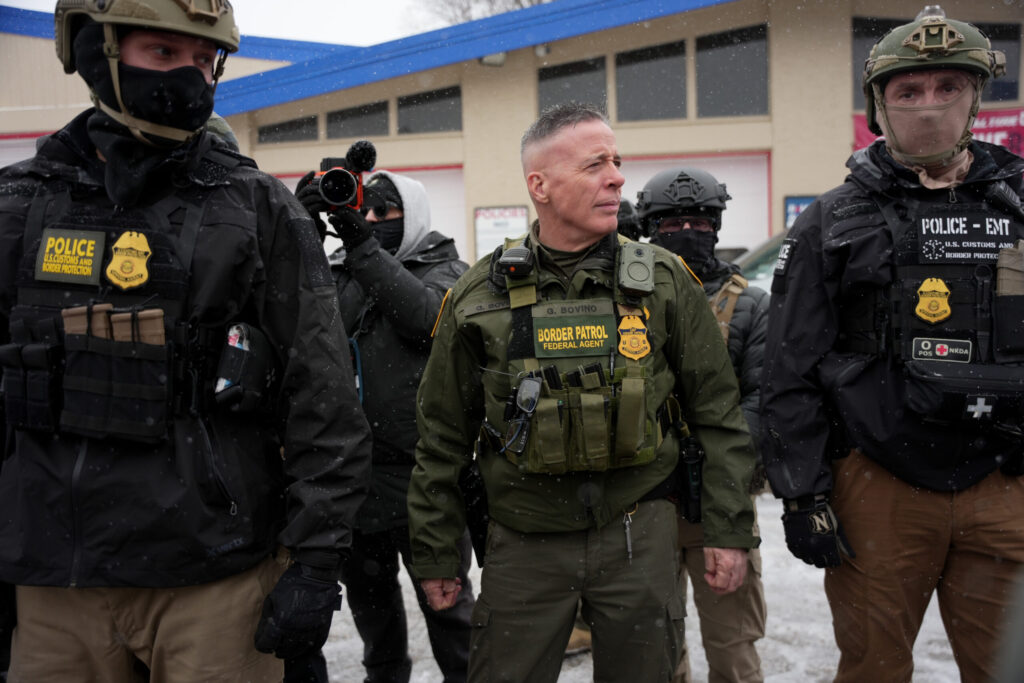
Two years ago — as Denver grappled with a sharp influx of immigrants, many who arrived in the city after illegally crossing America’s borders — Mayor Mike Johnston joined the mayors of Chicago and New York City in criticizing Texas...
Holocaust survivors, DU officials announce endowed antisemitism professorship
Michael Braithwaite
michael.braithwaite@gazette.com
Updated 13 hours ago
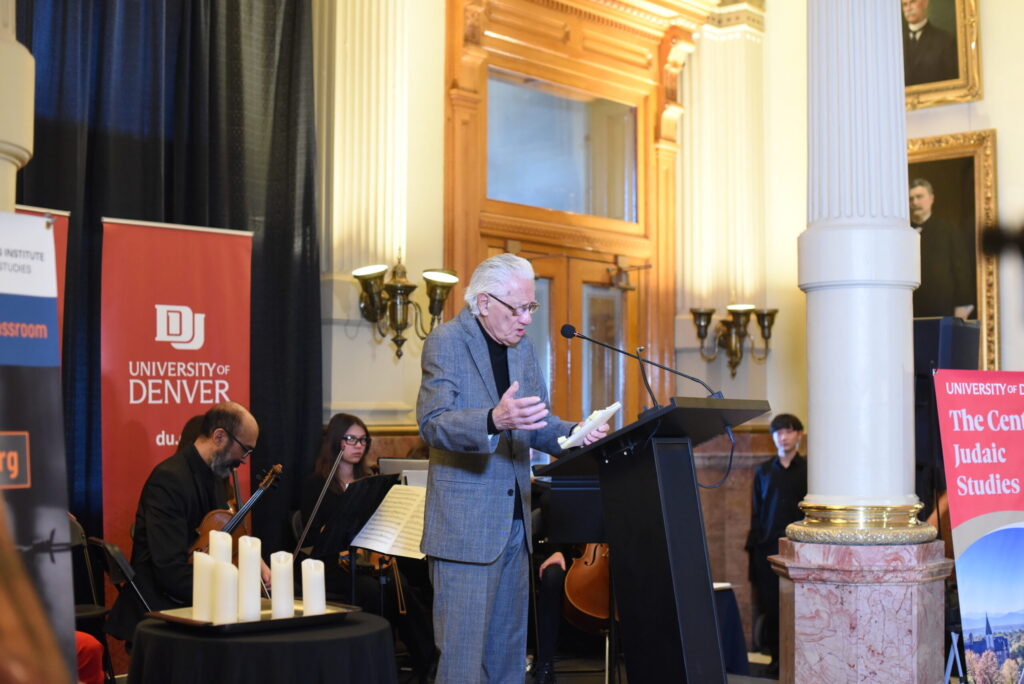
Eighty-one years after Auschwitz’s liberation, the University of Denver announced a new endowed role to help keep the Holocaust’s memory alive. In the space west of the Capitol’s rotunda, and under the gaze of portraits of former state leaders on...
Colorado’s unemployment rate fell again in December
Bernadette Berdychowski
bernadette.berdychowski@denvergazette.com
Updated 15 hours ago
Colorado’s unemployment rate fell to 3.8% in December, according to new data released Tuesday. The rate dropped one-tenth of a percentage point, following a monthslong trend of declining unemployment in the state, according to the Colorado Department of Labor and...
Voters will decide proposal to repeal Colorado limits on police cooperation with immigration authorities
Marianne Goodland
marianne.goodland@coloradopolitics.com
Updated 12 hours ago
A ballot initiative backed by the group Advance Colorado has qualified for the November general election, setting up a statewide vote on whether to undo limitations placed upon state and local law enforcement agencies’ ability to work with federal authorities....
Colorado Supreme Court to address child’s CCTV testimony
Michael Karlik
michael.karlik@coloradopolitics.com
Updated 18 hours ago
The Colorado Supreme Court announced on Monday that it will review the impact of a victim’s closed-circuit testimony on the prosecution of a juvenile defendant. At least three of the court’s seven members must agree to hear an appeal. There...
Colorado lawmakers reintroduce union bill, revive other stalled legislation
Marissa Ventrelli
marissa.ventrelli@coloradopolitics.com
Updated 13 hours ago
It can take years for a policy to successfully pass through the Colorado legislature, which is why it’s not uncommon to see the same bill or a version of it brought back from the dead several sessions in a row...

Appeals court indefinitely halts judge’s limits on ICE tactics in Minnesota
Kaelan Deese, Washington Examiner
kaelan.deese.washington.examiner@gazetteedit.wpenginepowered.com
Updated 20 hours ago
A federal appeals court on Monday blocked a lower-court judge’s restrictions on Immigration and Customs Enforcement tactics in Minnesota, handing the Trump administration a significant win as protests and legal challenges continue to surround federal immigration operations in the Twin...
Gun rights groups split with Trump administration over Minnesota shooting
Wire Services
wire-services@coloradopolitics.com
Updated 20 hours ago
The death of Alex Pretti in Minneapolis is opening a new fault line between President Donald Trump and his conservative base, as gun rights groups denounce what they say are a series of anti-Second Amendment statements justifying the shooting. The...

Greenland is now Colorado’s problem. And that’s a good thing. | Vince Bzdek
Vince Bzdek
vince.bzdek@gazette.com
Updated 20 hours ago
The conclusion to the dizzying odyssey over Greenland this week reminded me a little of the ending of the “Wizard of Oz.” If you recall, Dorothy, the Scarecrow, the Lion and the Tin Man finish a great and frightful quest...

10th Circuit to hold all-judges hearing, judicial committee turns down ‘civility code’ | COURT CRAWL
Michael Karlik
michael.karlik@coloradopolitics.com
Updated 1 day ago
Welcome to Court Crawl, Colorado Politics’ roundup of news from the third branch of government. The Denver-based federal appeals court agreed to hold a rare all-judges hearing in a criminal case, plus a state Supreme Court committee overwhelmingly rejected a...
PREV
PREVIOUS

Federal judge, lawyers discuss consequences of misconduct at U.S. District Court
Although the Colorado Supreme Court has a staffed office dedicated to investigating complaints of attorney misconduct, the federal trial court based in Denver has its own, smaller operation to respond to rule breaking – even when it occurs outside of the state. On Sept. 15, members of the U.S. District Court’s Committee on Conduct appeared alongside […]

Adams County judge wrongly canceled child neglect jury trial after mom failed to appear, appeals court finds
Colorado’s second-highest court ruled last week that an Adams County judge who wound up deciding a child neglect case had no authority to cancel the planned jury trial solely because the mother failed to appear at a pretrial conference. A three-judge panel for the Court of Appeals also warned that to the extent judges across […]