

Polis’ policy coddles polluters, ignores impacted communities | NOONAN
Should we assume an executive agency, the Air Pollution Control Division (APCD), and its oversight entity, the Air Quality Control Commission (AQCC), are under the ultimate authority of the executive branch of government, or Gov. Jared Polis? If so, then the Air Pollution Control Division’s GEMM 2 scheme to trade in air pollution credits to satisfy 2021’s Environmental Justice Act is a perfect example of Polis’ free-market approach to public solutions to private industry problems.
For context, GEMM 2 rules will implement a portion of the state’s Environmental Justice Act. GEMM 2 rules affect 18 companies that put 25,000 or more tons of carbon dioxide into the atmosphere each year. Suncor refinery is at the top of the list at 962,525 tons in 2015 as a base. The company must reduce its CO2 emissions by 20% by 2030. As of 2021, when the act was written, the company had reduced its emissions to 829,632 tons. It needs to get down to 770,020 tons by 2030.
Another company, Avago Technologies, offers a different example. If you haven’t heard of Avago, it’s because it was originally a division of Hewlett-Packard in the semi-conductor products business. Its various iterations in Colorado continue to produce products in hardware and software. It sent 288,703 tons of CO2 into the atmosphere in 2015 and cut that number to 125,323 by 2021. It has already exceeded the carbon cuts mandated by the Environmental Justice Act.
Based on these two conditions, the APCD sees opportunity to allow Suncor to satisfy its remaining need for carbon cuts by buying carbon reduction credits from another polluter, such as Avago that has exceeded its carbon reduction target.
Polis relishes those free-market “solutions.” Right now, seven companies produce more CO2 than in 2015, the base year. Leprino Foods in Greeley has increased its CO2 emissions about 2.5 times since 2015, from 38,254 tons to 97,816.
Leprino’s situation is opportunity for Avago to make money and Leprino to pay a price for its excess CO2 without having to reduce a pound of its CO2 emissions in its cheese factories.
Stay up to speed: Sign-up for daily opinion in your inbox Monday-Friday
Unfortunately for the communities sitting in the neighborhoods of these polluters, it’s not just CO2 that goes up into the atmosphere. Suncor as an example also sends up tons of other dangerous goop, such as benzene and other VOCs, soot and radioactive particulates.
SB19-181 to reduce pollution to protect the health of people and the environment is another key piece of legislation affecting this free-market scenario. It says, and the Environmental Justice Act reinforces, the APCD must consider a myriad of pollution sources in its rule-making. Can we imagine selling credits for benzene reductions, anyone?
The Colorado Chamber of Commerce has weighed in on GEMM 2. In a letter to Polis, it praises the APCD for including the “impacted companies and other stakeholders” in its rule-making. However, the chamber notes, the companies need a “pathway to compliance.” It suggests the price of the social cost of excess CO2 pollution should be $89 per ton.
At $89-a-ton, says the chamber, the excess CO2 producers can stay in business. They will remain competitive. Otherwise, these companies, such as Molson Coors, JBS Swift, and Cargill Meat Solutions, may leave the state. In the case of Suncor, residents of Commerce City and north Denver might welcome that result.
Without the $89-per-ton pollution insertion into the rules, there may not be enough credits for businesses to buy their way out of their excess pollution problems. Changes to operations, according to the chamber, would “require onsite emissions reductions projects whose financial costs outweigh their benefits, as measured by the social cost of GHGs. This is inconsistent with the administration’s focus on a thriving business community.”
So, there we have it, citizens of Colorado. Based on the $89-per-ton theory and Avago’s pollution history, the company would have almost $6 million of CO2 carbon reduction credits to sell. That would pretty much cover Suncor’s excess, a small price to pay for a company whose profits are in the many billions each year.
This free-market mechanism takes the excess polluters off the hook and enriches the lesser polluters. The residents of neighborhoods in proximity to the excess polluters of course don’t receive their full measure of environmental justice because environmental justice is neither competitive nor subject to free markets.
Paula Noonan owns Colorado Capitol Watch, the state’s premier legislature tracking platform.


A daring and fearless rescuer — is afraid of a debate | Dick Wadhams
Dick Wadhams
dick-wadhams@coloradopolitics.com
Updated 2 days ago
Victor Marx, the Republican nominee for governor who says he can exorcize demons and who claimed he has fearlessly rescued 45,000 women and children during 150 “high-risk” missions around the world, appears to be intimidated by the notion of debating...

Proposed EPA changes could save truckers billions | Rachel Gabel
Rachel Gabel
rachel-gabel@coloradopolitics.com
Updated 2 days ago
Agriculture is in distress across nearly every segment across much of the nation, and certainly to a more dire degree in the western United States. If it were not a historic drought, some pressures could be eased. Others can be...

Colorado Democrats, your time is coming | Jon Caldara
Jon Caldara
jon-caldara@coloradopolitics.com
Updated 2 days ago
Hey, Colorado Democrats! All the fun you’ve had watching Republican dysfunction in Colorado for the last 20 years was just a preview of what is about to happen to you. The Colorado Republican Party no longer exists as a competitive...
The relevance of Watergate more than a half-century later | SONDERMANN
By Eric Sondermann
by-eric-sondermann@coloradopolitics.com
Updated 5 days ago
It was the scandal for which all other scandals are now named. In June 1972, a small group of Cuban burglars with high-level connections broke into the headquarters of the Democratic National Committee. Those headquarters were located in the Watergate...
Colorado must continue finding common ground on wildfire policy | GUEST COLUMN
Colorado Politics
colorado-politics@coloradopolitics.com
Updated 3 days ago
By John Herrick Colorado has never lacked for opinions about wildfire policy. We debate forest management, climate change, prescribed burns, land use, air quality and budgets. Those debates are familiar territory, but a new discussion is beginning to happen around...

Proposition NN is the best investment for Colorado’s students and schools | GUEST COLUMN
Colorado Politics
colorado-politics@coloradopolitics.com
Updated 3 days ago
By Justin Ogden Colorado families know what it means to make difficult budget decisions. Inflation has driven up the cost of groceries, housing, utilities and just about everything else. Families like mine work hard to stretch every dollar while still...
Were the primaries a preview for consequential general election? | Paula Noonan
Paula Noonan
paula-noonan@coloradopolitics.com
Updated 4 days ago
Colorado’s political future will go the way of this election. Historically, the state has not had both chambers controlled by a supermajority. This election may change that. The primaries suggest how the general election may play out. Democrats had solid...
Disagreement doesn’t have to mean disrespect | GUEST COLUMN
Colorado Politics
colorado-politics@coloradopolitics.com
Updated 4 days ago
By Vincent Atchity These days, it doesn’t take long to feel overwhelmed by politics. Turn on the news, scroll through social media or read the comments on almost any political post and you’ll find anger, outrage and personal attacks. For...
Keeping Colorado’s kids’ trust online | PODIUM
Colorado Politics
colorado-politics@coloradopolitics.com
Updated 5 days ago
By Stuart Jenkins Almost every day, the kids and teens we serve across Colorado are introduced to new generative artificial intelligence and other emerging technology, including conversational AI systems designed to simulate human conversation. These tools are no longer a...
Marx’s ‘through line’ predates Trump, connects to Maes | FEEDBACK
Colorado Politics
colorado-politics@coloradopolitics.com
Updated 5 days ago
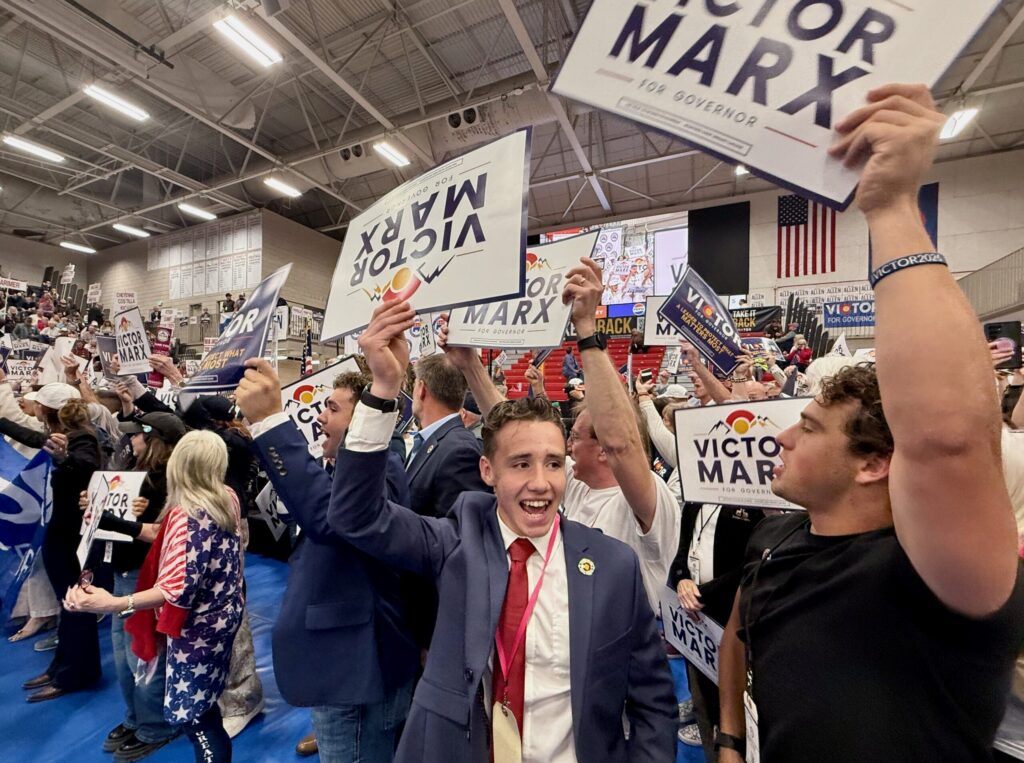
Eric Sondermann is of course correct Victor Marx is an unserious, unelectable, embarrassing Republican nominee for governor of Colorado. But I respectfully submit that the “through line,” as Mr. Sondermann describes it, is not from Trump to Marx, despite their...
PREV
PREVIOUS

Trust the experts, we aren't ready for wolves | Colorado Springs Gazette
Two famous pigs underestimated a wolf. He was of nature, incapable of humanoid male toxicity. Such a lovely creature would do no harm – so they thought. The wolf demolished their lives before the Welcome Wagon arrived. The pigs were not prepared for a wolf, which takes strategy, effort, investment and sacrifice. It means, don’t […]

What Western Slope wine tells us about Taiwan's place in the world | SLOAN
Kelly Sloan Last week was a banner one for Colorado’s Mesa County. The 32nd annual Colorado Mountain Winefest was held Saturday in Palisade’s beautiful Riverbend Park. By all accounts it was a glowing success. The official figures are impressive: more than 5,000 attendees from 40 states and five countries, sampling the wares of more than […]