

New tolls mean freedom on I-25 | Colorado Springs Gazette
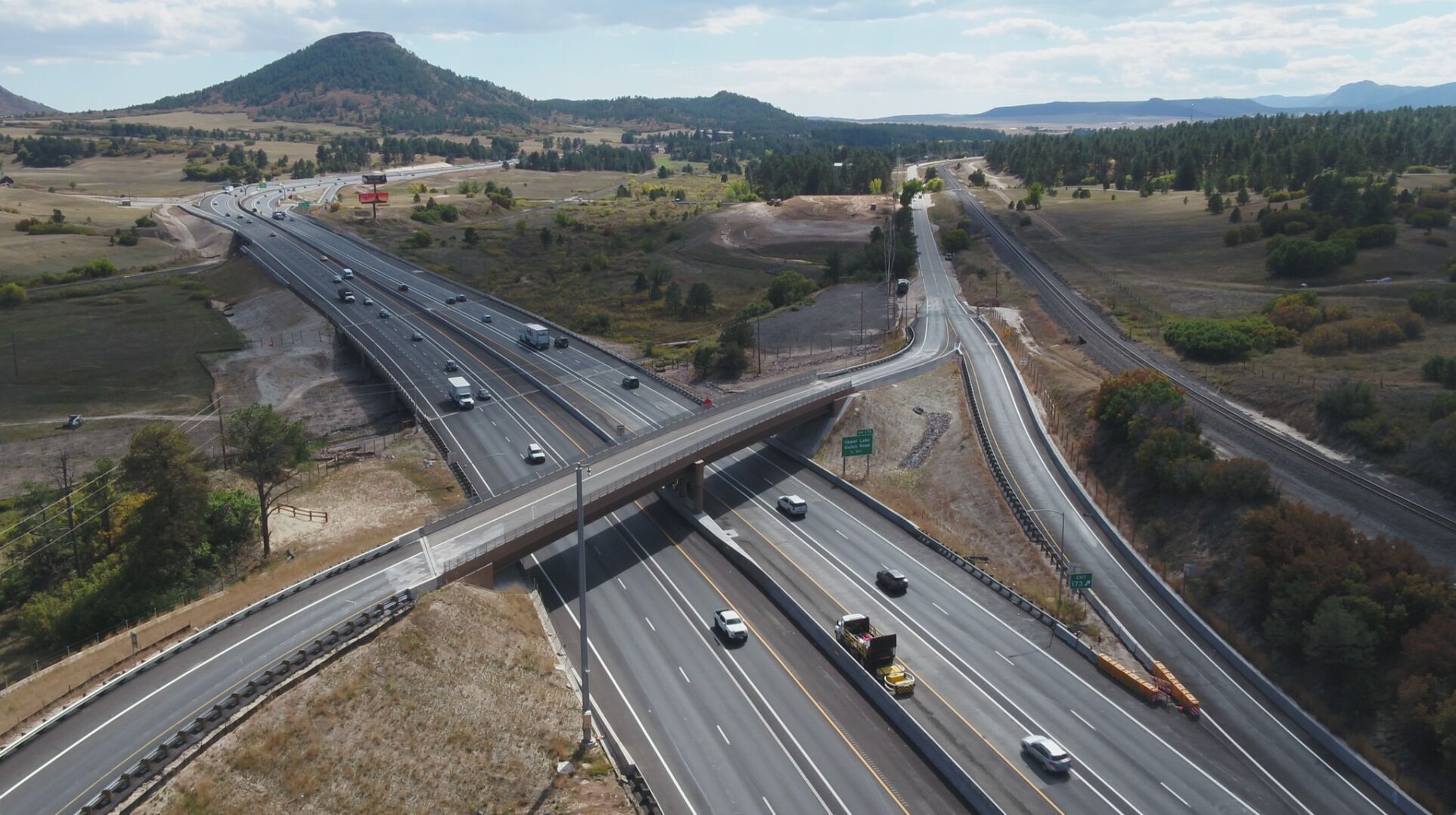
The trip between Denver and Colorado Springs will get easier and quicker, thanks to tolls the state will add between Monument and Castle Rock.
Drivers may have forgotten how the once-dreaded trips between Denver and the Springs could take hours. Congestion has been considerably less since the new north and south lanes went in along I-25’s notorious 18 miles of “The Gap.” Motorists used the lanes toll free while the state prepared to start charging.
The widening of I-25, completed in November, came just in time for the early stages of Colorado’s transition into the public-private aerospace technology hub of the United States. President Joe Biden’s decision to keep Space Command in Colorado led to a spate of aerospace companies moving or expanding here, a trend likely to continue.
Pricey transportation projects pave the way for more industry, commerce and jobs. National Geographic explains how the United States economy – the world’s largest – grew because of roads.
Stay up to speed: Sign-up for daily opinion in your inbox Monday-Friday
“These expanded transport links laid the foundation of a bustling nationwide economy of commercial agriculture and industry,” says a National Geographic transportation textbook.
Traffic jams cost money and lives. When thousands sit idle on pavement, our economy loses millions in production and consumption. Aside from the danger of bumper-to-bumper traffic, consider the person fighting for life in an ambulance stuck on I-25. Consider the person not saved by a doctor stuck on the road.
As the state’s major north-south thoroughfare, I-25 should move people – not trap them. As our wider I-25 invites and facilitates more travel, snarls will increase. That’s why we need managed access for each new lane.
In all transactions, pricing is a valve. When a price goes up, it necessarily slows the outflow of associated goods, services and commodities. As a price goes down for anything in demand, the outflow goes up. That’s why the price of lumber, gasoline, electricity, homes, bubble gum, haircuts, medicine – whatever it may be – goes up and down with supply and demand.
Access to the new I-25 lanes will be managed by price – just like entrance to a Taylor Swift concert.
Most people would see top-tier concerts if they were free, just as they take open traffic lanes without much thought. Admission fees force each consumer to contemplate a question: Do I prefer the money or the access?
We’ve heard how toll lanes disproportionately burden the poor. That amounts to decrying poverty in general. Gasoline and food prices hurt the poor. At least in this equation, two-thirds of the lanes are free. That means toll lanes likely benefit the poor. Each paying vehicle is one no longer competing in the toll-free lanes. Those who pay the toll benefit those who do not, much like first-class flyers subsidize prices in coach.
Someone having a medical crisis should take a toll lane and pay – or not. If it is a true emergency, and the driver can’t pay, take a lane and challenge the toll. At least a lane is moving. Late for a meeting? Late for a plane? Consider the toll versus the cost of being late and choose. Without the toll, we have no such choice.
The state wants one toll lane in each direction that ensures speeds of at least 45 miles an hour for those able and willing to pay. As traffic ebbs and flows throughout the day, prices will climb and fall. The price will fluctuate based on demand.
Flexible pricing will make I-25 safer and more efficient. Take joy in paying the tolls – or not. It is the state’s best way to value our time.
Colorado Springs Gazette Editorial Board


Update, safeguard Colorado’s mail ballot with voter ID | PODIUM
Colorado Politics
colorado-politics@coloradopolitics.com
Updated 8 hours ago
By Chuck Broerman and Suzanne Taheri Coloradans often refer to our state as a leader for accessible and secure elections. We have led on all-mail ballots, automatic voter registration, and same-day registration, turning Colorado into a model for modern elections...

Preserving access for vulnerable communities should be a top priority in Congress | OPINION
Colorado Politics
colorado-politics@coloradopolitics.com
Updated 8 hours ago
By Tony Henderson As both a minister and as president of the NAACP Denver, I believe access to high-quality, accessible health care is a right that should be afforded to each and every one of us. To that end, Medicare...

Yet again, when rights are in conflict | Hal Bidlack
Hal Bidlack
hal-bidlack@coloradopolitics.com
Updated 1 day ago
I admit, it is going to take quite a bit of self-control to not have this entire column end up being yet another screed about a certain president who continues to shock the world in his race to the bottom...

Turn blueprint into action with the Outdoors Opportunities Act | OPINION
Kent Thiry
kent-thiry@gazette.com
Updated 1 day ago
Nearly a year has passed since Gov. Jared Polis, Colorado Parks and Wildlife, the Colorado Department of Natural Resources, Colorado’s Outdoor Recreation Industry Office and other key partners finalized the visionary Colorado Outdoor Strategy, establishing the framework to ensure Colorado’s...
Let Colorado’s communities govern their own neighborhoods | OPINION
Colorado Politics
colorado-politics@coloradopolitics.com
Updated 1 day ago
By Jeff Bailey and Cindy Bailey Coloradans have always done things their own way. From how we manage our land to how we build our economies, the instinct to govern locally — to trust mayors, councils and commissioners over distant...

Threats inside and out loom for Colorado’s Republicans | Dick Wadhams
Dick Wadhams
dick-wadhams@coloradopolitics.com
Updated 3 days ago
Colorado Republicans made strides in 2024 despite an insidious state chairman who tried to defeat successful Republican candidates. Newly elected U.S. Reps. Gabe Evans, Jeff Hurd and Jeff Crank fought off unethical opposition from their own state party chairman, making...

Is it time for both parties to bail on Colorado’s political nominating system? | Miller Hudson
Miller Hudson
miller-hudson@coloradopolitics.com
Updated 3 days ago
Cracks are beginning to appear in Colorado’s political nominating system. Recently, Mario Nicolais, a formerly Republican-leaning pundit, and Doug Friednash, former Democratic legislator, have opined regarding the imminent demise of the caucus/assembly framework which controls partisan candidate selection. There has...

Recognizing the value of generational work | Rachel Gabel
Rachel Gabel
rachel-gabel@coloradopolitics.com
Updated 3 days ago
The Lesser Prairie Chicken habitat in southeastern Colorado is a swath of prairie that begins in Cheyenne and far-southeastern Lincoln counties and moves south and east into Kiowa, Prowers and Baca counties. This is cattle country where the short grass...

Why the controversy with mail-in ballots? | Cronin & Loevy
Tom Cronin Bob Loevy
tom-cronin-bob-loevy@coloradopolitics.com
Updated 3 days ago
Most Coloradans enjoy the right to vote “by mail” at election time. Most Americans favor this process. But U.S. President Donald Trump is trying to federalize (nationalize) this practice and shift the supervision of voting from county clerks to the...

Who are the kings being crowned here in Colorado? | Jon Caldara
Jon Caldara
jon-caldara@coloradopolitics.com
Updated 5 days ago
Though most of us celebrate “No Kings Day” on July 4, the Trump-deranged got a head start last weekend with rallies around the state. Attendees bravely fought oppression by blocking traffic for people with jobs. Rally-goers demanded freedom from tyranny,...
PREV
PREVIOUS

Hanger-on Hickenlooper is a stumbling block — for fellow Dems | WADHAMS
Dick Wadhams Coloradans breathlessly waited for U.S. Sen. John Hickenlooper’s cataclysmic announcement he would seek reelection in 2026. Actually, no one lost their breath. It was comparable to the response when he ran for the Democratic nomination for president in 2019. Thinking Iowa Democrats would swoon over the banjo-playing former brewpub owner, he was out […]

More lawsuits by lawbreakers | Denver Gazette
No prison system is perfect, and most are far from it. That’s true in Colorado, too. Prison conditions can fall short – sometimes, abysmally so – of the ideal standard for securely yet humanely housing criminal convicts. And while there are checks and balances in place to provide redress for inmates’ grievances, that process, as […]