

Colorado’s pollution regulators hear pros, cons of $2.55 billion energy efficiency mandate
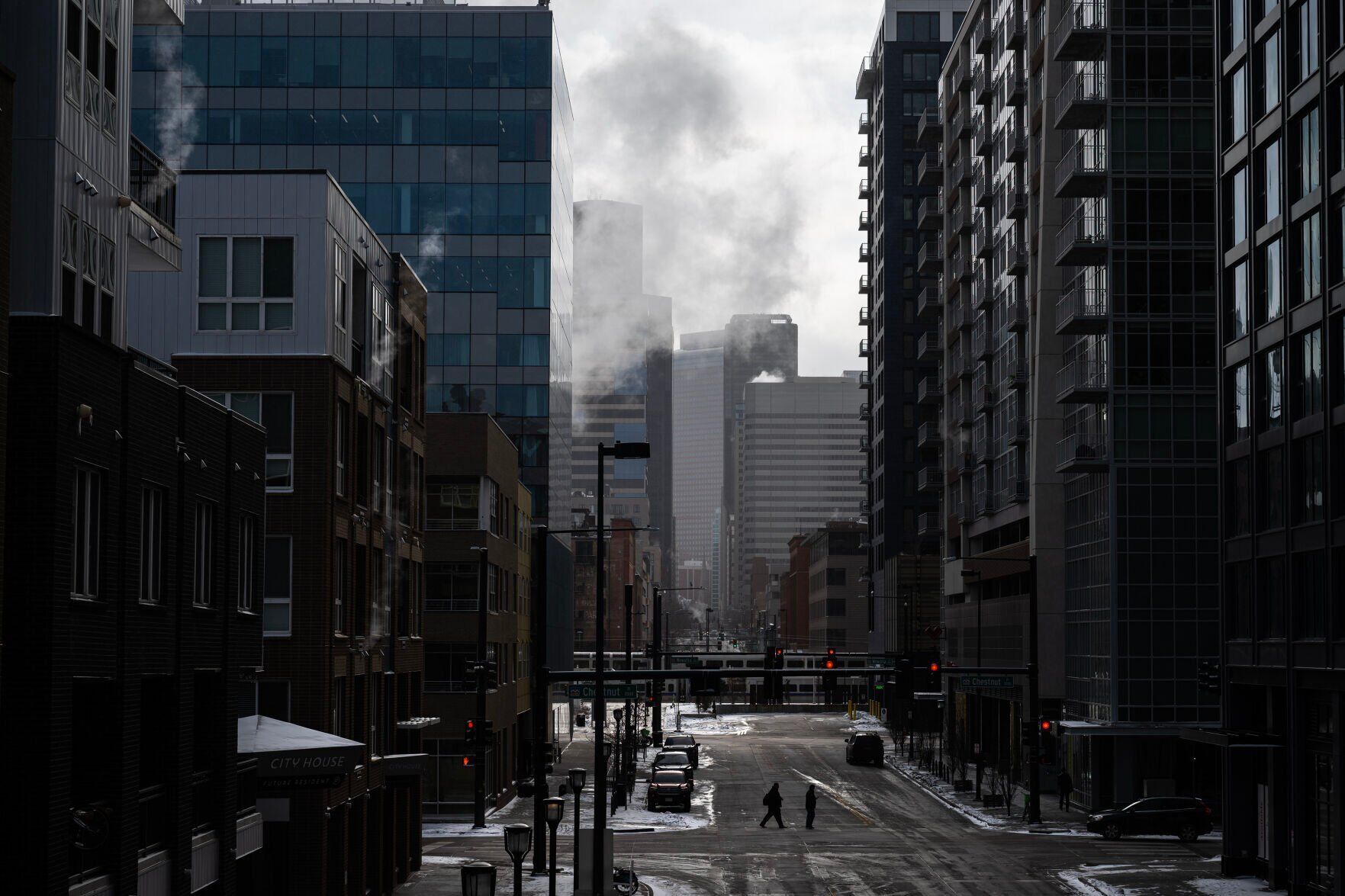
A state agency this week heard testimony favoring and opposing a proposal to mandate more than $2.55 billion in energy efficiency upgrades for some 8,000 large buildings under consideration.
The potential costs to upgrade large buildings having more than 50,000 square feet of floor space is causing consternation among building owners, including owners of large, older apartment buildings. Proponents, meanwhile, said the new regulations will improve air quality, upgrade the quality of buildings in Colorado, and must be done all at once to make any substantial effect.
In a three-day meeting, the Colorado Air Quality Control Commission tackled the proposal from the Colorado Air Pollution Control Division called Regulation 28, which seeks to mandate 7% building energy use reductions by 2026 and 20% by 2030. The proposal first came before the commission on May 16.
Strident objections from building owners and apartment industry representatives persuaded the air quality commission in April to continue the proceedings until August.
Colorado Real Estate Alliance objects to proposed large building energy efficiency rule
Apartment developers argued it may well be unaffordable, if not impossible, to meet the new standards and result in loss of low-income housing stocks if buildings have to be closed – or the cost of new, low-emission upgrades will be passed to renters.
The commission is determined to push the regulation through by Friday to meet a statutory mandate that it does so by Sept. 1.
Environmental attorney Paul Seby told The Denver Gazette that the revised regulation is worse than the original one in that it’s more stringent and less flexible.
Tim Walsh, CEO of The Confluence Companies, which builds multifamily housing up and down the Front Range, said electrification of older apartment buildings that use central hot water for heating and washing could cost as much as $80,000 per apartment.
“We’re going to be disproportionately hurting the hardest working Coloradans and the lowest wage earners by implementing this rule,” Walsh said in a prior interview. “Everybody wants to talk about affordable housing. And affordable housing is also about affordable utility bills in your home, as well, not just the cost of rent or own.”
Proposed rule mandating large building electrification violates federal and state laws, says critics
Dennis Supple, a spokesperson for International Facility Managers Association, told the commissioners Wednesday that supply chain issues and up to 18-month delays for delivering new, low-emission equipment are likely to make it impossible to obtain the necessary equipment before the 2026 reduction sets in.
On the other hand, Cliff Majersik, senior advisor for policy and programs at the Institute for Market Transformation, told the commission the building energy standards are necessary and workable.
“The requirements on building owners in the proposed Rule 28 are absolutely doable for building owners and they will create benefits beyond just energy and climate savings,” Majersik said. “They will create buildings that are healthier and more comfortable for the occupants. They’ll create jobs for Colorado workers, they will add property value.”
“And it’s hard though to move individually. So, collective action is needed to move the whole industry and a building performance standard is great for driving that collective action, overcoming the first-mover disadvantage, and helping Colorado to create more valuable buildings, more profitable buildings, more jobs for its residents,” Majersik added.
In addition to Colorado, three other states have adopted building performance standards: Washington state, Maryland and Oregon.
Tricia Canonico from Fort Collins City Council, a member of Colorado Communities for Climate Action, said the group’s members comprising 42 municipalities and counties all share a “deep concern about the existential threat of the climate crisis.” The coalition, he said, represents a broad cross section of diverse communities that make up over a quarter of the Colorado population.
Colorado’s new environmental rule could cost building owners, tenants more than $3 billion
In response to complaints against the proposed rule, the Colorado Energy Office said that the regulation is mandated by statutes enacted by House Bill 21-1286, and it is only doing what the law requires. Any defects lie in the law itself, said the office, and neither the energy agency nor the air quality commission can change that. Until the underlying statute is challenged and overturned, the energy office said agencies have a legal duty to forge ahead.
Gov. Polis signed the enabling legislation in June 2021. The commission announced the proposed rule 18 month later -on Jan. 20, 2023.
Seventeen of the approximately 75 people who attended the on-line Zoom public comment session on Tuesday spoke to the commission. Another 75 people signed up for the Wednesday formal hearing, where the Air Pollution Control Division gave its presentation on the new regulation and parties to the proceeding gave their testimony.
Late Thursday afternoon, commissioners voted 6-1 to pass the regulation with Commissioner Randy Ahrens voting against the proposal and Commissioner Gary Arnold absent.



New year, higher wages for Denver hourly and tipped workers
Deborah Grigsby
deborah.smith@denvergazette.com
Updated 46 minutes ago
Some Denver workers will be starting the new year with a pay raise as the city’s minimum wage rises to $19.29, up from $18.81. For tipped food and beverage workers, the minimum wage will jump from $15.79 to $16.27 per...

Businesses face losses after Xcel power shutoffs
Sage Kelley
sage.kelley@denvergazette.com
Updated 1 hour ago
Restaurants west of Denver are still coming to grips with product losses and future revenue concerns after power shutoffs last week by Xcel Energy, which cited high winds as the rationale for the decision. “It’s like living in a third-world...

Colorado PUC slates January hearings on natural gas plan, transmission line appeal, railroad rules
Scott Weiser
scott.weiser@gazette.com
Updated 1 hour ago
The Colorado Public Utilities Commission announced January public comment opportunities on railroad safety rules, natural gas infrastructure, and a major transmission line siting appeal. The hearings form part of expanded outreach efforts the commission launched to increase public participation in...

As Denver Pavilions and Sports Castle start new eras, so does Gart Properties with next generation
Bernadette Berdychowski
bernadette.berdychowski@denvergazette.com
Updated 1 hour ago
Gart Properties, a Denver real estate venture tied to a century-old family business, is entering a new era. The Gart Companies named Evan Gart, 34, as president of Gart Properties. Gart is the great-grandson of its founder Nathan Gart and...

69th Denver Debutante Ball celebrates families and tradition | NONPROFIT REGISTER
Joanne Davidson Special to Colorado Politics
joanne-davidson-special-to-colorado-politics@coloradopolitics.com
Updated 3 days ago
DENVER DEBUTANTE BALL Denver News: One of the Old Guard’s most cherished traditions, the annual Denver Debutante Ball, celebrated its 69th year on Dec. 22 when 31 debutantes were presented at the historic Brown Palace Hotel. The daughters, granddaughters, aunts and nieces from prominent families whose last names include Coors, Benson,...
Court: Municipal sentences may not be greater for identical state crimes
Michael Karlik
michael.karlik@coloradopolitics.com
Updated 3 days ago
The Colorado Supreme Court ruled on Monday that municipalities may not subject defendants to sentences that are harsher under their own ordinances than for identical offenses under state law. In the opinion, Chief Justice Monica M. Márquez noted localities are...

Denver Summit to stay in city after council approves $70M stadium deal
Bernadette Berdychowski
bernadette.berdychowski@denvergazette.com
Updated 3 days ago
With an incredibly short timeframe to start construction on a major league women’s soccer stadium, Denver’s City Council dropped the biggest hurdle for Denver Summit FC. Now, the team plans to move forward with its stadium and stay in Denver’s...
Colorado AG sues Trump administration to protect Consumer Finance Protection Bureau
Mary Shinn
mary-shinn@coloradopolitics.com
Updated 3 days ago
A coalition of 22 attorneys general from Democratic-led states sued the Consumer Financial Protection Bureau and its director, Russell Vought, on Monday, asserting that the White House’s argument to withhold funds from the consumer protection agency is unconstitutional. Colorado’s Attorney...

Colorado marijuana sales likely to reach $1 billion in 2025
Marissa Ventrelli
marissa.ventrelli@coloradopolitics.com
Updated 4 days ago
Colorado’s marijuana sales will likely reach $1 billion by the end of 2025, generating almost $200 million in tax revenue, according to a state agency. “Colorado’s world-class marijuana industry drives out criminals and cartels and is supporting Colorado businesses and jobs while...
Denver office conversion being considered for downtown authority’s largest loan yet
Bernadette Berdychowski
bernadette.berdychowski@denvergazette.com
Updated 4 days ago
The plan to convert two office towers on 17th Street in downtown Denver is under consideration to get nearly $63 million from the Denver Downtown Development Authority, which could be the largest loan since the quasi-government organization expanded in 2025....
PREV
PREVIOUS

Colorado education leaders, districts sue the state over troubled universal preschool program rollout
A half-dozen Colorado school districts and two education groups sued the state Thursday over its freshly implemented free universal preschool program, alleging the state walked back key promises and that deficiencies in the application process disproportionately harm low-income families and students with disabilities. Colorado Springs’ Harrison School District 2 is among the slate of districts […]

Federal judges dole out harsh words, monetary sanctions for lawyers' conduct
In recent months, judges on Colorado’s federal trial court have delivered stinging rebukes to lawyers – and in some instances, monetary penalties – for their behavior in the course of litigation. Although it is typical for judges to deliver critiques of lawyers’ legal arguments, it is less common for them to lay down accusations of unprofessionalism and […]