

Must I live by your beliefs? | BIDLACK
As is so often the case, I’d love to be writing today about national issues. In particular, I’d love to write about the recent shameful behaviors we’ve seen at the United States Supreme Court. We could start with the fact that the three Trump appointees, Gorsuch, Kavanaugh and Barrett all stressed the importance of precedent during their confirmation hearings. Each noted Roe was considered settled law and they did not anticipate voting to overturn it. Heck, even Alito, who wrote the opinion overturning Roe said, way back in his hearing, it was settled law and an important precedent that was “protected.”
They all had little quibbles, however, along the lines of not being able to foresee the future and who knows what will come along, and such. Well, I call shenanigans on that. The three Trumper appointees managed to overturn a 50-year precedent pretty darn fast. I posit a case can be made that they actually lied under oath, as I rather doubt they had a miraculous epiphany, that Roe should be completely overturned, after confirmation. Heck, GOP Sen. Susan Collins said Kavanaugh assured her in private conversations prior to his confirmation Roe was settled law.
Stay up to speed: Sign-up for daily opinion in your inbox Monday-Friday
It’s been a while since we impeached a SCOTUS member, but if lying under oath isn’t a reason for removal from office – let alone taking big gifts from rich donors, including some that have business before the Court – I don’t know what is. It won’t happen, of course, but Chief Justice John Roberts is increasingly likely to have his term in office – the Roberts Court – be remembered not for any judicial brilliance, but rather for scandal and deceit. And the public is paying attention, with confidence in the Court falling to all-time lows, with only roughly a third of Americans expressing confidence in the Court’s non-partisanship and character, while fully two thirds report little or no confidence in the Court. Roberts’ legacy is severely tarnished.
But I’m not going to talk about any of that…
Instead, I’d like to bring up an issue that never causes any disagreements or fights: religion.
A recent Colorado Politics story examined the religious views of our elected legislative representatives. The report found various religious views are overrepresented in the legislature, when compared to the general population of Colorado.
A brief note on how I came to this issue: I spent my 25-plus-year Air Force career as an outlier (Editor: no!?). First, I was a Democrat, and that’s unusual, but I am also not traditionally religious. If anything, I’m a deist. And so, over those years, I was often confronted with overt religious behaviors I had to deal with. As a young lieutenant, I mostly had to just suck it up when someone offered, say, a prayer in Jesus’s name. As a lieutenant colonel with a secure pension, I was less tolerant.
I was reminded of those days by the CoPo story. And please believe what you wish. As Jefferson famously said, “It does me no injury for my neighbor to say there are twenty gods or no god. It neither picks my pocket, nor breaks my leg.” But problems can arise when elected officials feel empowered to act on policy decisions before them based on that most dangerous type of belief system: that I am following God’s will that I know exactly what God wants. When any man or woman states he or she alone knows exactly what God wants, well, be nervous and on guard.
Happily so far, here in Colorado, I haven’t seen too much outright religious certainty pertaining to legislation, unlike what we are seeing in many deep-red states around the country (cough… abortion bans… cough).
The survey shows there are a significant number of nonreligious folks in the House and Senate, with 24 identifying that way. But the data do show the General Assembly overrepresents religion significantly, where a third (34%) are unaffiliated, compared to 24% in the Colorado population at-large.
That concerns me, as often those who are deeply religious feel compelled to try to govern in what they perceive to be the path chosen by God, which by a remarkable coincidence, seems to always mirror the individual’s own beliefs quite nicely.
Anthropologists estimate that, over the course of human history, there have been “at least 18,000 different gods, goddesses and various animals or objects have been worshipped by humans.” There is, at least to me, a degree of hubris in thinking that you and your group, be it a church or a temple or a mosque, have narrowed in on the one, exactly correct, religious view.
Now, I suspect I’ve managed to irritate quite a few of you, but that’s not my goal. Rather, I’d like you to take a look at that CoPo story to see how you yourself feel about the religious (and nonreligious) makeup of our state legislature. Along the lines of James Madison in his classic Federalist No. 10, I’d argue as long as no one set of beliefs is able to conquer all the others, we’ll be basically OK. But I do worry, as the radical right more and more embraces a far-right evangelical point of view, that more and more of our rights will be at risk. Yesterday it was Roe, and in a recent dissent, Justice Thomas argued the Court should now take another look at the decision legalizing birth control purchases, with an eye toward overturning that ruling. Can anyone doubt his religious views have influenced this notion?
The CoPo story is an important one, and it establishes a sort of benchmark to which we should come back every session. Colorado has been lucky so far in that extreme religious zealots have not yet been able to control or deeply influence law making.
Let’s be sure to keep it that way.
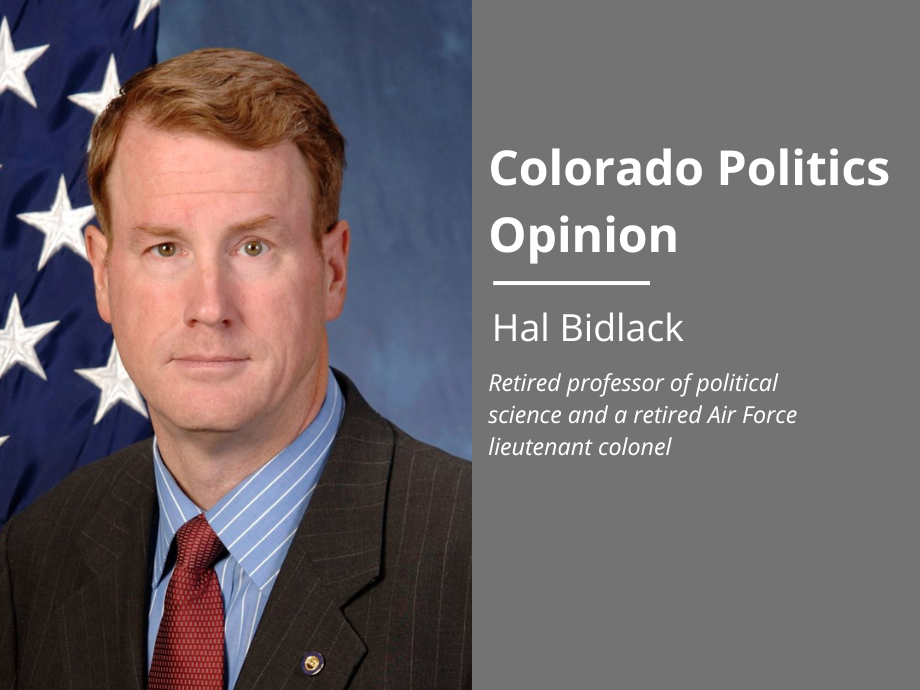
Hal Bidlack is a retired professor of political science and a retired Air Force lieutenant colonel who taught more than 17 years at the U.S. Air Force Academy in Colorado Springs.

Colorado Medicaid director’s resignation long-overdue inflection point for our families, kids | OPINION
Colorado Politics
colorado-politics@coloradopolitics.com
Updated 16 hours ago
By Heidi Baskfield For years, the consequences of a strained and fragmented Medicaid system have fallen on those least able to navigate it — the children with complex needs and the families fighting to care for them. Though policy debates...
Note to Colorado lawmakers — parents protecting kids isn’t abuse, it’s their job | OPINION
Colorado Politics
colorado-politics@coloradopolitics.com
Updated 1 day ago
By Matt Sharp and Sharon Supp During the last few years, the U.S. Supreme Court has made at least one thing clear: Colorado is consistently overreaching to apply its laws in unconstitutional ways. Colorado treated a cake artist with hostility...
H.R. 1 underscores unfairness in Colorado tax code | OPINION
Colorado Politics
colorado-politics@coloradopolitics.com
Updated 1 day ago
By Caroline Nutter On July 4, 2025, Colorado’s budget was overturned with the stroke of a pen. When President Donald Trump signed into law H.R. 1, or the One Big Beautiful Bill Act, he didn’t only cut federal funding by...
The danger of when government goes rogue | Paula Noonan
Paula Noonan
paula-noonan@coloradopolitics.com
Updated 17 hours ago
It’s dangerous, even fatal, when government goes rogue whether in a democracy or autocracy. Government officials who ignore or taunt laws that constrain bad acts should be given the heave ho. We’re witnessing these egregious scenarios now at the federal...

The future of Colorado condo development | OPINION
Colorado Politics
colorado-politics@coloradopolitics.com
Updated 2 days ago
By Peter LiFari For nearly two decades, the story of condominium construction in Colorado has been mistold, misunderstood and misrepresented. This outcome reflects the cumulative effect of more than two decades of Colorado policy, beginning with the Construction Defect Action Reform...
George Brauchler on Colorado’s ‘Jailbreak’ | The OpEdge Podcast
Tony Olivero
tony.olivero@gazette.com
Updated 3 days ago
We are pleased to introduce the inaugural episode of The OpEdge — The Gazette’s new opinion podcast. District Attorney and law enforcement hawk George Brauchler tells host and investigative columnist Jimmy Sengenberger what lawbreakers can expect in the 23rd Judicial District. Brauchler recaps...
Update, safeguard Colorado’s mail ballot with voter ID | PODIUM
Colorado Politics
colorado-politics@coloradopolitics.com
Updated 2 days ago
By Chuck Broerman and Suzanne Taheri Coloradans often refer to our state as a leader for accessible and secure elections. We have led on all-mail ballots, automatic voter registration and same-day registration, turning Colorado into a model for modern elections...
Preserving access for vulnerable communities should be a top priority in Congress | OPINION
Colorado Politics
colorado-politics@coloradopolitics.com
Updated 3 days ago
By Tony Henderson As both a minister and as president of the NAACP Denver, I believe access to high-quality, accessible health care is a right that should be afforded to each and every one of us. To that end, Medicare...
Yet again, when rights are in conflict | Hal Bidlack
Hal Bidlack
hal-bidlack@coloradopolitics.com
Updated 4 days ago
I admit, it is going to take quite a bit of self-control to not have this entire column end up being yet another screed about a certain president who continues to shock the world in his race to the bottom...

Turn blueprint into action with the Outdoors Opportunities Act | OPINION
Kent Thiry
kent-thiry@gazette.com
Updated 4 days ago
Nearly a year has passed since Gov. Jared Polis, Colorado Parks and Wildlife, the Colorado Department of Natural Resources, Colorado’s Outdoor Recreation Industry Office and other key partners finalized the visionary Colorado Outdoor Strategy, establishing the framework to ensure Colorado’s...
PREV
PREVIOUS

Far-left forbids elephants from celebrating America | Colorado Springs Gazette
Colorado’s premier July Fourth parade, which each year draws tens of thousands of visitors to Monument, ended with a mystery last summer. Don’t get this wrong. The parade provided patriotic splendor with scores of entertaining exhibits. There was just one nagging question: “Where were the elephants?” It was the talk of the ensuing street festival […]

Curbing Colorado’s car thieves | Denver Gazette
Law enforcement agencies are hopeful about a new law to rein in rampant auto theft – reversing soft-on-crime statutes that had earned our state a dubious distinction as the nation’s car-theft capital. “For far too many years, auto theft was perceived as a victimless crime when the … value of a vehicle was low. In […]