

Denver judge finds ‘reasonable’ belief DPS executive session violated Open Meetings Law

A Denver district court judge found “reasonable belief” the Denver Public Schools board violated Colorado’s open meetings law in an executive session in March, in which they emerged with a memo reversing the district’s policy that kicked out school resource officers.
A coalition of news outlets, including the Denver Gazette and Colorado Politics, sued the Board of Education and its custodian of records for the release of a recording and minutes of the executive session from the special meeting the board held on March 23. The meeting took place the day after a student at East High School shot two administrators before taking his own life.
Denver Gazette, news outlets file lawsuit against Denver Public Schools over executive session
The Board of Education removed school resource officers from the district in 2020, in the wake of national protests over the death of George Floyd and concerns about what some say is the “school to prison pipeline” exacerbated by the presence of law enforcement officers in schools.
The board reversed that policy in March, deciding to return officers to some schools for the rest of the academic year. The day before, a student at East High School allegedly shot two school administrators on March 22 before fleeing and killing himself hours later. The student, Austin Lyle, underwent daily searches as a condition of attending the school.
The Board of Education voted last week, 4-3, to bring back school resource officers on a long-term basis.
DPS board votes 4-3 to bring school resource officers back
Colorado’s Open Meetings Law bars policymaking in secret.
In the June 20 order, Judge Andrew Luxen said the coalition of news organizations has shown grounds for reasonable belief the Board of Education violated the Open Meetings Law by either adopting a policy or engaging in “substantial discussion” of matters not expressly permitted under the statutes. He ordered Denver Public Schools to turn over the recording and minutes of the session by Thursday so he can review them.
The Denver Gazette has reached out to a board spokesperson and President Xóchitl Gaytán for comment.
Under the law, a public body can go into executive session to purchase property, consult with an attorney for legal advice and for certain matters considered confidential, such as personnel issues or matters concerning individual students. The law does not allow for discussing policy changes in executive session.
Luxen’s order noted that the school board returned from its executive session and unanimously voted, without any public debate, to temporarily return police officers as school resource officers to some schools and to direct Superintendent Alex Marrero to come up with a long-term safety plan for the district.
In an email obtained by the Denver Gazette, Marrero told the school board hours after the shooting he wanted to have two armed police officers stationed at East High School for the rest of the school year. He said the district policy against armed officers in schools did not allow for it and asked to discuss the matter in an executive session the next day.
Denver Public Schools superintendent requested secret meeting to discuss policy change
The lawsuit also claims the Board of Education violated the Open Meetings Law because its public notice of the executive session wasn’t specific enough about the topic of the session. Luxen said he cannot yet tell if the notice violated the law.




Susan Blanco signals views on role of appellate courts in first opinion as Colorado justice
Michael Karlik
michael.karlik@coloradopolitics.com
Updated 2 hours ago
Justice Susan Blanco’s first solo opinion as a new member of the Colorado Supreme Court made clear her view of the guardrails that keep the state’s highest court tethered to the issues it is asked to decide. On Monday, the...

Colorado leaders weigh next steps after Supreme Court rejects state ban on ‘conversion therapy’
Marissa Ventrelli
marissa.ventrelli@coloradopolitics.com
Updated 20 hours ago
Colorado leaders said they are weighing next steps after the U.S. Supreme Court on Tuesday rejected the state’s ban on “conversion therapy” for children, as critics and supporters cheered or lambasted the ruling. The court’s near-unanimous decision called the Colorado...
Federal judge dismisses U.S. government lawsuit against Colorado, Denver’s ‘sanctuary’ laws
Michael Karlik
michael.karlik@coloradopolitics.com
Updated 19 hours ago
A federal judge dismissed the U.S. government’s lawsuit against Colorado and Denver on Tuesday, which alleged that various local policies impermissibly infringed on federal immigration enforcement. U.S. District Court Judge Gordon P. Gallagher followed the lead of judges in Illinois...
Federal judge finds DOJ adequately searched for, disclosed records related to Bidens
Michael Karlik
michael.karlik@coloradopolitics.com
Updated 24 hours ago
A federal judge determined on Friday that the U.S. Department of Justice adequately searched for and disclosed records to a Colorado attorney in response to his request for documents related to former President Joe Biden’s son and brother. In November...
10th Circuit warns lawyers after finding fake case in filing
Michael Karlik
michael.karlik@coloradopolitics.com
Updated 17 hours ago
The Denver-based federal appeals court warned attorneys to be more careful last month after discovering one lawyer cited a fake case in his arguments. In recent months, federal and state judges in Colorado have begun cautioning lawyers explicitly about the...

10th Circuit rules cognitively impaired man’s risk of lobotomy, mistreatment in Mexico not ‘torture’
Michael Karlik
michael.karlik@coloradopolitics.com
Updated 2 days ago
The Denver-based federal appeals court concluded last month that a man’s risk of mistreatment or forced lobotomy in his native Mexico did not amount to “torture” that should shield him from deportation. A three-judge panel of the U.S. Court of...
Colorado justices side with news organizations for disclosure of high-level child abuse data
Michael Karlik
michael.karlik@coloradopolitics.com
Updated 20 hours ago
The Colorado Supreme Court ruled on Monday that the state must disclose the number of child abuse reports at individual group living facilities in response to an open records request, as the addresses are already in the public domain. The...
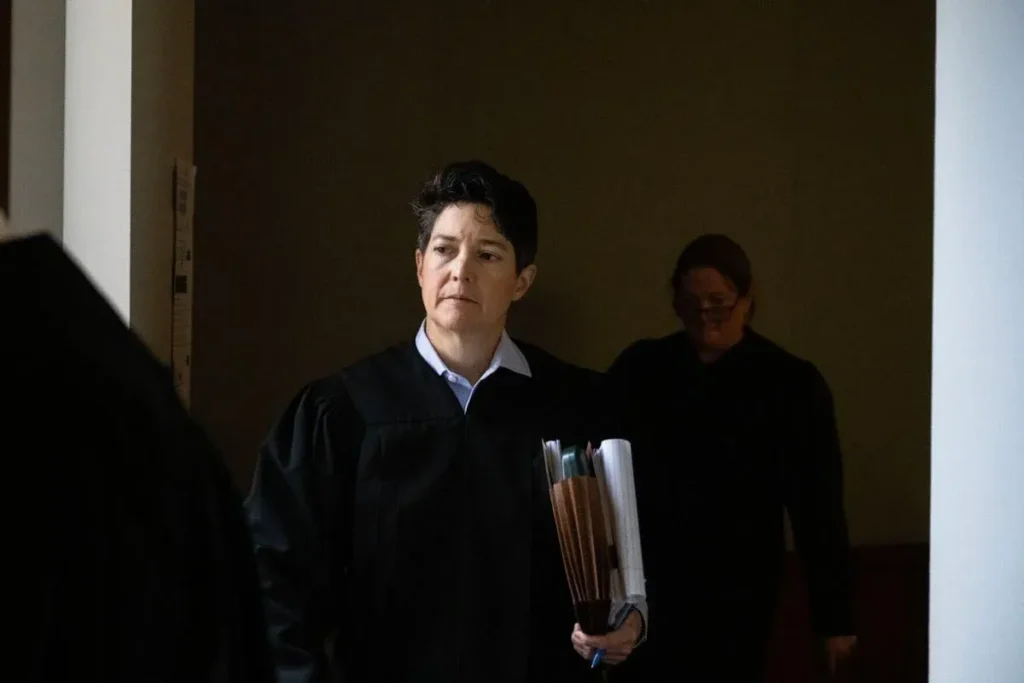
Divided Colorado Supreme Court finds Denver detective did not violate defendant’s Miranda rights
Michael Karlik
michael.karlik@coloradopolitics.com
Updated 2 days ago
The Colorado Supreme Court determined on Monday that a Denver detective did not improperly resume questioning of a defendant in custody after he invoked his right to counsel. By 4-3, the justices reversed a trial judge’s order that found a...

Out-of-state judges address ex-discipline director’s lawsuit, Colorado justices accept federal invitation | COURT CRAWL
Michael Karlik
michael.karlik@coloradopolitics.com
Updated 2 days ago
Welcome to Court Crawl, Colorado Politics’ roundup of news from the third branch of government. A pair of out-of-state judges got down to business in a lawsuit brought by Colorado’s former judicial discipline director, plus the state Supreme Court has...
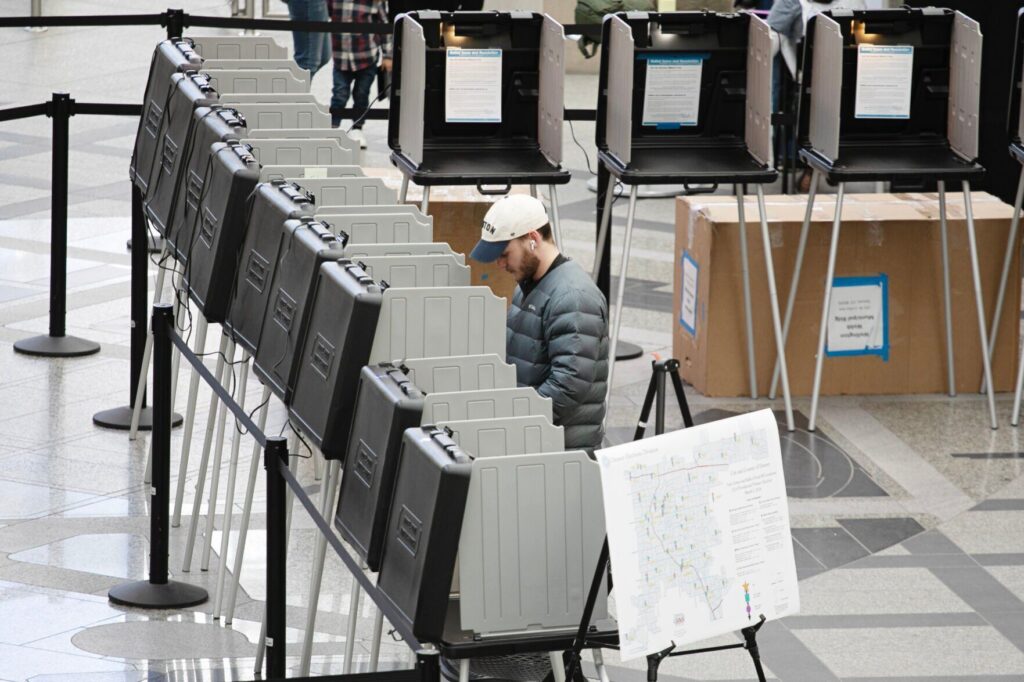
Federal judge upholds constitutionality of Colorado campaign contribution limits
Michael Karlik
michael.karlik@coloradopolitics.com
Updated 5 days ago
A federal judge upheld Colorado’s individual campaign contribution limits as constitutional on Thursday, finding that three Republican plaintiffs failed to prove the campaign finance framework violates their First Amendment rights. U.S. District Court Senior Judge John L. Kane recognized that...
PREV
PREVIOUS

RTD’s Zero Fare for Better Air program is set to launch its second year
RTD’s Zero Fare for Better Air program is set to launch its second year of helping to lower harmful ozone in the Metro Denver North Front Range Non-attainment Region Thursday. Media and the public are invited to the event at Union Station starting at 10 a.m. Thursday at RTD Union Station’s commuter rail platform, near […]

Denver OKs $10.4 million contract to convert Clarion Hotel to housing units
The Denver City Council approved a $10.4 million contract with the Colorado Coalition for the Homeless on Tuesday to support the city’s largest hotel conversion into housing and shelter so far. The contract will pay off bridge financing the city used to purchase the Clarion Hotel in December 2022 and “(ensure) the site will provide shelter […]