

Delivery fee no longer applies to small businesses, companies laud changes

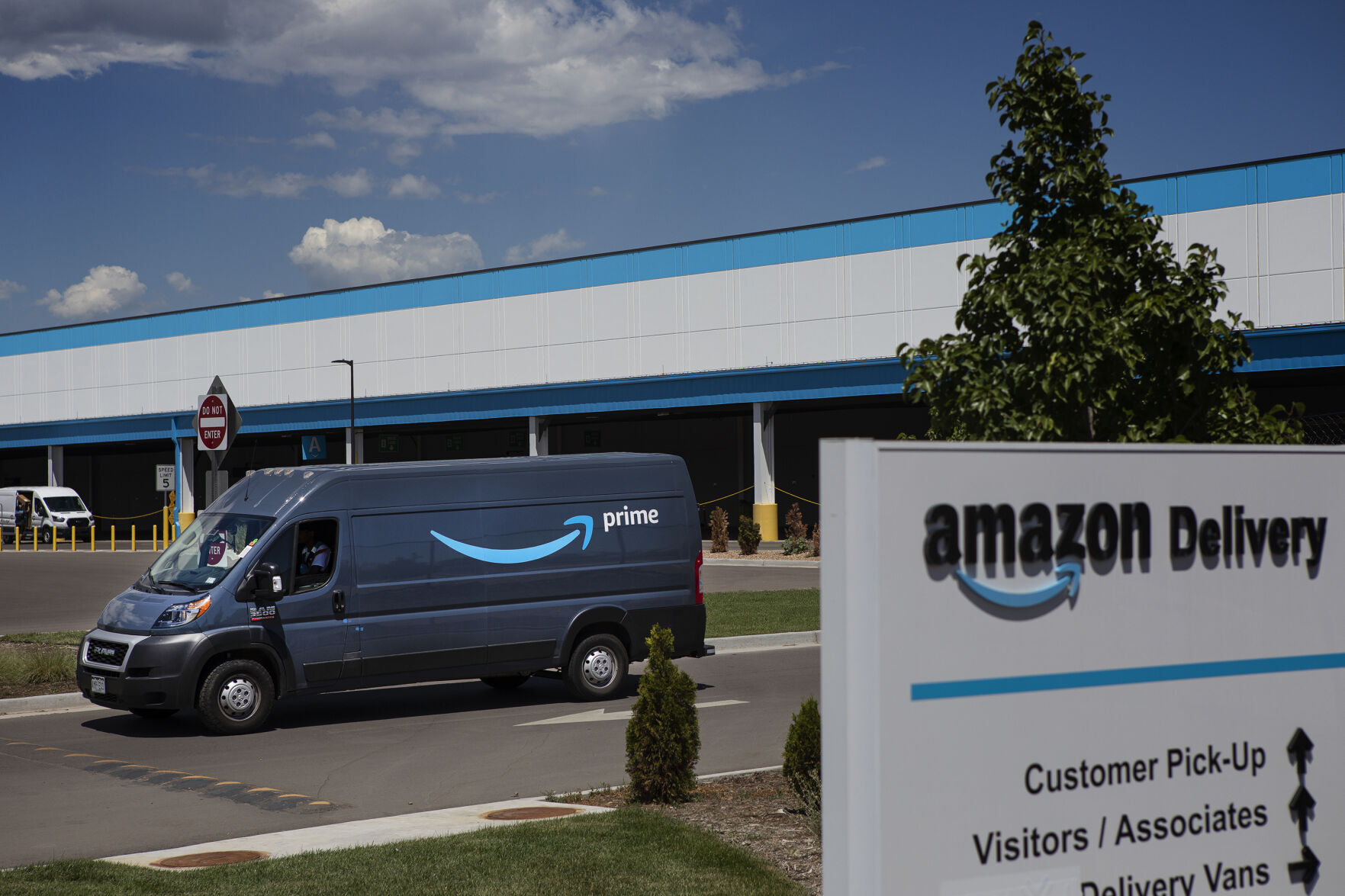
Gov. Jared Polis this month signed legislation to exempt small companies from the state’s 27-cent delivery fee, the subject of criticism by both businesses and customers alike.
Revenue from the delivery fee that a business must collect from each customer ordering products for delivery is part of a $5.4 billion, 10-year plan passed by the General Assembly in 2021 to build out Colorado’s roads and bridges, create more electric vehicle charging stations, boost mass transit and mitigate air pollution.
As of the end of 2022, the fee has already been collected on 161.2 million deliveries as of December – five months after it went into effect.
Senate Bill 23-143 exempts from the fee any business that had $500,000 or less in retail sales in the prior year, as well as new businesses. For those businesses not eligible to claim the exemption, the new law permits them to pay the fee on behalf of a customer without having to itemize it on the receipt or invoice or collect it directly from the customer.
A coalition of trade groups, which included the state’s association of accountants, applauded the proposal’s enactment.
“It’s no secret that Colorado has one of the most complicated sales tax systems in the nation, which has put a significant burden on businesses around the state,” said Paul Archer, who chairs the Simplify Colorado Sales Tax Coalition. “The Simplify coalition was formed to address these challenges, and we support any legislation that helps Colorado businesses thrive, create jobs and drive our economy.”
Lawmakers had two options to respond to the criticism surrounding the fee itself and its implementation: repeal or tweak it.
They opted for tweaks.
Currently, the retailer that makes the delivery must add it to the price of the delivery, collect the amount from the customer, and then submit the money to the Department of Revenue. Indeed, it doesn’t matter if the item delivered costs $10 or $60,000, the delivery fee must be detailed on the customer invoice, Archer noted.
That, he argued, created an administrative nightmare.
“Compliance would require of vendors expensive programming to modify customer invoicing IT systems,” he said.
The Department of Revenue, responding to objections from the business community, allowed companies to temporarily not detail the delivery fee on each customer invoice and to instead aggregate the total number of deliveries, report and then pay the total amount to the state.
SB 143 makes that temporary accommodation permanent, giving companies the ability to either itemize the delivery fee on each customer’s receipt or track the deliveries internally, sum them up and remit the aggregate amount to the state.
“Whether the customer is actually charged the 27 cents is up to the discretion of the retailer,” Archer said. “Using the car example, a car dealer can decide whether to increase the purchase price of the car by 0.27, so instead of being $60,000, the car would be $60,000.27, or the car dealer could choose to absorb the 0.27 delivery fee and not charge the customer for it.”
Dave Davia, who represents the Rocky Mountain Mechanical Contractors Association, said the fee was conceptually meant to apply to food deliveries. But, he said, it “got spread out” to any kind of delivery, affecting mechanical, plumbing, and HVAC contractors. That’s because the work that HVAC contractors do often means bringing supplies or materials to the job site.
That, in turned, spawned two major issues.
The first is it created a software headache. Davia said it entails modifying the tax software their members use in order to add a line that delineates the delivery fee. But to reprogram the software costs thousands of dollars – in fact, Davia said, it’s incredibly more expensive than whatever revenue the fee would accrue.
Citing one contractor, Davia said this company made about 12,500 service calls in 2021. Of those calls, about 50 to 70% would have included the delivery fee.
Under these parameters, the deliver fee the contractor need to collect would amount to somewhere between $1,600 and $2,200.
But the software update would cost $15,000.
The contractor also estimated the staffing cost to comply with the new law – $70,000 a year.
“From a taxing perspective, every time I send a service van out, every stop I make, I have to account for it,” Davia said, citing the contractor’s lament.
Davia also noted that his organization supported the underlying legislation that created the fee, since it is meant to alleviate traffic congestion and ultimately add new and better roads roads.
But, he said, “we didn’t contemplate” the complications arising out of the delivery fee.
Under the “Sustainability of Transportation Act,” the retail delivery fee will increase to $0.28 on July 1 as a result of an inflation adjustment.



Trump lowers flags to half-staff for Dolly Parton: ‘The World loves you’
Naomi Lim
naomi-lim@coloradopolitics.com
Updated 14 hours ago
President Donald Trump is honoring the life of country music legend and philanthropist Dolly Parton by ordering federal buildings across the country to lower flags to half-staff for a week. “Very sad to report that Dolly Parton, one of the...
Ted Cruz suggests GOP realignment coming after Trump leaves office
Emily Hallas
emily-hallas@coloradopolitics.com
Updated 14 hours ago
Sen. Ted Cruz (R-TX) on Monday suggested the Republican Party could embrace a directional shift after President Donald Trump leaves office, a transition that promises to leave a gaping hole in the GOP. Cruz is known as a critical ally...

2 Colorado State troopers shot near Woodland Park; suspect killed
DEBBIE KELLEY
debbie-kelley@coloradopolitics.com
Updated 13 hours ago
Two Colorado State Patrol troopers were hospitalized, and a suspect is dead after a shooting during a traffic stop Tuesday. The initial incident happened at about 7:15 a.m., when a resident reported suspicious activity in the area near milepost 286...

Aurora moves forward with data center regulations
Kyla Pearce
kyla.pearce@gazette.com
Updated 13 hours ago
The Aurora City Council approved moving forward with two new regulations on data centers and directed staff to come back at the next study session with others. At a council meeting in early August, council members directed city management to...

Aurora City Council considers stricter food truck regulations
Kyla Pearce
kyla.pearce@gazette.com
Updated 13 hours ago
The Aurora City Council is considering passing laws to limit the number of food trucks on properties in the city and how and when they operate. Councilmember Angela Lawson, who sponsored the ordinance, said she understands the importance of food...

Denver murder conviction reversed for incomplete self-defense instruction
Michael Karlik
michael.karlik@coloradopolitics.com
Updated 11 hours ago
Colorado’s second-highest court reversed a defendant’s murder conviction last week because a Denver judge gave an incomplete instruction to the jury about the man’s right to self-defense. Donald R. Gonzales and Gary McLaughlin met up in a Capitol Hill parking...
Colorado lawmaker, House leaders named in workplace-retaliation lawsuit
Marianne Goodland
marianne.goodland@coloradopolitics.com
Updated 14 hours ago
A former legislative aide has filed a lawsuit alleging she was mistreated, illegally directed to perform campaign work and harmed by a House leadership structure she charged was fragmented, politicized and ineffective at protecting employees. The lawsuit, filed by Jennifer...

Secret Service confirms awareness of Iranian state media video threatening Barron Trump’s life
The Associated Press
the-associated-press@coloradopolitics.com
Updated 19 hours ago
WASHINGTON (AP) — The U.S. Secret Service has confirmed it is aware that Iranian state media has aired a video that appears to threaten the life of Barron Trump, President Donald Trump’s youngest son. “The U.S. Secret Service is aware...
Federal judge hears arguments about Colorado’s 3-day gun purchase waiting period
Michael Karlik
michael.karlik@coloradopolitics.com
Updated 19 hours ago
A federal judge heard arguments on Monday about the constitutionality of a 2023 Colorado law that generally imposes a three-day waiting period on firearm purchases after the initiation of a background check. The test that the U.S. Supreme Court created...

Denver auditor finds oversight failures in $175.6M 16th Street project
Nico Brambila
nico.brambila@denvergazette.com
Updated 13 hours ago
Surprise historic sewer discovery delayed completion a year, cost $18M The Denver Auditor recently found significant oversight and contracting problems with the $175.6 million 16th Street Improvement Project, including an $18 million contract increase and a nearly one-year extension that...
PREV
PREVIOUS

Colorado's courts by the numbers: 2022 in review
Following the COVID-19 pandemic’s disruption of the justice system, Colorado’s state and federal courts are still experiencing lower volumes of cases, with the drop being particularly acute for some courts more than others. Colorado Politics examined the workloads of various courts in 2022, with the federal system reporting calendar year statistics and the state judiciary […]

Ozone control bill headed for Polis’ signature
A heavily amended bill now awaiting Gov. Jared Polis’ signature intended to cut down on ozone pollution makes major changes critics said would result in far-reaching repercussions. They allege it would handicap not just the oil and gas industry, but also other companies in Colorado – and do little to reduce summertime ozone. The bill’s […]