

GOP leaders divided over Denver mayoral race | A LOOK BACK

Forty Years Ago This Week: As the Denver mayoral race built toward crescendo, several high-profile members of the Republican Party seemed to be divided over how to handle a race with no registered Republicans running for the seat.
“Myself and the Colorado Republicans are officially staying out of the race,” said Colorado Republican Party Chairman Howard “Bo” Callaway. “Mainly because there are no Republican candidates running and thus no Republican interest.”
But Callaway’s predecessor, former state GOP Chairman Carl Williams had deviated from the party line, both endorsing and donating money to Dale Tooley’s mayoral campaign. The political action committee for the Colorado Chamber of Commerce had also endorsed Tooley.
Despite the fact that the Colorado Republican Party was a member of the Chamber, Callaway wouldn’t be drawn.
“[He] had a right to do it,” Callaway acquiesced.
On the Democratic Party side, U.S. Rep. Pat Schroeder, CD-1, refused to show any personal feelings on the mayoral race.
“Let the people decide who can lead into the ’80s,” Schroeder said. “Besides, a lot of my friends are running.”
The congresswoman did say that incumbent Mayor Bill McNichols had “worked hard and brought a lot to Denver.”
Schroeder did give her thoughts on the problems likely to face large cities in the coming years; predicting that federal money would be in short supply and cities would be forced to compete against each other for fewer and fewer resources.
“In the 1970s, energy was in Colorado’s backyard and the state didn’t have to compete as aggressively as it does now,” Schroeder said. “Denver has gotten more than its fair share of federal funds in the past and in terms of housing and mass transit the city has fared very well.”
Thirty Years Ago: After a long legislative session, and only a week left to go, House Speaker Chuck Berry, R-Colorado Springs, told The Colorado Statesman that he was pleased with the work done on the most knotty problem in 1993; financing public schools.
“I’m relatively satisfied, given the despair everyone expressed back in November,” Berry said.
Before the start of the session the conventional wisdom had it that the legislature would have to axe no less than 10%, or $270 million, from school funding.
“Legislators were able, thanks to the improving Colorado economy, to first add $200 million to the bill, then another $5 million for low spending schools,” Berry said. “I think the school finance act turned out pretty well.”
While cities like Colorado Springs and others in the “urban-suburban” school finance category, just barely made their goal of funding for each student, Berry believed this wasn’t enough.
“There are still inequalities between Denver metro school districts and the urban-suburban. The urban-suburban receive $200 less per pupil.”
But Senate Education Committee Chairman Al Meiklejohn, R-Arvada, was not nearly as pleased as Berry.
“It’s better than it might have been,” Meiklejohn said, “but it’s a long way from being good. The schools are still being cut. And it’s a real cut – not just a cut in the rate of growth.”
Sen. Dennis Gallagher, D-Denver, agreed with Meiklejohn, “It’s better than it started out,” Gallagher said. “I’m reminded of how Robert F. Kennedy put it ‘We can do so much better.'”
While her colleagues in both houses expressed cool acceptance Sen. Dottie Wham, R-Denver, was furious.
“I hate it,” Wham said of HB 93-1304. “I hate it for two reasons. First, I really felt that we should no do the $5 million distribution to the so-called low-spending districts. That should have been left alone until we got total information. I’m not convinced they’re the ones in the worst need.”
“Secondly,” Wham said, “The $5 million was money the Senate initially put into the Long Bill for pay raises for state employees. I was not in favor of using that money for school purposes.”
Rachael Wright is the author of the Captain Savva Mystery series, with degrees in Political Science and History from Colorado Mesa University, and is a contributing writer to Colorado Politics and The Gazette.



Colorado senators hold heated debate on latest immigration bill
Marianne Goodland
marianne.goodland@coloradopolitics.com
Updated 9 hours ago
A bill that would allow individuals who get injured during an immigration action to sue federal agents in state court won preliminary approval from the Colorado Senate on Monday. The bill would permit a “cause of action” by such individuals...

Trump pulls endorsement from Jeff Hurd over tariffs, backs Colorado Republican’s primary challenger
Ernest Luning
ernest.luning@coloradopolitics.com
Updated 8 hours ago
President Donald Trump on Saturday rescinded his endorsement of U.S. Rep. Jeff Hurd and threw his support behind the Colorado Republican’s primary challenger, Hope Scheppelman, citing the first-term incumbent’s “lack of support” for the administration’s tariff policy. The move comes...
Colorado Senate Democrats choose Sen. Cathy Kipp as president pro tempore
Marianne Goodland
marianne.goodland@coloradopolitics.com
Updated 11 hours ago
Senate Democrats on Monday elected Sen. Cathy Kipp, D-Fort Collins, as the next president pro tempore. Kipp replaced former Sen. Dafna Michaelson Jenet, D-Commerce City, who resigned her seat earlier this month. Kipp faced off against Sen. Tony Exum, D-Colorado...
Divided appeals court reverses murder convictions due to faulty self-defense instruction
Michael Karlik
michael.karlik@coloradopolitics.com
Updated 12 hours ago
Colorado’s second-highest court concluded last week that an incomplete self-defense instruction required the reversal of an El Paso County defendant’s murder convictions. Demetrius Montez Martin was among those present late at night at a club in Colorado Springs. An argument...
With deadline looming, Colorado House Ethics Committee narrows case against Rep. Ron Weinberg
Marianne Goodland
marianne.goodland@coloradopolitics.com
Updated 12 hours ago
With a Wednesday deadline to vote on seven ethics allegations against Rep. Ron Weinberg, R-Loveland, the Colorado House Ethics Committee signaled that it is poised to dismiss most of the claims, including campaign finance, conduct and firearm-related accusations, while focusing...

Democratic lawmakers propose changes to landlord-tenant laws in Colorado | Bills in Brief
Marissa Ventrelli
marissa.ventrelli@coloradopolitics.com
Updated 13 hours ago
Colorado lawmakers introduce hundreds of bills each year. Bills in brief cuts through the noise by explaining which proposals matter, what’s at stake, and how decisions at the Capitol could affect everyday life across the state. House Bill 1013, sponsored by Reps....
Colorado colleges must conduct wellness check if a student is reported missing under proposal
Marissa Ventrelli
marissa.ventrelli@coloradopolitics.com
Updated 10 hours ago
Spurred by the deaths of two young adults last year, a group of Colorado lawmakers is pushing legislation to require colleges to conduct wellness checks within six hours of a missing student report. The measure would also mandate statewide law...
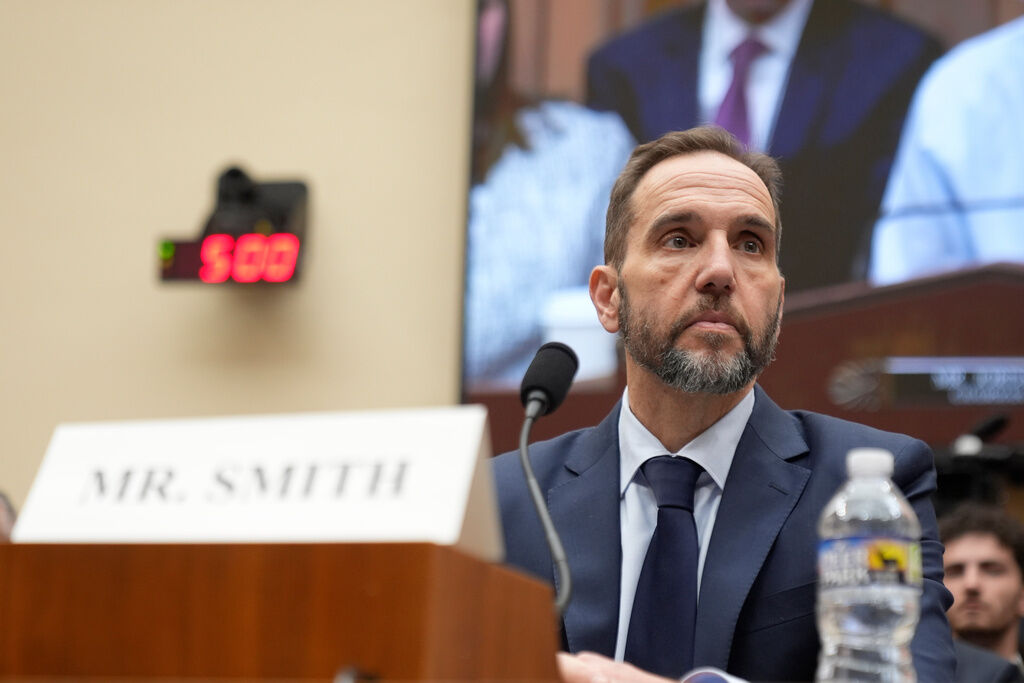
Judge permanently blocks release of Trump classified documents report
Kaelan Deese, Washington Examiner
kaelan.deese.washington.examiner@gazetteedit.wpenginepowered.com
Updated 9 hours ago
A federal judge permanently barred the Justice Department on Monday from releasing the portion of former special counsel Jack Smith’s final report detailing his investigation into President Donald Trump’s handling of classified documents, delivering a sharp rebuke of the prosecutor’s...
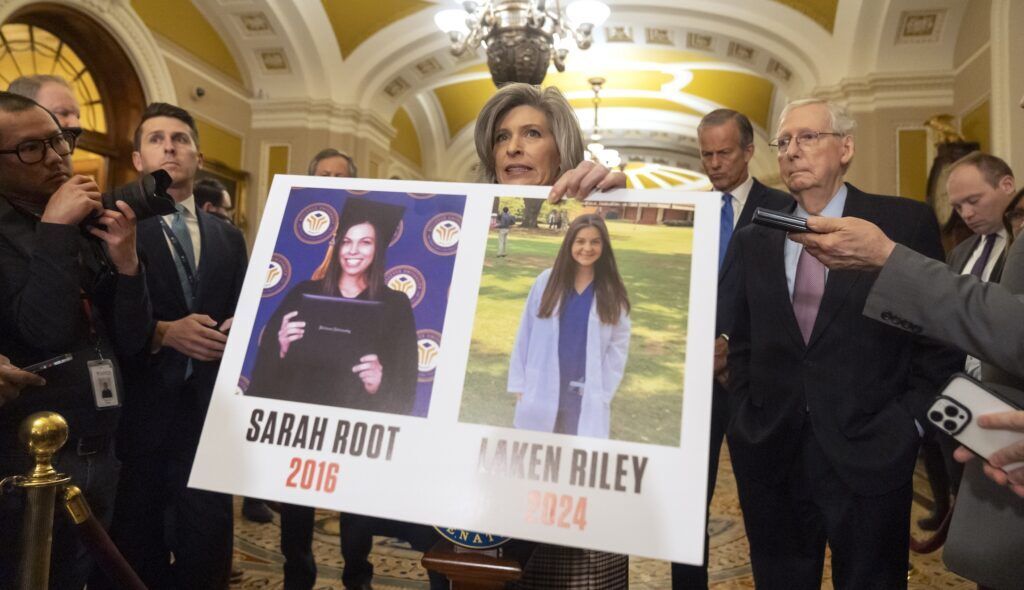
Trump declares National Angel Family Day for illegal immigrants’ victims
Mabinty Quarshie, Washington Examiner
mabinty.quarshie.washington.examiner@gazetteedit.wpenginepowered.com
Updated 14 hours ago
President Donald Trump on Monday designated Feb. 22 as National Angel Family Day in honor of 62 people who were killed by illegal immigrants and two others who survived attacks. Trump signed a proclamation making the designation official at an...
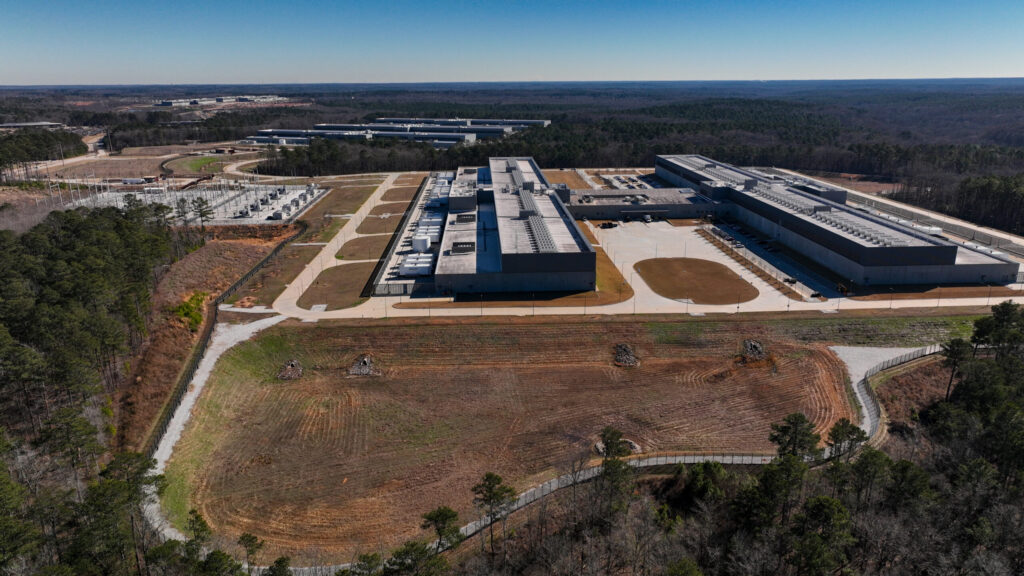
Colorado lawmakers mull competing bills on data centers
Scott Weiser
scott.weiser@gazette.com
Updated 8 hours ago
A Colorado coalition of data center developers and operators is urging lawmakers to pass a proposal that offers tax breaks to attract large facilities, while calling a competing bill a major obstacle to new investment. Meanwhile, proponents of the latter...
PREV
PREVIOUS

Polis signs 23 more bills into law | CROSSING THE FINISH LINE
With two days left in Colorado’s 2023 legislative session, Gov. Jared Polis has signed 179 bills into law. After being signed, bills take effect in August, 90 days after the general assembly adjourns, unless otherwise specified in the bill. A full list of legislation signed this year can be found online by clicking here. Here are […]

Intoxicating hemp bill amended to keep CBD product available for kids with disabilities
An effort to regulate intoxicating hemp could have had detrimental effects for thousands of Colorado kids who suffer from epilepsy and other debilitating conditions. But the bipartisan group of lawmakers who sponsored Senate Bill 271 found a way to address those concerns and still put a stop to a product that many claim is dangerous, […]