

Standing up to a scourge | Grand Junction Daily Sentinel
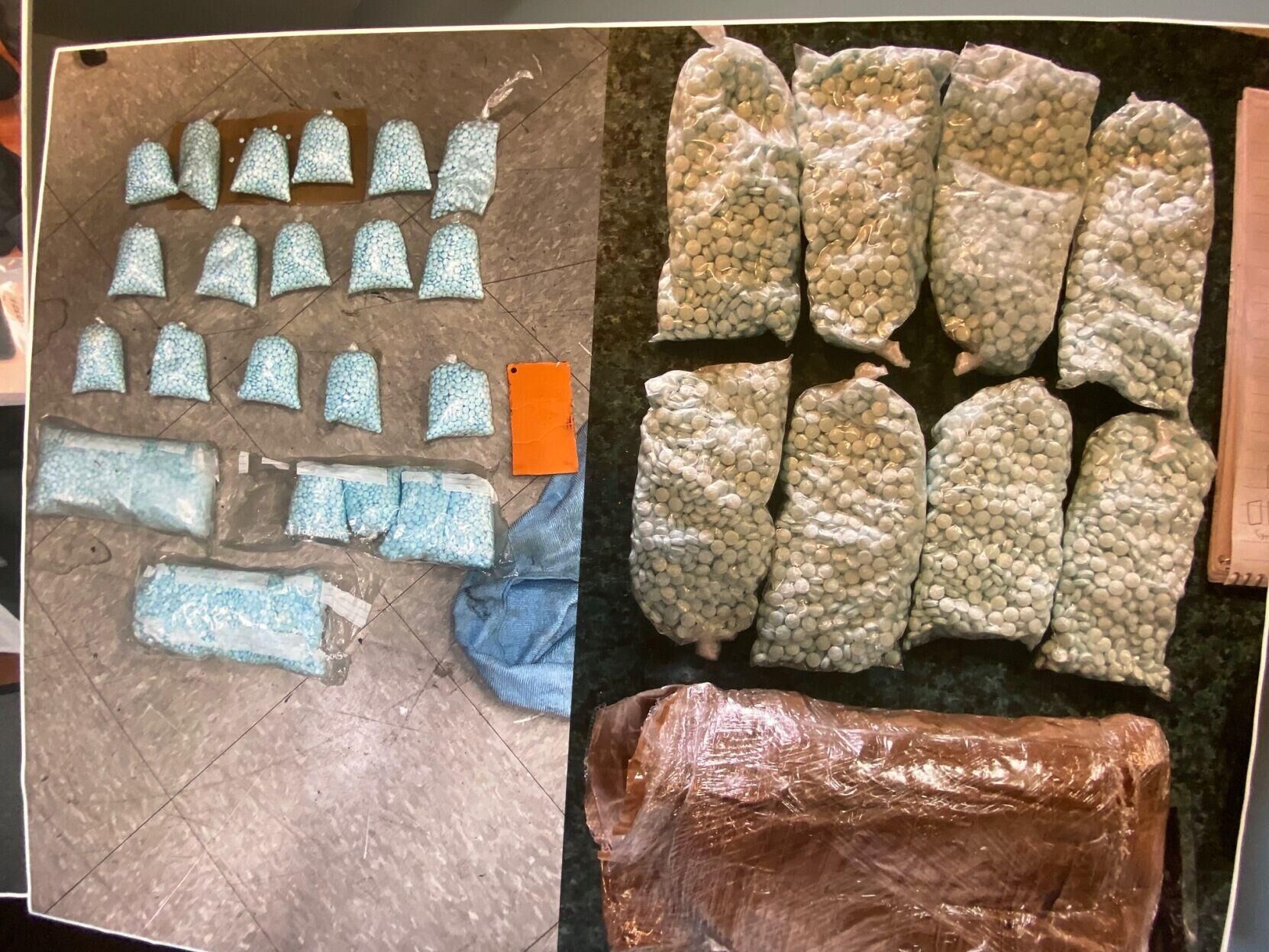
The statistics are grim and seemingly getting worse. But explaining Colorado’s fentanyl crisis in terms of numbers will never be as powerful a personal story of the drug’s destructive nature.
Sunday’s front-page column by the Sentinel’s Dale Shrull paints a picture of two lives ravaged by fentanyl intoxication. There’s the victim, 16-year-old Miah VanHouten, who died of fentanyl poisoning in May 2021. And there’s the victim’s mother, Tasha VanHouten, who’s been left emotionally drained, simultaneously fighting the stigma of her daughter’s death and sharing her story so that no other parent will have to suffer the same agonizing loss.
The numbers say parents should listen to VanHouten’s story. According to the Colorado Department of Public Health and Environment, fentanyl deaths rose by 70% in Colorado from 2020 to 2021. The total count of drug overdose deaths due to synthetic opioids mentioning fentanyl in Colorado was 1,452 during both years.
Stay up to speed: Sign-up for daily opinion in your inbox Monday-Friday
For comparison, 379 people died in 2011 from an overdose involving opioids in Colorado – about 13% involving fentanyl. But in 2021, more than 1,200 people died from an opioid overdose in Colorado, with 72.5% involving fentanyl.
A “single innocuous pill” laced with fentanyl killed Miah, raising an obvious lesson. Parents must be clear in telling their children to never trust a pill that someone hands them. Parents can’t overstate the deadly risk of swallowing a pill of unknown origin.
Fentanyl is such a problem nationwide that there’s now a bipartisan Fentanyl Prevention Caucus in Congress. Colorado’s Joe Neguse, a Democrat representing the 2nd Congressional District, is a founder. Members are doing what VanHouten does – promoting prevention and awareness to better understand the threat of fentanyl in communities across America.
VanHouten is a fentanyl “awareness ambassador.” When she has the emotional energy and encounters someone “who needs to hear the story,” she’ll go into “awareness mode” and share all the pertinent details, facts and statistics, including two important points she believes could have saved her daughter’s life.
The first is Colorado’s 911 Good Samaritan Law. It protects a person from criminal prosecution when they report “in good faith” an emergency drug or alcohol overdose – even if they had something to do with facilitating the overdose.
The second is the availability of naloxone, a medication that reverses an opioid overdose. It’s branded as Narcan by one pharmaceutical manufacturer. In March, the U.S. Food and Drug administration approved Narcan for over-the-counter non-prescription use, though it could take months to become available.
Drug overdose persists as a major public health issue in the United States, with more than 101,750 reported fatal overdoses occurring in the 12-month period ending in October 2022, primarily driven by synthetic opioids like illicit fentanyl, according to the FDA.
It’s never easy to talk about losing a child. VanHouten left Grand Junction after Miah’s death. Yet she does what she can to expose how and why fentanyl has come to be known as a scourge. We applaud her for trying to make a difference.
Grand Junction Daily Sentinel Editorial Board
Read the original article here.


‘Steel for fuel’ — but bill consumers for both | PODIUM
Colorado Politics
colorado-politics@coloradopolitics.com
Updated 6 hours ago
By Sarah Montalbano In 2018, Xcel Energy, an investor-owned utility serving millions of customers across eight states, was the first U.S. utility to pledge to deliver 100% carbon-free electricity by 2050. Eight years later, Xcel is pleading with Colorado...

Mental health education for coaches can help young athletes on and off the field | OPINION
Colorado Politics
colorado-politics@coloradopolitics.com
Updated 6 hours ago
By Erin Harrop Youth athletics have become significantly more intense and competitive. The physical effects of training or injury can be grueling — but so are the mental health effects, particularly as performance pressure increases. As leaders and mentors, coaches...
Legislature busy sending lots of minor bills for governor’s signature | Hal Bidlack
Hal Bidlack
hal-bidlack@coloradopolitics.com
Updated 1 day ago
One of the benefits of being, well, I guess technically, some type of journalist writing here on Colorado Politics, isI get on interesting mailing lists. A while back, some kind soul in the governor’s office added me to the daily...
SB26-140 will protect access to rare disease treatments | OPINION
Colorado Politics
colorado-politics@coloradopolitics.com
Updated 1 day ago
By Amanda Boone There are moments in life that leave an indelible mark on your soul. For me, one came in the middle of the night when I took a full breath for the first time in over a decade....
Lawmakers hold the key to solving Colorado’s mental health crisis | OPINION
Colorado Politics
colorado-politics@coloradopolitics.com
Updated 1 day ago
By Ryan M. Burkhart The U.S. is currently in the midst of a mental health crisis, and here in Colorado, more than 28% of residents live with a mental health condition. Unfortunately, a majority of Colorado residents are currently locked...
‘Change the terrain’ for deliberative democracy | FEEDBACK
Colorado Politics
colorado-politics@coloradopolitics.com
Updated 1 day ago
Vince Bzdek’s Gazette piece on James Fishkin’s experiments in deliberative democracy is an interesting read, though the very factors that produced its results — balanced information, expert moderation, and structured discussion — are what everyday politics lacks, and precisely what...

Killing off the Regional Transportation District | Miller Hudson
Miller Hudson
miller-hudson@coloradopolitics.com
Updated 2 days ago
This column is appearing the same day state Sen. Matt Ball (D) of Denver and his legislative co-sponsors unveil legislation implementing many of the recommendations advanced by last summer’s Regional Transportation District Accountability Committee. Although it isn’t readily apparent, they...
Green energy shouldn’t come at expense of Colorado farmers, ranchers feeding us | Rachel Gabel
Rachel Gabel
rachel-gabel@coloradopolitics.com
Updated 2 days ago
In 2023, the Department of Energy released the National Interest Electric Transmission Corridors (NIETC) study identifying areas they speculate would experience transmission capacity constraints of congestion. The map identified more than 2 million acres or 24% of the state of...

Bill in state legislature would put large apartment projects in single-family neighborhoods | Cronin & Loevy
Tom Cronin Bob Loevy
tom-cronin-bob-loevy@coloradopolitics.com
Updated 2 days ago
There is an old joke that goes something like this: “When the state legislature is in session, no person and their property are safe.” That is not a joke in the older, more traditional neighborhoods that surround the downtown regions...

Colorado hates its disabled citizens | Jon Caldara
Jon Caldara
jon-caldara@coloradopolitics.com
Updated 5 days ago
This is a selfish column. The legislature is about to hurt my disabled son. My son, Chance, has Down syndrome and a few years ago would have been labeled “retarded.” Then “developmentally delayed.” Now the hypersensitive prefer “intellectually disabled.” Whatever...
PREV
PREVIOUS

More accountability for Colorado’s judiciary | Denver Gazette
A much-needed overhaul of the procedures for investigating and disciplining Colorado’s judges is underway at the State Capitol. Thanks in part to extensive Gazette coverage exposing the system’s failings, the Legislature advanced key reforms last week enhancing accountability for a judiciary that has lacked adequate oversight. A Senate committee approved three bills revising various aspects […]

Forcing union membership threatens climate, diversity priorities | PODIUM
Brandon Berumen Combating climate change through ground-breaking renewable energy efforts and increasing Colorado’s commitment to diversity, equity and inclusion have been two major pillars of this legislative session. These vital goals – which I strongly support – are being put in jeopardy by legislation that needlessly would force Colorado workers and their employers into labor unions. Like […]