

Polis, Lamm and land use | HUDSON
It was 43 years ago when Gov. Dick Lamm announced an executive branch initiative he was launching at the Department of Local Affairs (DOLA) to create a “Human Settlements Policy” for Colorado. Although specifics were a little vague at the outset, his goal was to corral runaway growth along the Front Range. The Department was to catalog and coordinate zoning, transportation (mostly highway construction) projects, school expansion, water supplies and utility infrastructure with an aim of constraining urban sprawl. The mere threat of state land use mandates imposed across a traditionally “local control” polity alarmed Republican majorities at the state legislature. An interim study committee was empowered to investigate precisely what the Lamm was up to, chaired by Rep. Anne Gorsuch of Denver.
Following perfunctory public hearings that provided a platform for both proponents and opponents, urban planners and environmentalists cheered on Lamm’s initiative while local elected officials, realtors and homebuilders howled their objections. Then Gorsuch began to order in DOLA employees. Her interrogations focused on identifying precisely what each individual dedicated in their daily schedules to support the Human Settlements project. These witnesses were not arrogant, deep-state bureaucrats but frightened civil servants who wondered whether their jobs were suddenly at risk. Gorsuch was quick to confirm their worst fears. In response to a mid-level, planning division staffer, she indicated her purpose was to determine how much should be cut from the departmental appropriation the following year – to eliminate “…your waste of taxpayers’ money.”
Stay up to speed: Sign-up for daily opinion in your inbox Monday-Friday
It is fantasy novelist Terry Brooks who revised one of the world’s hundred most famous quotes by observing, “those who ignore the mistakes of the past are doomed to repeat them in the future, but no one believes it.” This insight applies to Gov. Jared Polis and Senate Bill 213. This 2023 legislation is not designed to contain housing growth so much as it is a roadmap to assure a sufficient portion of all new housing qualifies as affordable. Dick Lamm later admitted his choice of vocabulary had generated an ominous, Big Brother tone for what he felt was a modest effort to err on the side of caution. The governor never anticipated he was waving a red flag before the enraged bulls of municipal governance. Although the Polis bill has been characterized as a relatively anodyne reform of planning rules, its 150 pages of provisions has the stench of a Soviet era, five-year planning document produced in the Kremlin.
The additional 50-plus pages of amendments adopted in Senate committee last week seem unlikely to make anyone more or less comfortable with the bill’s contents. Polis has assembled an impressive coalition of supporters, including developers, realtors (although their allegiance sounds squishy), homeless advocates and urban planners. In order to enlist housing developers, the governor was willing to trade away a basket full of the permitting restrictions and local requirements that annoy them. Doubtlessly, most of these hurdles are little more than petty nuisances that act to delay projects, however worthy. Nonetheless, his legislation fails to define, mandate or establish specific fiscal markers for affordability raising the suspicion the entire exercise is more performative than serious.
There is substantial reason to believe the recent run-up in Colorado’s real estate values has rendered affordability unachievable without a funding mechanism which overtly subsidizes entry-level housing units, as distasteful as such intervention is for free market zealots. Furthermore, resistance to the burdensome maze of compliance plans required in SB-213 is not likely to vanish behind a thrum of muted grumbling. We only need look at California where Senate Bills 9 and 10 imposed similar statewide mandates on local government planners in 2021. Recent polling finds 65% of voters support their repeal in 2024. An immediate attempt to repeal them in 2022 was only thwarted by COVID-19 restrictions that thwarted petitioning, an obstacle also encountered by several Colorado initiative campaigns, driving the cost of a single valid signature to $16 in a state where a million signatures are needed to reach the ballot. Colorado won’t have to wait three years to see a repeal of SB-213 on its ballot. Election law specifically allows voters to rapidly overturn statutes approved by the legislature.
In the former San Jose Mercury News, once the fifth-largest paper in America and today a free daily handout, a recent column reported, “Single-family zoning likely to be restored in California.” Thomas Elias wrote, “immediately after state legislators passed the landmark Senate Bills 9 & 10 in 2021 – taking most local land-use decisions away from city councils and county supervisors – resentful local officials vowed to run a referendum campaign and kill those new laws.” In California these resentful local officials are mostly Democrats. A shortage of construction workers and the fact that few developers can see a path to earning a profit have limited the impact of California’s land-use restrictions. This pause has not cooled the desire to strangle this legislative infant in its cradle.
Dennis Richards, a long-serving San Francisco planning commissioner, is quoted as saying, “taking this field (land-use control) away from local government is a way of wiping out democracy.” That stings! Next year, Jon Caldara and the Independence Institute may find itself naming a Colorado Democrat as their annual “Californian of the Year” and mean it as a compliment. Increased density is seemingly inevitable but it remains unpopular in existing neighborhoods. Democrats have the votes to muscle SB-213 through both legislative chambers and forward it to Polis, who is actively prodding them to do so. Once it reaches the House, it’s unlikely to be stopped. The Senate, however, could still steer the entire proposition back to the drawing board.
Proponents claim they held extensive stakeholder meetings as they developed this legislation but precious few participants, other than supporters, can be identified. Homebuilders, who understand what it takes to turn a profit, remain on the fence. Conversion of vacant commercial spaces is expensive, yet several communities have started this ball rolling with tax incentives offered to owners currently losing their shirts attempting to maintain and preserve empty buildings. A little creativity could go a long way toward swiftly bringing affordable housing to market. Nothing worthwhile ever emerged from Colorado’s Human Settlement discussions nor does it appear likely to result from diligent jumping through the compliance hoops set forth in SB 213.
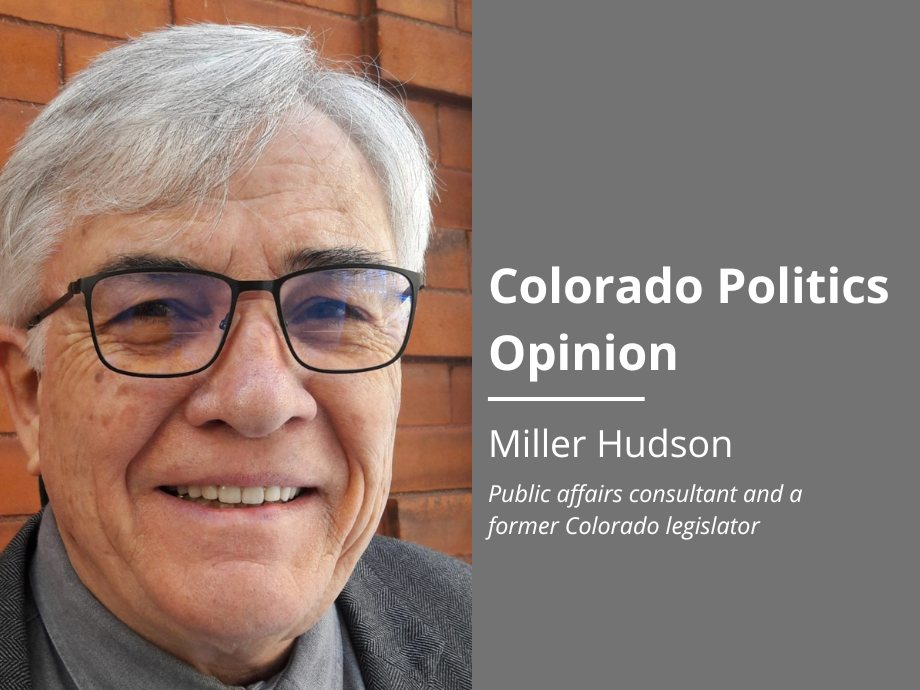
Miller Hudson is a public affairs consultant and a former Colorado legislator.


Colorado Medicaid director’s resignation long-overdue inflection point for our families, kids | OPINION
Colorado Politics
colorado-politics@coloradopolitics.com
Updated 8 hours ago
By Heidi Baskfield For years, the consequences of a strained and fragmented Medicaid system have fallen on those least able to navigate it — the children with complex needs and the families fighting to care for them. Though policy debates...

Note to Colorado lawmakers — parents protecting kids isn’t abuse, it’s their job | OPINION
Colorado Politics
colorado-politics@coloradopolitics.com
Updated 20 hours ago
By Matt Sharp and Sharon Supp During the last few years, the U.S. Supreme Court has made at least one thing clear: Colorado is consistently overreaching to apply its laws in unconstitutional ways. Colorado treated a cake artist with hostility...

H.R. 1 underscores unfairness in Colorado tax code | OPINION
Colorado Politics
colorado-politics@coloradopolitics.com
Updated 20 hours ago
By Caroline Nutter On July 4, 2025, Colorado’s budget was overturned with the stroke of a pen. When President Donald Trump signed into law H.R. 1, or the One Big Beautiful Bill Act, he didn’t only cut federal funding by...
The danger of when government goes rogue | Paula Noonan
Paula Noonan
paula-noonan@coloradopolitics.com
Updated 8 hours ago
It’s dangerous, even fatal, when government goes rogue whether in a democracy or autocracy. Government officials who ignore or taunt laws that constrain bad acts should be given the heave ho. We’re witnessing these egregious scenarios now at the federal...

The future of Colorado condo development | OPINION
Colorado Politics
colorado-politics@coloradopolitics.com
Updated 1 day ago
By Peter LiFari For nearly two decades, the story of condominium construction in Colorado has been mistold, misunderstood and misrepresented. This outcome reflects the cumulative effect of more than two decades of Colorado policy, beginning with the Construction Defect Action Reform...

George Brauchler on Colorado’s ‘Jailbreak’ | The OpEdge Podcast
Tony Olivero
tony.olivero@gazette.com
Updated 2 days ago
We are pleased to introduce the inaugural episode of The OpEdge — The Gazette’s new opinion podcast. District Attorney and law enforcement hawk George Brauchler tells host and investigative columnist Jimmy Sengenberger what lawbreakers can expect in the 23rd Judicial District. Brauchler recaps...
Update, safeguard Colorado’s mail ballot with voter ID | PODIUM
Colorado Politics
colorado-politics@coloradopolitics.com
Updated 1 day ago
By Chuck Broerman and Suzanne Taheri Coloradans often refer to our state as a leader for accessible and secure elections. We have led on all-mail ballots, automatic voter registration and same-day registration, turning Colorado into a model for modern elections...

Preserving access for vulnerable communities should be a top priority in Congress | OPINION
Colorado Politics
colorado-politics@coloradopolitics.com
Updated 2 days ago
By Tony Henderson As both a minister and as president of the NAACP Denver, I believe access to high-quality, accessible health care is a right that should be afforded to each and every one of us. To that end, Medicare...
Yet again, when rights are in conflict | Hal Bidlack
Hal Bidlack
hal-bidlack@coloradopolitics.com
Updated 4 days ago
I admit, it is going to take quite a bit of self-control to not have this entire column end up being yet another screed about a certain president who continues to shock the world in his race to the bottom...

Turn blueprint into action with the Outdoors Opportunities Act | OPINION
Kent Thiry
kent-thiry@gazette.com
Updated 4 days ago
Nearly a year has passed since Gov. Jared Polis, Colorado Parks and Wildlife, the Colorado Department of Natural Resources, Colorado’s Outdoor Recreation Industry Office and other key partners finalized the visionary Colorado Outdoor Strategy, establishing the framework to ensure Colorado’s...
PREV
PREVIOUS

The Farm Bill and bipartisanship | GABEL
Rachel Gabel Ag groups are either gearing up for a new Farm Bill, in the midst of Farm Bill updates and debates, or groping their way through changes from the previous Farm Bill. Welcome to the midst. This omnibus bill is updated about every five years and it’s a beast of a bill that governs […]

The housing question | SLOAN
Kelly Sloan There remains a great deal to occupy the minds, passions and dwindling time of the Colorado General Assembly, but most of the conversations recently have tended to come back to the perennial contentions surrounding the politics of land use and housing costs. These contentions are all wrapped up neatly in an enormous package […]