

Colorado House panel kills ‘assault weapons’ ban

Legislation that sought to ban so-called “assault weapons” died early Thursday morning after three Democrats joined the Colorado House Judiciary Committee’s Republicans to kill the bill on a 7-6 vote.
Shortly before 1 a.m. Thursday, Democratic Reps. Bob Marshall of Highlands Ranch, Said Sharbini of Westminster and Marc Snyder of Colorado Springs voted down the legislation along with their Republican colleagues after a pair of amendments to ban bump stocks and rapid-fire trigger activators were lost.
A subsequent vote to postpone the bill indefinitely drew one additional Democratic vote from Rep. Lindsay Daugherty of Arvada.
The nearly 15-hour hearing, which kicked off Wednesday morning, drew a 2023 record 522 witnesses seeking to testify.
The bill – sponsored by Rep. Elisabeth Epps, D-Denver – has divided the Democrats’ Gun Violence Prevention Caucus, with leading members, such as Sen. Tom Sullivan, D-Centennial, believing other measures, such as his proposal to improve the red flag law, are better solutions to gun violence.
When Democratic lawmakers unveiled a package of four gun control bills on Feb. 23, the assault weapons ban was notably not among them. Nor did lawmakers mention it.
In addition, Gov. Jared Polis is also believed to be opposed to an assault weapons ban.
Those who support gun control measures claim it’s an issue better addressed at the federal level, such as the ban that existed for a decade that started in the Clinton administration.
Under HB 1230, “assault weapons” – a nonspecific term – is defined in several ways:
- a semiautomatic rifle that can accept a detachable magazine, along with modifications, such as a pistol grip, a detachable stock, a flash suppressor or a grenade launcher;
- a semiautomatic rifle with a fixed large-capacity magazine or a semiautomatic pistol with the same list of possible modifications;
- a semiautomatic shotgun, including those that can accept the same modifications;
- a semiautomatic firearm that can accept a belt ammunition feeding device or a semiautomatic firearm modified to be operable as an “assault weapon” as defined in the bill
Ban on ‘bump stocks’
But the final bill that emerges might be markedly different than its introductory version.
Epps announced early on in Wednesday’s hearing that she is considering an amendment to remove all the firearms identified in the bill – except for a ban on “bump stocks,” an attachment that allows a semiautomatic rifle to fire like a machine gun.
A bump stock allowed the Las Vegas shooter who killed 58 people and wounded more than 500 others in 2017 to fire rapidly into the crowd at a country music concert.
However, as of press time, Epps had not asked for committee approval of the amendment.
A federal ban on bump stocks, implemented under the Trump administration, is on hold pending court appeals.
House Republicans decried the decision to bring forward an amendment that no one knew about, saying the hundreds of witnesses opposed to the measure would not have an opportunity to address what the bill could ultimately look like.
House Minority Leader Mike Lynch, R-Wellington, noted that a record number of people have signed up to oppose the measure. He called Epps’ plan to change the bill without warning an insult to the witnesses.
“The result remains uncertain, but we’re seeing a pushback … (against) a radical agenda of disarming our citizens,” he said.
But Lynch also asked why lawmakers are “wasting more time” on the issue of gun control.
He said while lawmakers spend another full day on a gun bill, what’s being left behind with just 18 days left in the 2023 session are issues affecting every Coloradan, such as proposals to make things safer so they don’t worry about crime or address the housing crisis.
“We’re spending inordinate amounts of time on an issue that we’ve beat to death this session. We’re running out of time,” he said.
‘The body is essentially blown apart’
Witnesses in support of the measure, who included representatives of the nation’s biggest gun control groups, testified on what an “assault weapon” does to the human body.
Denver District Attorney Beth McCann told the committee that she prosecutes the worst things people do to each other.
“I go to homicide scenes and I see the terrible results of injuries caused by handguns. But at least with handguns, there’s an entry wound and an exit wound and the body is generally intact other than those small wounds,” McCann said. “If a person is killed by an assault weapon, the body is essentially blown apart.”
“Assault weapons are designed for killing, not for self-defense,” added Peter Gurfein of Giffords Gun Owners for Safety. “The damage done by high velocity shells by these firearms is horrific and disproportionately used in mass shootings.”
He added, “There is no evidence that owning an assault weapon makes people safer.”
Students from East High School, who have marched on the state Capitol several times in the wake of the March 7 shooting that injured two administrators, also testified. Authorities later found the 17-year-old suspect dead. They believe he committed suicide.
Norah Krause, a 14-year-old freshman at East High, said she’s becoming all too familiar with the insides of the state Capitol. She now considers herself a survivor of gun violence and mass shootings, including incidents involving assault weapons.
The debate, she said, has become political, with Democrats versus Republicans instead of life versus death or graduation versus funerals.
“I’ve sent texts that I thought would be my last,” she told the committee.
Her 10-year-old brother is scared for her to go to school because he thinks she won’t come back, she said, adding, “I should not have to grow up this quickly. I should be worrying about insignificant things like a bio test, friend drama, or whether to get Chipotle or Starbucks for lunch. I should not have to come here every week to tell you guys to do your job.”
Instead, she said, her school experiences are ruining her love of learning.
“I can’t keep going through this,” Krause said. “I don’t deserve it. My friends don’t deserve it. My brother doesn’t deserve it.”
Opponents warn of lawsuits
Among the hundreds of opponents, Daniel Fenlason of the Colorado State Shooting Association said the bill will not stop any shooting, including at the school where he, too, became a survivor. The bill would only create more victims, he said, including victims of domestic violence who want to defend themselves.
That testimony also came, and was echoed by others, with a warning: lawsuits will follow.
Adam Dill of Boulder County pointed out the costs for the state of defending such lawsuits will be immense.
“We must consider the financial burden of a lengthy battle,” he told the committee members.
Disarming citizens will make them more vulnerable to crime, particularly for people of color, women, LGBTQ and those with disabilities, added Carynn Rudolph-Porter, who owns Goliath Tactical Firearms Training.
“As a Black, lesbian woman, a mother, a survivor of sexual assault, a disabled veteran, a social worker, and a certified firearms instructor, I believe that this proposed ban is detrimental to the greater community and a violation of our human right,” she said.
Several gun store owners also spoke in opposition, claiming the bill is intended to put them out of business. One said the bill is based on a lack of familiarity about what “assault weapons” are and added that HB 1230 will turn law-abiding citizens, including firearms dealers, into criminals.
The bill also drew opposition from five county sheriffs, including Sheriff Darren Weekly of Douglas County, who said the bill would make commonly owned firearms illegal to purchase, sell or transfer.
“We must not compromise individual liberties under the guise of safety,” Weekly said.
As of press time, witnesses are still testifying on the bill and the hearing is expected to continue late into the night.





Federal judge recommends dismissing trans athletics lawsuit by area school districts
Eric Young
eric.young@gazette.com
Updated 3 days ago
A judge has recommended dismissing a federal lawsuit filed by multiple school districts against the Colorado Attorney General’s and Civil Rights Offices over their policies dictating students’ participation in athletics and activities based on their biological sex rather than gender...
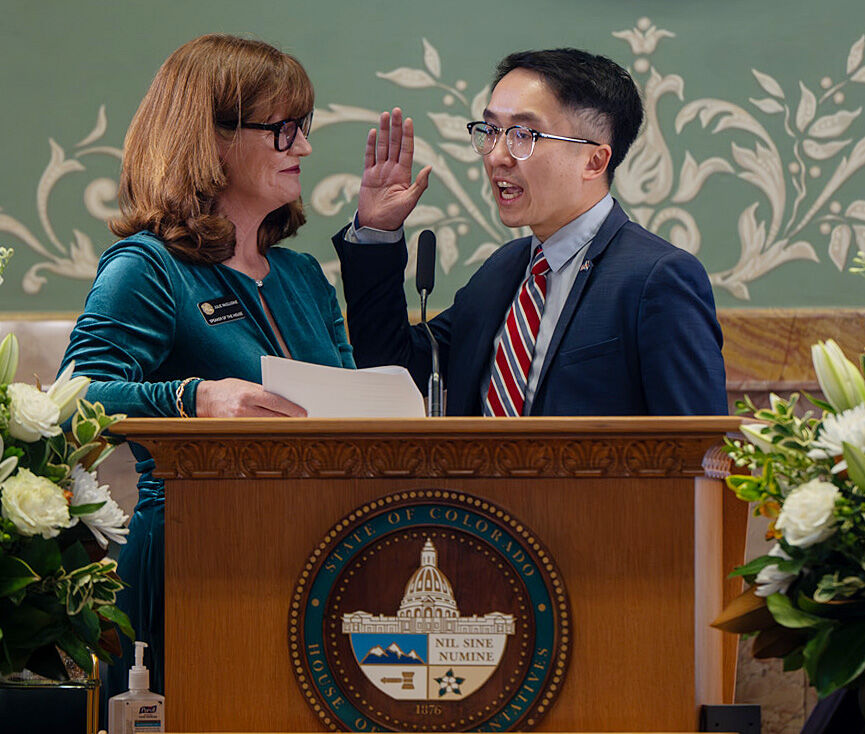
House Speaker urges colleagues to fight Trump, who ‘would hold Colorado hostage’
Marissa Ventrelli
marissa.ventrelli@coloradopolitics.com
Updated 1 week ago
A top Colorado Democrat on Wednesday characterized Colorado as under siege by the Trump administration, as she invoked Winston Churchill and urged colleagues to fight back. “In this moment, when the White House would hold Colorado hostage, I’m reminded of...

Colorado graduation and dropout rates improve as student enrollment continues to slide
Eric Young
eric.young@gazette.com
Updated 1 week ago
Colorado’s graduation and dropout rates continue to go up while its overall enrollment continues to go down, according to new data released Tuesday morning. The Colorado Department of Education released student graduation data from the 2024-25 school year, with the...
CC students and campus officials: Title IX rules do not sufficiently protect alleged assault victims
The Gazette
the-gazette@coloradopolitics.com
Updated 6 days ago
By Margaret Freeman and Olivia Link Special to The Gazette As an institution that receives federal funding, Colorado College is subject to federal Title IX regulations, which govern everything under the umbrella of gender equality, including discrimination, sexual harassment and...
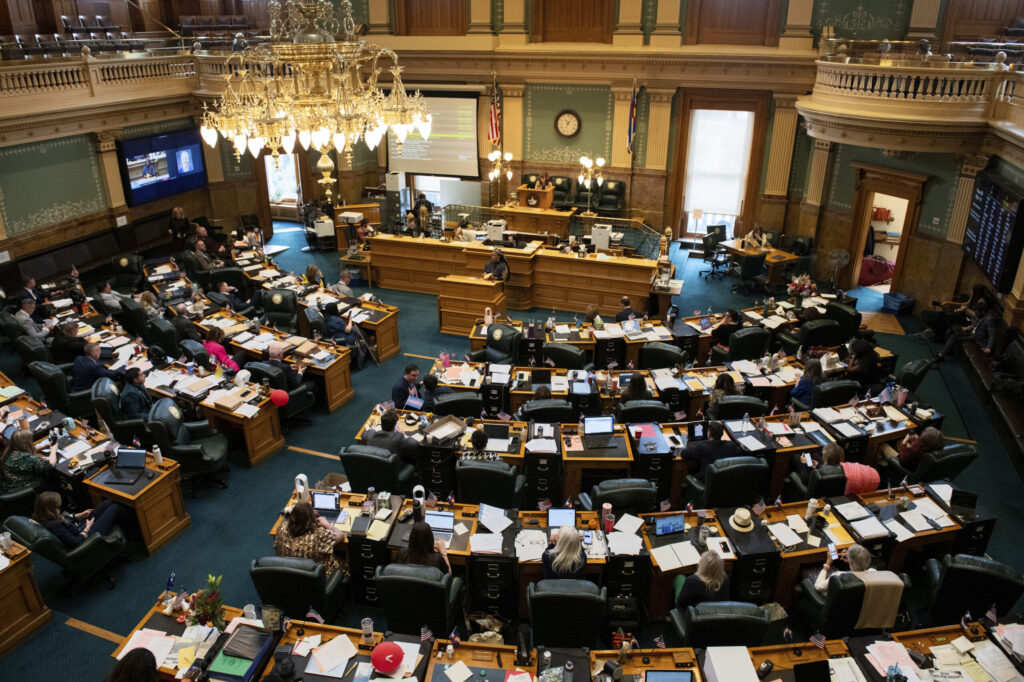
2025 Unfiltered: Unions, guns and vetoes — inside Colorado’s political year
Marissa Ventrelli
marissa.ventrelli@coloradopolitics.com
Updated 3 weeks ago
From affordability and labor rights to gun policy — as well as public safety and gubernatorial vetoes — 2025 proved to be one of the most consequential and contentious years in recent Colorado political history. Lawmakers entered the session pledging...

Colorado Politics in focus: the year’s top in-depth cover stories and series | 2025 unfiltered
Thelma Grimes
thelma.grimes@coloradopolitics.com
Updated 3 weeks ago
In 2025, Colorado Politics went beyond the daily headlines, delivering in-depth reporting on the major issues shaping the state — from congressional action to legislative proposals to the urban-rural divide and the future of Colorado’s economy. Here’s a look at...

Colorado sees record early applications for universal preschool
Nico Brambila
nico.brambila@denvergazette.com
Updated 1 month ago
Early preschool applications for the upcoming school year are breaking records for a program with 42,862 4-year-olds enrolled statewide. As of Monday, the program had received 12,886 applications. “Investing in high-quality early education is one of the most effective ways...

Fort Lewis College student proud of new Turning Point USA chapter despite backlash
Elizabeth Pond, Special to The Denver Gazette
elizabeth.pond@gazette.com
Updated 1 month ago
Before Fort Lewis College senior Jonah Flynn became president of the newly formed FLC Turning Point USA chapter, he described himself as a liberal-leaning atheist. Flynn, a senior studying philosophy and Spanish, gained local and national attention after the Associated...
Polis names JB Holston as next head of Colorado Department of Higher Education
Marianne Goodland
marianne.goodland@coloradopolitics.com
Updated 1 month ago
Gov. Jared Polis on Monday named JB Holston, former dean of the Ritchie School of Engineering and Computer Science at the University of Denver, as the next executive director of the Colorado Department of Higher Education. He will succeed Angie...

Suddenly, Colorado has a private school choice program │ Vince Bzdek
Vince Bzdek
vince.bzdek@gazette.com
Updated 1 month ago
By Vince Bzdek When I was a kid going to St. John’s Catholic grade school in Denver, I remember asking my mom if she and dad minded paying taxes for public schools since all her kids attended Catholic ones. We...
PREV
PREVIOUS

Michael Hancock slams Denver school board as 'dysfunctional' and 'immature'
Denver Mayor Michael Hancock isn’t mincing words when it comes to his beef with the Denver Public Schools board. The term-limited outgoing mayor Tuesday took the gloves off during an appearance on the Mandy Connell Show on 850 KOA. “This is a very dysfunctional board and it needs to be corrected,” Hancock said. “And the […]

Air Force Secretary, Space Force Generals say U.S. needs to go faster, invest in Space Force training
A glimpse at the exhibit hall during the 38th annual Space Symposium, held at The Broadmoor in Colorado Springs, CO from April 17 – 20, 2023. The U.S. needs to work faster to deter and detect threats in space, the secretary of the Air Force said Wednesday in Colorado Springs as he announced plans to […]