

$38.5 billion Colorado budget wins preliminary OK with fragile deal between Democrats, Republicans
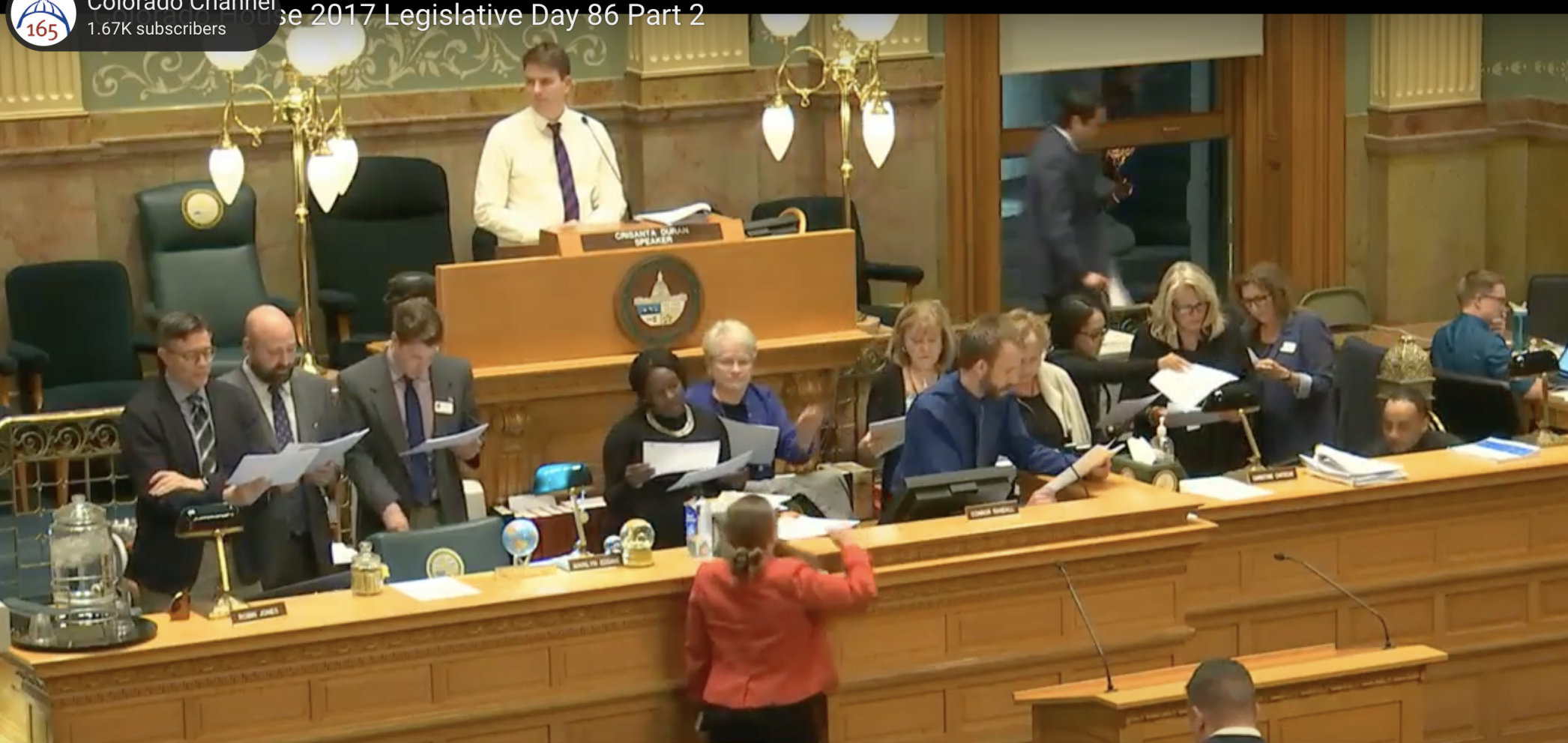
All-day negotiations between House Democrats and Republicans resulted in a late-afternoon deal Tuesday that would give tired lawmakers in the Colorado House a much-needed three day weekend, along with concessions from Democrats on seven priority GOP amendments to the state’s spending plan.
In fact, the deal is more than that. Republicans agreed – although at times that agreement appeared to be pretty fragile – not to ask for reading the 622-page state budget bill at length either during Tuesday’s debate and when it comes up for a final vote, which is likely on Wednesday.
Lawmakers spent the entire day working on the 2023-24 budget, which started at $38.5 billion a week ago, adding about two dozen amendments and at least $105 million in general fund spending.
The state budget bill, Senate Bill 23-214, arrived Tuesday on the House floor “clean,” following work on Monday by the House Appropriations Committee, which is chaired by the Joint Budget Committee’s Rep. Emily Sirota, D-Denver. The appropriations committee struck all the amendments added to the budget by the Senate last week.
House lawmakers from both sides of the aisle put 14 of those 17 amendments right back into the budget – over the objections of JBC members.
The day began with Republicans caucusing on the amendments, 73 in all, prior to the start of the debate on the budget.
In that meeting, Assistant House Minority Leader Rose Pugliese, R-Colorado Springs, outlined nine priority amendments for her caucus. House Minority Leader Mike Lynch, R-Wellington, then asked each member if they were planning to ask for the long bill to be read at length.
Fourteen members were strong “no’s,” including the caucus’ JBC member, Rep. Rod Bockenfeld of Watkins, who pointed out the budget was his work product and there was no way he’d have it read at length.
The other five members held different views. Four members said they were “unsure:” Reps. Stephanie Luck of Penrose; Ken deGraaf of Colorado Springs; Brandi Bradley of Littleton; and, Ty Winter of Trinidad. Rep. Scott Bottoms, also of Colorado Springs, said he was “leaning strongly toward yes.” However, Bottoms left early in the day for a medical appointment and did not return.
The business then shifted to debate on the House floor.
Funding for mascot replacements wins House nod
Among the Senate amendments restored by the House was $356,701 in funding for public schools that formerly had Indian mascots. A 2021 law required those schools to remove the mascots, but it also included a funding mechanism via the state’s Building Excellent Schools Today fund within the Department of Education. However, the BEST program placed the need for funding for replacing gym floors, athletic uniforms, signage and other mascot-emblemed items dead last among its priorities. To date, no school that has applied for a grant has gotten one.
In the Senate, the amendment was intended to go only to the Yuma School District, one of the school districts that sought a BEST grant. In the House, however, the amendment was tweaked to make the money available to all the schools that had to change out their mascots.
Most significantly, however, was who sponsored the amendment: Rep. Barbara McLachlan, D-Durango, the original House prime sponsor of SB 21-116. She was joined on the amendment by Rep. Richard Holtorf, R-Akron.
The only Senate amendment to be rejected in the House dealt with paying the state’s pension plan $30.6 million in interest, tied to a missed $200 million payment from 2020. The 2020 payment was made up last year, but the interest payment was rejected by Democratic leadership.
Here are some of the highlights.
Denver Health, which got a $5 million funding boost through the mid-year adjustments to the 2022-23 budget, will be the recipient of another $5 million boost for 2023-24 – the result of a bipartisan amendment.
The School of Medicine at the University of Colorado is in line for a $2 million general fund increase, intended to pay for a regional health connector workforce program, via an amendment from Rep. Elizabeth Velasco, D-Glenwood Springs.
Rep. Marc Catlin, R-Montrose, succeeded in adding an amendment to put $10.95 million in general funds toward 30 total additional inpatient psychiatric beds in Montrose, Montezuma and Gunnison counties.
An amendment from Reps. Javier Mabrey, D-Denver and Lorena Garcia, D-Adams County, would add $25 million in general funds for emergency rental assistance through the Department of Local Affairs, with a directive to the department to start accepting new applications for the program.
Rep. Ryan Armagost, R-Berthoud, offered an amendment to put $1 million in the general fund for the Veterans Community Project in the Department of Military and Veterans Affairs. The amendment lost on a voice vote, was passed on a later committee of the whole vote of 33 to 26, and due to a technical problem, went to a second vote, where it also passed, 40-19.
A veterans assistance grant program is in line for another $500,000, from an amendment offered by Rep. David Ortiz, D-Centennial.
Once the amendments were completed, Republicans headed back to caucus to announce to their members the deal they made with Democratic leadership.
Weekend rest for weary legislators
The conversation was short but heated.
Tired from nearly two straight weeks with only one day off, the prospect of working during Good Friday and through Easter weighed heavily on legislators.
Lynch had told the caucus earlier in the day that, as a Christian, he does not want to miss the most holy of Christian holidays, a sentiment shared by many in the caucus.
The deal Lynch offered is to have the upcoming three-day weekend off, in exchange for getting seven priority amendments passed (and they had already passed), not reading the long bill at length either on Tuesday or for its final vote, and avoiding reading other bills at length during the week for the rest of the session, in exchange for the following Sunday off.
Lynch explained that they could not get Saturdays off because of the backlog of bills awaiting action in the House, with 34 days to go in the 2023 session.
“We’ve done the math,” Lynch said. “In order for [Democrats] to get a whole lot done, there’s going to be weekend work.”
He complimented Speaker of the House Julie McCluskie, D-Dillon, and House Majority Leader Monica Duran, D-Wheat Ridge, for working with them on the deal.
But that came with a warning from Lynch.
“We have pushed them as far as we can push them,” he said. “I’ve seen the look on those two ladies’ faces before, and it’s not a place I want to revisit … They’re done negotiating with us, so we need to walk out of here with what we can, as Republicans, stand behind, and that’s not reading the bill at length.”
Holtorf, the lead negotiator, added they had worked with the Democrats in good faith and that Democrats had offered the Republicans “grace” on the negotiations.
“We have enormous capacity to do a lot of things … the mighty 19 will be heard and we will not be silenced, because of our enormous passion and capacity for representing our constituents and districts,” he told the caucus.
The idea of holding the caucus firm on not reading bills at length, including the budget bill, didn’t sit well with some, in part because several members were missing, including Bottoms.
Even Bockenfeld, who had pledged not to ask for a reading earlier in the day, and with his voice rising, questioned whether the deal would hold, and why they should adhere to it.
“I don’t know how you can make this deal,” he said, appearing angry.
Any member can ask for the long bill to be read, he said, questioning how they could strike a deal on behalf of a cause when any one member could make that decision.
But Bockenfeld’s anger went beyond just the budget debate.
“We represent different constituents, and some of our constituents are very inflamed about some of the things that have been pulled down here, in this session, how they’ve stepped on our freedom of speech and our ability to fight for our constituents,” he said.
Lynch, however, responded that they are negotiating with people who have no reason to negotiate.
Nobody’s telling legislators what to do, added Holtorf.
“All we’re doing is to talk about the way ahead,” just for today, he said.
Back on the House floor, several more amendments, including Armogast’s veterans community project ask, passed. SB-214 then passed on a preliminary voice vote, and the House called it a day.
The Long Bill has been read at length just once in the last 25 years, in 2017, at the request of then-Rep. Dave Williams, R-Colorado Springs. The reading of the 318-page bill took place in the days before computers did the work, and before the 2019 lawsuit filed by Senate Republicans that resulted in a ruling that the reading be understandable.
About a dozen House nonpartisan staff lined up to read different sections of the bill, which took just over 30 minutes. The House Journal for April 6, 2017, however, did not record the Williams motion nor the reading.
marianne.goodland@coloradopolitics.com
While the state Constitution mandates each bill be “read” three times – upon introduction, second reading and prior to the final vote – most of the time those readings are waived. Reading a bill at length is now viewed as little more than an attempt to delay or obstruct the majority party’s agenda. But those delays also given the minority party an opportunity to negotiate with the majority on any range of issues, and on issues not necessarily related to the budget.


Federal judge holds off on dismissing formerly bankrupt medical contractor from Jeffco jail death lawsuit
Michael Karlik
michael.karlik@coloradopolitics.com
Updated 41 minutes ago
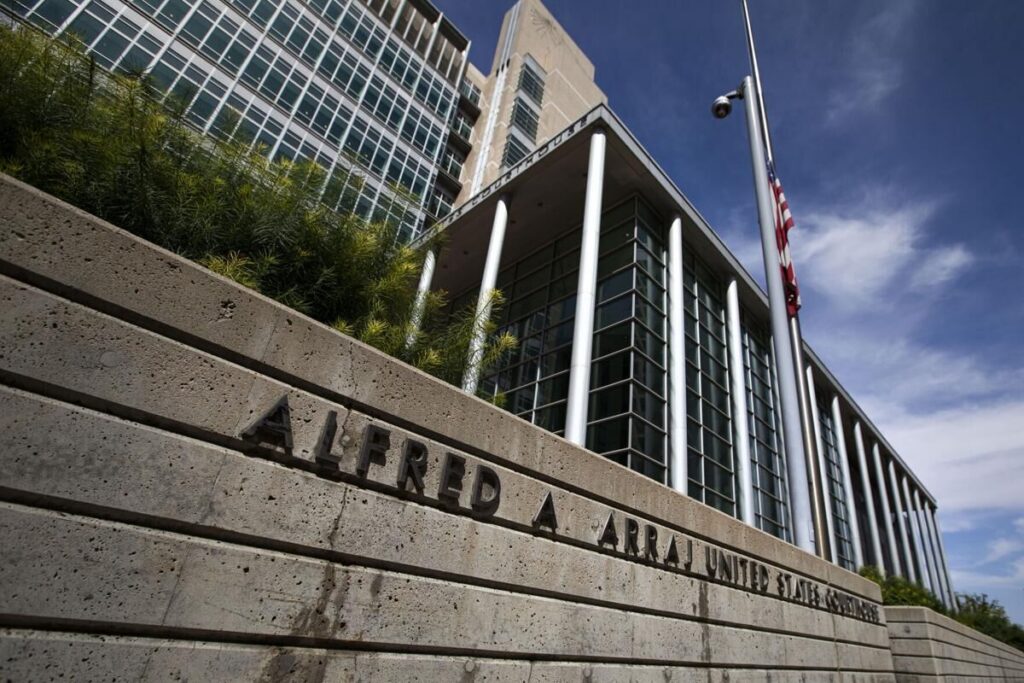
A federal judge declined on Monday to dismiss the formerly bankrupt medical contractor from a lawsuit over a detainee’s death in Jefferson County jail, but indicated she would do so if the plaintiffs’ attorneys go through the process to ensure...

Judicial performance evaluations released, Montezuma County judge disciplined | COURT CRAWL
Michael Karlik
michael.karlik@coloradopolitics.com
Updated 2 hours ago
Welcome to Court Crawl, Colorado Politics’ roundup of news from the third branch of government. Colorado’s citizen-led judicial performance commissions released their voter narratives for the judges standing for retention in November, plus a disciplinary panel imposed consequences on a...
Here are the 10 oldest members of Congress running for reelection
Lauren Green
lauren-green@coloradopolitics.com
Updated 1 hour ago
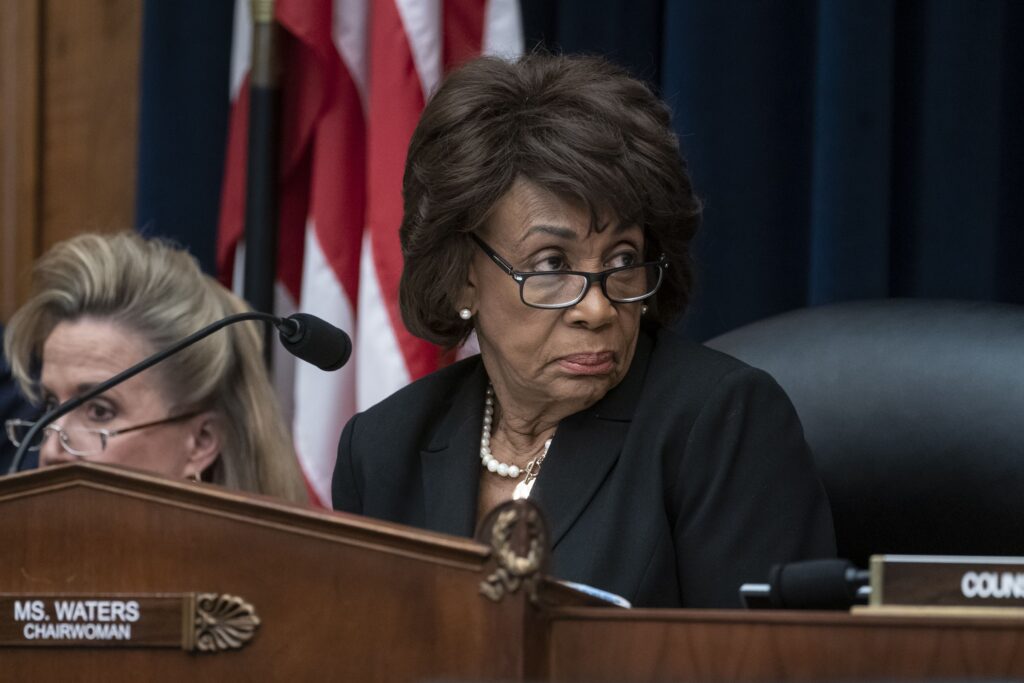
Capitol Hill has long been called a “retirement home,” as well over 100 House members and half the Senate are over the age of 65. That reputation doesn’t look due to change anytime soon — there are currently more than...
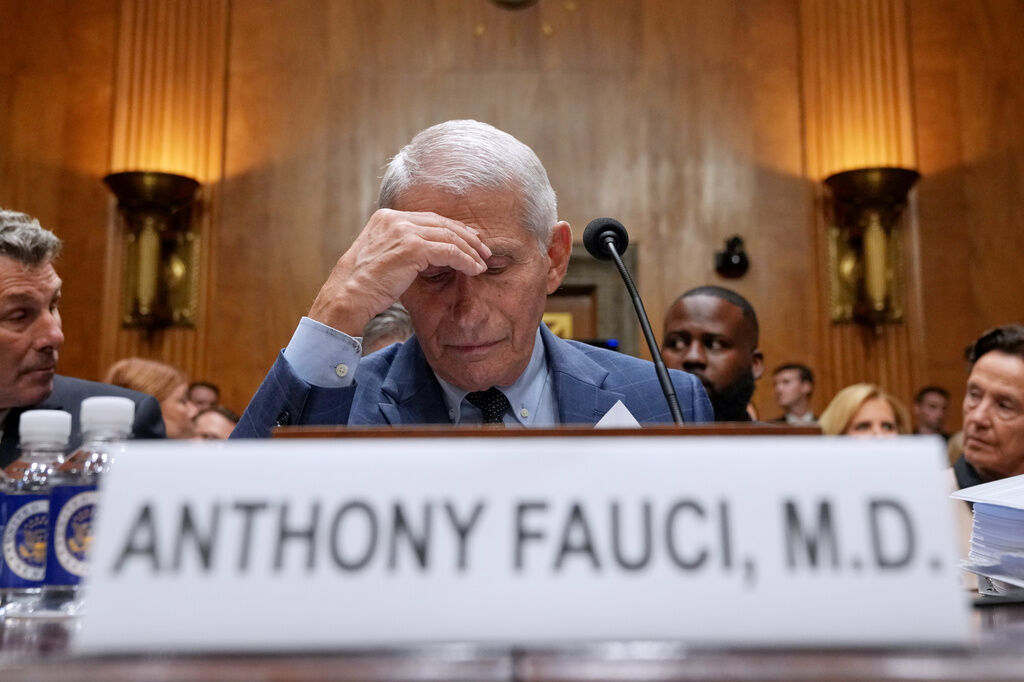
Fauci ignored reports of COVID vaccine side effects, new documents show
Gabrielle M. Etzel
gabrielle-m-etzel@coloradopolitics.com
Updated 3 hours ago
Dr. Anthony Fauci was made aware of possible COVID-19 vaccine complications by other senior-level public health officials in early 2021, according to new emails and text messages released by Senate Republicans on Sunday. Documents released by Sens. Rand Paul (R-KY)...

Majority of Americans say they’re worse off financially since Trump took office again: Poll
Emily Hallas
emily-hallas@coloradopolitics.com
Updated 3 hours ago
The majority of the public believes they are worse off financially than when President Donald Trump won a second term nearly two years ago, according to a new poll that painted an ominous picture of Republicans’ electability in the 2026...

Colorado River crisis: Lake Mead, Lake Powell inch closer to ‘dead pool’
Marianne Goodland
marianne.goodland@coloradopolitics.com
Updated 43 minutes ago
In the past 10 days, both Lake Mead on the Arizona-Nevada border and Lake Powell roughly 300 miles northeast on the Utah-Arizona line have recorded their lowest water levels since the reservoirs were first filled. Lake Mead, the nation’s largest...

Colorado lieutenant governor candidate Markert says early discipline and key mentors set his course
Marianne Goodland
marianne.goodland@coloradopolitics.com
Updated 5 hours ago
Editor’s note: This is the first installment in a three-part series examining Colorado’s candidates for lieutenant governor. In this piece, Colorado Politics speaks with George Markert, the Republican running mate to gubernatorial candidate Victor Marx. Marx is competing against Democrat...

The hidden politics of time: How clocks, calendars — and now-contentious time zones — came to be
The Associated Press
the-associated-press@coloradopolitics.com
Updated 7 hours ago
NEW YORK (AP) — It flies. It heals all wounds. It can be of the essence, and it can be money. We thrill in the best of it, lament the worst. We’re warned not to waste it, since we can’t...

1 killed in flash flooding in Beulah: Pueblo County Sheriff’s Office
O'Dell Isaac
odell.isaac@gazette.com
Updated 5 hours ago
One person was killed in Beulah on Sunday after floodwaters swept him downstream, according to a news release from the Pueblo County Sheriff’s Office. The male victim, whose name was not released, was standing near Colorado 78 and Central Avenue...

‘Kind of defeats the purpose’: Denver adds more cops but not enough working cruisers
Deborah Grigsby
deborah.smith@denvergazette.com
Updated 6 hours ago
Denver’s police force has added more sworn officers as part of Mayor Mike Johnston’s promise to deliver a “vibrant” and safe city, but there aren’t always enough working patrol cars to put the new cops on the street. The shortage...
PREV
PREVIOUS

Colorado federal judges provide candid look at applying to bench
Scott T. Varholak has roughly 400 cases he is responsible for as a federal magistrate judge. But despite the heavy workload, he is still able to step away from the courtroom in the afternoon to take his daughter to play sports, returning to his caseload at night. “The hours are long, but they’re a lot […]

Colorado Supreme Court faces 'difficult' question of whether to shut window on child sex abuse survivors
The Colorado Supreme Court on Tuesday stared down two possibilities: If it deems a 2021 law designed to help survivors of childhood sex abuse unconstitutional, many victims will have no avenue to hold their abusers or the institutions that harbored them legally liable. On the other hand, if the court upholds the law, then schools, […]