

Appeals court finds no discrimination in Denver prosecutor’s removal of Black woman from jury
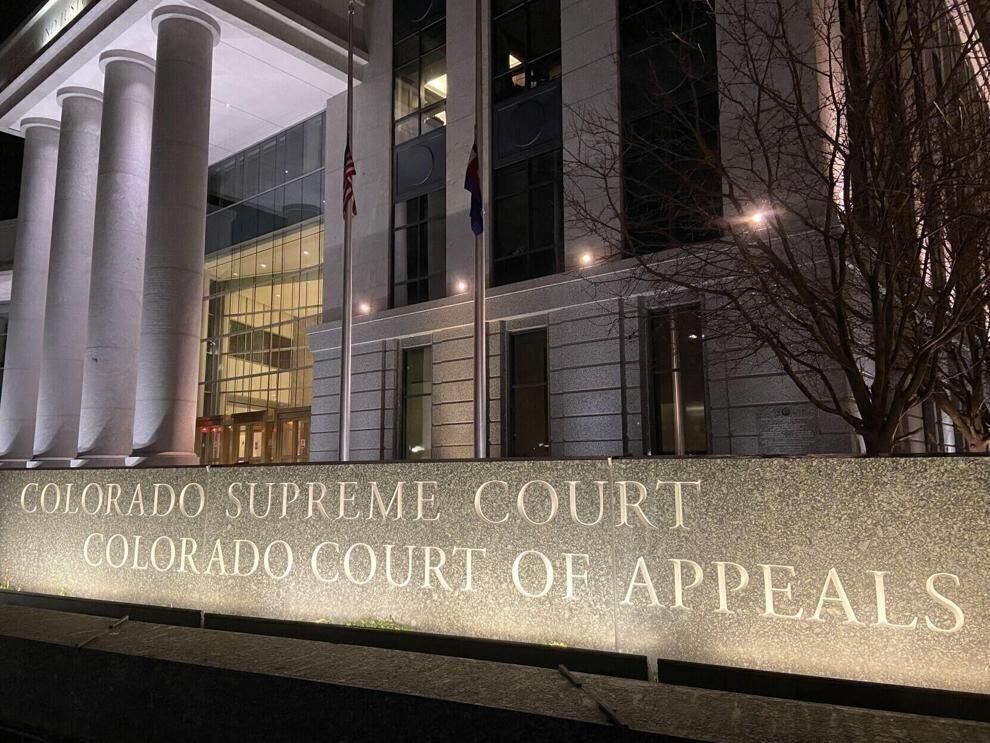
Colorado’s second-highest court on Thursday deemed it a “close” call, but ultimately decided Denver prosecutors had not removed a Black, presumably Muslim woman from a jury in violation of the longstanding prohibition on purposeful discrimination.
A three-judge panel for the Court of Appeals noted that Juror L was a Black woman who wore a head covering, and the parties assumed she was Muslim. Even though the prosecution had referenced Juror L’s “understanding” of East African and Muslim culture in justifying its dismissal of her from Nahib A. Mahamoud’s trial, the appellate panel did not believe the move was based on Juror L’s race or religion.
“(W)e conclude the prosecutor was expressing concern that Juror L’s background and understanding of Mahamoud’s family’s culture would lead the juror to be sympathetic to the family,” wrote Judge JoAnn L. Vogt in the Feb. 23 opinion. “Striking a juror because of concern that the juror would sympathize with the defendant or with the defendant’s family is not, without more, evidence of discriminatory intent.”
The U.S. Supreme Court’s 1986 decision in Batson v. Kentucky recognized that purposefully excluding, or “striking,” people from juries because of their race is unconstitutional. Now, defendants may raise a “Batson challenge” when the prosecution attempts to strike a juror of color. The challenge proceeds in three steps.
First, the judge determines if there is a plausible case that intentional discrimination is occurring. Second, the prosecutor must supply a “race-neutral” reason for striking the juror of color. Finally, the trial judge decides whether the race-neutral explanation is credible.
The Colorado Supreme Court, one year after Batson, suggested that a juror’s national origin, sex and religion were also protected from discriminatory strikes based on the requirement that juries represent a “fair cross-section of the community.”
Mahamoud stood trial in January 2019 for the murder of Isaiah Roquemore and the attempted murder or menacing of two other men. Jurors found him guilty and Mahamoud received a sentence of life in prison plus 35 years.
During voir dire, which is the part of jury selection when the parties question members of the jury pool, Juror L identified herself as a special education paraprofessional who had been in court “a few times” as a party and had a relative who was a police officer. The prosecutor asked Juror L how she felt when she heard the list of Mahamoud’s criminal charges.
“Kind of upset, disappointed a little bit,” she responded. The prosecutor wondered what was upsetting to her.
“Really, because I saw by the name that he’s probably Muslim. And I see Muslim family here,” said Juror L.
The prosecutor asked her to elaborate on why it was disappointing that “another Muslim” was involved.
“Seeing that, you know, the family’s probably East African. I can – things come into mind,” said Juror L. “Are they refugees or, you know, just thinking about mental health, that kind of – thinking about what the situation is, or was.”
The defense also asked her to speak about her thoughts on “the Muslim religion in general” or East African families. Juror L replied that she had “a lot of background with understanding them from that culture.”
Neither side attempted to strike Juror L for cause, but the prosecution exercised one of its peremptory strikes against her. Peremptory strikes typically do not require a reason in order to remove someone from the jury, except during a Batson challenge.
The defense challenged the strike of Juror L and the unnamed prosecutor said she had “several” non-discriminatory reasons. She cited Juror L’s disappointment “in seeing a Muslim man at the defense table,” Juror L’s concern for Mahamoud’s family, Juror L’s desire to “understand his not guilty plea,” and her “understanding of the culture.”
The prosecutor also pointed out Juror L had been a party to other court cases and had “some fairly closed body language.” Mahamoud’s attorney disputed some of those characterizations, but District Court Judge Shelley I. Gilman found Juror L’s responses to questioning and her demeanor were nondiscriminatory reasons for striking her.
On appeal, Mahamoud argued the bulk of the prosecutor’s reasons were inextricably linked to Juror L’s identity and, therefore, were not neutral.
“The prosecutor’s explicit reference to Juror L’s ‘understanding of the culture‘ – i.e., Muslim, East African culture – is an undeniable indication that ethnicity, national origin, and religion played an important role in the prosecutor’s decision to strike Juror L,” wrote public defender John Plimpton.
The appellate panel uncovered no prior cases in Colorado applying Batson challenges to a juror’s religion. Other state and federal courts, however, have held that while strikes based on religious affiliation are unconstitutional, strikes based on particular beliefs that would affect the trial are not.
“Although we acknowledge that the issue is close, we disagree with Mahamoud,” wrote Vogt, a retired judge who sat on the panel at the chief justice’s assignment.
She explained that the prosecutor had not referenced Juror L’s own religion or race when justifying the strike. Even if Juror L was sympathetic to Mahamoud’s family because of her cultural or religious background, “that would not amount to striking her because she was Muslim,” Vogt wrote.
The state Supreme Court is currently weighing a change to the procedural rules for criminal trials that would deter strikes of jurors of color for reasons that, while not explicitly racial, nonetheless correlate with race. Among the proposed restrictions, a party could not strike a juror for body language or demeanor without corroboration from others in the courtroom.
The case is People v. Mahamoud.

Federal judge dismisses malicious prosecution claim against former Denver prosecutor
Michael Karlik
michael.karlik@coloradopolitics.com
Updated 12 hours ago
A federal judge concluded on Monday that a former Denver prosecutor could not be sued for allegedly causing the arrests of two plaintiffs after they failed to appear for trial on the scheduled date, even though the trial had been...
Judicial discipline commission reports increased transparency, increased submissions
Michael Karlik
michael.karlik@coloradopolitics.com
Updated 13 hours ago
The Colorado Commission on Judicial Discipline received 473 misconduct complaints about judges in 2025, which was nearly 29% higher than in 2024 and substantially greater than any time in the past decade. However, only 31 complaints were referred to the commission...
Colorado Gov. Jared Polis ignites fierce debate after raising clemency questions in Tina Peters case
Marianne Goodland
marianne.goodland@coloradopolitics.com
Updated 6 hours ago
Gov. Jared Polis ignited a political firestorm Tuesday night after weighing in on the prison sentences of two former Colorado officials — a Democrat and a Republican — convicted of attempting to influence a public servant. The comments quickly fueled...
Colorado Supreme Court signals intervention in dispute over treatment for trans children
Michael Karlik
michael.karlik@coloradopolitics.com
Updated 1 day ago
The Colorado Supreme Court ordered Children’s Hospital Colorado on Tuesday to explain why it should not direct the organization to resume providing certain types of services to transgender children in compliance with the state’s non-discrimination law. Last month, a Denver...
Judge nixes latest policy requiring 7 days’ notice for Congress members to visit ICE facilities
Michael Kunzelman
michael.kunzelman@associatedpress.com
Updated 1 day ago
WASHINGTON (AP) — A federal judge agreed on Monday to temporarily suspend the latest version of a Trump administration policy that requires members of Congress to provide a week’s notice before they can visit immigration detention facilities. U.S. District Judge...
Judge nixes latest policy requiring 7 days’ notice for Congress members to visit ICE facilities
Michael Kunzelman
michael.kunzelman@associatedpress.com
Updated 1 day ago
WASHINGTON • A federal judge agreed on Monday to temporarily suspend the latest version of a Trump administration policy that requires members of Congress to provide a week’s notice before they can visit immigration detention facilities. U.S. District Judge Jia...
Colorado Supreme Court clarifies restraining order violations can always support burglary charge
Michael Karlik
michael.karlik@coloradopolitics.com
Updated 6 hours ago
The Colorado Supreme Court’s majority ruled on Monday that a violation of a restraining order can also serve as a basis for finding a defendant guilty of burglary. Under state law, a person commits second-degree burglary by unlawfully entering or...

10th Circuit judge creates vacancy, district court gets new chief judge | COURT CRAWL
Michael Karlik
michael.karlik@coloradopolitics.com
Updated 2 days ago
Welcome to Court Crawl, Colorado Politics’ roundup of news from the third branch of government. A longtime member of the Denver-based federal appeals court will give the president a vacancy to fill, plus Colorado’s federal trial court will see a...

Morgan County man accused of killing wife, staging her suicide charged with first-degree murder
Kyla Pearce
kyla.pearce@gazette.com
Updated 1 day ago
A grand jury announced the indictment of 52-year-old Ronald Lowry, who is accused of killing his wife in October 2023 and staging the crime scene to look like a suicide. Lowry, who was arrested Friday in Morgan County, was charged...
Gov. Jared Polis moves to end ICE subpoena fight over Colorado workers’ personal data
Marianne Goodland
marianne.goodland@coloradopolitics.com
Updated 5 days ago
The effort by Gov. Jared Polis to comply with an administrative subpoena from U.S. Immigration and Customs Enforcement for information held by several state agencies is over. Polis, in a motion filed Feb. 20, asked for a permanent injunction and...
PREV
PREVIOUS

Colorado school case study highlights need for collaboration in turnaround work
When Centennial Elementary in Greeley was facing state intervention in 2016, Superintendent Deirdre Pilch, who was new at the time, decided to try something different. She surprised then-Principal Anthony Asmus by letting him decide how he wanted to turn things around at the school. “She backed us up,” recalled Asmus. “We had the choice for […]

Federal regulators allege unsafe conditions at Colorado Springs Amazon facility
Online retail giant Amazon exposed employees at one of its Colorado Springs package delivery facilities to unsafe conditions that put them “at risk for lower back injuries” and should be fined $15,625 as a result, the U.S. Occupational Safety and Health Administration said this week. Amazon disputed the allegation and said employee safety is paramount. […]