

Heed the data — pot is poisoning kids | Colorado Springs Gazette
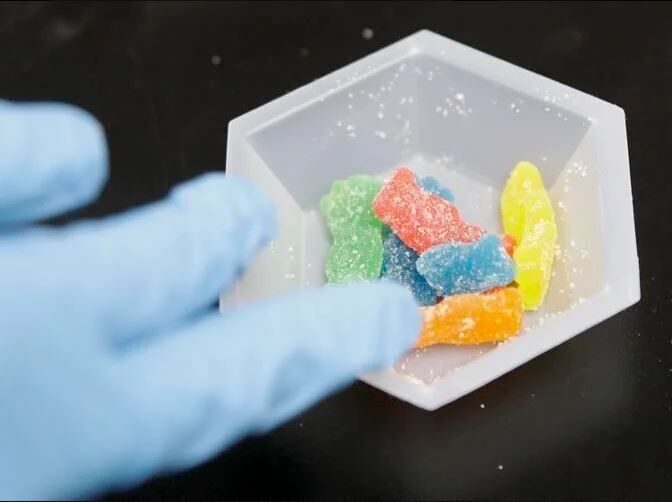
It’s a safe bet most Colorado parents are aware of the perils posed to their children by our state’s easy access to pot. They are worried, as they should be.
Yet, it’s far from clear most of the state’s elected policymakers understand those same dangers. If they did, they would move swiftly to set much more stringent standards for marijuana retailers, especially in marketing edible-pot products that children mistake for harmless candy.
Maybe the alarming, new research findings on kids and pot that made headlines last week will get politicians’ attention.
As reported by The Gazette and other news media nationwide, the number of young children who accidentally ingested marijuana by eating edible products has skyrocketed nationally since 2017. That’s according to a study conducted by three research physicians, published last week in the medical journal Pediatrics.
The study’s authors, who crunched numbers from the National Poison Data System, found that pot poisonings among children 5 and under exploded 1,375% between 2017 and 2021. Nearly a quarter of those cases resulted in hospitalization.
And in almost all those cases – more than 3,000 nationwide in 2021 – the kids had gotten access to the drug in their very own homes.
Meanwhile, in Colorado, the state health department’s Rocky Mountain Poison & Drug Safety center reports that more than half of what the state refers to as “exposures” to marijuana were unintentional and involved edibles. And nearly 50% were children 5 and younger.
Symptoms in children vary, from lethargy, anxiety and an accelerated heart rate, to difficulty breathing, loss of consciousness, and seizures. The younger and smaller the child, of course, the more dire the consequences of acute, unintentional poisoning from marijuana’s THC.
It comes courtesy of a growing assortment of pot products like edibles that are widely available in the legal retail marijuana market in Colorado and in ever more other states.
Especially the easily concealable, edible pot products, which are increasingly popular among adults and teens, are deceptive and dangerous to younger children.
“They think it looks like candy, and maybe, they just want to eat it,” Marit Tweet, an emergency room doctor and the national study’s lead author, told National Public Radio last week.
UCHealth University of Colorado Hospital emergency room physician Andrew Monte told NPR that parents who suspect their child ate an edible should seek treatment immediately.
“There are some patients that actually have airway obstruction and need to be in the ICU or put on a ventilator,” Monte said.
It’s past time for Colorado state lawmakers to put real teeth into the regulation of edible marijuana and other retail pot products.
Tweet and her co-authors observe in their study:
“Products continue to be offered in brightly colored, enticing packaging that is identical in style to how candy and snack products are marketed. Not only should cannabis products be placed in child-resistant packaging, but they should be in opaque packages with simple labels. In addition, there should be clear warning labels on the product cautioning against excessive use, and the national poison center phone number should be included on the package.”
And the author’s conclude:
“This study demonstrates that unintentional cannabis exposures in young children are increasing rapidly. These exposures can cause significant toxicity and are responsible for an increasing number of hospitalizations. Prioritizing prevention strategies such as changing product packaging and labeling, regulating the maximum allowable dose in a package, and increasing public education on mitigation of household risks are key in reducing these exposures.”
Those are doctors’ orders. Will lawmakers heed them?
Colorado Springs Gazette Editorial Board

Untraditional education platform makes fool out of state ed department | Paula Noonan
Paula Noonan
paula-noonan@coloradopolitics.com
Updated 12 hours ago
It’s April Fool’s week and ERBOCES, Education Re-envisioned BOCES, is one of the state’s biggest jokers. This untraditional education platform authorized through five founding school districts including Falcon School District 49 in El Paso County has played the Colorado Department...

‘Steel for fuel’ — but bill consumers for both | PODIUM
Colorado Politics
colorado-politics@coloradopolitics.com
Updated 1 day ago
By Sarah Montalbano In 2018, Xcel Energy, an investor-owned utility serving millions of customers across eight states, was the first U.S. utility to pledge to deliver 100% carbon-free electricity by 2050. Eight years later, Xcel is pleading with Colorado...

Mental health education for coaches can help young athletes on and off the field | OPINION
Colorado Politics
colorado-politics@coloradopolitics.com
Updated 1 day ago
By Erin Harrop Youth athletics have become significantly more intense and competitive. The physical effects of training or injury can be grueling — but so are the mental health effects, particularly as performance pressure increases. As leaders and mentors, coaches...
Legislature busy sending lots of minor bills for governor’s signature | Hal Bidlack
Hal Bidlack
hal-bidlack@coloradopolitics.com
Updated 2 days ago
One of the benefits of being, well, I guess technically, some type of journalist writing here on Colorado Politics, isI get on interesting mailing lists. A while back, some kind soul in the governor’s office added me to the daily...
SB26-140 will protect access to rare disease treatments | OPINION
Colorado Politics
colorado-politics@coloradopolitics.com
Updated 2 days ago
By Amanda Boone There are moments in life that leave an indelible mark on your soul. For me, one came in the middle of the night when I took a full breath for the first time in over a decade....
Lawmakers hold the key to solving Colorado’s mental health crisis | OPINION
Colorado Politics
colorado-politics@coloradopolitics.com
Updated 2 days ago
By Ryan M. Burkhart The U.S. is currently in the midst of a mental health crisis, and here in Colorado, more than 28% of residents live with a mental health condition. Unfortunately, a majority of Colorado residents are currently locked...
‘Change the terrain’ for deliberative democracy | FEEDBACK
Colorado Politics
colorado-politics@coloradopolitics.com
Updated 2 days ago
Vince Bzdek’s Gazette piece on James Fishkin’s experiments in deliberative democracy is an interesting read, though the very factors that produced its results — balanced information, expert moderation, and structured discussion — are what everyday politics lacks, and precisely what...

Killing off the Regional Transportation District | Miller Hudson
Miller Hudson
miller-hudson@coloradopolitics.com
Updated 3 days ago
This column is appearing the same day state Sen. Matt Ball (D) of Denver and his legislative co-sponsors unveil legislation implementing many of the recommendations advanced by last summer’s Regional Transportation District Accountability Committee. Although it isn’t readily apparent, they...

Green energy shouldn’t come at expense of Colorado farmers, ranchers feeding us | Rachel Gabel
Rachel Gabel
rachel-gabel@coloradopolitics.com
Updated 3 days ago
In 2023, the Department of Energy released the National Interest Electric Transmission Corridors (NIETC) study identifying areas they speculate would experience transmission capacity constraints of congestion. The map identified more than 2 million acres or 24% of the state of...

Bill in state legislature would put large apartment projects in single-family neighborhoods | Cronin & Loevy
Tom Cronin Bob Loevy
tom-cronin-bob-loevy@coloradopolitics.com
Updated 3 days ago
There is an old joke that goes something like this: “When the state legislature is in session, no person and their property are safe.” That is not a joke in the older, more traditional neighborhoods that surround the downtown regions...
PREV
PREVIOUS

Driving in Colorado is dead serious | Denver Gazette
As noted in Friday’s Gazette, the Colorado State Patrol is calling on the state’s motorists to concentrate on their driving – and add an extra dose of civility – while behind the wheel. It’s part of a campaign to stem rising traffic fatalities and it comes not a moment too soon. Traffic deaths have increased […]

You never know the big impact a small fish could have | BIDLACK
Hal Bidlack My regular reader (Hi Jeff!) will recall on several previous occasions I’ve mentioned the plight of the Unarmored Three-spined Stickleback. This tiny little fish swims happily in a creek located on the massive Vandenberg Air Force Base, sorry, I mean Vandenberg Space Force Base – boy, is that ever going to take some getting […]