

Appeals court clarifies defendants’ ability to access officers’ personnel files
Colorado’s second-highest court has clarified that criminal defendants are not automatically entitled to have a trial judge review and possibly release a police officer’s personnel file, but instead must show the request is factually relevant and not a “general fishing expedition.”
Last month, the state’s Court of Appeals determined a La Plata County judge acted appropriately when he declined to review the files of William Benjamin Cline VI’s arresting officer “in camera,” meaning behind closed doors. Cline stood trial in 2019 for assaulting a police officer and argued he had a right to information in Deputy Antaeus Draughon’s file related to his credibility.
However, “Cline did not articulate any factual basis for believing that Deputy Draughon’s personnel file includes complaints of excessive force or dishonesty. His claim that such documents exist was mere speculation,” wrote Judge Jaclyn Casey Brown in the three-member appellate panel’s Nov. 23 opinion.
Draughon and Deputy Darin Christensen responded to Cline’s Durango home in February 2019 after a report that Cline had crashed his golf cart in a snow drift and entered a neighbor’s house. The deputies knocked on Cline’s door and ordered him outside, but Cline, who was intoxicated, instead invited them inside.
The deputies then handcuffed Cline and a physical altercation ensued. While Christensen left to move the police vehicle closer, Cline reportedly kicked Draughon, prompting the deputy to punch Cline and place him in a chokehold. Cline grabbed Draughon’s genitals and Christensen then returned to tase him. During the ride to the jail, Cline physically damaged the vehicle and yelled racial epithets at Draughon, who is Black.
A jury convicted Cline of trespass, assault, harassment and criminal mischief and he received a sentence of two years in prison.
Before trial, Cline issued a subpoena for Draughon’s personnel file, specifically for any information about his credibility, misconduct and past use of excessive force, plus any internal investigations. La Plata County responded that there were no internal investigations for Draughon and otherwise sought to cast aside the request for documents.
Then-District Court Judge William L. Herringer granted the county’s motion, ruling Cline had “failed to show a specific factual basis demonstrating reasonable likelihood that documents exist within the file that would be relevant.”
He cited the Colorado Supreme Court’s 2010 decision of People v. Spykstra. Although Spykstra was not about police officers’ files, the court laid out five factors criminal defendants must satisfy to proceed with a subpoena for documents, including a reasonable likelihood the materials exist, that they are relevant to the case and the request is “not intended as a general fishing expedition.”
The court added that its decision about whether trial judges should release requested files did not amount to a “mandate” that judges review such materials in camera in the first place. To fill the gap, Cline seized on another Supreme Court decision from 1983, People v. Walker, which did involve a defendant’s request for the files of officers involved in his arrest.
There, the Supreme Court held a defendant charged with assault on a police officer is entitled to know of any excessive force complaints against the officer. Cline argued the Walker decision meant the trial judge needed to at least review Draughon’s file in camera to see if any information warranted disclosure.
But the Court of Appeals pointed out that even under the Supreme Court’s directive, a defendant still has to show the requested information likely exists and is relevant to his case.
“Walker did not address what showing a defendant must make to be entitled to an in camera review of the officer’s personnel file, nor did it mandate that a court must conduct an in camera review any time a defendant asks for an officer’s personnel file,” Brown wrote.
She added that if the Supreme Court wanted to exempt defendants from the Spykstra factors when requesting an officer’s personnel file, “it would have said so.”
The appellate panel also rejected Cline’s other arguments on appeal. His main contention was that evidence existed of Cline acting in self-defense by using force against Draughon because the deputies unlawfully entered his home. Brown noted that Cline himself invited them in, and the Supreme Court has required there to be a “knowing violation of the criminal law” for self-defense to be justified against an intruder.
The case is People v. Cline.


Susan Blanco signals views on role of appellate courts in first opinion as Colorado justice
Michael Karlik
michael.karlik@coloradopolitics.com
Updated 3 hours ago
Justice Susan Blanco’s first solo opinion as a new member of the Colorado Supreme Court made clear her view of the guardrails that keep the state’s highest court tethered to the issues it is asked to decide. On Monday, the...
Colorado leaders weigh next steps after Supreme Court rejects state ban on ‘conversion therapy’
Marissa Ventrelli
marissa.ventrelli@coloradopolitics.com
Updated 21 hours ago
Colorado leaders said they are weighing next steps after the U.S. Supreme Court on Tuesday rejected the state’s ban on “conversion therapy” for children, as critics and supporters cheered or lambasted the ruling. The court’s near-unanimous decision called the Colorado...
Federal judge dismisses U.S. government lawsuit against Colorado, Denver’s ‘sanctuary’ laws
Michael Karlik
michael.karlik@coloradopolitics.com
Updated 20 hours ago
A federal judge dismissed the U.S. government’s lawsuit against Colorado and Denver on Tuesday, which alleged that various local policies impermissibly infringed on federal immigration enforcement. U.S. District Court Judge Gordon P. Gallagher followed the lead of judges in Illinois...
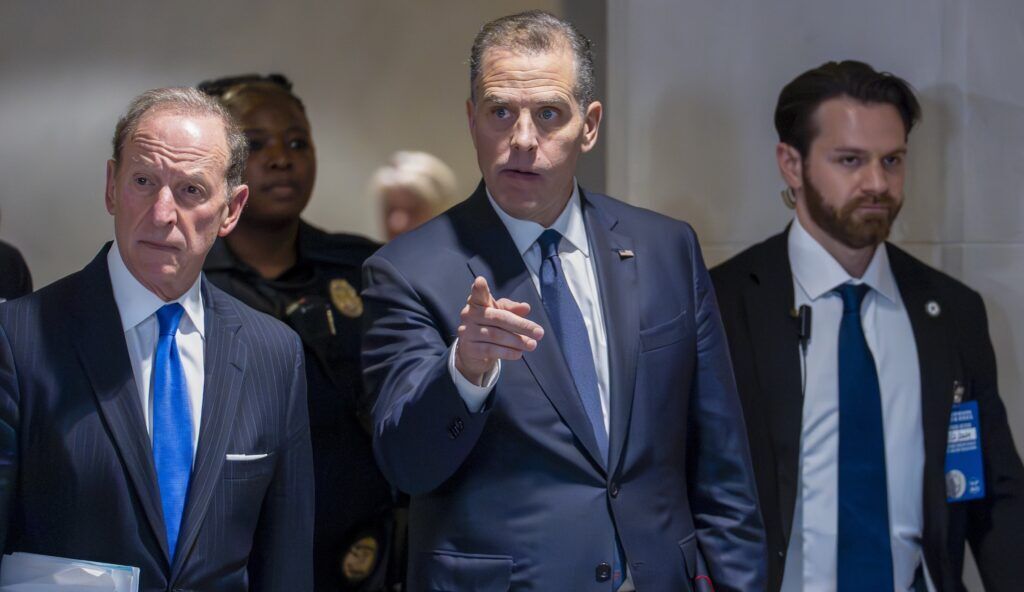
Federal judge finds DOJ adequately searched for, disclosed records related to Bidens
Michael Karlik
michael.karlik@coloradopolitics.com
Updated 1 day ago
A federal judge determined on Friday that the U.S. Department of Justice adequately searched for and disclosed records to a Colorado attorney in response to his request for documents related to former President Joe Biden’s son and brother. In November...
10th Circuit warns lawyers after finding fake case in filing
Michael Karlik
michael.karlik@coloradopolitics.com
Updated 18 hours ago
The Denver-based federal appeals court warned attorneys to be more careful last month after discovering one lawyer cited a fake case in his arguments. In recent months, federal and state judges in Colorado have begun cautioning lawyers explicitly about the...

10th Circuit rules cognitively impaired man’s risk of lobotomy, mistreatment in Mexico not ‘torture’
Michael Karlik
michael.karlik@coloradopolitics.com
Updated 2 days ago
The Denver-based federal appeals court concluded last month that a man’s risk of mistreatment or forced lobotomy in his native Mexico did not amount to “torture” that should shield him from deportation. A three-judge panel of the U.S. Court of...
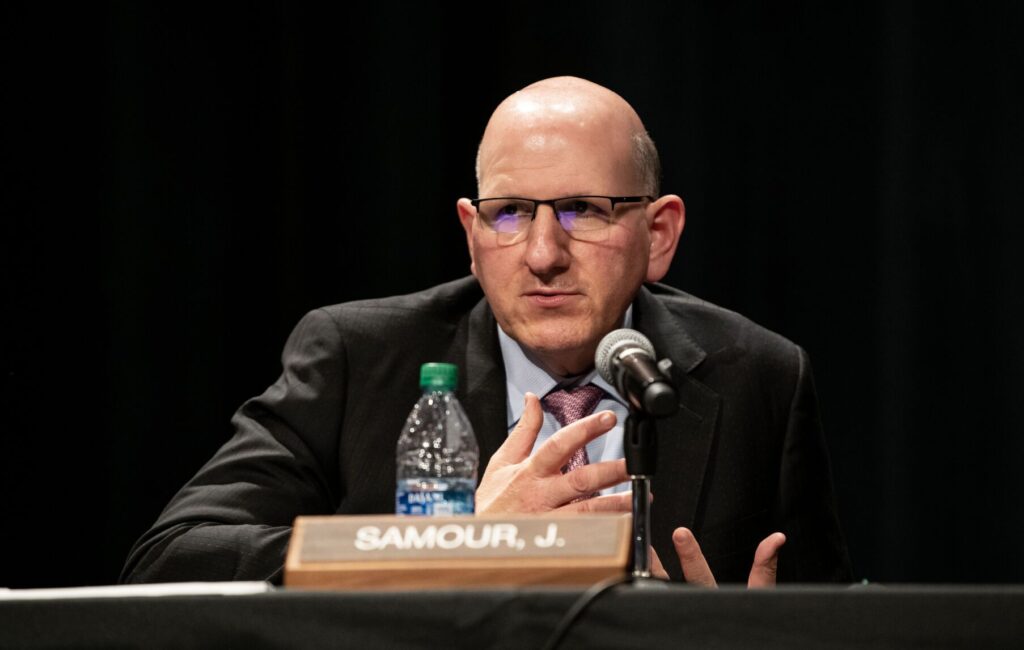
Colorado justices side with news organizations for disclosure of high-level child abuse data
Michael Karlik
michael.karlik@coloradopolitics.com
Updated 21 hours ago
The Colorado Supreme Court ruled on Monday that the state must disclose the number of child abuse reports at individual group living facilities in response to an open records request, as the addresses are already in the public domain. The...
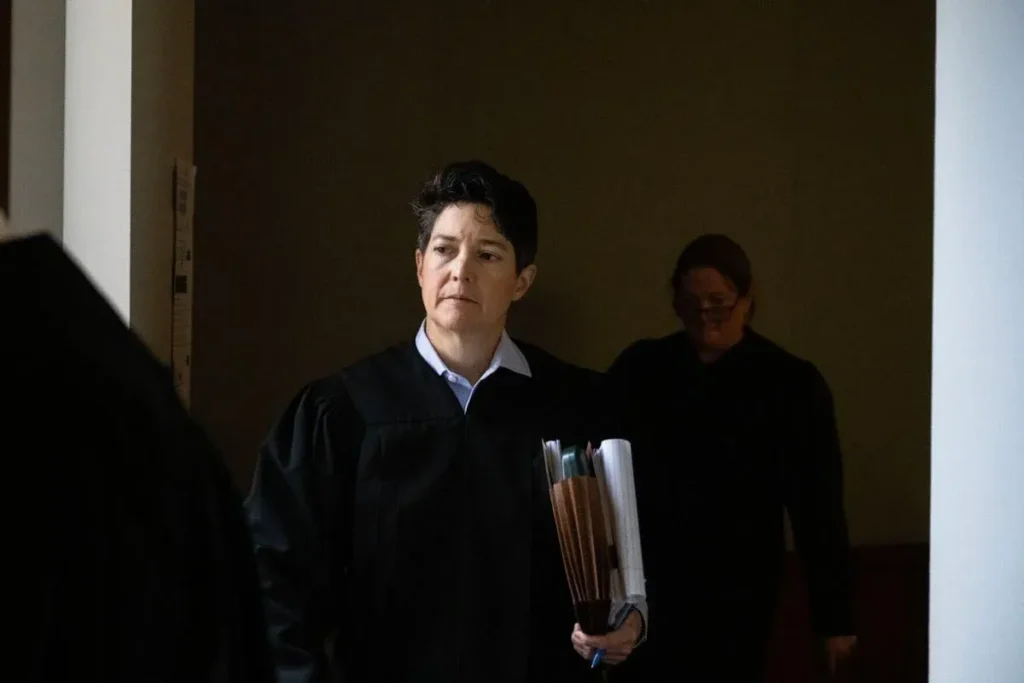
Divided Colorado Supreme Court finds Denver detective did not violate defendant’s Miranda rights
Michael Karlik
michael.karlik@coloradopolitics.com
Updated 2 days ago
The Colorado Supreme Court determined on Monday that a Denver detective did not improperly resume questioning of a defendant in custody after he invoked his right to counsel. By 4-3, the justices reversed a trial judge’s order that found a...

Out-of-state judges address ex-discipline director’s lawsuit, Colorado justices accept federal invitation | COURT CRAWL
Michael Karlik
michael.karlik@coloradopolitics.com
Updated 2 days ago
Welcome to Court Crawl, Colorado Politics’ roundup of news from the third branch of government. A pair of out-of-state judges got down to business in a lawsuit brought by Colorado’s former judicial discipline director, plus the state Supreme Court has...
Federal judge upholds constitutionality of Colorado campaign contribution limits
Michael Karlik
michael.karlik@coloradopolitics.com
Updated 5 days ago
A federal judge upheld Colorado’s individual campaign contribution limits as constitutional on Thursday, finding that three Republican plaintiffs failed to prove the campaign finance framework violates their First Amendment rights. U.S. District Court Senior Judge John L. Kane recognized that...
PREV
PREVIOUS

12 Colorado cities, towns lose urban status with new Census criteria
Despite Colorado’s population exploding over the last decade, a dozen cities and towns lost their status as urban areas due to revised criteria from the U.S. Census Bureau. The Census Bureau released a list of places considered urban based on their new criteria Thursday, showing almost 1,000 cities, towns and villages in the U.S. being changed […]
Denver's minimum wage increases Jan. 1, city auditor advises awareness
Denver’s minimum wage will increase from $15.87 per hour to $17.29 per hour starting Jan. 1. The city’s minimum wage is adjusted annually based on calculations made at the Department of Finance. The $1.42 increase translates to a raise of almost 9% according to City Auditor Timothy O’Brien, and is a response to rising prices […]