

Colorado’s updated water master plan draws criticism for not going far enough
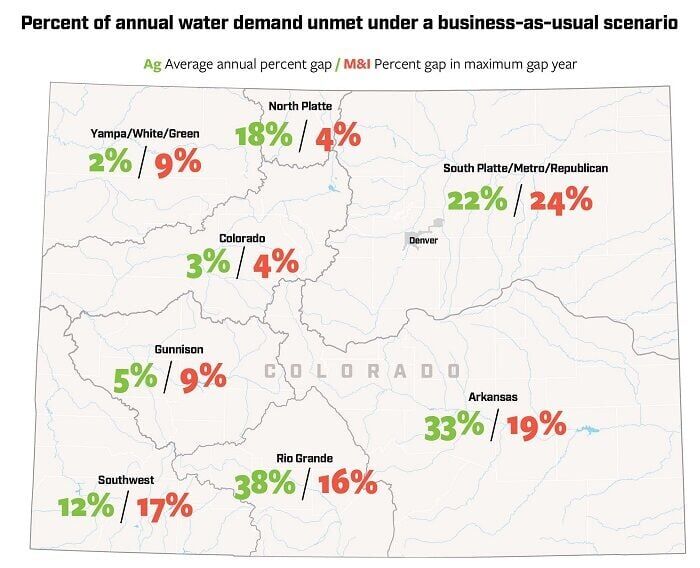
Coloradans want the state’s top water planning document to mandate faster action, be more accountable, require equitable drought responses between the Front Range and Western Slope, and to specifically include the crisis on the rapidly drying Colorado River in its estimates of future water shortages.
More than 1,300 individuals and agencies submitted public comments on the draft update to the Colorado Water Plan, according to Russ Sands, chief of water supply planning for the Colorado Water Conservation Board (CWCB).
The public comment period ended Sept. 30. The CWCB is scheduled to finalize revisions to the plan in January 2023.
Commenters, including major water utilities, environmental groups, ranchers and farmers, and city and county officials, asked for numerous changes to the document.
“The plan lacks the language of urgency throughout. It should emphasize the scarcity of time and water to address the life-or-death reality of the drought and the climate crisis that the state of Colorado is facing,” Hispanics Enjoying Camping, Hunting and the Outdoors wrote in their submitted comments.
The CWCB is responsible for drafting and updating the plan and supporting its implementation. Championed by U.S. Sen. John Hickenlooper when he served as governor, the state’s first water plan was approved in 2015 after years of public meetings and data gathering.
At the time, it was hailed as a breakthrough in grassroots water planning in the West because of its comprehensive effort to engage the public, analyze existing water use, future shortages, and potential solutions.
Since then, the CWCB has awarded more than $500 million in grants and loans to help communities develop water management plans, projects and other options locals believe are necessary to ensure their water futures.
But the plan was politically difficult to finalize even then because of conflicts between water utilities and environmentalists, pro-dam and anti-dam interests, and agricultural and urban water conflicts.
Regardless, water users across the state say that the water plan has spurred more cooperation than has ever existed before, with public roundtables in each of the state’s eight river basins making decisions and sharing information with one another, using the water plan as a roadmap.
Now, as the CWCB updates the plan and a 22-year megadrought drains the Colorado River system, pressure is building to act quickly.
For example, in their comments several individuals and agencies asked that the updated plan include more measurable goals with deadlines to improve accountability in addressing the state’s looming water shortages and environmental issues.
Business for Water Stewardship (BWS), a nonprofit that seeks to connect corporate funders with environmental initiatives, was among them.
“The water plan lacks specifics and accountability,” BWS wrote. “The plan should include metrics on conservation and storage and guidelines on how we balance competing needs. These metrics are necessary to measure progress on the plan’s goals and objectives.”
Major water diversions between Western Slope river basins and Front Range cities were also a topic of concern.
Roughly 80% of the state’s water supplies originate in Western Slope mountain snowpacks, while much of that water is moved to the thirsty Front Range in pipelines and canals known as transmountain diversions or TMDs.
The Colorado River District and other interests want the state to require that when the Western Slope is facing ultra-dry conditions and forced to deal with water restrictions and cutbacks, as it often is just because of its geography, urban cities who are using that water, live under the same rules. The district represents 15 Western Slope counties and is responsible for managing the Colorado River within state boundaries.
For years, communities on the west side of the state whose rivers have been subject to severe drying due to drought and climate change have complained about urban indifference to their plight.
This year, for example, some Western Slope river basins saw runoff that was well below average, while many Front Range communities, thanks to big reservoirs and better runoff from local rivers, saw normal conditions. There were water restrictions to the west, but few if any to the east.
“The river district recommends a stronger stance towards water conservation and a recommendation that communities reliant on TMD supplies tailor conservation needs when any watershed with their source water is undergoing drought conditions. This is particularly important when the end-use basin is undergoing less severe drought conditions than their TMD source watersheds,” the river district wrote.
The CWCB’s Sands said the state has limited ability to act on a request like this one, given that it has no statewide authority to impose drought restrictions.
Still another major topic of concern among several commenters is the ongoing crisis on the Colorado River. The river begins in Rocky Mountain National Park and by the time it makes its way west to the Utah state line, it has generated the majority of the entire seven-state river system’s water.
With the river in crisis and lakes Powell and Mead at historic low levels, Arizona, California and Nevada have begun taking cutbacks, a situation that eventually could occur in Colorado, where major metropolitan areas rely on the river for roughly 50% of their supplies.
And while the draft plan acknowledges the impact of climate change and uncertainties regarding future supplies, commenters say it should include more specifics on how the crisis could affect Colorado’s own water future.
The Sierra Club called release of the draft plan premature, because it did not adequately address the Colorado River crisis. Larimer County, the City of Fort Collins and the Colorado Agricultural Water Alliance, also asked that the draft plan include more specifics on the river’s dicey future.
“Adding the Colorado River crisis” to Colorado’s already well known water problems, “is like adding an overactive bull into an already somewhat ramshackle china shop,” the Sierra Club wrote. “Having the draft plan revision out at this time is premature given the likely need to stop about 30% of Colorado’s present use of Colorado River water.”
Here too, Sands said, because the plan is focused solely on intrastate water issues, rather than interstate issues, there is little more the water plan can do with data on the crisis.
The CWCB is scheduled to address which public requests for additions to the water plan will be included in the final draft at its November meeting, Sands said.
In the meantime, several commenters expressed hope that the revised water plan will create the energy and vision the state needs to address its complicated water future.
Said Colorado Springs Utilities, “The water plan is a formative document that outlines meaningful goals and actions for addressing the water supply gap in a time of increasing water scarcity. It will take political courage to ensure this plan has the impact Colorado requires.”

Primary rival sues to prevent Democrat Eileen Laubacher from going through assembly in Colorado’s 4th CD
Ernest Luning
ernest.luning@coloradopolitics.com
Updated 5 hours ago
Democratic congressional candidate Trish Calvarese on Monday asked a judge to prevent one of her primary rivals, Eileen Laubacher, from participating in the caucus and assembly process to seek the nomination to challenge Republican U.S. Rep. Lauren Boebert in Colorado’s...
Colorado lawmakers tackle legislation on sexual assault
Jenny Deam
jenny-deam@coloradopolitics.com
Updated 5 hours ago
A panel of Colorado lawmakers on Monday unanimously approved a bill that supporters say will offer protections and support to victims of domestic violence, stalking, sex trafficking and sexual assault, including mandatory training for law enforcement on trauma. The measure,...
Colorado Supreme Court clarifies restraining order violations can always support burglary charge
Michael Karlik
michael.karlik@coloradopolitics.com
Updated 8 hours ago
The Colorado Supreme Court’s majority ruled on Monday that a violation of a restraining order can also serve as a basis for finding a defendant guilty of burglary. Under state law, a person commits second-degree burglary by unlawfully entering or...

Big week ahead for major legislation to address housing affordability woes
Zach Halaschak, Washington Examiner
zach.halaschak.washington.examiner@gazetteedit.wpenginepowered.com
Updated 11 hours ago
The Senate is pushing ahead with a bipartisan bill to improve housing affordability, teeing up a critical week for housing on Capitol Hill and raising major questions about what provisions will be included. Senate Majority Leader John Thune (R-SD) filed cloture on legislation from the...

Macron goes nuclear with increases to French warhead arsenal
Timothy Nerozzi, Washington Examiner
timothy.nerozzi.washington.examiner@gazetteedit.wpenginepowered.com
Updated 11 hours ago
French President Emmanuel Macron is channeling the atomic spirit of his predecessor Charles de Gaulle with orders for the French military to “increase the number of nuclear warheads” in the nation’s arsenal. Macron announced the seismic shift in France’s defensive...

Who has been killed so far during US-Israel mission in Iran?
David Zimmermann and Keely Bastow, Washington Examiner
david.zimmermann.and.keely.bastow.washington.examiner@gazetteedit.wpenginepowered.com
Updated 11 hours ago
There have been numerous casualties on all sides since the joint U.S.-Israel strikes against Iran commenced over the weekend, with more lives expected to be lost as the campaign continues. The Islamic regime’s leadership is currently bearing the brunt of...
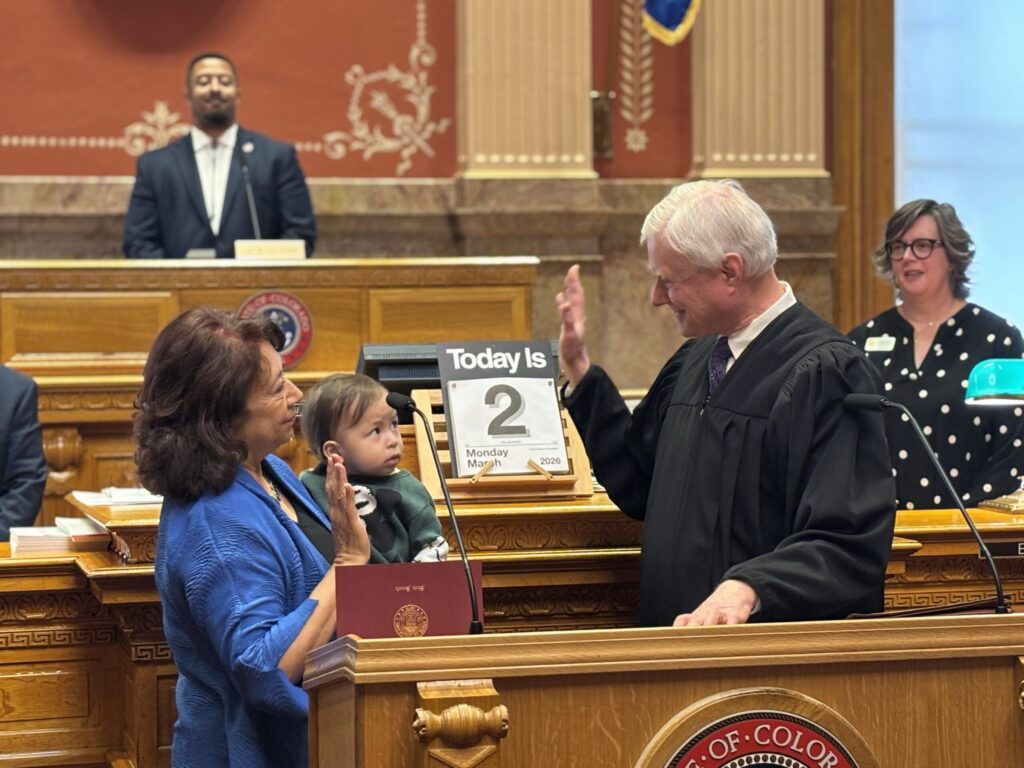
Colorado Senate swears in Adrienne Benavidez after district vacancy win
Marianne Goodland
marianne.goodland@coloradopolitics.com
Updated 11 hours ago
Sen. Adrienne Benavidez, a Democrat from Adams County, was sworn in Monday to the Colorado Senate, just four days after winning a vacancy election in District 21. She was sworn in by Colorado Court of Appeals Justice Lino S. Lipinsky...

10th Circuit judge creates vacancy, district court gets new chief judge | COURT CRAWL
Michael Karlik
michael.karlik@coloradopolitics.com
Updated 12 hours ago
Welcome to Court Crawl, Colorado Politics’ roundup of news from the third branch of government. A longtime member of the Denver-based federal appeals court will give the president a vacancy to fill, plus Colorado’s federal trial court will see a...

Denver mayor says his commute time tripled following ‘road diet’ change
Mark Samuelson Special to The Denver Gazette
mark.samuelson@denvergazette.com
Updated 10 hours ago
Mayor Mike Johnston is pushing back sharply against the claim by Denver councilmembers and bike activists that the city succumbed to lobbying pressure in revising a “road diet” plan for East Alameda Avenue, while noting that his own commute time...

Rural legislators, Colorado farmers defeat pollinator bill backed by Gov. Polis
Marianne Goodland
marianne.goodland@coloradopolitics.com
Updated 11 hours ago
A proposal to limit the use of neonicotinoid-coated crop seeds collapsed in the Senate Agriculture and Natural Resources Committee last week, as rural lawmakers, including two Democrats, joined Republicans to reject what they called an expensive, impractical mandate on farmers....
PREV
PREVIOUS

'The door is now open': Charlotte Sweeney officially sworn in to history-making judgeship
Charlotte N. Sweeney paid tribute Friday to every woman who preceded her as a trial judge on the U.S. District Court for the District of Colorado, observing they all made history for being a “first” in one way or another. “For me it’s important to name the firsts. It’s only when you celebrate the first […]

SONDERMANN | Sizing up the election in the homestretch
As the candidates round the final turn and enter the homestretch, let’s size up where things stand and the prospects ahead. This election year began with every expectation of a Republican rout. Rampant inflation and an unpopular president combined with the historical trend of off-year elections spelled a tidal wave that would drown Democratic dreams. […]