

Colorado appeals court judges should not sit in judgment of Supreme Court justices: Discipline panel
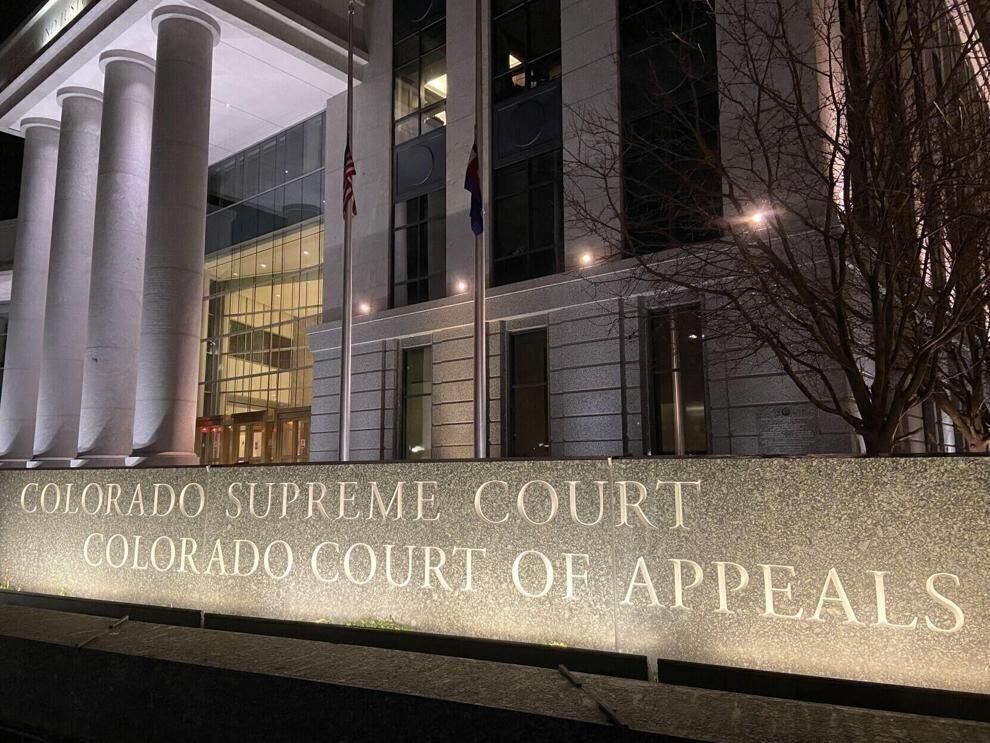
Allowing judges from the Colorado Court of Appeals to stand in judgment over a Supreme Court justice accused of misconduct would be fraught with the appearance of impropriety and potential conflicts of interest.
So says the state Commission on Judicial Discipline in a letter to a panel of legislators scheduled to take up a trio of proposals Friday that could dramatically change how judges are disciplined in Colorado.
In a 10-page letter to the Interim Committee on Judicial Discipline, the commission charged with investigating and administering punishment to judges accused of misdeeds said the appellate court should not preside over any disciplinary matter that would involve a sitting or retired Supreme Court justice.
Colorado lawmakers seek constitutional change, ombudsman, open disciplinary hearings against judges
An initial proposal by the interim committee would create a special council called a special supreme court that would be composed of appellate court judges should a disciplinary case involve a Supreme Court justice and require the other justices to remove themselves because of the conflict.

Currently, there is no specific provision in state law requiring a justice to recuse themselves if a colleague is accused of misconduct or is a material witness to a disciplinary case against another judge. The Supreme Court is the final arbiter of any disciplinary matter that the commission wants to make public, such as removing a judge from the bench or other serious sanction.
“The collegial nature of the court is the reason for the imputed disqualification of the entire court,” the commission wrote in its Sept. 22 letter noting that Supreme Court justices ought not to sit in judgment over one of their own. “On a very fundamental level, there is an appearance of impropriety and conflicts of interest where judges who regularly work closely together are required to judge their own or one of their colleagues’ credibility and compliance with ethical standards.”
But allowing appellate court judges to take the justices’ place, especially when the discipline involves a member of the higher court, is also problematic, the commission wrote.
“Unfortunately, creating a special supreme court composed of Colorado Court of Appeals Judges does not fully address the possibility of continuing conflicts of interest,” commission executive director Christopher Gregory wrote. “Like the Colorado Supreme Court, the Colorado Court of Appeals is a collegial court. Because the Court of Appeals is often a path to becoming a Colorado Supreme Court justice, there will be circumstances where a special supreme court composed entirely of Court of Appeals judges would be reviewing the conduct of a current or former colleague.”
Ultimately, “a special supreme court composed of Court of Appeals judges does not correct the conflicts that necessitate the underlying recusal of the whole Colorado Supreme Court.”
Instead, the commission is recommending that any panel named to replace the Supreme Court include district court judges as well as one member of the appellate court.
Disciplinary information rarely considered in decisions on judge retention
The committee proposal was inked with the input of the Judicial Department and initially was to name a member of the appellate court to replace any Supreme Court justice who recused themselves. That proposal changed when it was clear the close-working justices would fundamentally have a potential conflict sitting in judgment over a colleague.
Keeping the new judgment panel limited to appellate court judges creates a problem if the justice facing discipline had come from the lower court, Gregory wrote.
The judiciary scandal that led to the interim committee and consideration of a constitutional amendment to change how discipline gets done is rooted in accusations that some judicial misdeeds were intentionally overlooked or handled softly. Those accusations came from a two-page memo that outlined some of the misbehaviors and was read to then-Chief Justice Nathan “Ben” Coats in a meeting intended to garner a multi-million-dollar training contract for a former employee threatening a lawsuit.
Coats is under investigation by the Office of Attorney Regulation Counsel in the matter and could be under inquiry by the discipline commission, whose work is secret.
As evidence of why the special supreme court proposal is problematic, the memo cited the case of a Court of Appeals judge facing a harassment complaint by an intern. The matter was handled quietly and the intern given a settlement, allegedly so as not to impact the judge’s chances of being named to the Supreme Court, which ultimately happened.
It’s unclear if that justice is under investigation by the commission over that incident.
The commission is recommending that any panel named to replace the Supreme Court include district court judges as well as one member of the appellate court.
In addition to recommending a panel that includes district court judges, the commission and judicial department recommended a number of other changes to the proposals legislators are considering, including:
? A requirement that a new ombudsman report all complaints of misconduct to the commission rather than only founded ones, leaving the investigative work to the commission rather than the ombudsman.
? Ensure all forms of discipline shared with committees reviewing judicial performance for retention remain confidential and not be shared with voters. Currently, those committees do not automatically learn of a judge’s discipline record.
? Decriminalization of disclosure of the existence of a inquiry into judicial misconduct. Currently it is a misdemeanor to disclose the commission’s work and it’s believe that such punishment is a deterrent to anyone wanting to file a complaint.
? A structure of rulemaking for the new judicial discipline process that would equally include input from the commission and the judicial department. Currently, the department creates the rules and may, but is not required to, request the commission’s input.
Proposed sweeping changes to judicial discipline process would need public approval

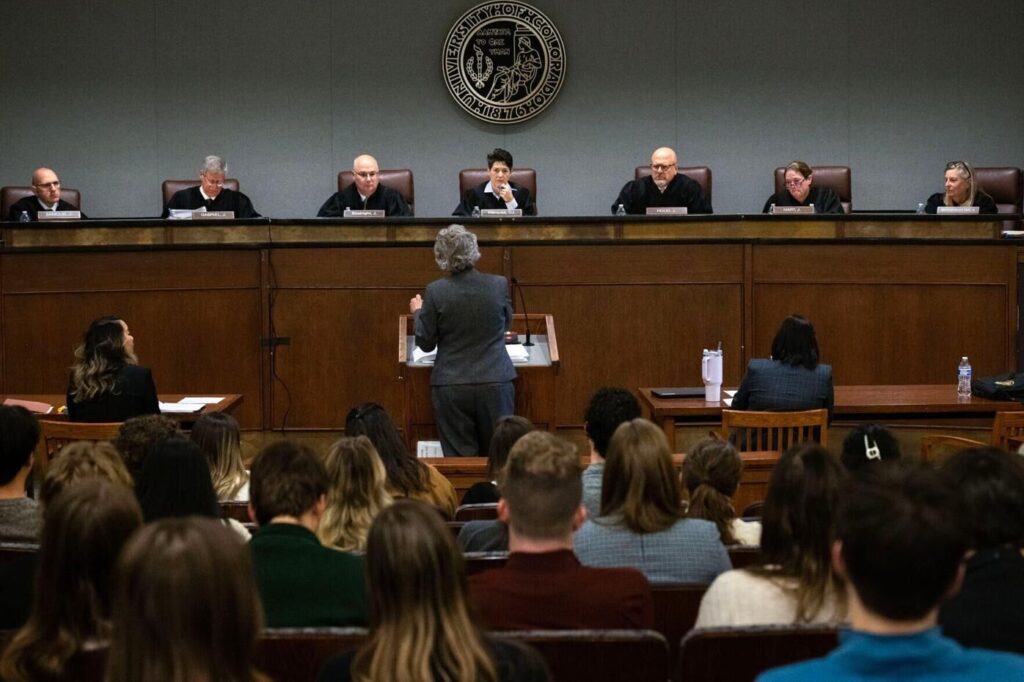
Colorado Supreme Court blocks ‘child-to-parent violence’ testimony in Boulder County case
Michael Karlik
michael.karlik@coloradopolitics.com
Updated 5 hours ago
The Colorado Supreme Court concluded on Friday that a Boulder County judge incorrectly green-lit a psychologist’s expert testimony when the defendant had not laid the necessary groundwork for the evidence. State law requires criminal defendants to provide notice and undergo...
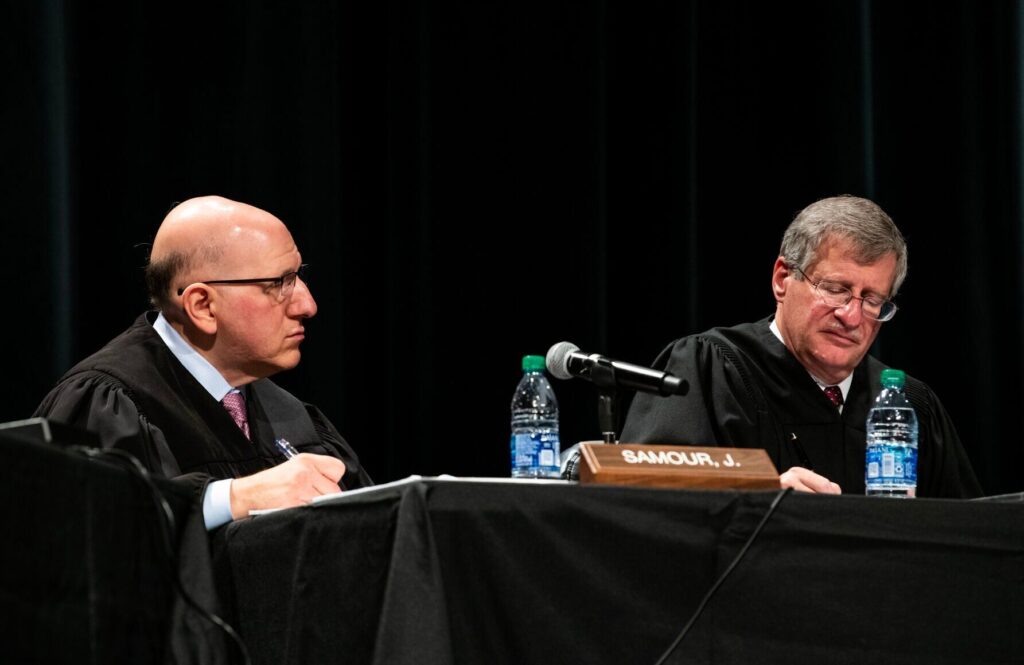
Colorado justices concerned about retrying defendant after jury signaled acquittal
Michael Karlik
michael.karlik@coloradopolitics.com
Updated 2 hours ago
Some members of the Colorado Supreme Court appeared uncomfortable on Tuesday with allowing a criminal defendant to stand trial a second time after a Larimer County jury signaled it was deadlocked on some counts but found him not guilty of...
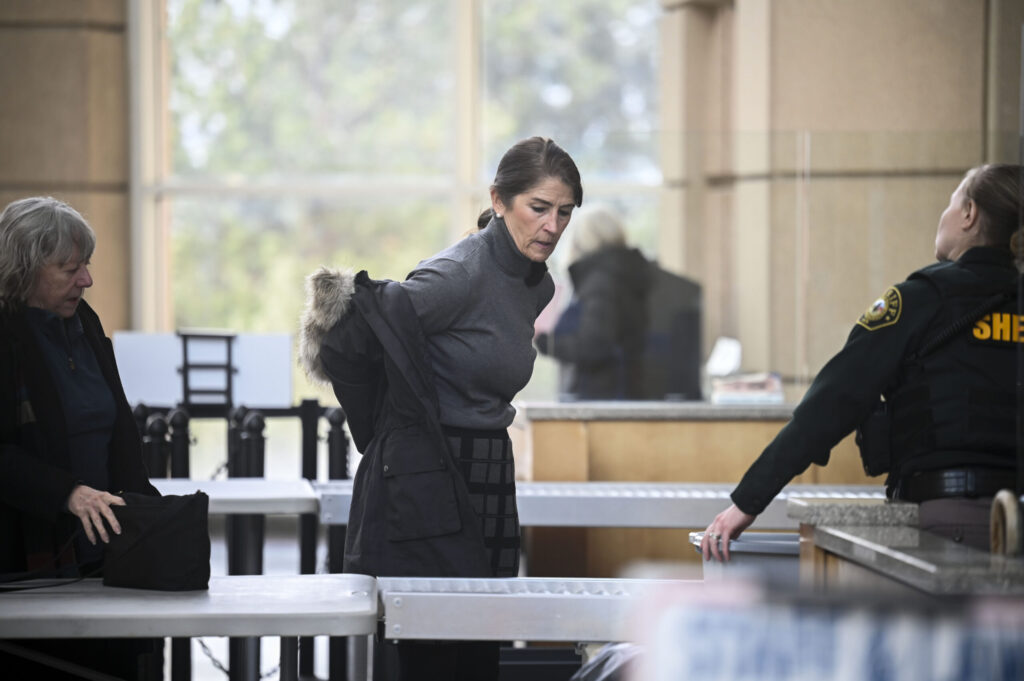
Missy Woods pleads not guilty; trial set for fall
Jenny Deam
jenny-deam@coloradopolitics.com
Updated 3 hours ago
The former Colorado Bureau of Investigation DNA expert charged with more than 100 felonies entered a plea of not guilty to all of them Wednesday in a packed Jefferson County courtroom. The plea was entered by her defense attorney Tom...
Colorado justices question process for parole board appeals
Michael Karlik
michael.karlik@coloradopolitics.com
Updated 9 hours ago
The Colorado Supreme Court considered on Tuesday whether criminal defendants whose parole is revoked must appeal the decision internally to the state’s parole board before seeking review by a judge. The process for returning someone to incarceration for violating the...
Colorado justices weigh potentially faulty jury instruction in child abuse case
Michael Karlik
michael.karlik@coloradopolitics.com
Updated 11 hours ago
Members of the Colorado Supreme Court questioned on Tuesday whether a San Miguel County jury convicted a defendant of child abuse resulting in death, even though the instructions potentially allowed jurors to avoid finding that the child abuse resulted in...
Federal judge sanctions Pueblo for destroying evidence in lawsuit
Michael Karlik
michael.karlik@coloradopolitics.com
Updated 1 day ago
A federal judge imposed sanctions on the city of Pueblo last week after it disposed of a key piece of evidence shortly after the plaintiffs filed suit seeking damages for the destruction of their home. On June 25, 2022, a...
10th Circuit orders lawyer to pay $1,000 for faulty AI citations
Michael Karlik
michael.karlik@coloradopolitics.com
Updated 2 days ago
The Denver-based federal appeals court ordered a lawyer on Monday to pay $1,000 to the opposing side for submitting a legal filing with fake case citations generated by artificial intelligence. A three-judge panel of the U.S. Court of Appeals for...

Supreme Court finalists selected, federal judges slash backlogs | COURT CRAWL
Michael Karlik
michael.karlik@coloradopolitics.com
Updated 2 days ago
Welcome to Court Crawl, Colorado Politics’ roundup of news from the third branch of government. Coloradans learned who the three finalists are for a state Supreme Court vacancy, and new data show that Colorado’s federal trial judges reduced their backlog...
Federal judge blasts government for violating court order, confiscating man’s property
Michael Karlik
michael.karlik@coloradopolitics.com
Updated 3 days ago
A federal judge gave the government three hours on Friday to return the property of a man released from immigration detention, which it allegedly retained in violation of her previous order. “At its most benign, this failure is an unforced...
DA’s withdrawal from veterans treatment court not judge’s problem, ethics panel says
Michael Karlik
michael.karlik@coloradopolitics.com
Updated 5 days ago
There are no ethical concerns from a judge continuing to participate in a specialty veterans treatment court if the district attorney’s office has withdrawn from the program, the Colorado Supreme Court’s ethics committee advised on Wednesday. Colorado law permits chief...
PREV
PREVIOUS

Could Dearfield become Colorado's next national park?
Dearfield, the community about 24 miles east of Greeley and founded in 1910 as a colony for African Americans, could become Colorado’s next national park. U.S. Sens. John Hickenlooper and Michael Bennet introduced legislation Thursday to create the Dearfield Study Act, the first step in evaluating its inclusion in the National Park System. Under the […]

10th Circuit mulls whether to recognize right of hemp producers to sue for plant confiscation
One day after Francisco Serna passed through Denver International Airport, he filed a lawsuit in federal court with a three-sentence description of what happened when he attempted to carry his hemp plants through security. “I was travelling with 32 plant clones or rooted clippings compliantly produced under Subtitle G of 2018 Farm Bill Act,” Serna […]