

Water and the West drew JFK to Pueblo

President John F. Kennedy came to Pueblo 60 years ago on Aug. 17, 1962, to celebrate the signing of the Fryingpan-Arkansas bill that has so shaped the water resources, economy, agricultural and environmental base of southeastern Colorado since then. He signed the bill the day prior in Washington D.C., before a group of Colorado elected office-holders, Pueblo community leaders and Department of Interior representatives in the Kennedy Administration. All lauded this landmark legislation that was in the making for decades and which they hoped would ameliorate the drought cycles that plagued that portion of the state since the 1930s.
The President was invited to Pueblo by then owner of the Pueblo Chieftain Robert Hoag, Jr. during a briefing on the project a few weeks earlier. President Kennedy immediately accepted the invitation, knowing the importance of water to the American west in general and southeastern Colorado in particular. Having campaigned in Pueblo several times during the 1960 election, he had been advised of the Fryingpan-Arkansas legislation and its importance. At the time, Pueblo was the second largest city in the state and there were political reasons to support this project as well. Having waited since the 1960 election for all the competing Colorado entities to resolve their differences, it was a relatively easy task for the president to support this important legislation. The legislation, in essence, created a Tennessee Valley Authority for southeastern Colorado and the Arkansas River Basin. Its importance to this region cannot be overstated.
Pueblo leaders spearheaded the drive for the transfer of water resources from the Western Slope since the 1930s, though the project benefited many other communities to include Colorado Springs and cities east of Pueblo, such as Fowler, Rocky Ford and La Junta. There was significant, and bipartisan, resistance from the Western Slope opposed to the transfer of any water to the Front Range. Presidents Harry Truman, Dwight Eisenhower and Kennedy would not, or could not, move forward on the project until the various parties within Colorado came to resolution. Compromise was reached on this internecine fight in the Spring of 1962 and President Kennedy and his team took the initiative to drive the matter to conclusion. Though the legislation was signed in 1962, the centerpiece of the bill, Pueblo Dam, was not completed until 1975. It is currently the largest outdoor attraction for a Colorado State Park and provides superb recreational amenities well beyond the water collection resource it was primarily intended to be.
On the day of his Pueblo visit, President Kennedy made three presidential stops across America. Celebrating the commencement of water resource projects from South Dakota to California, the Pueblo visit was the intermediary stop that day. All of these celebrated the importance of water to the West and the federal government’s commitment to proper stewardship of such resources for the benefit of the people; and to the interdependence of the United States. As the president said that day, “I hope that those of us who hold positions of public responsibility in 1962 are as far-seeing for the needs of their country in 1982 and 1992 as those men and women were 30 years ago who made this project possible.”
The Kennedy trip to Pueblo came at approximately the mid-point of his presidency. Behind him was the Bay of Pigs, the Berlin Wall and the steel industry strike. Within 60 days of the Pueblo visit would be the Cuban Missile Crisis. Later the Berlin “Ich bin ein Berliner” speech and a more visible and energetic civil rights movement.
But on this particular day, Pueblo hosted one of the more important figures of the 20th Century. Together, the president of the United States celebrated with the people most affected by the project, one of the most profound events in the region. Today, the citizens of Pueblo and southeastern Colorado continue to enjoy the many benefits of this far-sighted project. And for one “brief, shining moment” we were honored to have this most important person among us.
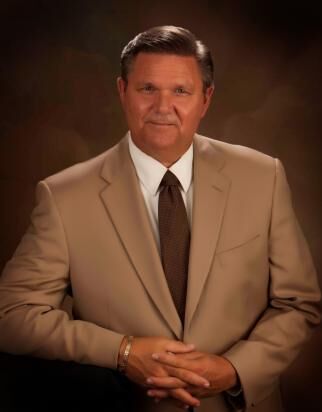
Jeff Chostner is the district attorney for the 10th Judicial District in Pueblo and has served in that post since 2013. He also served on Pueblo City Council and was a Pueblo County commissioner. He is a retired U.S. Air Force colonel and served 22years of active duty.


Colorado’s election audits are built on math, not politics | IN RESPONSE
Colorado Politics
colorado-politics@coloradopolitics.com
Updated 19 hours ago
By Amanda Gonzalez You don’t build a secure election system overnight. You build it over years — layer by layer — reinforcing it with stronger safeguards, better technology and more transparency. In Colorado, one of those safeguards is a little-known...

The backstory behind the school-funding TABOR ballot initiative | Paula Noonan
Paula Noonan
paula-noonan@coloradopolitics.com
Updated 2 days ago
Last session, the General Assembly took in a report on K-12 public school funding. The legislature ordered the report because an idea circulated Colorado was among the bottom five states in dollars allocated per student even though it is one...
Senate Bill 22 critical to keeping energy costs affordable, power reliable | PODIUM
Colorado Politics
colorado-politics@coloradopolitics.com
Updated 19 hours ago
By Brian Wortinger I love Colorado’s outdoors. I’m an avid skier and hiker and my happiest days are spent deep in the mountains with no one around for miles. I want to protect that environment as much as anyone along...
Swipe-fee ban a giveaway to big boxes, mega-chains | IN RESPONSE
Colorado Politics
colorado-politics@coloradopolitics.com
Updated 2 days ago
By Jenifer Waller Four Colorado lawmakers recently published an op-ed in Colorado Politics calling for legislation to prohibit interchange fees on the sales tax portion of credit and debit card transactions (“Why Colorado should stop charging swipe fees on sales...

Leveling the playing field —why Colorado must fight fire with fire on redistricting | OPINION
Colorado Politics
colorado-politics@coloradopolitics.com
Updated 2 days ago
By Curtis Hubbard So Dick Wadhams suddenly cares about mid-decade redistricting — hyperventilating about efforts to “hijack Colorado’s congressional map” and calling those of us involved with the effort “amazingly naive.” Where was his outrage last year when President Donald...
You get what you pay for in your state reps | Hal Bidlack
Hal Bidlack
hal-bidlack@coloradopolitics.com
Updated 3 days ago
My regular readers will know of my affection for the Out West Roundup, a Colorado Politics feature that lets us keep up to date with the goings on out here in the western U.S., and draws attention to stories that...
A warrant should mean something — expedite carrying them out | OPINION
Colorado Politics
colorado-politics@coloradopolitics.com
Updated 3 days ago
By Aaron Ping My name is Aaron Ping. I am a father from Washington state, and I am writing because my 16-year-old son, Avery, cannot. Avery died on Dec. 19, 2024. The drugs that killed him were ordered through Snapchat....
Lower Basin must adapt to Colorado River hydrology | OPINION
Colorado Politics
colorado-politics@coloradopolitics.com
Updated 3 days ago
By Nick Peters A February deadline for determining future operating guidelines for the West’s two largest reservoirs came and went with no agreement on the table and clear lines drawn in the sand. A seven-state resolution to how Lake Mead and Lake Powell will...
Keep kids safe without overregulating childcare | OPINION
Colorado Politics
colorado-politics@coloradopolitics.com
Updated 3 days ago
By Tamra Ryan As the Coors Economic Mobility Fellow for Common Sense Institute, I have written several reports in the past two years about the challenges related to affordability and availability of child care in our state. Though there are many factors affecting the dearth of...

Colorado’s GOP at its best — and worst | Dick Wadhams
Dick Wadhams
dick-wadhams@coloradopolitics.com
Updated 2 days ago
By Dick Wadhams Colorado Republicans are fighting to be relevant in the face of gross mismanagement by Democrats who totally control state government. While the Colorado Republican Party is mired in controversy, several Republican elected officials and candidates represent the...
PREV
PREVIOUS
Grand Junction Daily Sentinel: Don't freak out about pot sales
Colorado’s cannabis industry is facing declines it has never seen before just as Grand Junction, fashionably late to the party as usual, is getting ready to open its first retail marijuana stores, but we don’t think things are as dire as they might appear. The contraction is coming after steady increases in cannabis revenue were […]
BIDLACK | Investing in future minds
Hal Bidlack I admit, I’m not unbiased on libraries. I am the son of the founding dean of the University of Michigan School of Library Science, and my work performing as Alexander Hamilton (cough… HamiltonLives.com… cough) has often brought me inside the walls of these vital public buildings. Heck, less than a month ago, I […]