

Chemistry is not speech, appeals court says in upholding state’s drug law

A Colorado Springs man who argued the state’s law against manufacturing controlled substances is unconstitutional because it infringes on the protected “speech” of chemists ran into resistance last week from the Court of Appeals.
Because chemistry is not intended to convey a message, it is not legally speech, a three-judge appellate panel concluded.
“In sum, while ‘Breaking Bad’ is a constitutionally protected work of art, Walter White’s production of methamphetamine wasn’t,” wrote Judge Jerry N. Jones in the July 14 opinion.
Kynan S. Arnold is serving a 48-year sentence after a jury convicted him in 2011 of multiple drug charges, including possessing chemicals or supplies to manufacture a controlled substance. Authorities who searched Arnold’s apartment and storage unit found a methamphetamine laboratory and other items that indicated manufacturing activity.
The Court of Appeals upheld Arnold’s convictions in 2014 and again in 2020. Arnold then attempted to challenge the constitutionality of the drug law under which he was convicted. He claimed the law swept up legal forms of speech through outlawing the possession of “one or more chemicals or supplies or equipment with intent to manufacture a controlled substance.”
“It chills the First Amendment rights of anyone who might consider taking up chemistry as a hobby and those who may wish to purchase, possess and use glassware to experiment, create, invent, patent or replicate existing patents,” Arnold, who represented himself from prison, wrote to the Court of Appeals.
Arnold contended the First Amendment protected his expressive rights “as a chemist,” and that the impermissibly vague law fails to make aromatherapists, photographers, mechanics and others whose occupations involve chemicals aware of when their behavior is illegal.
“Mr. Arnold and the citizens of Colorado are therefore entitled to ‘fair notice’ as to which chemicals, supplies, equipment and controlled substances this provision specifically refers to because without this information therein lies the trap!” he wrote.
The Colorado Attorney General’s Office argued Arnold had already appealed his conviction directly, and also unsuccessfully sought postconviction relief. Not only had Arnold filed his additional challenge years after his initial conviction, but the government pointed out that trial courts are generally required to reject claims that could have been raised in prior proceedings.
Even considering the merits of the challenge, wrote Senior Assistant Attorney General Kevin E. McReynolds, the law criminalizes possession of chemicals and equipment “with the intent to manufacture” narcotics, meaning there is no question about what conduct is prohibited.
Although Arnold insisted he was not attempting to overturn his conviction and instead wanted to prevent others from being wrongfully convicted, the Court of Appeals panel agreed with the government Arnold had no standing to attack the constitutionality of the law.
Jones, in the panel’s opinion, nevertheless addressed the free speech question Arnold raised. Expressive conduct, Jones wrote, means there is a particular message conveyed that is generally understood by those who view it.
“We conclude that engaging in chemistry, as Arnold characterizes it, doesn’t convey an intent to present a particularized message and therefore isn’t speech,” he explained. “To hold otherwise would seem to permit literally anyone to assert a facial free speech challenge to any law criminalizing almost any conduct.”
The court also agreed the law clearly applies only if a person has the intent to manufacture drugs. The decision was designated as unpublished, meaning it will not set a precedent for future courts.
The case is Arnold v. Polis.

Colorado Supreme Court blocks ‘child-to-parent violence’ testimony in Boulder County case
Michael Karlik
michael.karlik@coloradopolitics.com
Updated 7 seconds ago
The Colorado Supreme Court concluded on Friday that a Boulder County judge incorrectly green-lit a psychologist’s expert testimony when the defendant had not laid the necessary groundwork for the evidence. State law requires criminal defendants to provide notice and undergo...
Colorado justices concerned about retrying defendant after jury signaled acquittal
Michael Karlik
michael.karlik@coloradopolitics.com
Updated 2 hours ago
Some members of the Colorado Supreme Court appeared uncomfortable on Tuesday with allowing a criminal defendant to stand trial a second time after a Larimer County jury signaled it was deadlocked on some counts but found him not guilty of...
Missy Woods pleads not guilty; trial set for fall
Jenny Deam
jenny-deam@coloradopolitics.com
Updated 3 hours ago
The former Colorado Bureau of Investigation DNA expert charged with more than 100 felonies entered a plea of not guilty to all of them Wednesday in a packed Jefferson County courtroom. The plea was entered by her defense attorney Tom...
Colorado justices question process for parole board appeals
Michael Karlik
michael.karlik@coloradopolitics.com
Updated 4 hours ago
The Colorado Supreme Court considered on Tuesday whether criminal defendants whose parole is revoked must appeal the decision internally to the state’s parole board before seeking review by a judge. The process for returning someone to incarceration for violating the...
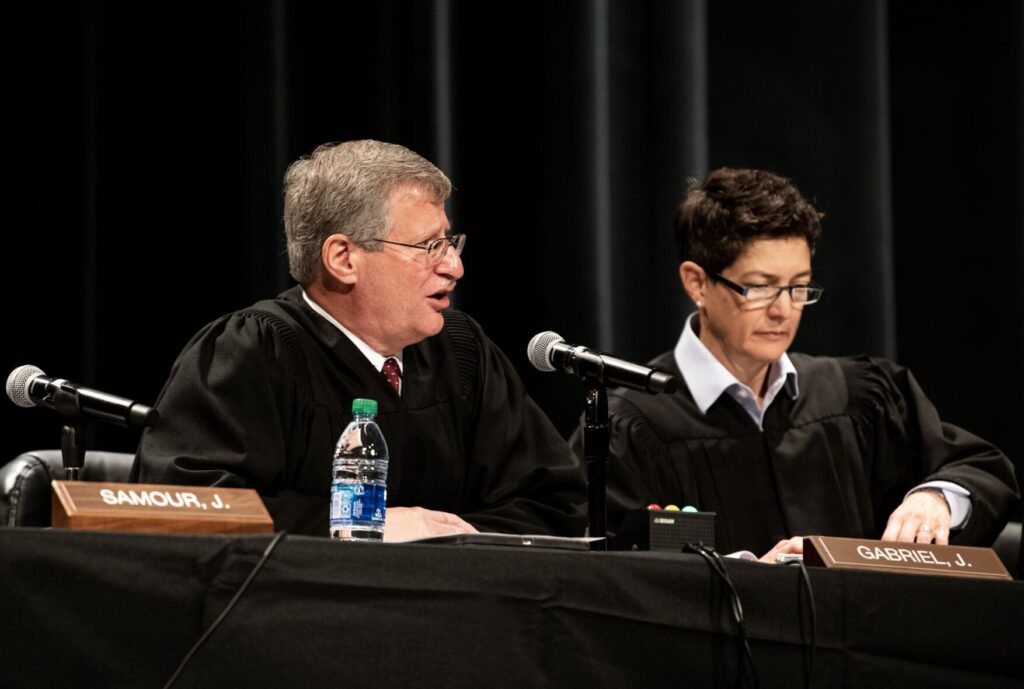
Colorado justices weigh potentially faulty jury instruction in child abuse case
Michael Karlik
michael.karlik@coloradopolitics.com
Updated 6 hours ago
Members of the Colorado Supreme Court questioned on Tuesday whether a San Miguel County jury convicted a defendant of child abuse resulting in death, even though the instructions potentially allowed jurors to avoid finding that the child abuse resulted in...
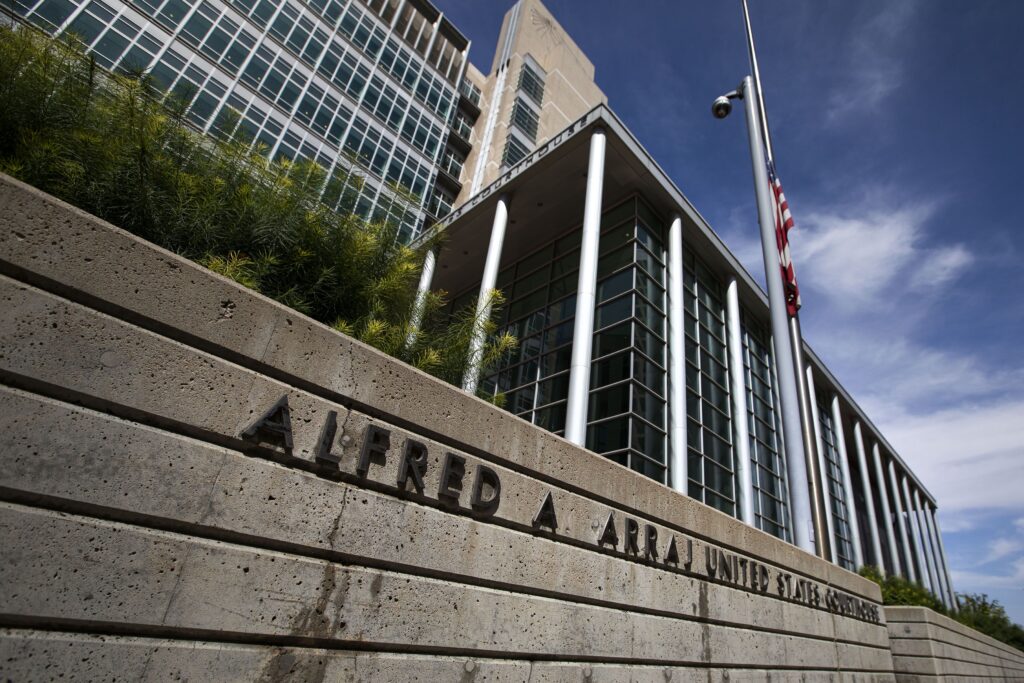
Federal judge sanctions Pueblo for destroying evidence in lawsuit
Michael Karlik
michael.karlik@coloradopolitics.com
Updated 22 hours ago
A federal judge imposed sanctions on the city of Pueblo last week after it disposed of a key piece of evidence shortly after the plaintiffs filed suit seeking damages for the destruction of their home. On June 25, 2022, a...
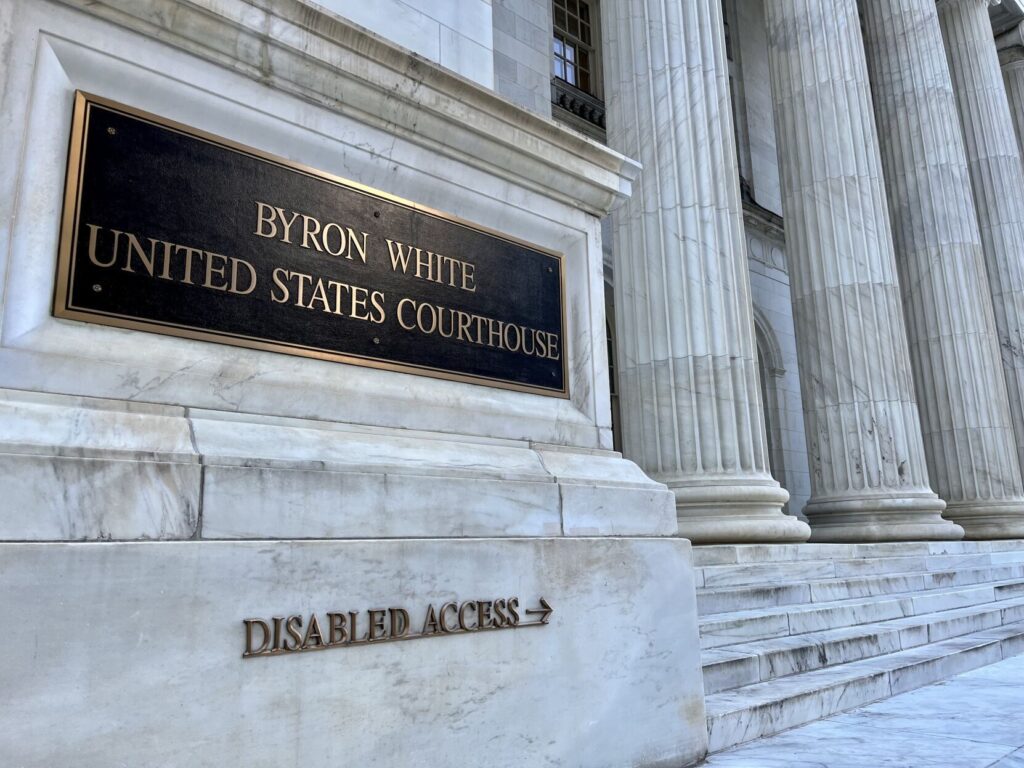
10th Circuit orders lawyer to pay $1,000 for faulty AI citations
Michael Karlik
michael.karlik@coloradopolitics.com
Updated 1 day ago
The Denver-based federal appeals court ordered a lawyer on Monday to pay $1,000 to the opposing side for submitting a legal filing with fake case citations generated by artificial intelligence. A three-judge panel of the U.S. Court of Appeals for...

Supreme Court finalists selected, federal judges slash backlogs | COURT CRAWL
Michael Karlik
michael.karlik@coloradopolitics.com
Updated 2 days ago
Welcome to Court Crawl, Colorado Politics’ roundup of news from the third branch of government. Coloradans learned who the three finalists are for a state Supreme Court vacancy, and new data show that Colorado’s federal trial judges reduced their backlog...
Federal judge blasts government for violating court order, confiscating man’s property
Michael Karlik
michael.karlik@coloradopolitics.com
Updated 3 days ago
A federal judge gave the government three hours on Friday to return the property of a man released from immigration detention, which it allegedly retained in violation of her previous order. “At its most benign, this failure is an unforced...
DA’s withdrawal from veterans treatment court not judge’s problem, ethics panel says
Michael Karlik
michael.karlik@coloradopolitics.com
Updated 5 days ago
There are no ethical concerns from a judge continuing to participate in a specialty veterans treatment court if the district attorney’s office has withdrawn from the program, the Colorado Supreme Court’s ethics committee advised on Wednesday. Colorado law permits chief...
PREV
PREVIOUS
Ethics panel says judge may assist former client with clemency petition without violating rules
A recently-appointed, part-time judge may help his former client ask for clemency without running afoul of the rules of judicial conduct, the Colorado Supreme Court’s ethics panel has advised. In a June 29 opinion, the Judicial Ethics Advisory Board answered the inquiry of a county court judge who wished to know if he could assist […]

COURT CRAWL | Lookback on the state Supreme Court, 10th Circuit recognizes the right to record
Welcome to Court Crawl, Colorado Politics’ roundup of news from the third branch of government. The state Supreme Court’s major rulings and other activities over the past year were the subject of a recent cover story, and the federal appeals court based in Denver has followed six other circuit courts across the country in recognizing […]