

COVID exposed cracks in our health-care system


As a Thornton city councilor, I have seen the effects of the COVID-19 pandemic firsthand. Through the course of two years, more than 35,000 members of my community tested positive for COVID and 287 irreplaceable lives were lost. Now more than ever, Americans need access to quality, affordable health care, and the pandemic has not only proven this to be true, but also exposed many flaws in our health-care system. Even before the pandemic, Americans faced significant barriers to accessing quality health care. Rising out-of-pocket costs, prior authorization requirements for medical services that jeopardize care, and inequalities that disproportionately impact people of color are prominent in the American health-care system. These issues must be addressed.
Prior authorization — when physicians must receive approval from insurers for necessary procedures or medications — is a common practice in the U.S. health-care system. However, this practice is just as harmful as it is widespread. In fact, an American Medical Association (AMA) survey of 1,000 physicians found that 9-in-10 reported prior authorizations delayed access to necessary care and more than 25% said the delays had led to a dangerous event. Because prior authorization leads to major delays in care, many Americans are forced to pay out-of-pocket as these harmful delays threaten their health and safety.
Before the pandemic, studies showed that Americans were more concerned about rising health-care costs than with expenses related to retirement, housing, childcare and higher education. After COVID-19 began rapidly spreading across the world, more than half of Americans with employer-sponsored health insurance still chose to delay treatment for themselves or a family member because of cost. Furthermore, 42% of Americans have reported that they or someone in their household has lost a job or taken a pay cut during the pandemic. With the sheer number of Americans who have lost their only source of income and access to quality health care, many have to face a harrowing decision: pay for health care out-of-pocket, or delay or completely deny treatment due to financial concerns. Additionally, many insurers and hospitals — like United Healthcare — use predatory practices to substitute the expense of unpaid medical bills, resulting in medical bills coming in as the number one reason why Americans declare bankruptcy annually. Now more than ever, it is crucial for our policymakers to control rising out-of-pocket health-care costs because they endanger the safety and lives of millions of hard-working American families.
Though all these issues are relevant and prominent among all Americans, the pandemic has disproportionately amplified these disparities within communities of color. A 2022 study found that a smaller percentage of Black and Latino people are covered by employer-sponsored health care and that they are 1.5 to 2.5 times more likely to be uninsured than White people. From lower vaccination rates in the south to the all-too-common belief that Black patients feel less pain than White patients, minority communities have suffered in untold ways at the hands of the American health-care system. Furthermore, they are still suffering at the hands of the system: Black and Hispanic women are nearly three times more likely to die in childbirth than white women. It is up to politicians to reform discriminatory and racist practices within our health-care system; these deadly biases and misinformation have resulted in millions of untimely and avoidable deaths within minority communities. Our policymakers must stand up and fight for every American.
Consumers have shown they are concerned about their access to health care as well as the constantly rising costs, and as Americans, we all deserve full access to these services regardless of race, socioeconomic status, gender or religious affiliation. Though the COVID-19 pandemic has certainly eased up, there is no denying that the legacy it left in exposing the cracks in the American health-care system, as well as our ability to respond to public-health crises, is troubling. Our federal policy makers need to make reforms so Americans can feel confident in the system once more.
Julia Marvin has served on the Thornton City Council since 2019. A CU-Boulder graduate, she currently works in communications and has been a grassroots activist and community advocate since her college years.


The real impact of regulations on businesses, employees and Colorado’s way of life | OPINION
Colorado Politics
colorado-politics@coloradopolitics.com
Updated 4 hours ago
By Loren Furman and Steve Swinney Every day in Colorado, business owners are faced with decisions most people never see, shaped by rising costs and a regulatory environment that has grown more complex over time. Those choices eventually reveal themselves...
Should we have recall votes for all Colorado elected officials? | Hal Bidlack
Hal Bidlack
hal-bidlack@coloradopolitics.com
Updated 4 hours ago
As I write this on the Sunday before you read it, we’ve just learned of the first American casualties of our, what — war? conflict? attack? — on Iran. The Supreme Leader of Iran, for the past 36 years or...
Colorado legislature should not reverse lottery modernization | OPINION
Colorado Politics
colorado-politics@coloradopolitics.com
Updated 5 hours ago
By Bill Clayton Four years ago, the Colorado General Assembly passed bipartisan legislation to modernize the state’s lottery system and strengthen funding for Colorado’s outdoor projects and open spaces. Lawmakers recognized a simple reality: consumer behavior has evolved. Most Coloradans...

Could Weiser or Bennet as governor each be an improvement over Polis? | Miller Hudson
Miller Hudson
miller-hudson@coloradopolitics.com
Updated 2 days ago
The weekend before last was a forerunner to numerous forums and debates where U.S. Sen. Michael Bennet and Attorney General Phil Weiser will jostle for position in the Democratic primary for governor. The victor seems certain to be headed to...

Poison, poultry and prostitution — the Colorado legislature marches on | Rachel Gabel
Rachel Gabel
rachel-gabel@coloradopolitics.com
Updated 2 days ago
Many weeks my search history is odd but the past two weeks might worry our county sheriff if he didn’t know me as well as he does. This week has been the week of poison, poultry and prostitution. Not to...

Thoughts on President Trump’s State of the Union address | Cronin & Loevy
Tom Cronin Bob Loevy
tom-cronin-bob-loevy@coloradopolitics.com
Updated 2 days ago
The U.S. Constitution’s Article Two states “He (the president) shall from time to time give to the Congress Information of the State of the Union, and recommend to their Consideration such Measures as he shall judge necessary and expedient….” On...

Are Colorado businesses leaving or evacuating? | Jon Caldara
Jon Caldara
jon-caldara@coloradopolitics.com
Updated 5 days ago
At this point, if you hear beeping downtown, it’s not a construction crew. It’s a company backing out. And look, I get it. Businesses relocate for all sorts of reasons: taxes, regulations, labor costs, office space, crime, commute times, the...

Additional thoughts on State of the Union address/rally | Cronin and Loevy
Tom Cronin Bob Loevy
tom-cronin-bob-loevy@coloradopolitics.com
Updated 3 days ago
The U.S. Constitution’s Article II states that “He (the president) shall from time to time give to the Congress Information of the State of the Union, and recommend to their Consideration such Measures as he shall judge necessary and expedient...
Cute puppy overload and an audition of a different kind: Capitol M | Week of Feb. 28, 2026
Marianne Goodland
marianne.goodland@coloradopolitics.com
Updated 5 days ago
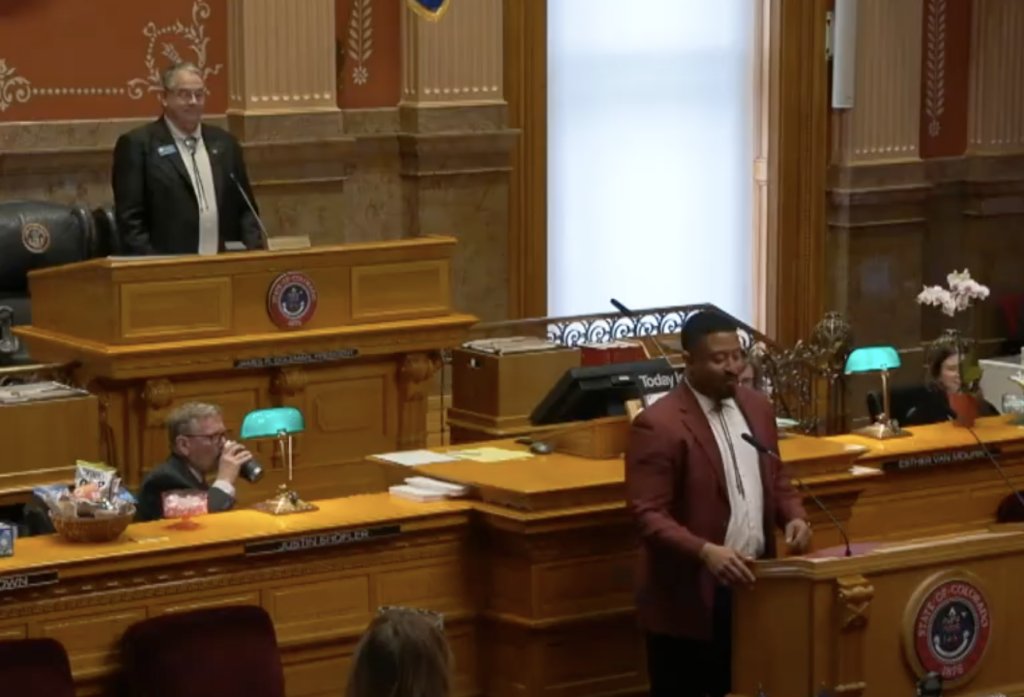
The lighter side of the Capitol, and most days, you ought to be really grateful for it. There’s a rumor (jk) floating around that an amendment is coming for the bill to legalize prostitution. The amendment would ban condoms made...
A cynical import Colorado doesn’t need | SONDERMANN
By Eric Sondermann
by-eric-sondermann@coloradopolitics.com
Updated 3 days ago
“But mommy, he started it.” Every parent, definitely those with more than one kid, has heard this instinctively defensive reaction to the point of exhaustion. It is the ultimate deflection or shifting of the blame. A similar rationale, often about...
PREV
PREVIOUS
Durango Herald: Election deniers threaten democracy
When we think of cringy things our dads do, who could top what it must have been like for Ivanka Trump? She stood near her father while his inner circle repeatedly told the former president he clearly lost the 2020 election. What would it feel like for Ivanka to hear Donald Trump lean on election […]

SLOAN | The primary question
Kelly Sloan I have always liked the formulation put forward by the late William F. Buckley Jr. concerning electoral strategy: to support the rightward-most, viable candidate — the most conservative candidate, that is, who can win. Buckley actually borrowed the line from his friend and political adversary John Kenneth Galbraith, who concocted it in the reverse […]