

Colorado Healthy Kids Survey results show decreases in substance use among teens statewide, increases in depression, stress

The tumult of the COVID-19 pandemic continued to have juxtaposing effects on the lives of 106,800 Colorado teenagers who took the 2021 Healthy Kids Colorado Survey last fall.
Participants indicated that feelings of depression and stress anxiety were lingering, according to results the Colorado Department of Public Health and Environment released Wednesday.
But a lack of ability to get their hands on marijuana, alcohol, cigarettes, vaping products and drugs, coupled with increases in the perceived risk of harm by daily use of substances, led to decreased use of such substances among adolescents.
These and other findings from the voluntary, confidential survey will be used in determining future programs to help children avoid risky behaviors and maintain well-being physically, emotionally and socially, professionals say.
The Colorado School of Public Health at the University of Colorado Anschutz Medical Campus in Aurora administers the Healthy Kids Colorado Survey statewide in the fall of odd-numbered years.
The survey became controversial and took on a political nature when low participation first began occurring in some school districts in 2015.
Some parents said the questions were too invasive to family life and inappropriate for adolescents. They also doubted the confidentiality of the survey, which is filled out online at school.
The survey asks about eating habits, sleeping patterns, substance use, sexual activity, suicidal inclinations, bullying, driving characteristics, gun access and other personal health and lifestyle questions.
New for this cycle were questions about affects of the pandemic, experiences with racism and whether teens could fire a loaded gun without adult permission in less than an hour. As to the latter, 19% of respondents said they could. But the percentage of youth who thought they could easily get a handgun if they wanted to decreased from 20% in 2019 to 17% in 2021.
After record participation in 2019, low turnout happened again during this latest administration.
Results from 2021 have been suppressed in five regions of the state containing 13 counties because “the overall response rate of sampled schools was insufficient to be considered representative of youth who attend public schools,” said state health department spokeswoman Vanessa Bernal.
Those counties are: El Paso, Mesa, Weld, Logan, Morgan, Phillips, Sedgwick, Washington, Yuma, Cheyenne, Elbert, Kit Carson and Lincoln.
Results for 16 regions encompassing 51 counties were made public.
Individual schools in the counties that did not have enough participation for statistical data sets received their student data, Bernal said, but it’s not available to the public.
Significant key findings among high school students include:
? 68.5% of youth experienced poor mental health during the pandemic.
? Depression remains high, with 40% saying they had feelings of depression in the past year, up from 35% in the 2019 survey.
? 51% of youth felt daily stress more often during the COVID-19 pandemic.
? 22% of youth said they had tried electronic vaping products before age 13.
? The percentages of youth who have seriously considered (17%), planned (13%), and attempted suicide (7%) in the past year have not changed since 2015.
? The percentages of youth who currently use substances have decreased: alcohol (24%, down from 30%), marijuana (13%, down from 21%), cigarettes (3%, down from 6%), electronic vapor products (16%, down from 26%), and prescription pain medications without a prescription (6%, down from 7%).
? Youth felt it was harder to access alcohol, marijuana, cigarettes, electronic vapor products and other drugs, than in prior survey years.
? Youth reported increases in the perceived risk of harm by the daily use of substances, with perception of risk a key to changing behavior.
? 5% of respondents said they were treated badly or unfairly because of their race or ethnicity in the past year, and 9% of youth said they saw family members treated unfairly.

Appeals court shuts down path to challenge convictions if lawyer tells jury that defendant is guilty
Michael Karlik
michael.karlik@coloradopolitics.com
Updated 7 hours ago
Colorado’s second-highest court concluded on Wednesday that defendants cannot challenge whether the evidence was sufficient to sustain their convictions if their lawyer argues to the jury that it should find the defendant guilty. The U.S. Supreme Court has provided guidance...
Colorado legislature votes to make committee hearing livestreams permanent
Marianne Goodland
marianne.goodland@coloradopolitics.com
Updated 7 hours ago
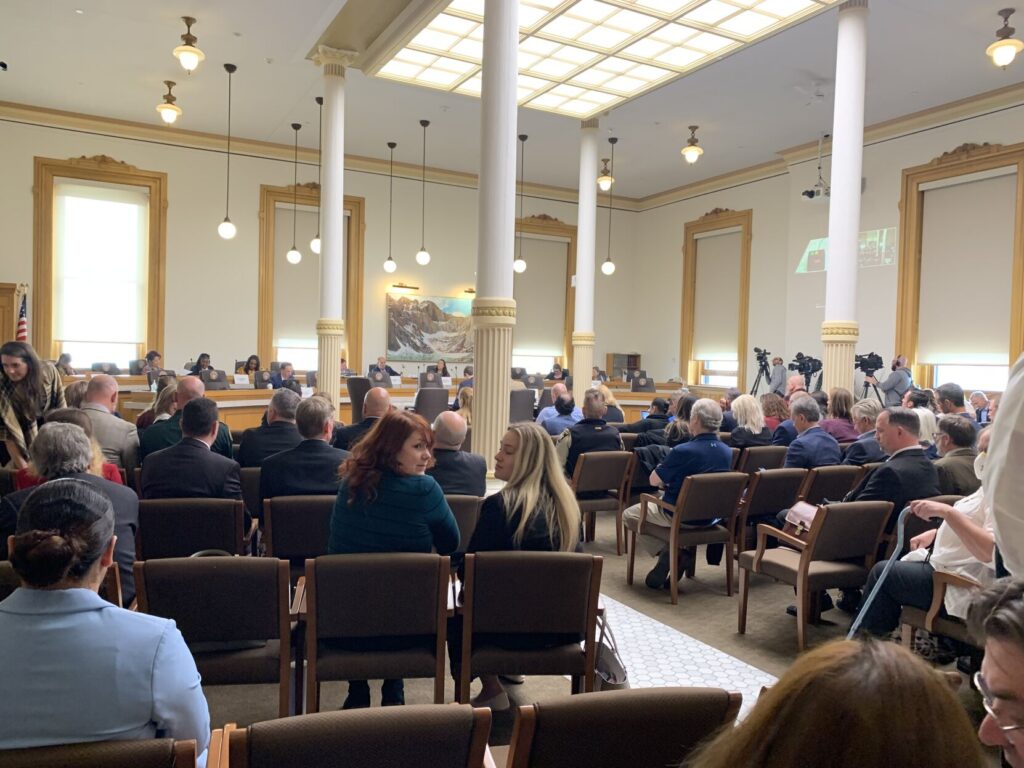
The executive committee of the legislative council—the six top leaders of the House and Senate—voted 5-1 Wednesday to make permanent the video livestreaming of committee hearings, starting in the 2026 legislative session, which begins Jan. 14. And they managed to...
Here’s where House retirements stand as clock strikes midnight on 2025
Rachel Schilke, Washington Examiner
rachel.schilke.washington.examiner@gazetteedit.wpenginepowered.com
Updated 9 hours ago
The House will return on Jan. 6, and with it, some 10% of lawmakers will start their final year in the lower chamber, either retiring or seeking higher office in the 2026 midterm elections. The lower chamber will get its...
Colorado senator, local officials push for new Colorado Springs federal courthouse
Michael Karlik
michael.karlik@coloradopolitics.com
Updated 8 hours ago
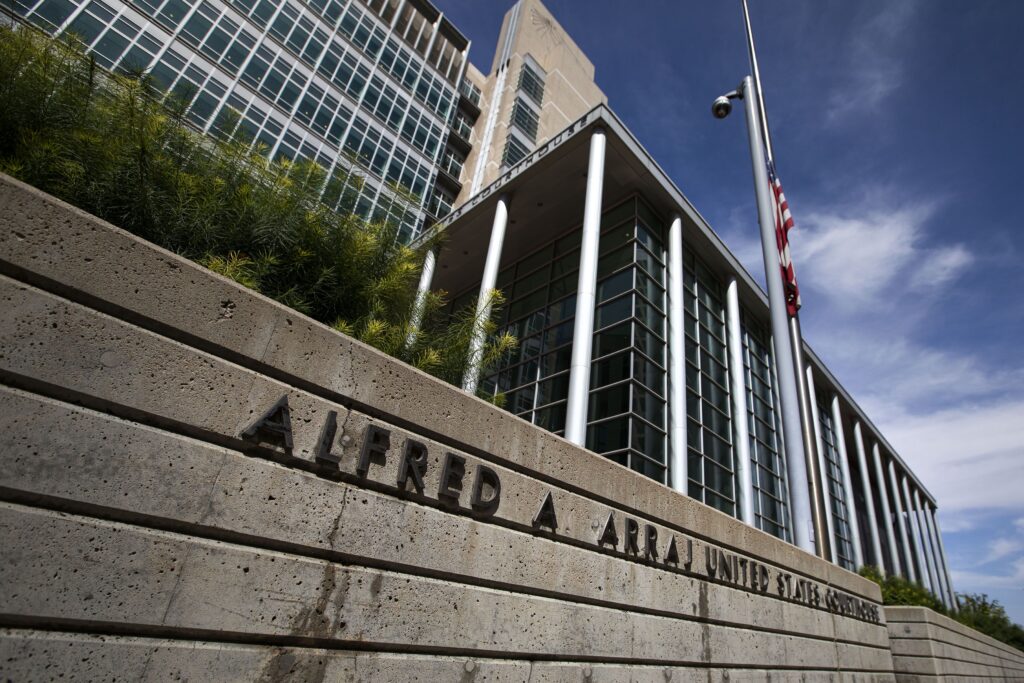
Local officials and one of Colorado’s U.S. senators urged the judiciary earlier this year to explore placing a new federal courthouse and judge’s chambers in Colorado Springs, while the district court is cautioning that Congress must establish new judgeships before...
SNAP recipients in five states will be banned from using assistance for candy and soda, beginning 2026
David Zimmermann Washington Examiner
davidzimmermannwashingtonexaminer@wpstage.coloradopolitics.com
Updated 9 hours ago
More than 1.4 million recipients of the Supplemental Nutrition Assistance Program across five states will be banned from using federal food assistance for candy and soda purchases, starting Thursday. Indiana, Iowa, Nebraska, Utah, and West Virginia are the first group...

Trump’s first year back in office: Four successes and four failures
NAOMI LIM Washington Examiner
naomi-lim-washington-examiner@coloradopolitics.com
Updated 8 hours ago
President Donald Trump is closing a seismic year as the country’s commander in chief. Since the first day of his second administration, when he issued 26 executive orders, 12 presidential memos, and four proclamations, the most first-day actions of any...
Gov. Polis appoints Lindstedt to Colorado Senate District 25 after vacancy committee misses deadline
Marianne Goodland
marianne.goodland@coloradopolitics.com
Updated 6 hours ago
Despite a similar vote by a Senate District 25 vacancy committee last week, it was up to Gov. Jared Polis on Tuesday to make sure the Senate seat was filled and ready for the 2026 session. That’s because the vacancy...

‘Rot in hell’: Trump post reignites feud with Colorado Gov. Jared Polis over Tina Peters
Thelma Grimes
thelma.grimes@coloradopolitics.com
Updated 7 hours ago
Heading into the New Year, President Donald Trump said he would like Gov. Jared Polis and others in Colorado to “rot in hell.” The object of the president’s ire is Tina Peters, the former Mesa County clerk convicted of state...
US Rep. Lauren Boebert calls for override vote after Trump vetoes bipartisan Colorado water bill
Marianne Goodland
marianne.goodland@coloradopolitics.com
Updated 7 hours ago
President Donald Trump issued the first veto of his second term Tuesday, blocking a long-awaited bipartisan effort to finish a southeastern Colorado water project that supporters say is critical to delivering clean drinking water to roughly 50,000 residents of the...
From Pope Francis to Charlie Kirk, many deaths in 2025 had a wide impact
Bernard Mcghee
bernard.mcghee@associatedpress.com
Updated 13 hours ago
The death of Pope Francis brought change to the Catholic Church, which counts 1.4 billion adherents and is now led — for the first time — by an American pope. The fatal shooting of conservative activist Charlie Kirk as he...
PREV
PREVIOUS

Low participation on 2021 Healthy Kids Colorado Survey fails to yield data for El Paso County
For the second time, not enough El Paso County secondary students took a voluntary, confidential survey that asks about eating habits, substance use, sexual activity, suicidal inclinations, bullying and other personal health questions, to gather a large enough sample to produce a statistical data set. While that leaves El Paso County Public Health somewhat “blindsided,” […]

COLORADO POLITICKING | State Supreme Court ignored subpoena for evidence in scandal inquiry, report says
This week on Colorado Politicking, investigative reporter David Migoya joins host Pat Poblete to discuss his reporting on Colorado’s judicial discipline commission probe into the alleged coverup of misconduct by judges, including the latest revelation that the Judicial Department – and by extension its Supreme Court – has refused to comply with a subpoena from […]