

Convoluted recycling scheme bad for Colorado

The greatest accomplishment of the proposed extended producer responsibility program, HB22-1355, being considered in the Colorado Senate this week will be the flurry of complicated lawsuits sure to follow its passage. Even if the state can defend the law successfully, Colorado will be saddled with a convoluted program riddled with exemptions, an unclear structure and no coherent direction for its implementation.
Dubbed the “Producer Responsibility Program for Recycling,” HB 1355 is a purposely complicated scheme designed to try to weave its way around several constitutional hurdles. The result is a mess: the state, through the Colorado Department of Public Health and Environment (CDPHE), would force specific businesses which sell packaged goods direct to consumers to form an independent third-party nonprofit organization – the Producer Responsibility Organization (“PRO”). The targeted businesses would be required to pay a tax/fee/dues to the PRO to develop and implement a statewide recycling program that may or may not work with our locally-controlled waste management system. The same model has already been rejected in New York and Maryland this year, and it is obviously bad policy for Colorado as well.
When introduced, the legal issues presented by this bill were so glaring and obvious that a flurry of amendments had to be offered just to attempt to bring it within viewing distance of constitutionality. Unfortunately, the amendments offered have done very little to make the legislation legally defensible.
Among other lingering legal deficiencies, the bill still violates Colorado’s non-delegation doctrine. The state’s legislative branch, the General Assembly, is not allowed to delegate its legislative functions, authority or oversight to a third party. Nor is the state permitted to delegate its taxing authority. Yet that is exactly what this bill does, by anointing a non-governmental organization – the PRO – with an extraordinary discretion to establish and collect taxes (disguised as “dues”) for the purpose of running a statewide program.
Through this bill, the Legislature is essentially telling an outside party to develop and run a program for the state. The state retains fining authority, of course, along with other punitive abilities – including the imposition of restrictions on business licenses if the state deems a business as non-compliant.
Were this structured as a voluntary effort, there would be no issue of the state delegating its authority. However, with a program and structure that mandates participation, enforced by the power of state law with associated penalties, that violation is clear.
Proponents have tried to paper over the bill’s obvious, attempted end-run around both TABOR and Proposition 117 by labeling the money extracted from businesses as “dues” rather than “taxes” or even “fees.” The fact is, they are monies being exacted under the force of law to pay for a program with a public benefit under threat of fines and penalties for noncompliance, making it difficult to argue with a straight face that it is not a tax. And the cost will certainly be passed along to us – the consumers.
While an argument could be made that the required payment is a fee, in that it is paying for a specified service, doing so would make the PRO an enterprise – subject, under the direction of Proposition 117 passed last year, to a vote of the people, since the program is expected to far exceed the $100 million threshold set by that law. None of the proffered amendments even pretend to address that issue.
The proposed amendments also do next to nothing to deal with issues concerning violations of freedom of association (forced membership in the PRO) and anti-trust law. Competing businesses will be forced to collude with one another to set “dues” for a public program, which they will jointly run under the distant but threatening eye of the CDPHE, to which they will be expected to report on one another.
It is not especially surprising that HB1355 is planted with so many legal mines. It is structured so broadly that it is impossible to even know how it is going to work, let alone if it is all legal.
Among the many unanswered logistical questions are: Who will be responsible for letting businesses know they are not included among the many exemptions and, therefore, need to participate? How many Colorado breweries or other businesses will only discover they fall under the shadow of the new program after they are slapped with a fine? Who will be communicating that fine?
HB 1355 exposes the state to a very real risk of expensive lawsuits, which will require especially circumlocutive legal maneuvering to overcome. The Senate ought to reject the bill and spare the state the ordeal of gambling millions of taxpayer dollars to fight the inevitable legal challenges, a successful defense against which will only result in an expensive and unworkable new third-party bureaucracy that doesn’t actually fix anything.
John Zakhem is a partner in the Denver office of Jackson Kelly PLLC, practicing in commercial and constitutional litigation.


The real impact of regulations on businesses, employees and Colorado’s way of life | OPINION
Colorado Politics
colorado-politics@coloradopolitics.com
Updated 5 hours ago
By Loren Furman and Steve Swinney Every day in Colorado, business owners are faced with decisions most people never see, shaped by rising costs and a regulatory environment that has grown more complex over time. Those choices eventually reveal themselves...

Should we have recall votes for all Colorado elected officials? | Hal Bidlack
Hal Bidlack
hal-bidlack@coloradopolitics.com
Updated 5 hours ago
As I write this on the Sunday before you read it, we’ve just learned of the first American casualties of our, what — war? conflict? attack? — on Iran. The Supreme Leader of Iran, for the past 36 years or...

Colorado legislature should not reverse lottery modernization | OPINION
Colorado Politics
colorado-politics@coloradopolitics.com
Updated 5 hours ago
By Bill Clayton Four years ago, the Colorado General Assembly passed bipartisan legislation to modernize the state’s lottery system and strengthen funding for Colorado’s outdoor projects and open spaces. Lawmakers recognized a simple reality: consumer behavior has evolved. Most Coloradans...

Could Weiser or Bennet as governor each be an improvement over Polis? | Miller Hudson
Miller Hudson
miller-hudson@coloradopolitics.com
Updated 2 days ago
The weekend before last was a forerunner to numerous forums and debates where U.S. Sen. Michael Bennet and Attorney General Phil Weiser will jostle for position in the Democratic primary for governor. The victor seems certain to be headed to...

Poison, poultry and prostitution — the Colorado legislature marches on | Rachel Gabel
Rachel Gabel
rachel-gabel@coloradopolitics.com
Updated 2 days ago
Many weeks my search history is odd but the past two weeks might worry our county sheriff if he didn’t know me as well as he does. This week has been the week of poison, poultry and prostitution. Not to...

Thoughts on President Trump’s State of the Union address | Cronin & Loevy
Tom Cronin Bob Loevy
tom-cronin-bob-loevy@coloradopolitics.com
Updated 2 days ago
The U.S. Constitution’s Article Two states “He (the president) shall from time to time give to the Congress Information of the State of the Union, and recommend to their Consideration such Measures as he shall judge necessary and expedient….” On...

Are Colorado businesses leaving or evacuating? | Jon Caldara
Jon Caldara
jon-caldara@coloradopolitics.com
Updated 5 days ago
At this point, if you hear beeping downtown, it’s not a construction crew. It’s a company backing out. And look, I get it. Businesses relocate for all sorts of reasons: taxes, regulations, labor costs, office space, crime, commute times, the...
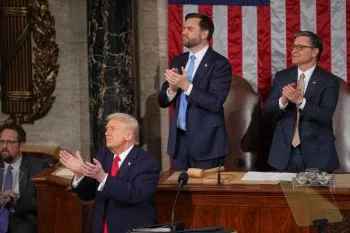
Additional thoughts on State of the Union address/rally | Cronin and Loevy
Tom Cronin Bob Loevy
tom-cronin-bob-loevy@coloradopolitics.com
Updated 3 days ago
The U.S. Constitution’s Article II states that “He (the president) shall from time to time give to the Congress Information of the State of the Union, and recommend to their Consideration such Measures as he shall judge necessary and expedient...
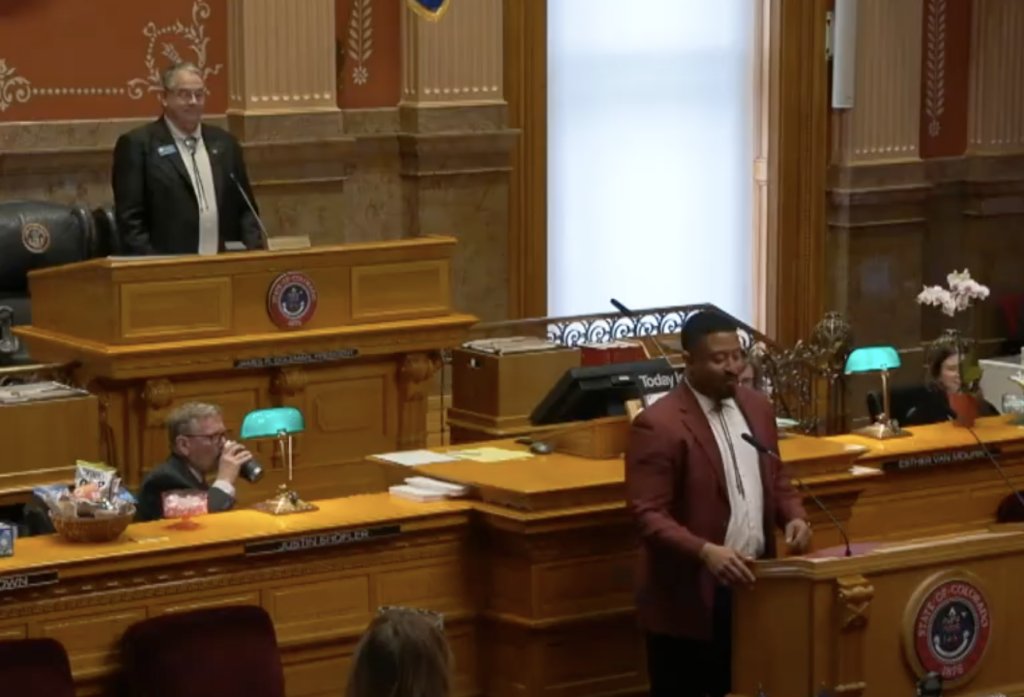
Cute puppy overload and an audition of a different kind: Capitol M | Week of Feb. 28, 2026
Marianne Goodland
marianne.goodland@coloradopolitics.com
Updated 5 days ago
The lighter side of the Capitol, and most days, you ought to be really grateful for it. There’s a rumor (jk) floating around that an amendment is coming for the bill to legalize prostitution. The amendment would ban condoms made...
A cynical import Colorado doesn’t need | SONDERMANN
By Eric Sondermann
by-eric-sondermann@coloradopolitics.com
Updated 3 days ago
“But mommy, he started it.” Every parent, definitely those with more than one kid, has heard this instinctively defensive reaction to the point of exhaustion. It is the ultimate deflection or shifting of the blame. A similar rationale, often about...
PREV
PREVIOUS
Aurora Sentinel: Act now to stop a GOP minority from forcing its iniquity on women and all Americans
It’s taken only about 10 years for a depraved minority of Americans to seriously put at risk more than 200 years of consistent evolution of democracy and civil rights. The nation – already shaken by six arduous and solid years of corruption by Donald Trump, his cronies and servile poltroons – was sandbagged this week […]

BIDLACK | Yet another downside of TABOR
Hal Bidlack I’ll admit that as I sat down to write today’s missive my first thought was to offer some angry rant on the recently leaked Supreme Court (SCOTUS) opinion overturning Roe and Casey. I’d like to muse about whether a certain three new justices should resign or be impeached for lying (to Republican senators) […]