

GABEL | Ag-worker suit bites hand that feeds us
Bruce Talbott is a peach grower in Palisade. He has been hiring seasonal harvest workers through the H-2A program, the federal guest worker program, for years. Peach harvest is fast and furious and it is hard work. Peaches, like many crops grown in Colorado, have a small window to harvest. And weather – which no one has one iota of control over – drives the entire thing.
The peach pickers who work for Talbott have been traveling the same circuit, if you will, for years. Once Talbott’s harvest is done, they move to other farms in other states and eventually return to their homes in the fall or winter. Their goal is to come to the United States, work long hours to bring crops in, make as much money as possible, and return home until next season.
They aren’t here to make weekend shopping trips, nor are they carving out time to spend with their children in the evening and on weekends. For many, their families are back home and they’re here to work and send money there to support them.
I would note that while there are exceptions to this situation and undoubtedly bad employers in agriculture, the majority value their employees and treat them well. This is evidenced in cases like the Talbott’s, wherein the same core group of employees have been with them for decades. Talbott is one of the agriculture producers across the state who will be, along with his employees, impacted by new ag worker laws.
Since the passage of the so-called Farm Workers Bill of Rights, much of the content of the bill has been sent to the rule-making process. Agriculture groups, once they were included in the conversation, did push for flexible rules to fit the industry. It wasn’t a move to protect their bottom line or to protect what proponents of the bill claimed was unfair pay and treatment of workers. Just as one-size-fits-all COVID restrictions didn’t translate from the Front Range to rural Colorado, blanket rules for the state’s diverse agriculture industry will be a failure.
The peach packers in Palisade can’t wrap up at 5 p.m., on a Friday and let harvest wait until Monday morning. No one makes any money when peaches are left on the tree. And when there are fewer peaches in stores, the price consumers pay increases. There is no other way to pick peaches than to pick them by hand, so if there is not sufficient labor, employers will scale back production. This takes money out of the pockets of workers, employers and consumers.
The Peruvian range-workers watching over the Theos family’s sheep in northwest Colorado live in wagons out with the sheep they’re charged with caring for and protecting. Predators work evenings and weekends and so sheep herders do, too. If there isn’t enough labor to watch sheep on summer range, the ranchers will scale back flock numbers. Anthony Theos said he expects the new law to increase his labor costs about 30% and he’ll need a sharp pencil to make that work. Further, it will again, rob money from everyone across the chain.
Some employers – especially in the produce realm -will run two sets of employees so none are working too many hours and the produce isn’t left in the field. Of course, it appears that every business in the state is struggling to fill staff positions so this may be more difficult than it perhaps ought to be. If employers are able to fill the positions, every employee with limited hours will take home a paycheck reduced by about half. It’s money out of pockets, and food out of consumers’ hands.
A farm-worker group has filed a lawsuit against Gov. Jared Polis and the Colorado Department of Labor and Employment with regards to the set of rules creating the agriculture industry’s first overtime framework. The suit claims the rules violate the law resulting from the passage of Sen. Jessie Danielson’s SB21-087 and claim the rules discriminate against agriculture workers, who are predominately Hispanic.
Though there are exceptions based on seasonality and the number of employees, most ag workers will receive overtime pay only if they work more than 60 hours per-week or 15 hours per-day. The rules are not unlike other seasonal industries, like ski resorts, according to the CDLE.
The lawsuit is calling for blanket rules, ignoring the input from producers and the CDLE. One of the claims made is that the rules are confusing. Perhaps they are, but the agriculture industry in Colorado includes livestock on the range, livestock in feeding operations, produce that must be weeded and picked by hand, grains harvested by huge crews and equipment, and other crops. Each crop depends upon labor in different ways and at different times and the labor woes can’t be solved without extensive expertise in agricultural production. That expertise, of course, is what is lacking when legislation is penned by people far away from the fields.
At the end of the day, consumers want the abundant, affordable, safe food supply to continue in the U.S. despite supply-chain wrecks, $5 diesel fuel, labor shortages, transportation challenges and perennial weather challenges. Without flexibility in overtime rules, agriculture producers – who are famously price takers rather than price makers – will be forced to make difficult decisions and some of those employers will decide to exit the business of food production.
Consumers have told producers time and again that they value locally grown produce, want to know where their food comes from, and support family-owned operations. By making it impossible for small to mid-sized operations to thrive within flexible rules that take into account the unique demands of agriculture, it is a bite on the hand that feeds us.
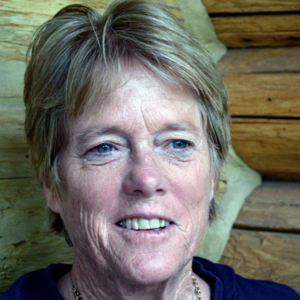
Rachel Gabel writes about agriculture and rural issues. She is assistant editor of The Fence Post Magazine, the region’s preeminent agriculture publication. Gabel is a daughter of the state’s oil and gas industry and a member of one of the state’s 12,000 cattle-raising families, and she has authored children’s books used in hundreds of classrooms to teach students about agriculture.


Killing off the Regional Transportation District | Miller Hudson
Miller Hudson
miller-hudson@coloradopolitics.com
Updated 7 hours ago
This column is appearing the same day state Sen. Matt Ball (D) of Denver and his legislative co-sponsors unveil legislation implementing many of the recommendations advanced by last summer’s Regional Transportation District Accountability Committee. Although it isn’t readily apparent, they...

Green energy shouldn’t come at expense of Colorado farmers, ranchers feeding us | Rachel Gabel
Rachel Gabel
rachel-gabel@coloradopolitics.com
Updated 7 hours ago
In 2023, the Department of Energy released the National Interest Electric Transmission Corridors (NIETC) study identifying areas they speculate would experience transmission capacity constraints of congestion. The map identified more than 2 million acres or 24% of the state of...

Bill in state legislature would put large apartment projects in single-family neighborhoods | Cronin & Loevy
Tom Cronin Bob Loevy
tom-cronin-bob-loevy@coloradopolitics.com
Updated 7 hours ago
There is an old joke that goes something like this: “When the state legislature is in session, no person and their property are safe.” That is not a joke in the older, more traditional neighborhoods that surround the downtown regions...

Colorado hates its disabled citizens | Jon Caldara
Jon Caldara
jon-caldara@coloradopolitics.com
Updated 4 days ago
This is a selfish column. The legislature is about to hurt my disabled son. My son, Chance, has Down syndrome and a few years ago would have been labeled “retarded.” Then “developmentally delayed.” Now the hypersensitive prefer “intellectually disabled.” Whatever...
Kwame Spearman warrants plenty of criticism, not cancellation | SONDERMANN
By Eric Sondermann
by-eric-sondermann@coloradopolitics.com
Updated 4 days ago
All of us are flawed humans, some more so than others. This is the tale of Kwame Spearman who burst onto Denver’s business and political scene a handful of years back. His ride has taken a downhill trajectory. Within the...
From pause to progress — a better path on AI policy | OPINION
Colorado Politics
colorado-politics@coloradopolitics.com
Updated 3 days ago
By Brittany Morris Saunders and Loren Furman Last year, following the Special Legislative Session, we wrote in Colorado Politics that delaying Colorado’s AI Act was not a setback. It was an opportunity. We asked state leaders to pause, bring more...

Cutting Prop 123 would cost Colorado far more than it saves | OPINION
Colorado Politics
colorado-politics@coloradopolitics.com
Updated 3 days ago
By Luke Teater Colorado’s legislative budget writers are about to receive updated revenue forecasts and begin making final cuts to close a historic budget gap, and Proposition 123’s affordable housing financing tools are on the chopping block. But in their...
Colorado’s place in President Trump’s oil-and-gas approach | Paula Noonan
Paula Noonan
paula-noonan@coloradopolitics.com
Updated 4 days ago
Head spinning is the unwanted reality of today’s world. Let’s start at the international level. The wars in the Middle East since the 1950s have never ended. Though religion and ethnicity are factors, oil and gas access is always predominant...

Reject onerous ad limits in sports-betting bill | OPINION
Colorado Politics
colorado-politics@coloradopolitics.com
Updated 4 days ago
By Justin Sasso A dangerous precedent is potentially afoot in the Colorado state Senate right now, where a bill was recently introduced to restrict advertising for local broadcast media across Colorado. Senate Bill 26-131, seemingly designed to discourage Coloradans from participating...

Reform to Colorado’s grantmaking drives efficiency, strengthens state’s partnership with nonprofits | OPINION
Colorado Politics
colorado-politics@coloradopolitics.com
Updated 4 days ago
By Marco Dorado and Jack Murphy Colorado’s nonprofit sector is one of the most significant contributors to our state’s economic and civic life, with more than 14,000 registered nonprofit organizations supporting more than 262,000 jobs — approximately 10% of all...
PREV
PREVIOUS

HUDSON | Ditch local hurdles to quell housing crisis
Miller Hudson Access to affordable housing has been a Colorado challenge for nearly two decades. As the state’s economy recovered from the real estate collapse of the early 1990s, prices started rising and they’ve never looked back. Demand is finally crashing into economic reality with the average equity appreciation jumping by 9% during March alone. […]
Denver Gazette: It pays to riot in Denver
It was encouraging to learn last week that Denver Mayor Michael Hancock will appeal a preposterous jury award to the instigators of street riots that thrashed and paralyzed downtown in the summer of 2020. Nearly two years after law-abiding Denverites suffered through destructive “racial justice” riots that ran roughshod over their community, a federal jury […]