

Colorado to end community vaccination sites by March 31
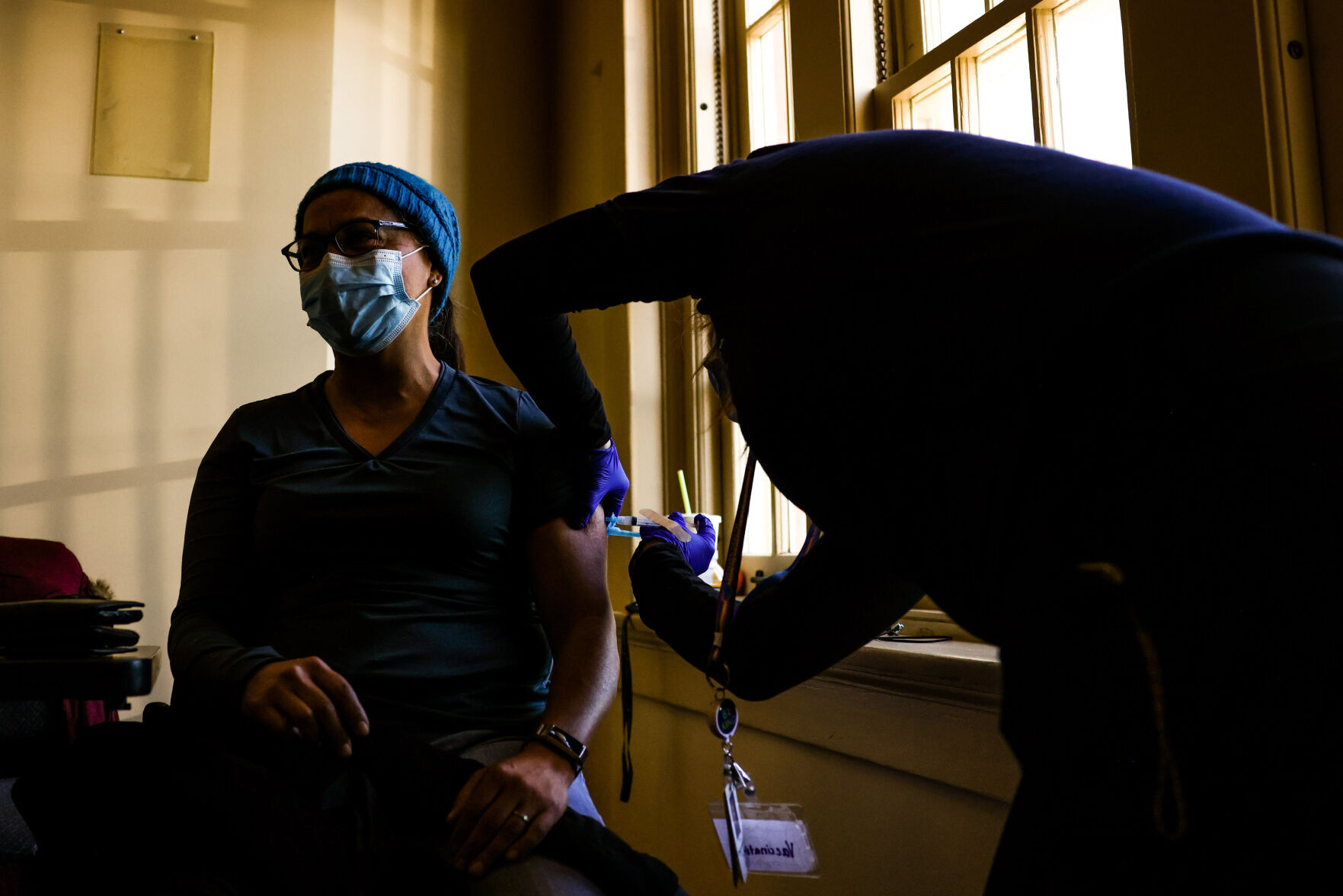
Colorado will stop offering vaccines at community sites beginning March 31, the state announced Tuesday morning, and will instead fold COVID-19 inoculations into the broader health system.
The transition will be “phased,” the state Department of Public Health and Environment said in a news release, and mobile buses and other equity-specific efforts will continue. The move is the latest step by the state to unwind its role in managing and addressing COVID-19, a transition accelerated by a significant decline in cases and hospitalizations in recent weeks.
The drive-thru and community vaccination sites have been a mainstay of Colorado’s COVID-19 response since inoculations became widely available a year ago. Those sites inoculated thousands of Coloradans each day, turning parking lots at sports arenas and event centers into clinics.
As 2021 progressed, the importance of the large-scale sites dipped somewhat as the pandemic continued and the bulk of the ready-and-waiting population received their vaccines. In some ways, the state had begun to transition away from this model late last summer: With much of the motivated population inoculated, officials turned increasingly to primary care offices to vaccinate the hesitant.
Under Gov. Jared Polis’ “Roadmap to Moving Forward,” unveiled late last month, a pillar of the state’s move away from its COVID-19 response is “normalizing COVID patient care in traditional medical settings.” That includes not only moving vaccinations into clinics, pharmacies and doctors’ offices but also transitioning the delivery of COVID-19 treatments into those settings, as well.
“It’s not normal to get tested in a parking lot,” Scott Bookman, the state’s COVID-19 incident commander, told The Denver Gazette last month. “It’s not normal to receive therapeutics in a bus. It’s not normal to get your vaccine in a drive-thru site. And so we need to start thinking about how we evolve this back to our normal health care system while continuing to make sure that we have a robust public health infrastructure to (ramp) up a response again.”
In its statement, the health department said it was “prepared to reestablish” its community sites “within a four-to-five week timeline,” if necessary. With COVID-19 cases in full retreat across the state, and with case and hospitalization levels at their lowest points since mid-2020, officials here have advanced plans to move the response to the disease away from a centralized, state-driven model and toward a more traditional approach, driven by hospitals, clinics and the standing health care system.
Colorado’s mobile vaccine clinics will continue through at least the end of June to help the vaccine get to “hard to reach communities.” Other equity-focused efforts, like pop-up clinics and a “forthcoming equity-focused grant program,” will continue.
As of Tuesday morning, 73.11% of Coloradans 5 years of age and older have been fully inoculated. More than 81% have received at least one dose.

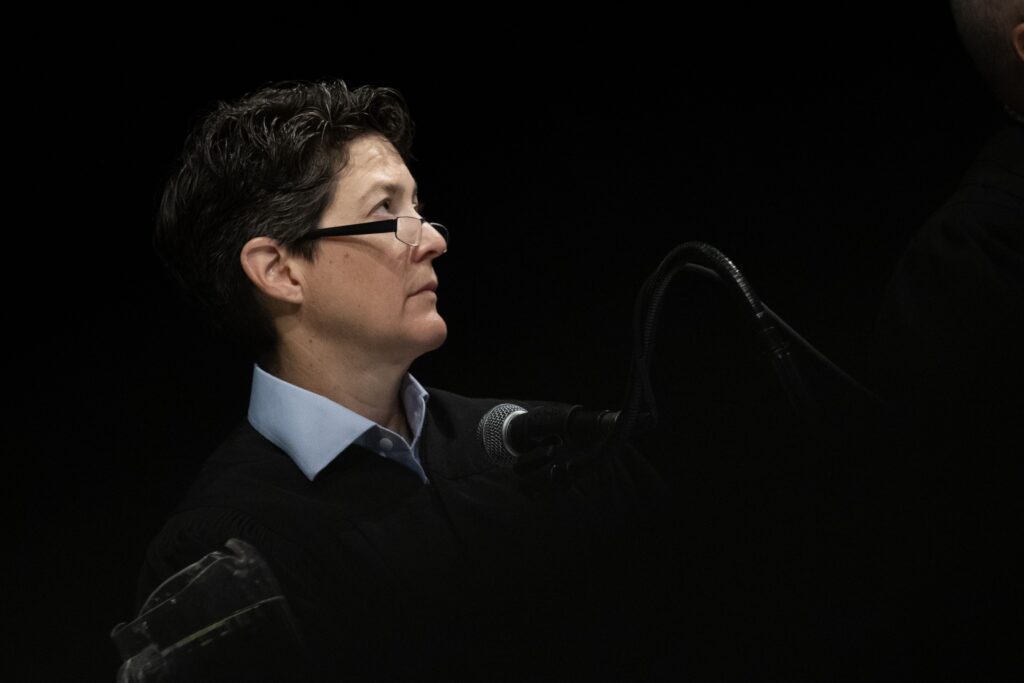
Colorado Supreme Court clarifies restraining order violations can always support burglary charge
Michael Karlik
michael.karlik@coloradopolitics.com
Updated 47 minutes ago
The Colorado Supreme Court’s majority ruled on Monday that a violation of a restraining order can also serve as a basis for finding a defendant guilty of burglary. Under state law, a person commits second-degree burglary by unlawfully entering or...

Big week ahead for major legislation to address housing affordability woes
Zach Halaschak, Washington Examiner
zach.halaschak.washington.examiner@gazetteedit.wpenginepowered.com
Updated 3 hours ago
The Senate is pushing ahead with a bipartisan bill to improve housing affordability, teeing up a critical week for housing on Capitol Hill and raising major questions about what provisions will be included. Senate Majority Leader John Thune (R-SD) filed cloture on legislation from the...

Macron goes nuclear with increases to French warhead arsenal
Timothy Nerozzi, Washington Examiner
timothy.nerozzi.washington.examiner@gazetteedit.wpenginepowered.com
Updated 3 hours ago
French President Emmanuel Macron is channeling the atomic spirit of his predecessor Charles de Gaulle with orders for the French military to “increase the number of nuclear warheads” in the nation’s arsenal. Macron announced the seismic shift in France’s defensive...

Who has been killed so far during US-Israel mission in Iran?
David Zimmermann and Keely Bastow, Washington Examiner
david.zimmermann.and.keely.bastow.washington.examiner@gazetteedit.wpenginepowered.com
Updated 3 hours ago
There have been numerous casualties on all sides since the joint U.S.-Israel strikes against Iran commenced over the weekend, with more lives expected to be lost as the campaign continues. The Islamic regime’s leadership is currently bearing the brunt of...
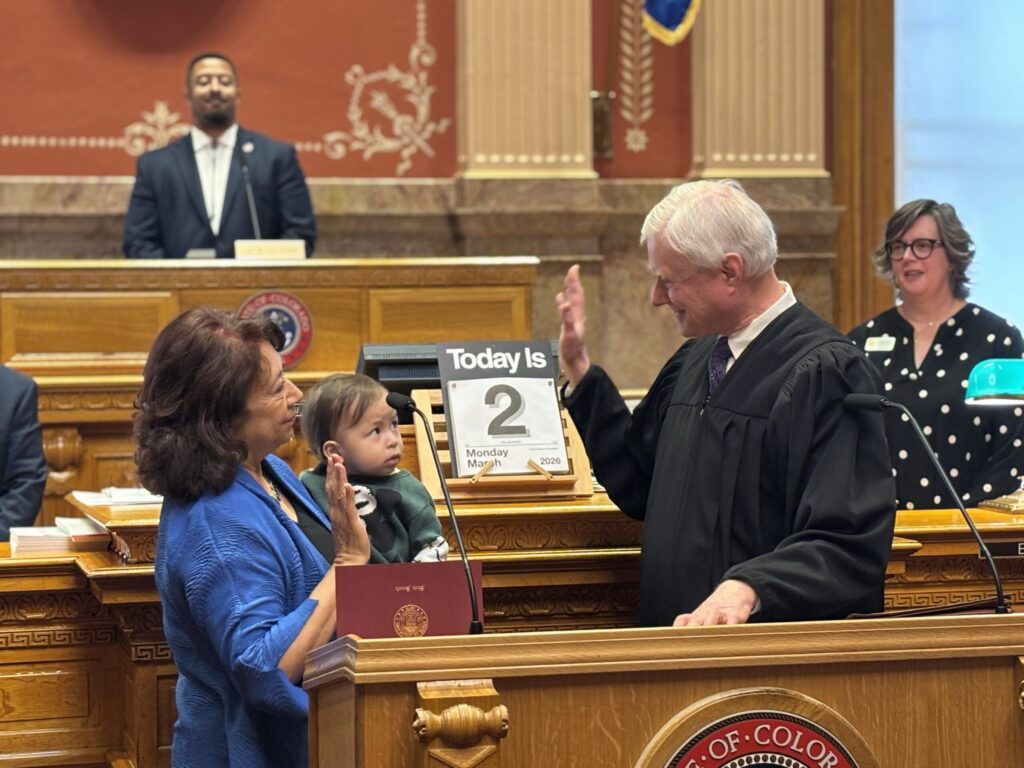
Colorado Senate swears in Adrienne Benavidez after district vacancy win
Marianne Goodland
marianne.goodland@coloradopolitics.com
Updated 3 hours ago
Sen. Adrienne Benavidez, a Democrat from Adams County, was sworn in Monday to the Colorado Senate, just four days after winning a vacancy election in District 21. She was sworn in by Colorado Court of Appeals Justice Lino S. Lipinsky...

10th Circuit judge creates vacancy, district court gets new chief judge | COURT CRAWL
Michael Karlik
michael.karlik@coloradopolitics.com
Updated 5 hours ago
Welcome to Court Crawl, Colorado Politics’ roundup of news from the third branch of government. A longtime member of the Denver-based federal appeals court will give the president a vacancy to fill, plus Colorado’s federal trial court will see a...

Denver mayor says his commute time tripled following ‘road diet’ change
Mark Samuelson Special to The Denver Gazette
mark.samuelson@denvergazette.com
Updated 3 hours ago
Mayor Mike Johnston is pushing back sharply against the claim by Denver councilmembers and bike activists that the city succumbed to lobbying pressure in revising a “road diet” plan for East Alameda Avenue, while noting that his own commute time...

Rural legislators, Colorado farmers defeat pollinator bill backed by Gov. Polis
Marianne Goodland
marianne.goodland@coloradopolitics.com
Updated 4 hours ago
A proposal to limit the use of neonicotinoid-coated crop seeds collapsed in the Senate Agriculture and Natural Resources Committee last week, as rural lawmakers, including two Democrats, joined Republicans to reject what they called an expensive, impractical mandate on farmers....

WATCH LIVE: Trump speaks on Iran
Dan Boniface
dan.boniface@denvergazette.com
Updated 8 hours ago
U.S. President Donald Trump is speaking live on Monday, March 2, 20026, about the conflict in Iran as he awards three U.S. soldiers the Medal of Honor.

Competing overtime bills for agriculture workers split Colorado Democrats
Marianne Goodland
marianne.goodland@coloradopolitics.com
Updated 7 hours ago
Competing bills setting the overtime threshold for farmworkers have split legislators at the Colorado state Capitol, with one group saying a law passed in 2021 has harmed, rather than helped, farming operations and workers alike, while the other side insists...
PREV
PREVIOUS

Deeply divided House rejects bill to grant physician assistants more practice authority
A deeply divided House on Tuesday rejected a bill that would have given physician assistants more authority to practice without supervision. House Bill 1095 was up for a final vote in the House last week, but lacking the votes to pass it, the sponsors won permission to send it back to second reading debate in […]

Colorado legislature unanimously OKs 'reasonable independence' for children
When Brinley Sheffield was 7 years old, she decided she wanted to be a runner. After running around her block several times with her parents to learn the route, Sheffield embarked on her first solo trip with the goal of completing two laps in a row. The run was going well, until she noticed a […]