

OUT WEST ROUNDUP | Gigawatt wind project completed; Yellowstone bison status revisited

NEW MEXICO
Company says gigawatt wind project completed
ALBUQUERQUE – A California-based renewable energy company says work is complete on four wind farms in New Mexico that total more than a gigawatt of capacity.
Pattern Energy officials announced on Jan. 6 that the Western Spirit Wind project has started commercial operations. The company had billed it as the largest single-phase construction of renewable power in the U.S.
The wind farms span three counties in central New Mexico and while electric consumption varies by state and the size of homes, company officials have that Western Spirit’s generating capacity can provide enough electricity to meet the needs of about 365,000 homes.
Power purchase agreements already are in place to serve several California utilities, including the Los Angeles Department of Water and Power and the city of San Jose. Some of the electricity will also serve customers in New Mexico.
Western Spirit is projected to provide nearly $3 million per year in new property tax revenues for Guadalupe, Lincoln and Torrance counties and the two school districts that encompass the area over the next 25 years. Pattern Energy also plans $6 billion in wind energy and related infrastructure projects in New Mexico over the next decade that will net more tax revenues.
Pattern CEO Mike Garland said in a statement that the Western Spirit project generated over 1,100 construction jobs during the 15 months that work was underway. More than 50 workers will operate and maintain the wind facilities going forward.
High court upholds deal on coal-fired power plant
SANTA FE – The state Supreme Court has upheld provisions of an environmental law that provides financial arrangements for an electric utility to abandon investments in a coal-fired power plant in northwestern New Mexico.
In a unanimous opinion announced on Jan. 10, the court upheld a finance order from state utility regulators that helps end the use of the San Juan Generating Station by Public Service Company of New Mexico.
The order allows the investor-owned utility to bill $361 million to utility customers as it moves forward with plans to abandon the power plant and raise money to shore up local employment.
Two advocacy groups for utility customers challenged the financial arrangements and the constitutionality of the 2019 Energy Transition Act that aims to phase out electricity sources linked to heavy emissions of climate-warming gasses.
An opinion from Justice David Thomson says that advocacy groups were unable to show that the new law results in unreasonable charges on utility bills.
The court rejected arguments that the state legislature overstepped its constitutional authority or infringed on the utility commission’s responsibility for regulating utility companies.
The opinion was applauded by a long list of environmental advocacy groups, including the Sierra Club, Natural Resources Defense Council and Western Resource Advocates.
WYOMING
Judge questions Yellowstone bison species decision
YELLOWSTONE NATIONAL PARK – A federal judge has ordered the U.S. Fish and Wildlife Service to revisit part of its decision not to protect Yellowstone National Park’s bison as an endangered species.
The Buffalo Field Campaign and Western Watersheds Project groups have been fighting since 2014 to have Yellowstone’s bison declared endangered or threatened under the Endangered Species Act.
They have argued that two separate groups of bison in the park are genetically distinct. Rather than set a population limit of 3,000 animals for the entire park, they said, the limit should be 3,000 for each herd, or 6,000 overall.
The Fish and Wildlife Service, citing a different study, has argued that the herds are not genetically distinct and rejected the listing petition in 2019, the Billings Gazette reported.
The federal agency failed to articulate why it chose one study over the other, District of Columbia U.S. District Judge Randolph D. Moss wrote in an opinion.
Moss set no deadline for the Fish and Wildlife Service to respond but will require both sides to update the court on the case within 90 days.
NAVAJO NATION
Booster required for tribe’s government workers
WINDOW ROCK – Navajo Nation President Jonathan Nez has signed an executive order requiring all government workers on the tribe’s vast reservation to have a booster shot.
Nez also said tribal health officials have changed how the term “fully vaccinated” is defined by making it two doses of the COVID-19 vaccine plus a booster shot.
The actions come after a record number of COVID cases have been reported on the reservation that covers 27,000 square miles and extends into parts of Arizona, New Mexico and Utah.
Tribal health officials reported 525 new cases on Jan. 14, the most in a single day since the pandemic began almost two years ago.
That number topped the 405 cases reported the day before.
The Navajo Nation has reported more than 45,000 confirmed COVID-19 cases and 1,600 deaths since the start of the pandemic.
OKLAHOMA
Death row inmates choose firing squad in delay attempt
OKLAHOMA CITY – Two men on Oklahoma’s death row – at the prodding of a federal judge – agreed to choose execution by firing squad as a way to delay their upcoming lethal injections, one of their attorneys told the judge.
The two inmates, Donald Grant and Gilbert Postelle, want U.S. District Judge Stephen Friot to grant them a temporary injunction that would halt their upcoming executions until a trial can be held over whether Oklahoma’s three-drug lethal injection method is constitutional. A trial on the issue is set to begin before Friot on Feb. 28, but the judge has said in order to be added as plaintiffs, inmates must select an alternative method of execution. Grant, who is scheduled to die on Jan. 27, and Postelle, who has a Feb. 17 execution date, hadn’t previously selected an alternative method.
“While it may be gruesome to look at, we all agree it will be quicker,” attorney Jim Stronski told Friot on Jan. 10 after a daylong hearing in Oklahoma City.
More than two dozen death row inmates who are plaintiffs in the challenge agreed previously to provide the court with an alternative method of execution, including the use of different drug combinations or firing squad, which is one of several execution methods authorized under Oklahoma law.
Oklahoma has never used firing squad as a method of executing prisoners since statehood, but current state law does allow for its use if other methods, such as lethal injection, were determined to be unconstitutional or otherwise unavailable. The Oklahoma Department of Corrections does not currently have execution protocols in place for any method other than lethal injection.


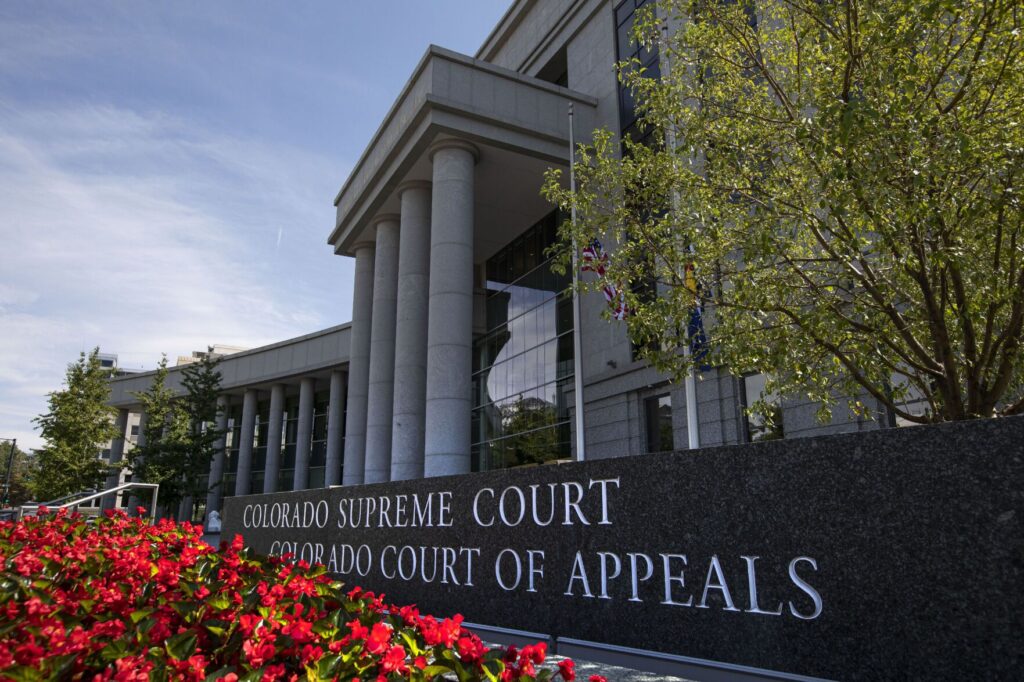
Appeals court recognizes longer window to sue insurers for withholding policy details
Michael Karlik
michael.karlik@coloradopolitics.com
Updated 35 minutes ago
Colorado’s second-highest court split with its own prior decision earlier this month and concluded injured motorists have two years, not one, to sue insurance companies for withholding relevant information about an at-fault driver’s policy. In 2019, Colorado lawmakers enacted a measure to...

Trump open to $5 billion ICE funding cut if SAVE Act package passes
Zach LaChance, Washington Examiner
zach.lachance.washington.examiner@gazetteedit.wpenginepowered.com
Updated 2 hours ago
President Donald Trump signaled he is open to a $5 billion funding cut for U.S. Immigration and Customs Enforcement if the Senate passes the Save America Act, along with other amendments. “I don’t think we should make any deal with...

Appeals court decides free speech cases, error-prone judge reversed again | COURT CRAWL
Michael Karlik
michael.karlik@coloradopolitics.com
Updated 2 hours ago
Welcome to Court Crawl, Colorado Politics’ roundup of news from the third branch of government. The state’s Court of Appeals decided multiple cases implicating free speech rights, plus Colorado’s most error-prone judge was reversed on appeal yet again. Heard on...

It’s time to let unaffiliated voters caucus | Vince Bzdek
Vince Bzdek
vince.bzdek@gazette.com
Updated 3 hours ago
There’s no getting around it: Colorado’s 3,000 county caucuses, which just wrapped up recently, left half the electorate out in the cold. Since unaffiliated voters now make up 51% of all Colorado voters, a majority of Colorado electors are barred...

With new medical school set to open, Feinstein will step down as UNC president
Hap Fry, Special to The Gazette
hap-fry@gazette.com
Updated 23 hours ago
GREELEY • Dr. Andrew “Andy” Feinstein, the charismatic president of the University of Northern Colorado, has announced that he will step down from his leadership role just on the cusp of what is perhaps his signature accomplishment being realized. He’ll...
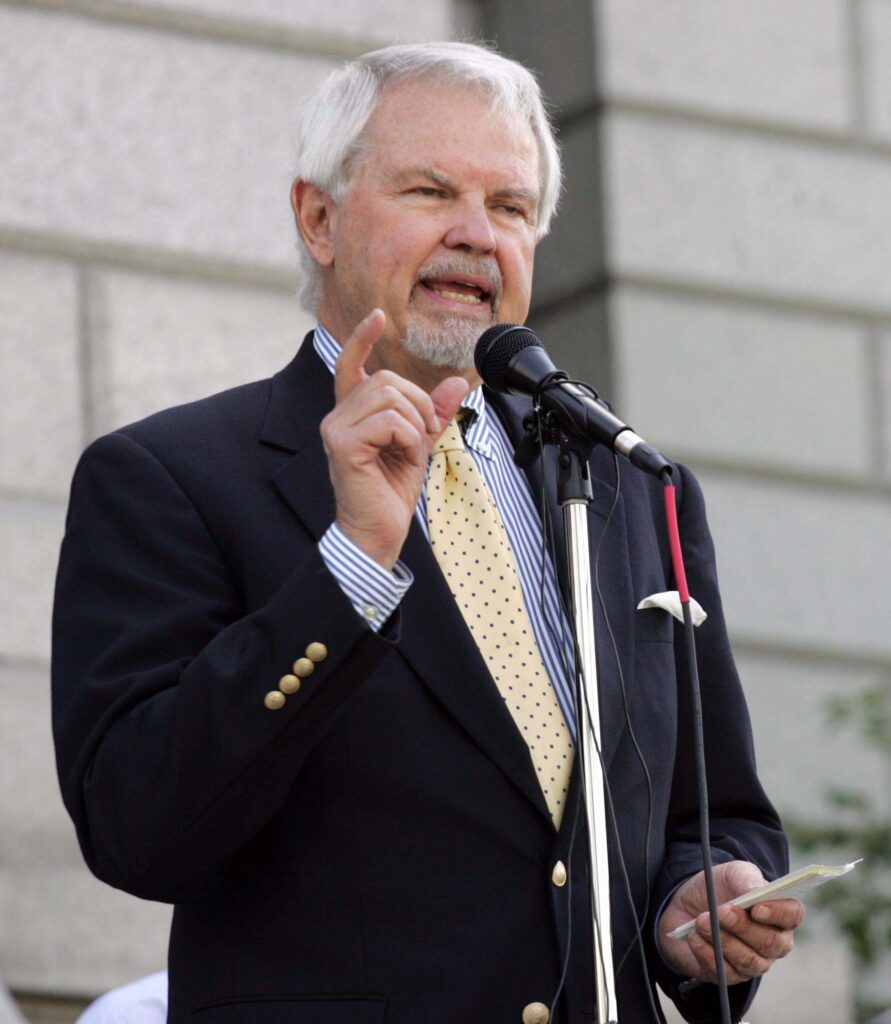
Governor warns energy development both a boon and a risk to Colorado | A LOOK BACK
Rachael Wright, Special to Colorado Politics
rachael.wright@coloradopolitics.com
Updated 5 days ago
Forty-Five Years Ago This Week: “The real opportunity and the dangers before us are both real,” said Gov. Dick Lamm in his January state of the state address before the Colorado General Assembly. Lamm argued that energy development would continue...
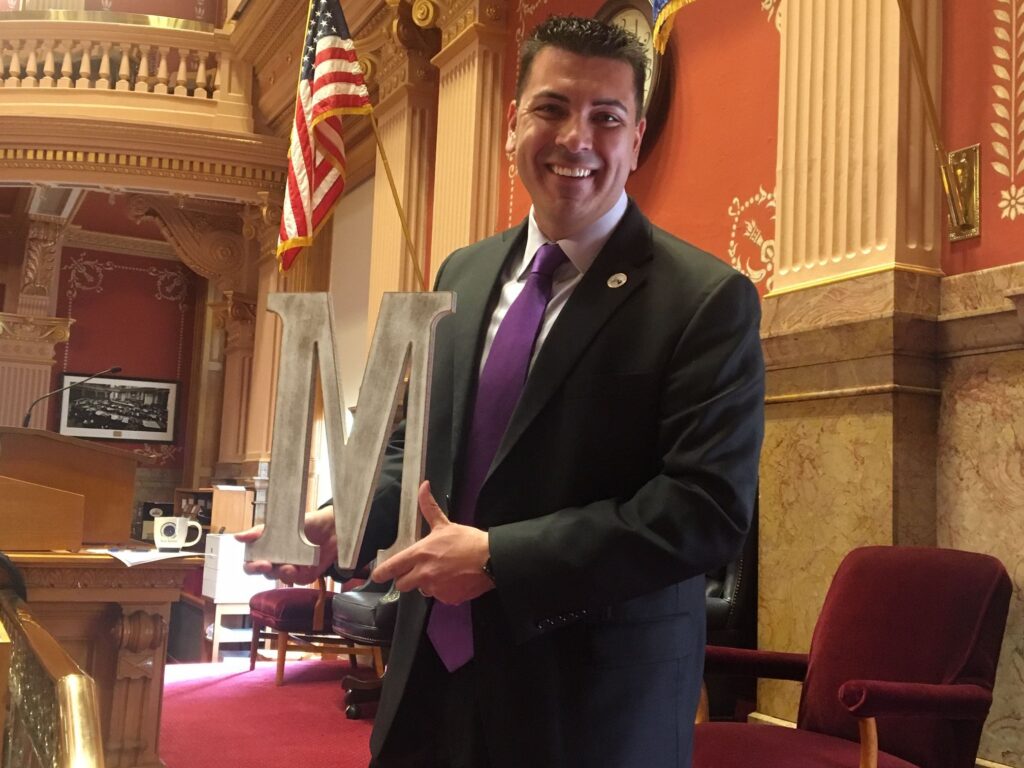
A Mile High, again: Capitol M | Week of March 21, 2026
Marianne Goodland
marianne.goodland@coloradopolitics.com
Updated 5 days ago
The lighter side of the Capitol, usually…. Local Journalism Day, except they forgot their very own local journalists. The state Senate on Thursday, March 19, passed a resolution recognizing Local Journalism Day. Everyone voted for it, which is good, because...

Colorado Politics Calendar Mar. 23-29
Rachael Wright, Special to Colorado Politics
rachael.wright@coloradopolitics.com
Updated 4 days ago
CoPo’s weekly political calendar will help you find political and public-policy events throughout Colorado. It includes candidate and issue campaign events, public policy meetings, court hearings, state and local party conventions, assemblies, debates, rallies, parades, speaking engagements, traveling dignitary appearances,...

The insular bubble of caucuses and assemblies | SONDERMANN
Eric Sondermann
eric-sondermann@coloradopolitics.com
Updated 4 days ago
Nearly 30 years ago, then-Federal Reserve Chairman Alan Greenspan coined the term “irrational exuberance” to describe the overheated stock market. That descriptive phrase could also apply to much of the political realm. The hype in politics often grossly exceeds the...

Lauren Boebert’s hard ‘no’ on Pentagon Iran funding request puts Mike Johnson in tough spot
Emily Hallas, Washington Examiner
emily.hallas.washington.examiner@gazetteedit.wpenginepowered.com
Updated 3 days ago
Colorado U.S. Rep. Lauren Boebert announced on Thursday that she will not support further funding for the United States’s war in Iran, marking an uphill battle for the Trump administration’s effort to secure additional financing from Congress. “I’ve already told...
PREV
PREVIOUS

SONDERMANN | A dozen questions to shape this Colorado election year
Eric Sondermann Ready or not, another big election year is upon us – even if some of us feel like stealing the title of the HBO series, “Curb Your Enthusiasm.” Let’s devote this mid-January column to the dozen big questions that will do much to shape and define this year. Here it goes. What is […]

THIS WEEK AT THE COLORADO CAPITOL | Week of Jan. 24, 2022
Here are legislative committee hearings and other events of note for the week ahead at the Colorado state Capitol. Committee schedules are subject to change. The daily schedule is available on the legislature’s website. Options for public testimony during committee hearings can be found here. House regulations regarding remote testimony can be found here. Senate regulations are here. According […]