

TRAIL MIX | As new year dawns, top races take shape
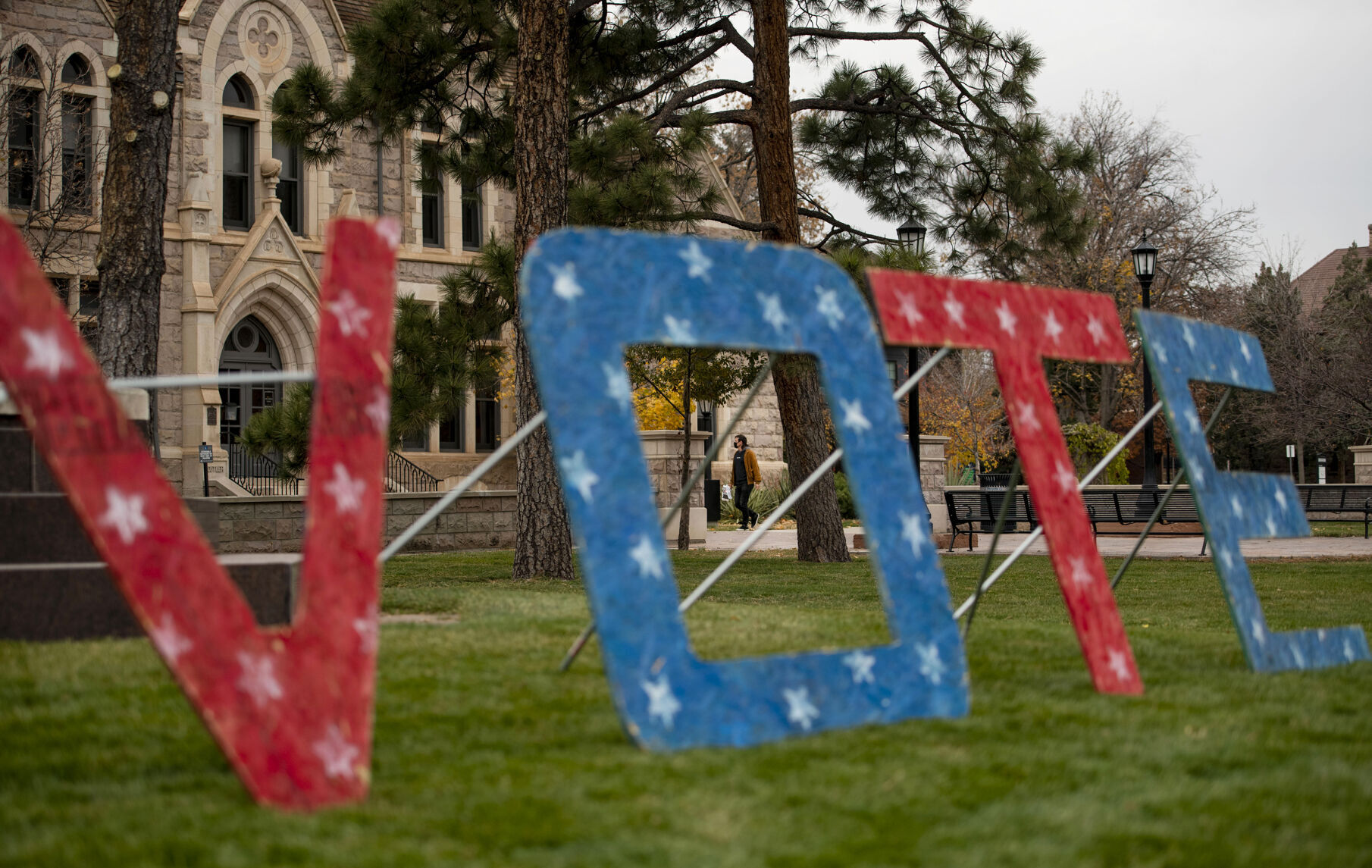
Let the games begin.
As the 2022 midterm election year fast approaches, the political landscape is taking shape in Colorado after an unusually unsettled off-year, as aspiring candidates waited for the once-a-decade redistricting process to wrap up.
Bear in mind, nearly all of the uncertainty has been on the Republican side of the aisle, since Democrats boast incumbents running for re-election in every statewide office on next year’s ballot.
Barring any last-minute changes of heart, U.S. Sen. Michael Bennet, Gov. Jared Polis, Lt. Gov. Dianne Primavera, Attorney General Phil Weiser, Secretary of State Jena Griswold and State Treasurer Dave Young – all Democrats – will be facing voters next November, with their GOP challengers yet to be determined.
Once the independent commission finished drawing Colorado’s congressional lines – and the state Supreme Court gave the new maps a stamp of approval on Nov. 1 – the congressional candidate line-up also became much more clear, since every House incumbent somehow wound up by themselves in districts that favor the incumbents.
That means Democratic U.S. Reps. Diana DeGette, Joe Neguse, Jason Crow and Ed Perlmutter, and Republican U.S. Reps. Lauren Boebert, Ken Buck and Doug Lamborn all have decent chances of returning to Washington, D.C., after next year’s election, though some of them face spirited primary challengers and a couple could have more difficult general elections battles than they’d like.
DeGette is being challenged in the primary from the left by first-time candidate Neal Walia. Boebert has attracted a primary challenge from newcomer Marina Zimmerman, and state Sen. Don Coram has recently floated the possibility he might jump in. Lamborn, no stranger to primary opponents, is facing GOP primary challenges from 2020 Unity Party nominee Rebecca Keltie and state Rep. Dave Williams.
While they’ll still have an edge in their newly drawn districts, Boebert and Perlmutter could face well-funded opponents in November, since Boebert’s advantage is roughly 9 points and Perlmutter’s is around 7 points – outside true toss-up territory but enough to look winnable. So far, none of the declared opponents in their districts has demonstrated fundraising chops, but if the seats are targeted, expect that to change.
While there’s likely to be loads of election-year squawking across the state – fueled by millions of dollars in campaign spending – at this point, only one congressional seat appears truly up-for-grabs: Colorado’s new, 8th Congressional District, stretching north of Denver from Adams County suburbs to Greeley. The fast-growing, closely divided district has tended to vote more often than not for Democratic candidates in recent statewide races, though only by a couple of percentage points.
Since its voters sided in 2016 with Republican Donald Trump and opted last year for Democrat Joe Biden, it’s rightly viewed by both parties as an attainable prize – and one worth plenty to both sides, since its voters could determine which party holds the House majority in the next Congress.
So far, the race has attracted three Democrats – state Rep. Yadira Caraveo, Adams County Commissioner Charles “Chaz” Tedesco and newcomer Johnny Humphrey – and five Republicans – state Sen. Barbara Kirkmeyer, Weld County Commissioner Lori Saine, Thornton Mayor Jan Kulmann and business owners Ryan Gonzalez and Giulianna “Jewels” Gray.
At this point, both sides have plausible stories to tell about what’s in store in 2022.
It could be an ideal year for Colorado Republicans to claw back some of the political power they’ve lost to Democrats over the previous three cycles, since the GOP has a history of rebounding in the state in midterm elections when a Democrat is in the White House.
That’s what happened during both Obama midterms, which were also the last elections when Republican candidates notched significant wins in Colorado – taking control of the state House, knocking off two congressional incumbents and sweeping the down-ballot statewide races in 2010, and four years later unseating a U.S. senator, winning the majority in the state Senate and again sweeping all three of the down-ballot statewide races.
Since then, however, Democrats have romped at the polls for three cycles running, in 2016, 2018 and 2020 – regaining control of the Legislature and winning every statewide office except the part-time University of Colorado regent at-large seat. Over the same period, Democrats have gone from a deficit of roughly 50,000 active, registered voters – compared to Republicans – to an advantage of roughly 120,000 active, register voters.
Some of the Democrats’ recent performance in Colorado can be attributed to Trump’s deep unpopularity among the state’s mostly suburban, well-educated voters, including the vast trove of unaffiliated voters, who dislike Trump by wide margins and have punished Republicans at the polls.
Next year’s Colorado election will answer the question, whether consecutive Democratic sweeps have been due mostly to Trump’s presence on the ballot and in the White House or whether the state’s rapid growth and demographic changes have yielded more enduring Democratic majorities.
The results in last month’s off-year election suggests that at least some of the swing voters who had shunned Republicans can be persuaded to give GOP candidates a second look. Couple that with widespread dissatisfaction with ruling Democrats – stimulating a “throw the bums out” response – and Republican candidates could be looking at their best chance in years to wrest back some offices in Colorado.
But there’s little evidence Trump intends to sideline himself over the next year and ample evidence he’ll be inserting himself in the election, including making endorsements in key races.
What’s more, in order to offer themselves to voters next November, Republicans will first have to make it through a primary in a party polls show is still in thrall to the former president and his baseless claims that the 2020 election was rigged.
Expect the political pace to quicken once the calendar turns to the new year, as previously far-off deadlines loom and sprawling primary fields begin to winnow.
The first imminent hard deadline lands at midnight on New Year’s Eve, when candidates will close the books on fourth quarter fundraising. Some will pop champagne corks, while others will figure out how to spin their disappointing totals – “grassroots support” sounds better than “we’re almost broke” – before having to file reports in January.
Also in January, what have so far been fairly amorphous groups of candidates – including as many as 14 Republicans hoping to challenge Polis and eight Republicans vying for the chance to take on Bennet – will begin appearing together on stage at candidate forums and debates. The first gubernatorial confab takes place Jan. 6 in Fort Lupton, and the first U.S. Senate debate is set for Jan. 25 in Lakewood.
In the three down-ballot statewide races, Republicans appear to have a challenger for Young, the state treasurer, in former state Sen. Lang Sias, but have yet to come up with any candidate for attorney general. The GOP is probably looking at a brawl in the secretary of state primary, which so far features former Jefferson County Clerk Pam Anderson and recent entrant Mike O’Donnell, an economic development expert who disagrees with Anderson’s contention that the 2020 election was conducted securely.
Candidates who will be petitioning onto the ballot can start gathering signatures on Jan. 18, with petitions due by March 15. According to estimates received by some candidates, it’ll cost upwards of $500,000 to petition for statewide offices. With several candidates expected to petition and a dearth of available petition-carriers, quotes are running as high as a record-setting $40 per signature.
In the crowded governor’s race, only CU Regent Heidi Ganahl, the lone Republican holding statewide office, is likely to have enough money to petition onto the ballot, though there’s a good chance she’ll save her funds and instead seek the ballot via caucus and assembly.
Among the U.S. Senate field, only three Republican candidates are expected to have the financial wherewithal to afford petition drives: wealthy business owners Gino Campana and Joe O’Dea, who each have the potential to self-fund portions of their campaigns, and Eli Bremer, who got in the race months earlier and has had a head-start on fundraising. That leaves the other candidates – Deborah Flora, state Rep. Ron Hanks, Erik Aadland, Peter Yu and Juli Henry – to the caucus and assembly route, which could wind up sending as many as three candidates to the primary ballot but is more likely to yield one or two candidates.
It’s up to county parties when to hold their precinct caucuses during the first week of March next year, so long as they’re scheduled from Tuesday, March 1, to Saturday, March 5. County assemblies follow quickly and must be completed by Saturday, March 26, and the state assemblies have to be held by Saturday, April 16. The deadline for the secretary of state’s office to certify the June 28 primary ballot is Friday, April 29.

Colorado lawmakers react along partisan lines to Donald Trump’s State of the Union address
Ernest Luning
ernest.luning@coloradopolitics.com
Updated 5 hours ago
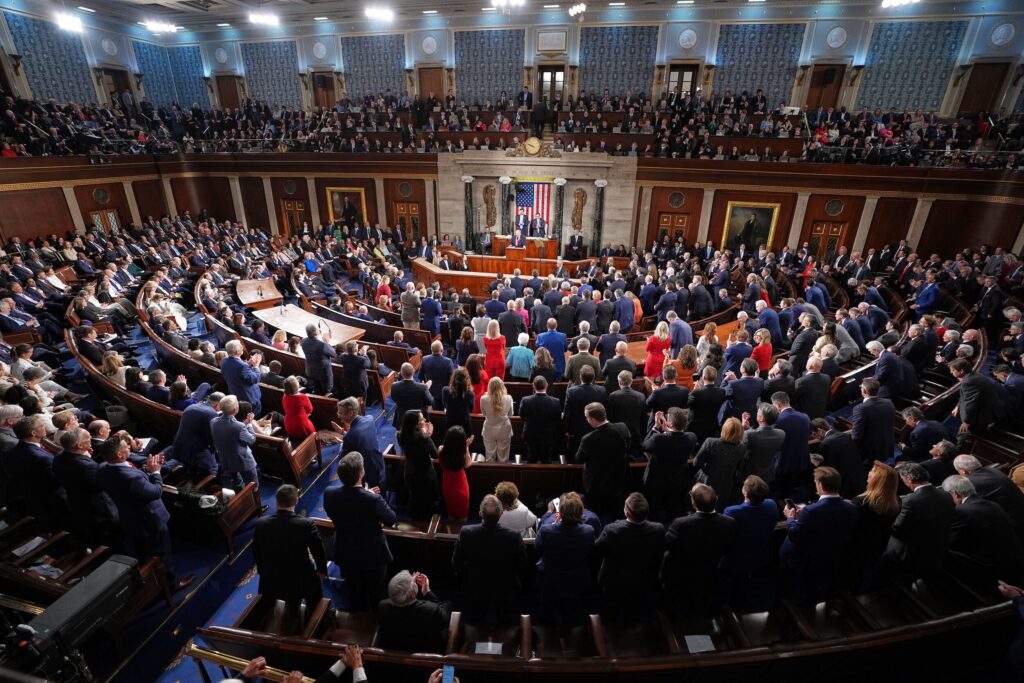
President Donald Trump could have been describing two different countries in Tuesday’s State of the Union address — one entering a “Golden Age” and the other enduring daily stress under a “lawless” regime — at least as far as the...

Colorado group files 6 ballot measures to counter redistricting proposals backed by Democrats
Marianne Goodland
marianne.goodland@coloradopolitics.com
Updated 16 hours ago
A half-dozen congressional redistricting ballot measures were filed Friday by a Colorado advocacy group in response to proposals filed last week from a group seeking to flip three Republican-held U.S. House seats in two years. “The gist of it is...

Trump pulls endorsement from Jeff Hurd over tariffs, backs Colorado Republican’s primary challenger
Ernest Luning
ernest.luning@coloradopolitics.com
Updated 1 day ago
President Donald Trump on Saturday rescinded his endorsement of U.S. Rep. Jeff Hurd and threw his support behind the Colorado Republican’s primary challenger, Hope Scheppelman, citing the first-term incumbent’s “lack of support” for the administration’s tariff policy. The move comes...

At least 6 candidates vying to replace former Sen. Dafna Michaelson Jenet
Marianne Goodland
marianne.goodland@coloradopolitics.com
Updated 2 days ago
Sometime in the next 24 days, a vacancy committee for Senate District 21 will hold an election to choose a successor to former Sen. Dafna Michaelson Jenet, D-Commerce City. Michaelson Jenet resigned on Feb. 13 to take a job as...
In a meeting Colorado GOP chair Brita Horn calls ‘illegal,’ Republicans vote to demand her resignation
Ernest Luning
ernest.luning@coloradopolitics.com
Updated 4 days ago
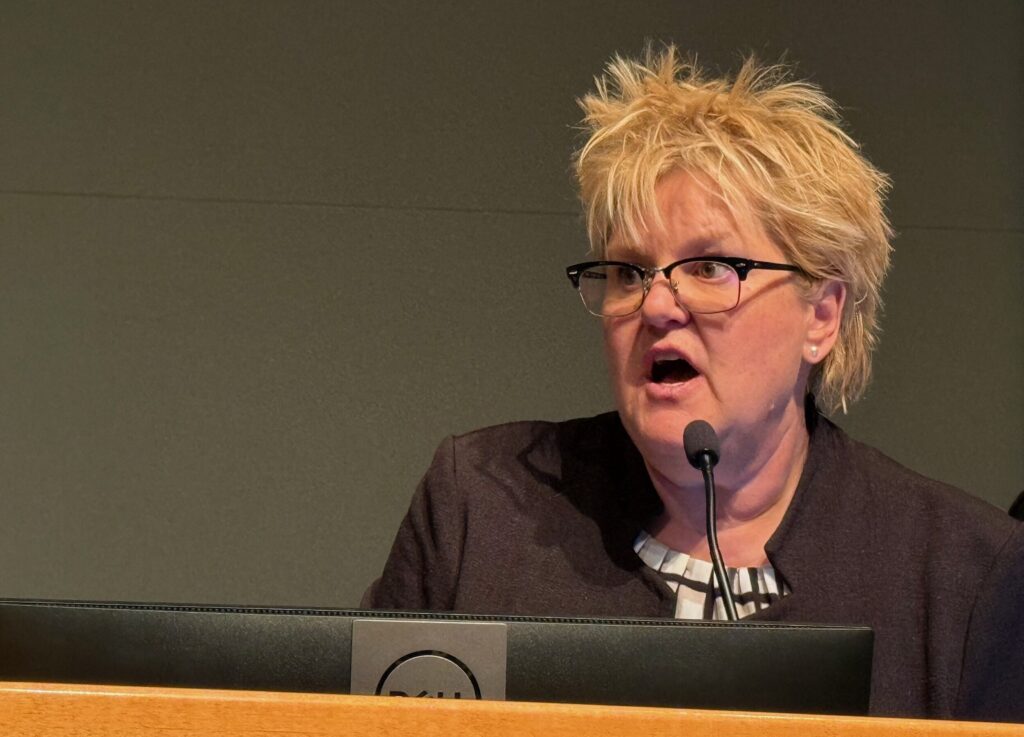
Roughly half the membership of the Colorado Republican Party’s state central committee on Saturday voted overwhelmingly to approve a resolution expressing “no confidence” in state GOP Chairman Brita Horn’s leadership and calling for her immediate resignation in an online meeting...

Democrats Michael Bennet, Phil Weiser make their cases to be Colorado’s next governor ahead of primary
Ernest Luning
ernest.luning@coloradopolitics.com
Updated 2 days ago
Nearly eight months before ballots will be counted in Colorado’s race for the its open gubernatorial seat, voters are lining up behind two of the state’s leading Democrats, who are facing off in a primary that will likely determine which...
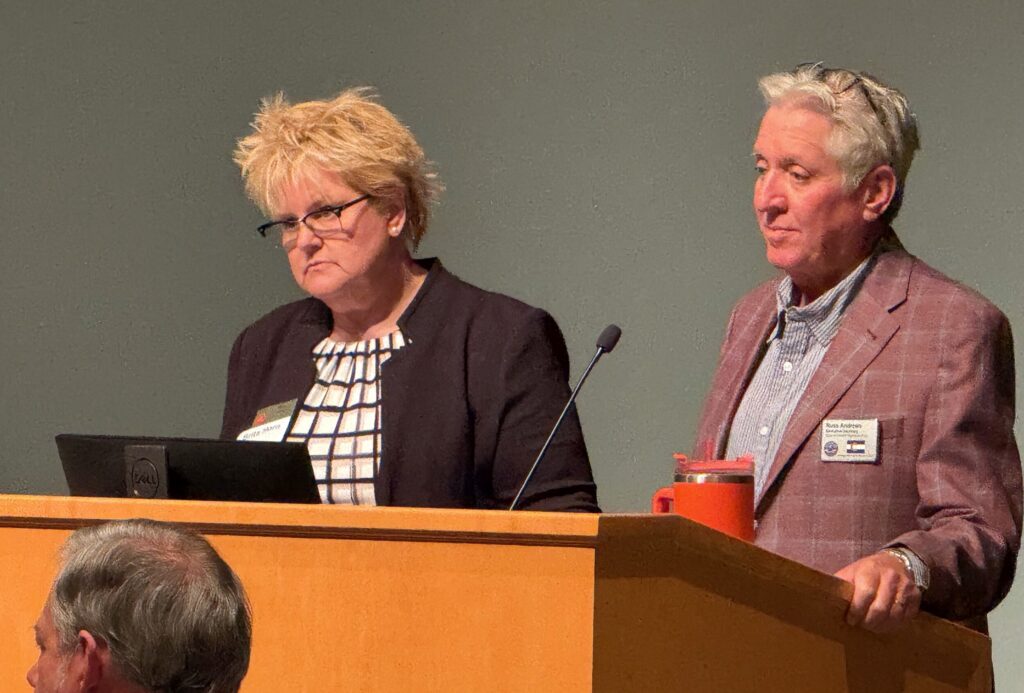
Colorado GOP officers set competing meetings to hold ‘no-confidence’ votes on state chair Brita Horn
Ernest Luning
ernest.luning@coloradopolitics.com
Updated 5 days ago
Once again, members of the Colorado Republican Party’s central committee have scheduled separate, competing meetings to consider whether the state GOP’s governing body supports its chair, but this time neither meeting will be held under a bridge. State GOP Chair...
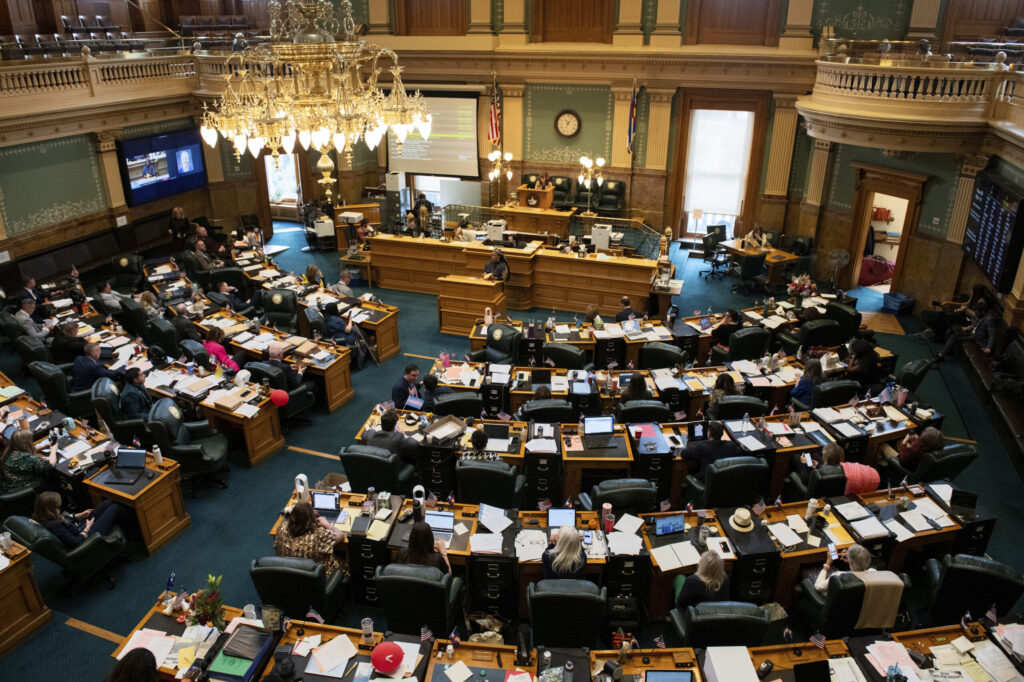
Colorado Democratic candidate submitted 1,600 signatures — only 29 were valid
Marianne Goodland
marianne.goodland@coloradopolitics.com
Updated 4 days ago
When he turned in some 1,600 signatures last month, Eric Nelson said it demonstrated “strong grassroots support from voters” across the district and a “growing momentum” for his “inclusive, community-centered leadership.” On Thursday, the Secretary of State rejected Nelson’s petition...
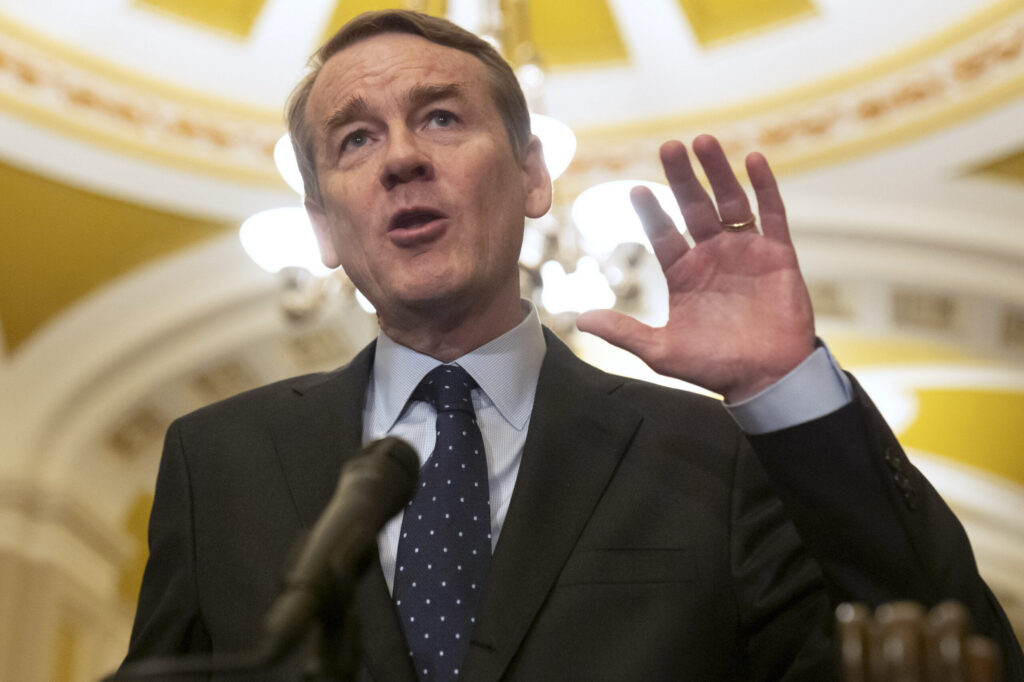
U.S. Sen. Michael Bennet: ‘It’s right to suspend’ wolf program in Colorado
Marianne Goodland
marianne.goodland@coloradopolitics.com
Updated 5 days ago
U.S. Sen. Michael Bennet, who is running for governor, told a newspaper this month that he favors suspending Colorado’s wolf reintroduction program. “I think it’s right to suspend it for now and to try to see whether there’s any way...
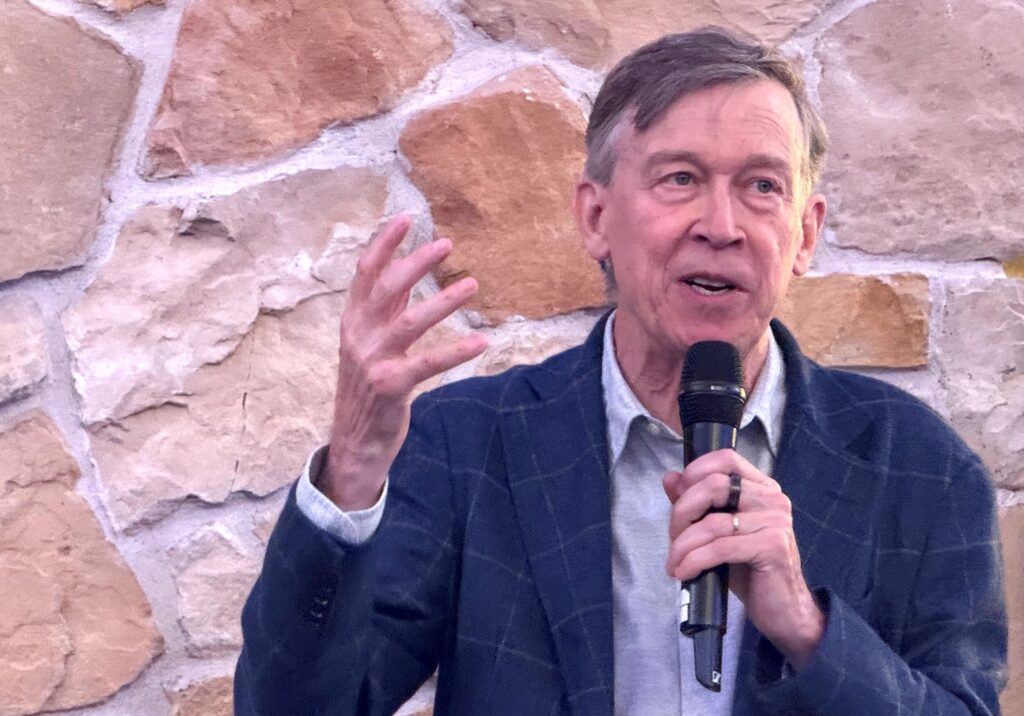
Hickenlooper endorsed by Planned Parenthood Action, environmental group in Colorado’s U.S. Senate race
Ernest Luning
ernest.luning@coloradopolitics.com
Updated 6 days ago
A pair of progressive national groups that advocate for abortion rights and fighting climate change have endorsed U.S. Sen. John Hickenlooper’s bid for reelection, with both calling the Colorado Democrat a proven fighter for their causes. Planned Parenthood Action Fund...
PREV
PREVIOUS

Colorado-based health care provider for seniors sanctioned over failure to deliver services
In twin actions, federal and state officials on Thursday suspended enrollment by elderly Coloradans with the state’s largest provider of community-based home health care after concluding the company failed to deliver medically necessary services to patients. Officials with the federal Centers for Medicare & Medicaid Services (CMS) told the president and CEO of Denver-based InnovAge on Wednesday that the agency […]

YEAR IN REVIEW | Colorado Politics recalls topsy-turvy 2021
It was the year when things were supposed to start returning to normal, but just days into the new year, it became clear that 2021 would be anything but normal. As the year dawned, much-anticipated COVID-19 vaccines were being deployed to front-line health care workers and older residents as Colorado and the nation reeled from […]