

Health officials brace for Omicron after suspected surge in Eagle County

Eagle County reported more COVID-19 cases Monday than on any other day during the pandemic, and the average number of daily cases confirmed there has tripled in a week, local data show.
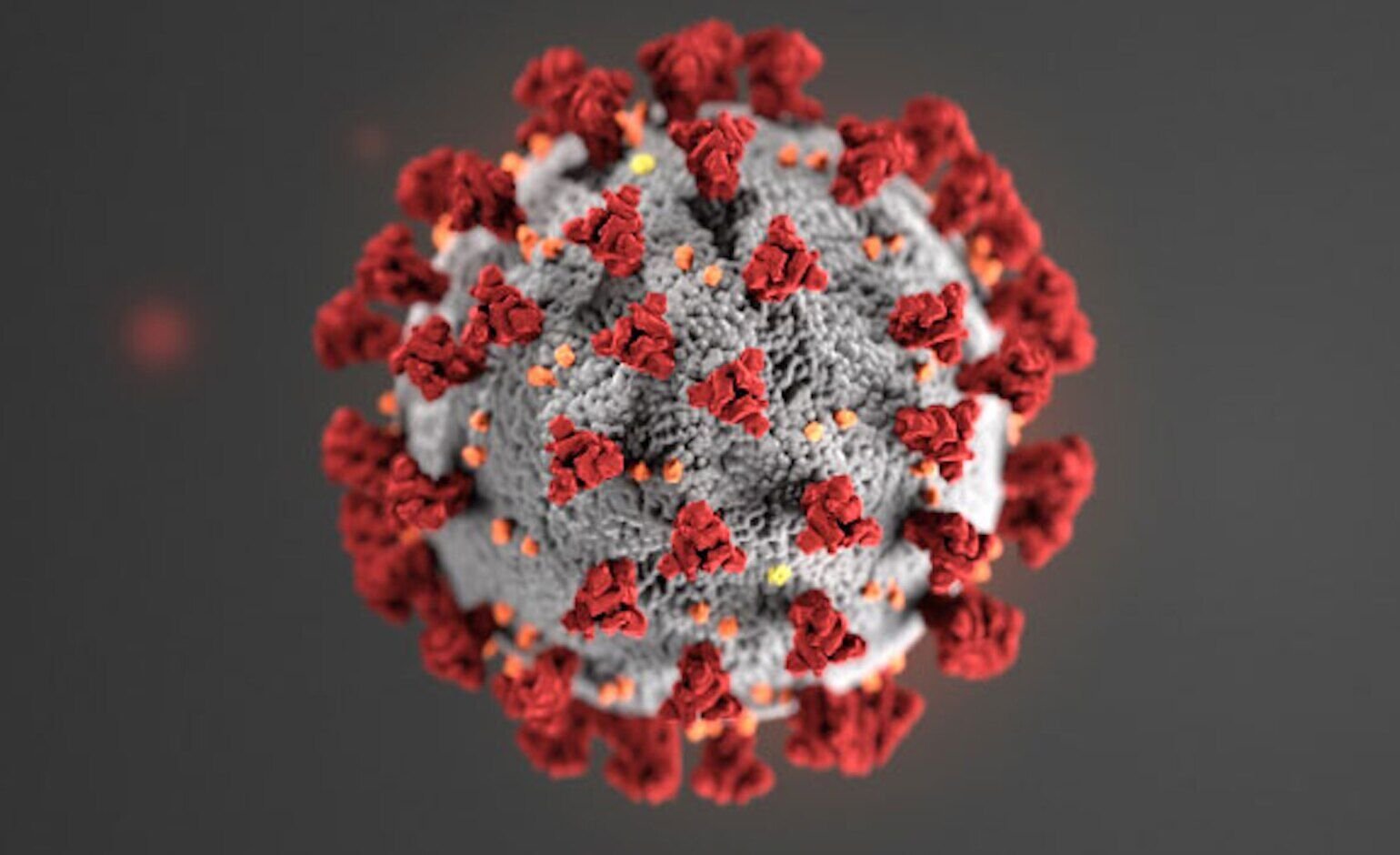
It is “highly likely” that the surge is being caused by the omicron variant, the state health department said Monday.
The county averaged about 15 cases per day on Dec. 12, a recent low as it and the rest of the state slowly emerged from the fall surge. But that average has nearly tripled in the days since – to more than 43 cases per day by Sunday. The county reported 105 new cases Monday, the most it has identified in a single day during the pandemic, according to the Eagle County Public Health website.
Denver’s first 2 cases of omicron variant identified, city says
A spokesperson for the state Department of Public Health and Environment said Monday that “sequencing is pending” to confirm omicron is driving the spread in the county. But the Eagle County samples contain a telltale marker that indicates the presence of the new variant, the spokesperson and Gov. Jared Polis said this week.
“That, plus their rapid rise, suggests it is highly likely that omicron is circulating there,” the spokesperson said in an email Monday night.
Messages sent to public health officials in the county were not returned Tuesday. On Friday, Eagle County Public Health issued a public health advisory warning of the “sharp increase in cases.”
Colorado surpasses 10,000 COVID-19 deaths
“This is an indication that community spread is very high and the likelihood for exposure has increased considerably,” the agency wrote. “In addition, local testing is quickly reaching its capacity and persons with symptoms will be prioritized for testing.”
Speaking at a news conference Tuesday, Polis said omicron was spreading in areas with recent travel, highlighting Eagle, Summit and Pitkin counties specifically. Pitkin confirmed its first omicron case Tuesday. The governor said officials expected the parts of Colorado with “significant visitation” to be hit by omicron first.
All three of those counties have vaccination rates of over 80%, and Polis said officials weren’t as worried about residents there because of those rates. But he said the state wants to make sure Colorado is a safe place for non-Coloradans to visit.
“At this point, we can essentially confirm that transmission of omicron variant in Colorado is occurring,” he said. “It still is not the predominant strain in Colorado, but based on what has occurred elsewhere, we expect omicron to increase even as we continue to see delta to decrease, which is what we’ve been seeing the last few weeks.”
He added that it is a matter of “days or weeks” until omicron becomes the dominant strain here.
Polis: Omicron spread just ‘a matter of time’
Omicron was only officially identified a month ago but has surged to become the dominant variant in the United States. The Centers for Disease Control and Prevention said Monday that the latest strain accounted for 73% of cases in the country over the past week.
In Colorado, the variant has been identified in several counties, including Denver, Arapahoe, Jefferson, Boulder, Pitkin, El Paso and Garfield. The cases in Denver and Garfield counties have been linked to community transmission, as opposed to infections picked up while traveling. Wastewater sampling has also indicated traces of the variant in various systems around the metro area.
Colorado’s third omicron variant case found in Jefferson County resident
Though it’s now believed omicron is more transmissible than the initial form of the virus, it remains unclear if it’s more severe than that strain or the delta variant, which remains dominant in Colorado. The impact of omicron on Colorado will in part hinge on that question, experts said.
“Omicron is here for sure with last week’s surge in Eagle County probably a signal,” said Jon Samet, dean of the Colorado School of Public Health. “The good news is that omicron will arrive while delta is descending, easing the strain on the medical care system. From what we know in other countries, omicron will likely rise steeply because of its transmissibility and immune escape. The impact on health care and on Coloradans will depend on its virulence.”


Ben Campbell, former US senator from Colorado and advocate for Native American rights, dies at age 92
Ernest Luning
ernest.luning@coloradopolitics.com
Updated 9 hours ago
Former U.S. Sen. Ben Nighthorse Campbell, who represented Colorado for two terms beginning in 1993 and was the first Native American elected to the chamber since the 1920s, died Tuesday, his family and close associates confirmed. He was 92. Campbell,...
Federal judge sides with Douglas County School District in ex-admin’s discrimination lawsuit
Michael Karlik
michael.karlik@coloradopolitics.com
Updated 14 hours ago
A federal judge concluded last week that a former high school administrator had not proven his claims of religious discrimination against the Douglas County School District. Corey McNellis had worked at Ponderosa High School since 2002 and served as the athletic...
Appeals court orders new menacing trial after faulty self-defense instruction
Michael Karlik
michael.karlik@coloradopolitics.com
Updated 15 hours ago
Colorado’s second-highest court ordered a new trial last week for an El Paso County defendant convicted of felony menacing, concluding an erroneous self-defense instruction may have influenced the verdict. Under Colorado law, self-defense is an affirmative defense, meaning the prosecution...

Investment and innovation expected across the defense community in town
Mary Shinn
mary-shinn@coloradopolitics.com
Updated 17 hours ago
Investment and innovation are on the horizon for the defense community in Colorado Springs over the coming year. In December, the Missile Defense Agency selected 2,100 companies to compete for work on Golden Dome through a contract known as SHIELD...

Colorado eyes shift in particulate oversight amid EV push
Scott Weiser
scott.weiser@gazette.com
Updated 17 hours ago
Colorado’s Air Pollution Control Division proposed shifting oversight of solid particulates as small as one-seventh the width of a human hair from federal to state-only authority on Dec. 19, citing more than 20 years of compliance with national standards. The...

Saudi Arabia strikes Mukalla port over ‘extremely dangerous’ actions by ally UAE
Brady Knox, Washington Examiner
brady.knox.washington.examiner@gazetteedit.wpenginepowered.com
Updated 17 hours ago
Saudi Arabia launched airstrikes targeting Emirati equipment unloading at the port of Mukalla in Yemen on Tuesday after accusing its ally of “extremely dangerous” actions, a major escalation in the war-torn nation. After weeks of high tensions following the Emirati-backed...

Trump’s latest funding cuts dampen bipartisan dealmaking in 2026
Ramsey Touchberry, Washington Examiner
ramsey.touchberry.washington.examiner@gazetteedit.wpenginepowered.com
Updated 17 hours ago
Senate Republicans are optimistic about bipartisanship beyond healthcare next year, despite the looming midterm elections, but some of President Donald Trump’s latest actions could thwart the appetite for deal-making. The administration is dismantling a federal climate center and halting construction...
The 2026 battleground: Congress’s most vulnerable House and Senate seats
Samantha-Jo Roth, Washington Examiner
samantha-jo.roth.washington.examiner@gazetteedit.wpenginepowered.com
Updated 18 hours ago
With control of Congress expected to hinge on a narrow margin in 2026, a small group of House and Senate incumbents is already emerging as the most vulnerable lawmakers of the coming cycle. Both parties are already zeroing in on...
From mental health coverage to bison protection: New Colorado laws that take effect Jan. 1
Marissa Ventrelli
marissa.ventrelli@coloradopolitics.com
Updated 20 hours ago
A new year means new laws in Colorado, covering everything from health insurance and gun shows to “junk fees” and protections for wild bison. Here’s a list of laws passed during the 2025 legislative session that will go into effect...
Appeals court clarifies framework for parents’ First Amendment rights in child-naming disputes
Michael Karlik
michael.karlik@coloradopolitics.com
Updated 20 hours ago
Colorado’s second-highest court overturned a Jefferson County judge’s order last week in a long-running dispute about whether two ex-spouses must call their child by his first name or middle name outside the home. In doing so, a three-judge Court of...
PREV
PREVIOUS

State Supreme Court agrees to scrutinize law involving testimony from child victims
The Colorado Supreme Court has agreed to review a pair of cases that call into question how old a child victim must be for their statements outside of the courtroom to be admissible at trial. The first appeal from Dennis R. Chirinos-Raudales comes in the wake of his 2017 convictions for sexually assaulting a child. The trial […]

District attorney asks for reconsideration of trucker's sentence in new motion
The district attorney’s office in Jefferson County is asking a judge to reconsider the 110-year sentence he imposed on Rogel Lazaro Aguilera-Mederos, the office announced Tuesday. Aguilera-Mederos, 26, was convicted in October of dozens of charges in connection with a fiery wreck on Interstate 70 in 2019 that killed four people and injured several others […]