

SLOAN: Bob Dole, rest in peace
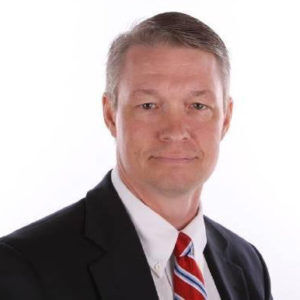
It was said of Bob Dole, in somewhat almost bewildered and reverential tones, that he liked to make up his own mind about political matters. This was startling to the Washington-watchers of the day because it was such a refreshing change from both the poll-obsessed whose views are consistent only in being tailored to the popular whims of the moment, and the dogmatic ideologues whose every position could be referenced by the applicable page number and line in the relevant playbook.
Senator Dole died last Sunday, at 98 America’s elder statesman, and one wonders what all died with him.
Anytime a figure of Dole’s stature passes it evokes remarks about an end of an era. In Dole’s case it is quite literally true.
Bob Dole represents the end of many things, some tangible, others more abstract. He is probably the last senior public figure to belong to the Greatest Generation, and the last to have seen combat in World War II. He may also be the last to fully embrace the ideals and traits which characterized that generation: honor, duty, decency. In other words, one wonders if he were the last real American gentleman.
If you are over 40 years of age, you probably remember Dole, as a Senate leader and certainly as a Presidential candidate. If you are under 40 those chances diminish, and that is a shame.
The highlights of Dole’s biography are quite well known. He grew up in the middle of America, in Russell, Kansas, joined the Army during World War II, received his commission as a Second Lieutenant, and served in Italy with the 10th Mountain Division, where he nearly lost his life.
During Operation Grapeshot in 1945, the Allies offensive to drive the Germans out of Italy and back over the Alps, Lt. Dole emerged from the relative safety of his foxhole to destroy the German machine gun that had his men pinned down. He saw one of his men go down, and as he went to pull him to safety a Nazi shell exploded nearby, shredding his right arm and leaving him unable to move.
After nine long hours of pain and bleeding on the battlefield, Dole was finally evacuated to a field hospital, unable to move his arms or legs, a quadriplegic. The young man who had been a promising high school athlete was shipped back to the United States in a full-body cast. The story of his recovery is a remarkable and inspiring one, one that has been too seldom told, partly because we all know how it turned out. The young man, his body ruined by a German gun, not expected to live let alone have a fruitful and successful life, eventually rose to the highest levels of American government and public life.
His character could be summed up in the succinct (and accurate) campaign slogan he adopted briefly during his presidential run in 1996: “A better man for a better America.” The juxtaposition between Dole and his opponent could hardly be more striking. About 57% of Americans in 1996 believed that Bill Clinton was involved in shady dealings, which he was hiding from the public, and possessed a disturbing lack of moral self-control. And 57% of Americans voted for him anyway. Dole was entirely correct in asking, as he did, “where’s the outrage?” Good Question.
One of the most poignant moments in recent American history came a few years back, as Dole paid his respects at the funeral of President George H.W. Bush. Few could forget the moment, the aging Dole pushed up to the casket in a wheelchair, rising (because that’s what you do), almost contemptuously waving off an aide who tried to help him up, and saluting the flag-draped casket with his left arm, his right having never regained the function it lost in Italy.
It was more than just a magnanimous gesture from a senior public official to an old political rival – the blue-collar, Kansan-bred Dole had always felt a twinge of disdain for the wealthy and more patrician Bush – and everyone who watched it felt it. It was a moment of final camaraderie among the last remnants of the Greatest Generation, two men who had fought and suffered for their country and had gone on to serve it just as honorably in public life. Their differences no longer mattered. They shared a deeper, far more important bond.
William F. Buckley one wrote of Dole, “He is a handsome man, his countenance is both that of the American who enjoys impieties at the Mark Twain level, and the American one goes to war with, knowing that, at your side, is noble man and true companion.” Dole’s passing symbolizes the passing of his generation. Have we lost the character that defined it? Is it lost along with the outrage that should accompany the deficit of honor that Dole himself queried about? Was Dole the last American Gentleman?
We hope not, and yet somehow our mourning is a little deeper.
Kelly Sloan is a political and public affairs consultant and a recovering journalist based in Denver.

Colorado’s place in President Trump’s oil-and-gas approach | Paula Noonan
Paula Noonan
paula-noonan@coloradopolitics.com
Updated 9 hours ago
Head spinning is the unwanted reality of today’s world. Let’s start at the international level. The wars in the Middle East since the 1950s have never ended. Though religion and ethnicity are factors, oil and gas access is always predominant...
Reject onerous ad limits in sports-betting bill | OPINION
Colorado Politics
colorado-politics@coloradopolitics.com
Updated 22 hours ago
By Justin Sasso A dangerous precedent is potentially afoot in the Colorado state Senate right now, where a bill was recently introduced to restrict advertising for local broadcast media across Colorado. Senate Bill 26-131, seemingly designed to discourage Coloradans from participating...
Reform to Colorado’s grantmaking drives efficiency, strengthens state’s partnership with nonprofits | OPINION
Colorado Politics
colorado-politics@coloradopolitics.com
Updated 22 hours ago
By Marco Dorado and Jack Murphy Colorado’s nonprofit sector is one of the most significant contributors to our state’s economic and civic life, with more than 14,000 registered nonprofit organizations supporting more than 262,000 jobs — approximately 10% of all...
Costly auto mandate amounts to needless overkill | FEEDBACK
Colorado Politics
colorado-politics@coloradopolitics.com
Updated 23 hours ago
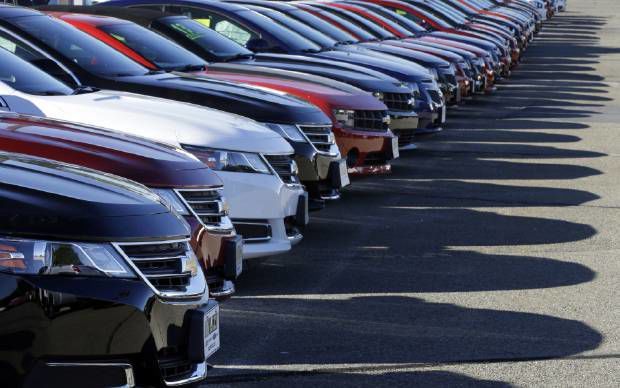
HB26-1199 is currently in the legislature, and let me explain how this affects you. Currently in the state of Colorado, your vehicle’s emissions have to meet California standards even though you do not live in California. Though we all can agree...
Congress needs to protect 340B for rural Colorado | PODIUM
Colorado Politics
colorado-politics@coloradopolitics.com
Updated 9 hours ago
By Rod Pelton A lot of politicians talk about understanding what life is like for our rural communities, but not many really do. I’m a third-generation Cheyenne County farmer and rancher; I grew up on the eastern plains of Colorado, raised...
Caldara overlooked facts in slamming utilities | FEEDBACK
Colorado Politics
colorado-politics@coloradopolitics.com
Updated 2 days ago
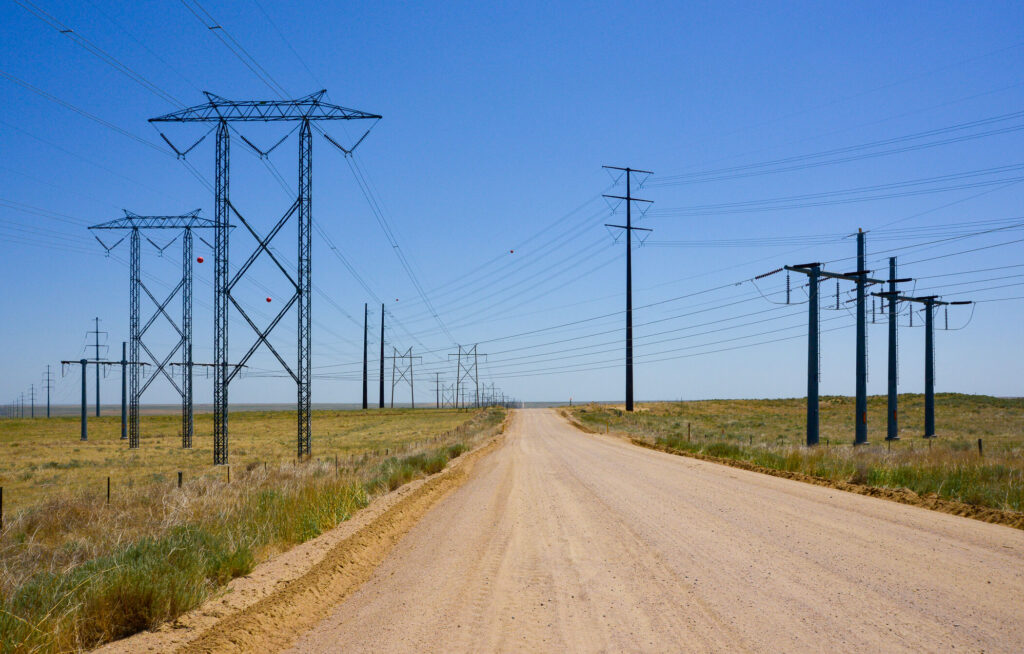
Normally, I appreciate the variety of perspectives published on Colorado Politics. But regarding Jon Caldara’s recent column on Xcel, he irresponsibly neglects key facts to the point of annihilating credibility (“Are our overlords normalizing power outages?” March 15). He neglects...
Fix the process before reauthorizing state PUC | OPINION
Sara Blackhurst
sara-blackhurst@gazette.com
Updated 2 days ago
What needs to be fixed before reauthorizing the Public Utilities Commission? The answer is simple: the process. The last time the commission was reauthorized in 2021, lawmakers expanded its role in meaningful ways — particularly as Colorado accelerated its clean...
What exactly makes you a public figure? | Hal Bidlack
Hal Bidlack
hal-bidlack@coloradopolitics.com
Updated 3 days ago
Well, once again, this non-lawyer columnist is going to jump in the deep end of legal scholarship and will explore a recent Colorado Court of Appeals decision. Buckle up. In yet another terrific Colorado Politics Court Crawl article, we learned...
Modernizing Pinnacol is about its members, not politics | IN RESPONSE
Colorado Politics
colorado-politics@coloradopolitics.com
Updated 3 days ago
By Akasha Absher While we share the passion for protecting Colorado’s workers expressed in a recent op-ed from the perspective of trial attorneys and union representatives, the piece paints a picture of Pinnacol Assurance that is more rooted in 1915...
Mum on his own replacement, Bennet disrespects voters | Dick Wadhams
Dick Wadhams
dick-wadhams@coloradopolitics.com
Updated 9 hours ago
U.S. Sen. Michael Bennet is playing an arrogant game of hide-and-seek with Colorado voters as he seeks to abandon his Senate seat to become governor. Bennet insists that if he is elected governor in November, he will wait until he...
PREV
PREVIOUS
NOONAN | State's snowpack has a grim future
Paula Noonan Eleven miles up Castle Creek Road above Aspen, heading into the Elk Mountains, sits Ashcroft, a ghost town once filled with thousands of silver seekers in a valley that was Nuchu, or a Ute Mountain Ute summer hunting camp. The miners took the valley in the 1880s, with the federal government moving Nuchu […]
Denver Gazette: Veto the Denver council’s tobacco ban
Stringent limits on the sales and use of tobacco can be effective in keeping it out of the hands of kids. The same goes for excise taxes that make buying tobacco products prohibitive and serve to keep them out of kids’ reach. Those and other measures only make sense as society tries to ensure another […]